Imagine a world where every single medication you needed cost a fortune because only one company had the right to sell it. For a huge chunk of American history, that was basically the reality. Today, most of us don't think twice about picking the generic version of a drug at the pharmacy to save a few dollars-or a few hundred. But the road to getting affordable, interchangeable medicine wasn't a straight line; it was paved with tragedies, legal battles, and massive regulatory shifts.
The Early Days of Standardization
Long before we had a formal government agency overseeing pills, the US had a "Wild West" approach to medicine. It all started in 1820 when eleven physicians met in Washington, D.C. to establish the U.S. Pharmacopeia is the first official compendium of standard drugs in the United States. Why did this matter? Because back then, a "medicine" bought in one state might be completely different in strength or purity than one bought in another. The Pharmacopeia gave doctors a baseline for what a drug should actually contain.
By 1848, the government realized that bad medicine wasn't just a local problem-it was an import problem. The Drug Importation Act was passed to let the U.S. Customs Service stop adulterated drugs from crossing the border. Later, in 1888, the American Pharmaceutical Association (APhA) stepped in with the National Formulary to stop counterfeiting. These were the first real attempts to make sure that when you bought a drug, you actually got what the label promised.
Tragedy as a Catalyst for Change
Real progress often comes from disaster. In 1906, President Theodore Roosevelt signed the Federal Food and Drugs Act. This was a game-changer because it finally required product labeling. If a company lied about what was in their medicine, the government could actually do something about it. This legislation laid the groundwork for the Food and Drug Administration is the federal agency responsible for protecting public health by ensuring the safety, efficacy, and security of human and veterinary drugs.
However, the biggest wake-up call happened in 1937 with the Elixir Sulfanilamide incident. A company created a liquid version of a sulfa drug using diethylene glycol-a poisonous chemical. It killed 107 people, many of them children. This horror story led directly to the 1938 Federal Food, Drug, and Cosmetic Act (FDCA). For the first time, companies had to prove a drug was safe through testing and get FDA clearance before selling it to the public. Safety was no longer an afterthought; it became a legal requirement.
Defining Prescriptions and Proving Efficacy
As the medical field grew, the government had to decide who could actually handle these powerful chemicals. The 1951 Durham-Humphrey Amendment created the split we still use today: prescription-only drugs that need a doctor's supervision and over-the-counter meds. But safety wasn't enough. In the early 60s, the government realized that a drug could be "safe" (meaning it didn't kill you) but totally useless for the condition it claimed to treat.
The 1962 Kefauver-Harris Drug Amendments changed the game by requiring companies to prove efficacy. This meant manufacturers had to provide evidence that the drug actually worked. They even went back and demanded efficacy data for everything approved between 1938 and 1962. This era turned the FDA into a rigorous gatekeeper, which ironically made the eventual arrival of generics more important-because now, the "gold standard" brand-name drug was scientifically proven to work.
The Hatch-Waxman Revolution
If you want to understand why generics are so common today, you have to know about the 1984 Drug Price Competition and Patent Term Restoration Act, better known as the Hatch-Waxman Act. Before this law, generic medicines made up only about 19% of prescriptions. The system was broken; generic makers had to repeat expensive clinical trials, which meant few companies bothered to make them.
Hatch-Waxman created a compromise. It gave brand-name companies a way to extend their patents to make up for time lost during FDA approval, but it created a shortcut for generic companies called the Abbreviated New Drug Application is a regulatory pathway that allows generic drugs to be approved by demonstrating bioequivalence to a brand-name drug without repeating full clinical trials (ANDA). Instead of spending millions on new trials, a generic company just had to prove their version worked exactly like the original. This is called bioequivalence.
| Metric | Pre-1984 (Estimated) | Modern Era (2020s) |
|---|---|---|
| Prescription Market Share | ~19% | Over 90% |
| Approval Requirement | Full Clinical Trials | Bioequivalence (ANDA) |
| Primary Goal | Basic Safety | Price Competition & Accessibility |
The Financial Impact and Modern Hurdles
The scale of the savings is hard to overstate. In 2021 alone, generic drugs saved the US healthcare system about $373 billion. Some estimates suggest that generics reduce spending by as much as 80-85% compared to the brand-name version. In 2022, while generics accounted for over 90% of prescriptions, they only made up about 23.4% of total spending. That is a massive gap that keeps millions of people from going bankrupt over a prescription.
But it hasn't all been smooth sailing. Brand-name companies found a loophole in Hatch-Waxman: by suing generic manufacturers, they can often get a 30-month extension on their patent, delaying cheaper competition. We've also seen a dangerous shift in where our medicine comes from. About 80% of Active Pharmaceutical Ingredients is the biologically active component of a drug product that produces the intended pharmacological effect (API) facilities are now located outside the US, mostly in China and India. This creates a fragile supply chain, which is why we've seen so many drug shortages recently.
The Path Forward: Biosimilars and New Laws
We are now entering a new phase of the generic story. For decades, we focused on "small molecule" drugs (simple chemicals). Now, we're dealing with complex biologics-drugs made from living organisms. These can't be exactly copied, so we have Biosimilars is a biological product that is highly similar to another biological product already approved for sale. They aren't identical generics, but they provide the same clinical result for a lower price.
To fight back against companies blocking competition, the government passed the CREATES Act in 2019. This law prevents brand-name makers from refusing to sell samples of their drugs to generic developers, who need those samples to prove bioequivalence. Between this and the FDA's effort to speed up ANDA reviews (which dropped from 30 months down to 10 months in some cases), the goal is to keep the market competitive.
What is the difference between a brand-name drug and a generic drug?
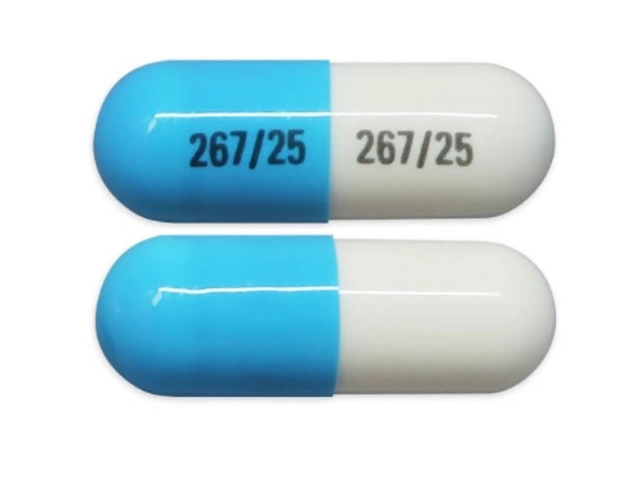
A generic drug is a medication created to be identical to an already approved brand-name drug in dosage, strength, route of administration, and active ingredients. While they may look different (different colors or shapes) or have different inactive fillers, they must meet the same quality and potency standards as the original.
Why are generics so much cheaper than brand-name drugs?
Generic manufacturers don't have to pay for the initial research, development, and massive clinical trials that the original company funded. Because they can use the ANDA process to prove bioequivalence rather than repeating those trials, their overhead is significantly lower, and they compete on price to win market share.
Are generic drugs as safe as brand-name ones?
Yes. The FDA requires generic drugs to be "bioequivalent," meaning they deliver the same amount of active ingredient into the bloodstream at the same rate as the brand-name version. They must adhere to the same strict Current Good Manufacturing Practice (cGMP) regulations.
What was the Hatch-Waxman Act?
Passed in 1984, this act created the modern framework for generic drugs. It balanced the need for innovation (giving brand names patent protection) with the need for affordability (creating the ANDA process so generics could enter the market faster without repeating clinical trials).
What are biosimilars?
Biosimilars are the "generic" version of biologic drugs. Because biologics are made from living cells and are incredibly complex, they can't be perfectly copied. A biosimilar is a version that is highly similar and has no clinically meaningful difference in safety or effectiveness compared to the original biologic.
Next Steps for Patients and Providers
If you're looking to lower your healthcare costs, your first move should be asking your doctor or pharmacist if a generic equivalent exists for your current prescriptions. Most of the time, the answer is yes. However, if you're switching to a generic and notice a change in how you feel, document it and tell your provider-while the active ingredient is the same, different inactive binders can occasionally affect how some people react to a drug.
For those interested in the regulatory side, keep an eye on the FDA's reports on drug shortages. As the US tries to bring more API manufacturing back home to avoid supply chain collapses, we may see shifts in which generics are available and how they are priced over the next few years.