
Vaccine Timing Calculator for Immunosuppressants
Vaccine Timing Calculator
Calculate safe vaccination windows based on your immunosuppressant treatment schedule using 2025 CDC and IDSA guidelines.
Recommended Vaccination Window
Vaccine Recommendations
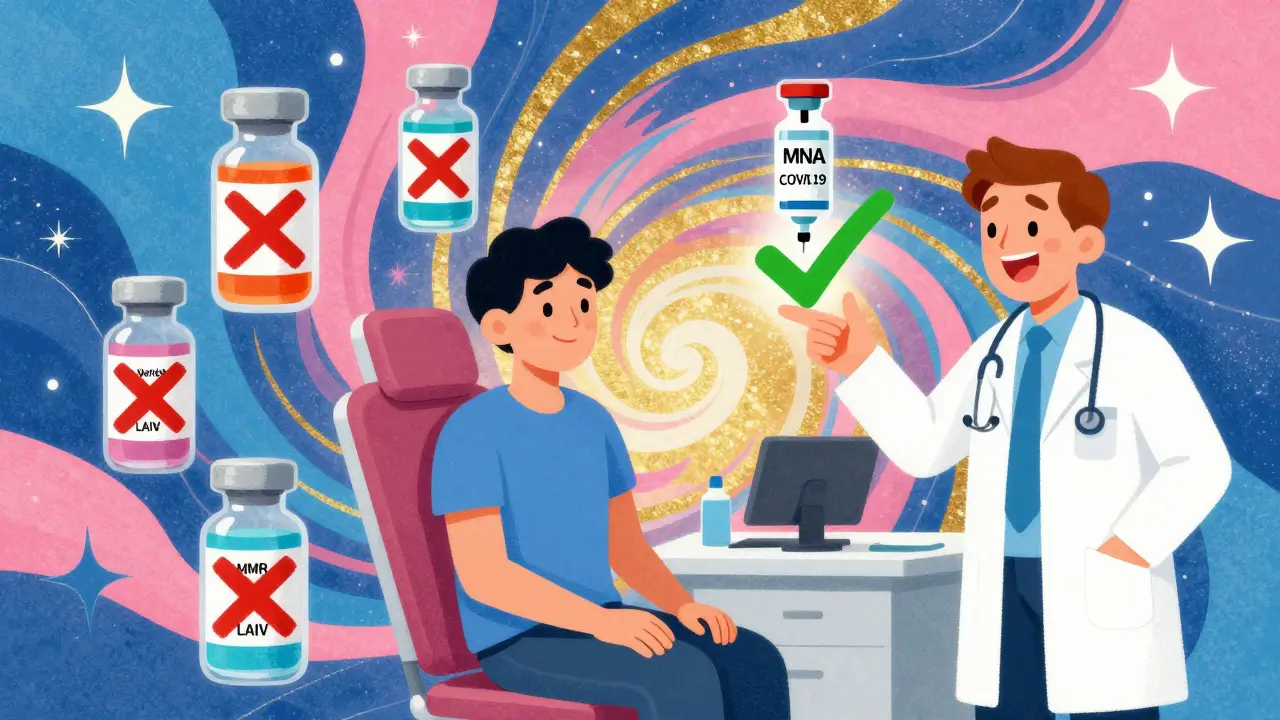
Safe Inactivated Vaccines:
- Flu shot (inactivated)
- COVID-19 mRNA vaccines
- Pneumococcal vaccines (PCV20, PPSV23)
- Hepatitis B vaccine
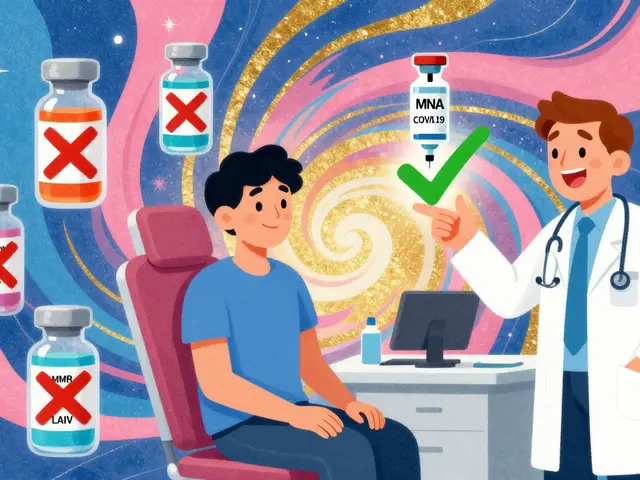
Important: Do NOT receive live vaccines (MMR, Varicella, Zostavax, LAIV) while on immunosuppressants. Consult your specialist before vaccination.
Timing Tip: The CDC and IDSA recommend two doses of the updated COVID-19 vaccine for immunocompromised patients, not one.
Getting vaccinated while on immunosuppressants isn’t just about picking a shot-it’s about timing, type, and your specific treatment. If you’re taking steroids, rituximab, methotrexate, or any other drug that dampens your immune system, the rules change. A vaccine that’s safe for most people could be dangerous for you. And one that’s supposed to protect you might not work at all if given at the wrong time.
Why This Matters More Than You Think
People on immunosuppressants are at higher risk for serious infections. Flu, COVID-19, pneumonia-they don’t just cause a bad week. They can land you in the hospital or worse. But your immune system isn’t just weak-it’s confused. It can’t respond properly to vaccines the way a healthy person’s can. That means standard advice doesn’t apply. The CDC and Infectious Diseases Society of America (IDSA) updated their guidelines in 2025 specifically for this group. And the differences between live and inactivated vaccines are critical.Live Vaccines: Avoid Unless Your Doctor Says Otherwise
Live vaccines contain a weakened version of the virus. In healthy people, that’s enough to trigger immunity without causing illness. In someone on immunosuppressants? It can cause the actual disease. Examples of live vaccines to avoid:- MMR (measles, mumps, rubella)
- Varicella (chickenpox)
- Zostavax (shingles-older version)
- LAIV (nasal flu vaccine)
Inactivated Vaccines: Safe-but Only If Given Right
Inactivated vaccines don’t contain live virus. They use killed viruses, proteins, or mRNA. These are safe for immunocompromised patients. But they don’t always work well. That’s why timing and extra doses matter. Safe inactivated vaccines include:- Inactivated flu shot (not the nasal spray)
- COVID-19 mRNA vaccines (Pfizer, Moderna)
- COVID-19 protein vaccine (Novavax)
- Pneumococcal vaccines (PCV20, PPSV23)
- Hepatitis B (Engerix-B, Recombivax HB, Heplisav-B)
Timing Is Everything
Giving a vaccine at the wrong time is like trying to water a plant during a drought. It won’t help. Key timing rules from the 2025 guidelines:- Before starting immunosuppressants: Get all needed vaccines at least 14 days before treatment begins. This gives your immune system time to respond.
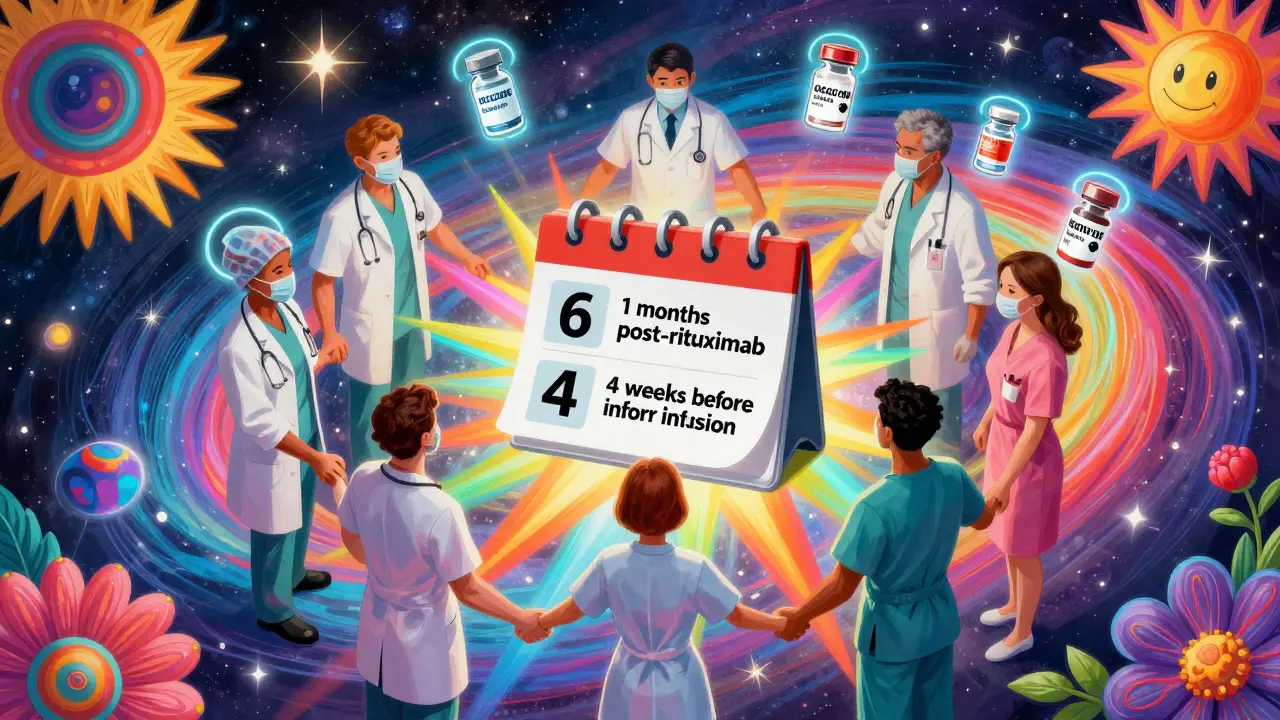
- On B-cell depleting drugs (rituximab, ocrelizumab): Wait at least 6 months after your last dose before getting vaccinated. The best window is 3 to 6 months after treatment ends. If you’re on ongoing therapy, schedule the vaccine 4 weeks before your next infusion.
- On cyclophosphamide: Wait for the “nadir week”-when your white blood cell count is starting to rebound between cycles.
- On high-dose steroids (≥20 mg prednisone/day for ≥14 days): Delay vaccines until the dose drops below 20 mg/day, if possible.
COVID-19 Vaccines: Two Doses Are Now Standard
For immunocompromised people, the 2025-2026 COVID-19 vaccine schedule is different. You need two doses of the updated vaccine, not one. That’s true even if you’ve had previous boosters. The IDSA guidelines say this applies to everyone with moderate to severe immunosuppression-no exceptions. One patient with rheumatoid arthritis shared: “I skipped my methotrexate for a week after each shot. My doctor said it was okay. I got antibodies for the first time.” That’s not an accident. Some studies show temporarily holding certain drugs around vaccination can improve response. But this must be done under medical supervision. Don’t stop your meds on your own.What About Hepatitis B and Pneumonia Shots?
These are often overlooked. Hepatitis B vaccine is given in either three doses (at 0, 1, and 6 months) or two doses (Heplisav-B at 0 and 1 month). The two-dose version works faster-useful if you’re on a tight treatment schedule. Pneumococcal vaccines are even more important. PCV20 (Prevnar 20) and PPSV23 (Pneumovax 23) protect against pneumonia and bloodstream infections. If you haven’t had them, ask your doctor. Many immunocompromised patients get one first, then the other six months later. You don’t need both if you’ve already received them-but if you’re unsure, check your records.What If You Got the Wrong Vaccine?
Some patients have accidentally received live vaccines. One Reddit user wrote: “My oncologist scheduled me for the nasal flu shot while I was on rituximab. I had to cancel after my infectious disease specialist called.” If this happens, don’t panic. Contact your infectious disease specialist immediately. They’ll assess your risk and may recommend antiviral treatment or close monitoring. The key is speed-most complications, if they occur, show up within days.
Coordinating Care: Who Should Be On Your Team?
This isn’t something you handle alone. You need:- Your primary care provider
- Your specialist (rheumatologist, oncologist, transplant doctor)
- Your pharmacist
- Your vaccine administrator (clinic, pharmacy, hospital)
- Exact drug names and doses
- Start and stop dates
- Previous vaccines and dates
- Any adverse reactions
What’s Next? The Future of Vaccines for the Immunocompromised
Researchers are working on better tools. A new NIH-funded trial is testing adjuvanted vaccines-formulations with added ingredients to boost immune response. Point-of-care immune tests are in early development. In five years, your doctor might check your antibody levels right in the office and adjust your vaccine plan on the spot. The CDC’s 2025 Vaccine Administration Record now includes fields for immunosuppression status. That’s progress. But awareness is still uneven. Only 62% of community oncology practices have standardized vaccination schedules, according to ASCO’s 2025 survey. That means you might need to advocate for yourself.Final Checklist: What to Do Now
If you’re on immunosuppressants, here’s your action list:- Review your current meds with your doctor. Are you on steroids, rituximab, methotrexate, or similar?
- Check your vaccination history. Which shots have you had? When?
- Ask: “Which vaccines do I need, and when should I get them based on my treatment cycle?”
- Request coordination between your specialists and your pharmacy.
- Keep a printed or digital record of all vaccines, dates, and drug doses.
- Ensure all household members are up to date on their vaccines. It’s not just about you-it’s about who you live with.



March 7, 2026 AT 07:04
phyllis bourassa
I swear, if I see one more person get the nasal flu shot while on rituximab, I'm gonna scream. My cousin did this and ended up in ICU for 11 days. They told her it was "just a cold." Nope. It was live virus in her lungs. Don't be that person. Your doctor didn't know? Then find someone who does. This isn't a suggestion-it's a life-or-death checklist.
March 9, 2026 AT 01:28
Susan Purney Mark
I'm so glad this was posted. 🙏 My rheumatologist actually set up a vaccine coordination call with my oncologist and pharmacist last month. We mapped out my whole schedule-methotrexate hold, PCV20, then PPSV23 six weeks later. It felt like finally being heard. If you're on immunosuppressants, don't wait for someone to tell you to ask. Just ask. You deserve to be protected.
March 10, 2026 AT 12:58
Ian Kiplagat
In the UK, we’ve had NHS vaccine clinics for immunocompromised patients since early 2024. They even send reminders. If you’re in a city, ask your hospital if they run one. Simple. Effective. No guesswork.
March 11, 2026 AT 14:03
Amina Aminkhuslen
Let me tell you what happens when you skip the timing game. My sister got her mRNA shot two weeks after her rituximab drip. Zero antibodies. Zero. She cried. I yelled. We both learned. This isn't a "maybe". It's a goddamn science experiment where you're the lab rat. Don't be cute. Don't wing it. Follow the damn calendar.
March 12, 2026 AT 02:03
amber carrillo
I have been on methotrexate for seven years and received all recommended vaccines at the correct intervals. My immune system is not perfect but it is protected. I encourage everyone to stay consistent with their records and communicate with their care team.
March 12, 2026 AT 10:14
Jeff Mirisola
I was skeptical until I saw my dad's numbers. After he held his steroids and got the double mRNA dose, his antibody titers jumped from 12% to 87%. That's not luck. That's science. And yeah, I know some people say "just get the shot"-but for us? It's not that simple. This guide? It's the real deal.
March 13, 2026 AT 14:40
Tim Hnatko
I'm a transplant recipient. I got my first pneumonia shot in 2022. Forgot about the second. Then my nurse called six months later. "You still alive?" she joked. I laughed. Then I got the shot. Best decision I made all year. Don't wait for a reminder. Be the one who remembers.
March 15, 2026 AT 04:46
Aaron Pace
OMG I just realized my mom got the shingles shot last year while on prednisone 😱 I need to call her doctor right now. Thank you for this. I'm so glad I saw this before it was too late. 🥺💉