
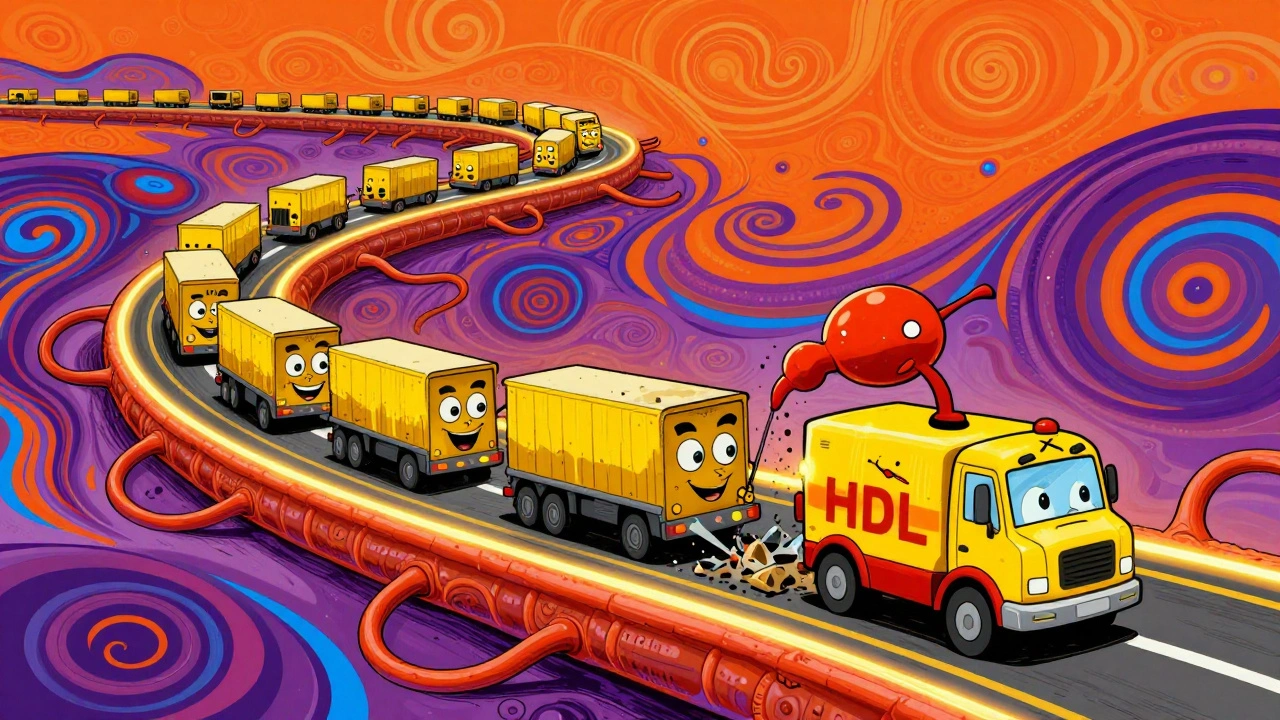
Most people don’t feel high cholesterol until it’s too late. There’s no pain, no warning sign, no sudden ache. Just a quiet buildup in your arteries, year after year, silently narrowing the roads that carry blood to your heart and brain. By the time symptoms show up-chest pain, shortness of breath, or worse-it’s often already damaged something critical. That’s why hypercholesterolemia, the medical term for abnormally high cholesterol in the blood, is called a silent killer. And it’s not rare. In the U.S. alone, 94 million adults have total cholesterol above 200 mg/dL, according to the CDC. That’s nearly 1 in 3 people.
What Exactly Is Hypercholesterolemia?
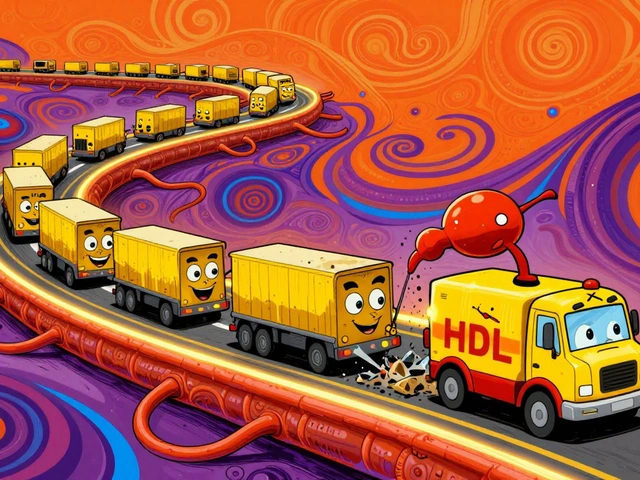
Hypercholesterolemia means your blood has too much cholesterol, especially the bad kind-low-density lipoprotein, or LDL. Cholesterol isn’t all bad. Your body needs it to build cells, make hormones, and digest food. But when LDL levels climb too high, it sticks to artery walls, forming plaques. These plaques harden over time, making arteries stiff and narrow. That’s atherosclerosis. And it’s the leading cause of heart attacks and strokes worldwide.
There are two main types: familial (genetic) and acquired (lifestyle-driven). Familial hypercholesterolemia (FH) is inherited. If one parent has it, you have a 50% chance of getting it. About 1 in 250 people globally have this form, and many don’t even know it until they have a heart attack in their 30s or 40s. In contrast, acquired hypercholesterolemia comes from diet, inactivity, obesity, or other conditions like diabetes or hypothyroidism. It’s more common, and often more preventable.
How Do You Know If You Have It?
You can’t feel it. You can’t see it. The only way to know is through a simple blood test-a lipid panel. This test measures total cholesterol, LDL (bad), HDL (good), and triglycerides. The 2018 AHA/ACC guidelines say:
- Optimal LDL: under 100 mg/dL
- Borderline high: 130-159 mg/dL
- High: 160-189 mg/dL
- Very high: 190 mg/dL or above
Severe cases-especially with FH-can push LDL above 400 mg/dL. That’s not just risky. It’s dangerous. People with untreated FH are 20 times more likely to have a heart attack before age 40 than those without it.
Physical signs can hint at FH: fatty lumps on tendons (tendon xanthomas), especially on the heels or knuckles, or yellowish patches around the eyelids (xanthelasmas). These aren’t common, but if you see them, get tested. They’re red flags.
Familial vs. Acquired: The Big Difference
Not all high cholesterol is the same. Familial hypercholesterolemia starts at birth. Your liver can’t clear LDL properly because of a gene mutation-usually in the LDLR or PCSK9 gene. Even if you eat salad and run marathons, your LDL stays high. That’s why FH patients often need three drugs at once: a high-dose statin, ezetimibe, and a PCSK9 inhibitor like alirocumab.
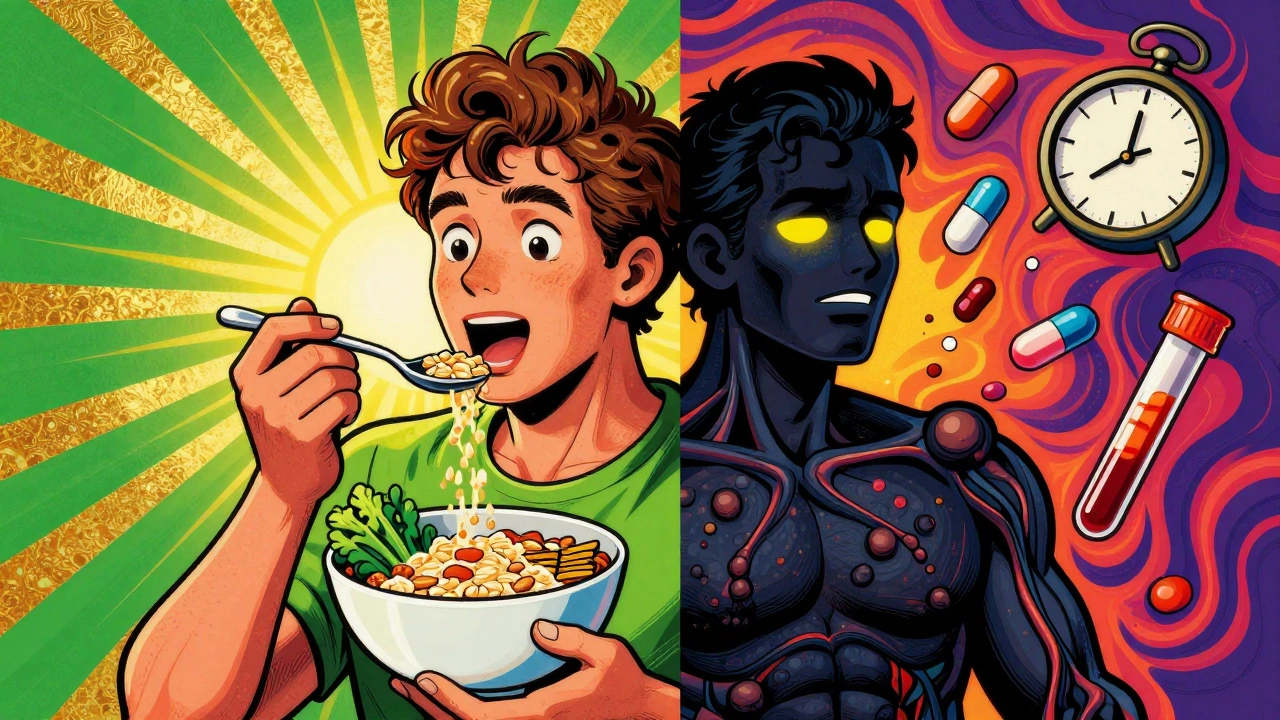
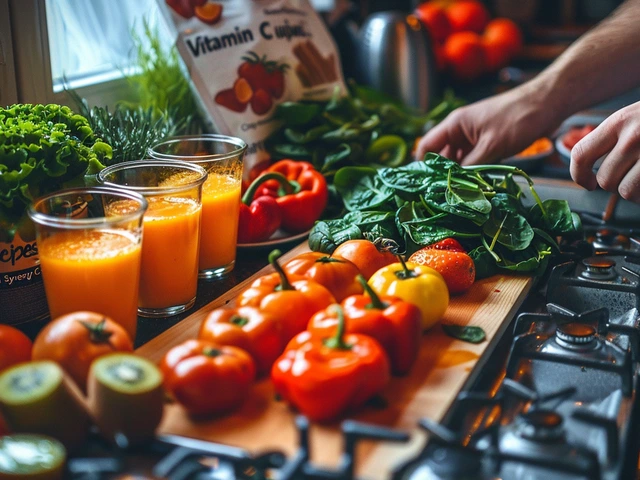
Acquired hypercholesterolemia is different. It’s usually tied to what you eat, how much you move, and other health issues. Eating too many saturated fats-found in red meat, butter, full-fat cheese-raises LDL. Being overweight, especially with belly fat, lowers HDL and raises triglycerides. Diabetes and hypothyroidism also mess with cholesterol metabolism. The good news? This kind often responds to lifestyle changes. The Portfolio Diet, which includes oats, nuts, plant sterols, and soy, has been shown to lower LDL by 15-30% in clinical trials.
Why It’s Not Just About Diet
For years, we were told to avoid eggs and shellfish because they’re high in cholesterol. But that’s outdated. The Dietary Guidelines for Americans removed the daily cholesterol limit in 2020. Why? Because for most people, dietary cholesterol has a small effect on blood cholesterol. What matters more is saturated and trans fats. Those are the real culprits.
Still, there’s debate. A 2019 JAMA Internal Medicine study found that every extra 300 mg of dietary cholesterol per day (about two eggs) was linked to a 17% higher risk of heart disease. So while eggs aren’t the enemy for everyone, if you already have high cholesterol, it’s smart to be cautious.
Other hidden triggers: certain medications. Thiazide diuretics (used for high blood pressure) can raise LDL by 10-15%. Beta-blockers and some steroids can also nudge cholesterol up. If you’re on meds and your numbers worsened after starting them, talk to your doctor. It’s not always the food.
Treatment: It’s Not Just Statins
Statins are still the first-line treatment. Drugs like atorvastatin and rosuvastatin can cut LDL by 50% or more. But they’re not perfect. Between 7% and 29% of people can’t tolerate them because of muscle pain or liver issues. That’s where alternatives come in.
- Ezetimibe: Blocks cholesterol absorption in the gut. Lowers LDL by about 18%.
- PCSK9 inhibitors (alirocumab, evolocumab): Injected every 2-4 weeks. Can drop LDL by another 50-60% on top of statins.
- Inclisiran (Leqvio): A newer shot given just twice a year. It silences a gene that makes PCSK9, so your liver clears LDL better. It’s a game-changer for people who struggle with daily pills.
For FH patients, doctors often start with a triple combo: high-intensity statin + ezetimibe + PCSK9 inhibitor. It’s aggressive, but necessary. Without it, many won’t reach the target LDL below 70 mg/dL.
Why People Don’t Stick With Treatment
Even with effective drugs, most people don’t take them long-term. CVS Health found that only half of statin users are still taking them after one year. Why? Side effects, forgetfulness, or thinking they’re fine because they feel okay. But high cholesterol doesn’t make you feel bad until it’s too late.
Adherence drops even more with lifestyle changes. The Portfolio Diet works-but only 45% of people stick with it after a year. It’s hard to give up cheese, butter, and fried foods. And if you’re not seeing immediate results, motivation fades.
That’s why digital tools are becoming more important. Apps that track meals, remind you to take pills, and connect you with dietitians are helping. Some insurers now cover nutrition counseling for high-risk patients. It’s not magic, but it helps.
The Cost of Doing Nothing
High cholesterol isn’t just a health problem-it’s an economic one. In 2023, heart disease linked to high cholesterol cost the U.S. $218 billion. $142 billion went to hospital stays, meds, and doctor visits. The rest? Lost wages, early retirement, caregivers missing work.
And the gaps are glaring. Only 55.5% of eligible U.S. adults get statins. Among Black adults, it’s just 42.3%. Women are less likely than men to be prescribed them, even when they have the same risk profile. This isn’t about access alone-it’s about awareness, bias, and how little we talk about cholesterol until it’s an emergency.
What You Can Do Today
You don’t need to overhaul your life overnight. Start small:
- Get a lipid panel if you’re 40 or older-or younger if you have a family history of early heart disease.
- Swap butter for olive oil. Choose lean proteins like chicken, fish, or beans over red meat.
- Add 30 minutes of walking most days. It doesn’t have to be intense. Just consistent.
- Read food labels. Avoid anything with “partially hydrogenated oil” or more than 2g of saturated fat per serving.
- If you’re on meds, don’t skip doses. Talk to your doctor before stopping, even if you feel fine.
And if you’ve been told you have high cholesterol? Don’t panic. Don’t wait. You’re not alone. And you’re not powerless. With the right plan, you can lower your risk significantly-even if you have FH.
What’s Next for Cholesterol Management?
The future is getting smarter. Polygenic risk scores-based on dozens of genetic markers-can now identify people at high risk even if their LDL isn’t sky-high yet. This lets doctors intervene earlier, before plaques form.
Also, new guidelines are pushing for stricter targets. The European Society of Cardiology now says very high-risk patients (like those with FH or diabetes) should aim for LDL under 55 mg/dL. That’s lower than ever before. And with inclisiran and other gene-targeted therapies, hitting that target is becoming possible for more people.
But the biggest challenge isn’t science-it’s action. We know how to treat this. We have the tools. What’s missing is the will-to get tested, to take meds, to change habits. Because when it comes to high cholesterol, the most powerful medicine isn’t a pill. It’s awareness.
Can high cholesterol be reversed?
Yes, in many cases. Lifestyle changes like eating more fiber, exercising regularly, and losing excess weight can lower LDL by 10-30%. For people with acquired hypercholesterolemia, these changes can bring numbers back into a healthy range. For those with familial hypercholesterolemia, reversal isn’t possible without medication, but aggressive treatment can stop plaque buildup and reduce heart attack risk dramatically.
Do I need to fast before a cholesterol test?
No, not anymore. The National Lipid Association updated its guidelines in 2021 to say fasting isn’t required for standard lipid panels. Non-fasting tests are just as accurate for total cholesterol and HDL. LDL can still be estimated reliably without fasting. This makes testing easier and more accessible, especially for people who work long hours or have trouble skipping meals.
Is high cholesterol hereditary?
Yes, in about 1 in 250 people. This is called familial hypercholesterolemia (FH), caused by a gene mutation that prevents the liver from removing LDL from the blood. If one parent has FH, each child has a 50% chance of inheriting it. Even if you’re young and healthy, if you have a family history of early heart disease (before age 55 in men, 65 in women), you should get tested.
Can I lower cholesterol without medication?
For many people, yes. The Portfolio Diet-which includes oats, nuts, plant sterols, soy, and fiber-rich foods-has been shown to lower LDL by up to 30%. Regular exercise, weight loss, and cutting out trans fats and excess sugar also help. But if your LDL is above 190 mg/dL or you have other risk factors like diabetes or high blood pressure, medication is usually needed alongside lifestyle changes.
What’s the safest cholesterol-lowering drug?
Statins are the most studied and safest long-term option for most people. Side effects like muscle pain are real but uncommon. For those who can’t take statins, ezetimibe is well-tolerated and effective. PCSK9 inhibitors like evolocumab are also safe but more expensive. Inclisiran, a twice-yearly injection, has shown excellent safety in trials and is ideal for people who struggle with daily pills.
How often should I get my cholesterol checked?
The U.S. Preventive Services Task Force recommends screening every 4-6 years for adults aged 40-75. If you have risk factors-like obesity, diabetes, smoking, or a family history of early heart disease-get tested every 1-2 years. If you’re on medication, your doctor will likely check your levels 4-12 weeks after starting or changing treatment, then every 6-12 months.


December 3, 2025 AT 11:11
dan koz
Yo I just got my lipid panel back and my LDL is 210. No symptoms, felt fine, then boom-doctor says I’m one step from a heart attack. I thought cholesterol was just about eggs and butter. Turns out I’ve been eating too much processed cheese and thinking I’m healthy. Time to swap my cheddar for avocado.
December 3, 2025 AT 12:17
Mindy Bilotta
OMG I’m so glad someone finally said this. My dad had FH and didn’t know until he had a stroke at 48. I got tested at 32 because of him-my LDL was 198. Started on ezetimibe and changed my diet. Lost 30 lbs, no statin side effects. You can beat this. Don’t wait like I did. 🙏
December 5, 2025 AT 11:58
Brian Perry
Okay but what if the real enemy is not cholesterol but the pharmaceutical industry? I mean, statins are literally designed to keep you dependent. Big Pharma doesn’t want you healing with kale and sunlight. They want you on meds forever. And don’t get me started on how they silence the truth about saturated fat being fine. I’ve been off everything for 2 years. My numbers? Better than my doctor’s. 🤯
December 5, 2025 AT 20:00
Chris Jahmil Ignacio
Let me break this down for you people who think this is just about diet. The CDC data is manipulated. They don’t test people who are healthy. They test people who are already sick and then say cholesterol causes it. It’s reverse causality. The real cause? Glyphosate in your food. It destroys your liver’s ability to process lipids. That’s why everyone’s got high cholesterol now. The government won’t tell you this because Monsanto owns them. You think your statin is helping? It’s just masking the real poison. Wake up.
December 6, 2025 AT 06:35
Pamela Mae Ibabao
Okay I’m gonna be real-this post is actually really helpful. I used to think if I didn’t eat bacon I was fine. Nope. Turns out my daily oatmeal with almond butter and flaxseed? That’s the secret. I’ve been doing the Portfolio Diet for 6 months. My LDL dropped from 182 to 110. No meds. Just food. And I’m not even that disciplined. I still eat pizza on weekends. But I eat better the other 6 days. It adds up.
December 7, 2025 AT 07:59
Palanivelu Sivanathan
Cholesterol… is… not… the… enemy… it… is… a… mirror… a… reflection… of… our… disconnection… from… nature… from… rhythm… from… the… ancient… wisdom… of… our… cells… we… have… forgotten… that… our… bodies… are… not… machines… to… be… fixed… but… ecosystems… to… be… honored…
When… you… eat… processed… food… you… are… not… just… feeding… your… stomach… you… are… poisoning… your… soul’s… blueprint…
And… the… statins…?… They… are… the… opiate… of… the… modern… medical… masses…
December 9, 2025 AT 05:24
Erik van Hees
Guys I just read a 2024 meta-analysis in The Lancet that showed PCSK9 inhibitors reduce heart attacks by 52% over 5 years. And inclisiran? It’s basically a one-time gene tweak that lasts years. We’re living in the future and most people are still arguing about eggs. The science is here. Use it. If you have LDL over 190, you’re not being careful-you’re being reckless. Get tested. Get treated. Don’t wait for a crisis.
December 10, 2025 AT 17:04
Cristy Magdalena
I’ve been on statins for 7 years. I have muscle pain every single day. My doctor says it’s ‘normal.’ But I’ve cried in the shower over it. I’m not lazy-I’m exhausted. And now they want me to add another drug? What about my quality of life? No one talks about this. The system wants numbers, not people. I’m not a statistic. I’m a human who just wants to walk without feeling like her muscles are made of broken glass.
December 11, 2025 AT 13:32
May .
My cholesterol’s high. I don’t care. I’m 65. I’ve lived good. Eat cheese, drink wine, laugh loud. I’m not dying for a number.
December 11, 2025 AT 22:22
Sara Larson
You got this!! 💪 I was in the same spot as you-scared, overwhelmed, thought I had to go full vegan. Nope. Started with one change: swapped soda for sparkling water. Then added a 20-min walk after dinner. Then swapped white bread for whole grain. Tiny steps. No guilt. Progress, not perfection. And hey-if you’re on meds, that’s okay too! You’re not failing-you’re fighting smart. 🌱❤️
December 13, 2025 AT 05:58
Josh Bilskemper
Most people don’t understand that LDL isn’t even the real metric. It’s the particle count and size. ApoB is what matters. If you’re not getting that tested, you’re wasting your time. And if your doctor doesn’t know what ApoB is, find a new one. This isn’t 2005 anymore. You need advanced lipid panels if you’re serious. Otherwise you’re flying blind.
December 14, 2025 AT 10:34
Storz Vonderheide
Just wanted to say thank you for this. I’m from Nigeria and we don’t talk about cholesterol here. People think it’s a ‘Western problem.’ But my cousin had a heart attack at 39. We didn’t even know what LDL was. Now I’m sharing this with my family. My sister got tested last week-her LDL was 205. We’re starting the Portfolio Diet together. This isn’t just health. It’s cultural change. And it starts with one post.