
You’ve been prescribed a medication. Your pharmacist hands you a bottle with a different name than what your doctor wrote. It’s cheaper. But you hesitate. Generic drugs feel like a compromise-like you’re getting the second-best version. You’ve heard stories: "My cousin switched to generic and felt worse." "The generic didn’t control my blood pressure like the brand did." And suddenly, even though science says otherwise, your mind starts to believe it.
They’re the Same Medicine-So Why Do You Feel Different?
The U.S. Food and Drug Administration (FDA) doesn’t just approve generic drugs. They demand proof. Every generic must contain the exact same active ingredient, in the same strength, delivered the same way-pill, injection, patch-as the brand-name version. The FDA requires bioequivalence: the generic must release the drug into your bloodstream at the same rate and amount as the brand, within a 20% margin. That’s not a loophole. That’s the scientific standard for therapeutic equivalence. For over 90% of medications, that small variation means nothing in real life. Yet, here’s the disconnect: 13% of U.S. adults still believe brand-name drugs are more effective. Twenty percent think generics cause more side effects. Even doctors aren’t immune-11% admit they doubt generic efficacy. That’s not based on data. It’s based on perception.The Nocebo Effect: When Your Mind Makes You Sick
Your brain doesn’t distinguish between a brand pill and a generic one by looking at the label. But it does notice the price difference. It notices the different color. It notices the unfamiliar name. And if you’ve been told-by a friend, a TV ad, or even a well-meaning but misinformed provider-that generics are "not as good," your brain starts looking for proof. This isn’t placebo. It’s the opposite: the nocebo effect. When you expect something to make you feel worse, your body often delivers. A 2023 study in JAMA Network Open showed patients who were told generics were "just as effective" had 34% better adherence. Those told they were "less effective" had 41% worse adherence. The drug didn’t change. The belief did. And that belief changed how they felt. One pharmacist in Alabama told a patient who switched from brand to generic levothyroxine: "It’s the same medicine." The patient replied, "But I don’t feel the same." She stopped taking it. Her TSH levels climbed. Her fatigue got worse. She didn’t need a stronger dose. She needed reassurance.Why Do Some People Trust Generics Less?
It’s not random. The gap in trust isn’t just about misinformation-it’s tied to deeper social patterns. A 2015 study found non-Caucasian patients were nearly twice as likely to believe generics were inferior. In rural areas like Alabama’s Black Belt, people describe generics as "for poor people," "not real medicine," or "weaker pills." These aren’t medical facts. They’re cultural narratives. And they’re reinforced by marketing. Brand-name companies spend $1.8 billion a year on ads that don’t say "generics don’t work." They say things like: "The original. The trusted choice. The one your doctor knows best." Subtle. But powerful. When you see a slick commercial with a smiling family enjoying a sunny day on brand-name medication, and a generic sits on the shelf with no story behind it, your brain fills in the blanks.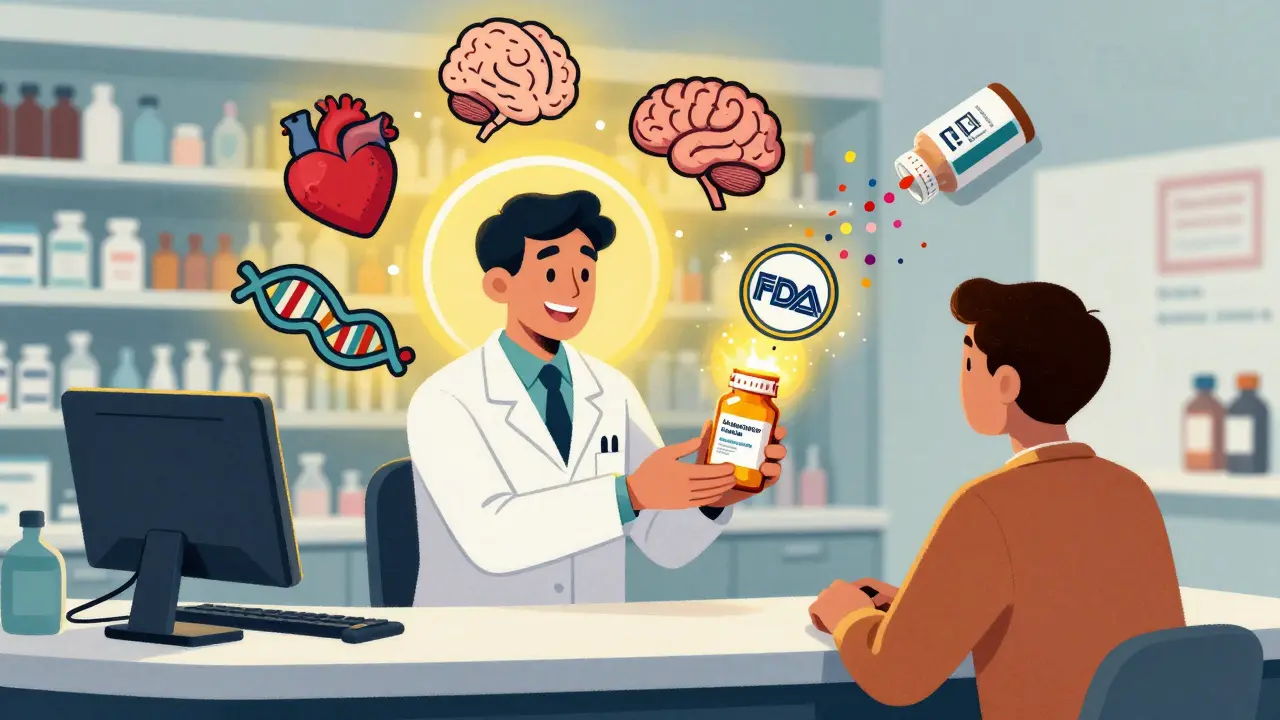
Cost Isn’t Just Money-It’s Trust
Generics save the U.S. healthcare system about $1.7 trillion over the last decade. That’s billions in savings for families, insurers, and taxpayers. But when a patient pays $4 for a generic instead of $40 for the brand, they often assume they’re getting less. That’s the psychology of price. In many cultures, higher cost equals higher quality. That’s not true for drugs. But it’s hard to unlearn. A 2021 Drugs.com survey of over 12,000 patients found 87% said generics worked just as well. But the 13% who didn’t? They were the ones who stopped taking their meds. And that’s the real cost: non-adherence. A 2019 study showed patients who believed generics were inferior were more than twice as likely to quit their medication entirely. That leads to hospitalizations. Worsening conditions. Higher long-term costs.What Actually Makes a Generic Different?
The active ingredient? Identical. The dosage? The same. The manufacturing standards? Exactly the same. The FDA inspects every facility-brand or generic-with the same rules. The only differences are in the inactive ingredients: dyes, fillers, coatings. These don’t affect how the drug works. But they can change how the pill looks, tastes, or even how fast it dissolves slightly. For most drugs, that’s irrelevant. But for narrow therapeutic index drugs-like warfarin, levothyroxine, or some seizure meds-the margin for error is tiny. Even so, the American College of Clinical Pharmacy confirms: studies show no consistent difference in outcomes between brand and generic versions. The FDA has extra oversight for these, and many states require prescribers to specifically authorize generic substitution for them. But even then, the science says: if it’s approved, it works.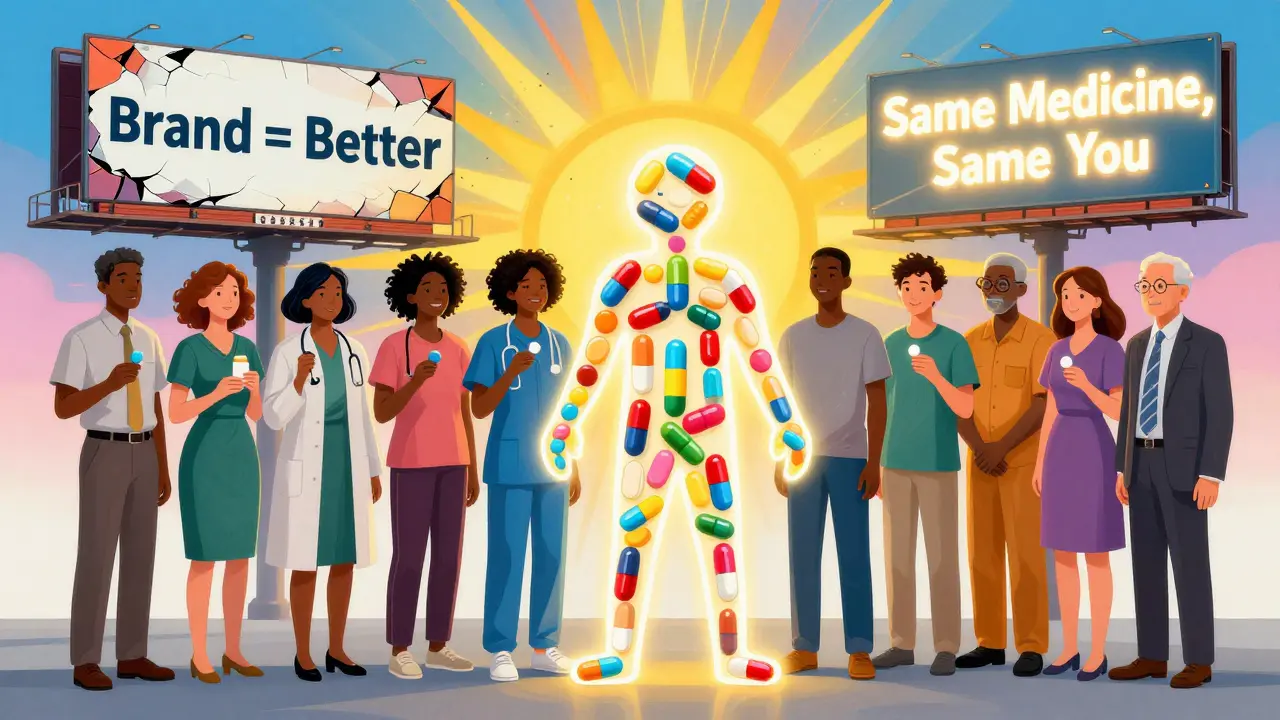
How to Bridge the Gap
If you’re a patient: ask your pharmacist. Show them your prescription. Ask: "Is this the same medicine as the brand?" They’ll show you the FDA’s Therapeutic Equivalence rating. It’s right on the label now. If you’re a provider: don’t just say, "It’s cheaper." Say: "This has the exact same active ingredient. The FDA requires it to work the same way. Here’s the paperwork." Studies show that showing the evidence increases patient acceptance by 87%. If you’re a system: fix the education. The FDA’s website on generics has 4.2 million visits a year-but it’s written at a 9th-grade reading level. Most Americans read at a lower level. That’s not just a problem. It’s a failure.What’s Changing?
The FDA is finally acting. In 2024, they’re launching "Equivalence Explorer," an interactive tool that lets you compare brand and generic versions side-by-side. Medical schools are now required to train doctors on how to talk about generics without triggering fear. Insurance companies are starting to drop co-pays for brand-name drugs when a generic is available. But the biggest change won’t come from policy. It’ll come from conversations. From pharmacists taking an extra minute. From doctors saying, "I’ve prescribed this generic to my own mother. It works just as well." From patients sharing their own stories: "I switched to generic and felt fine. Better, even-no more stomach upset."It’s Not About the Pill. It’s About the Story.
The science is clear. Generics are not inferior. They’re not second-rate. They’re the same medicine. The only thing different is the story you’ve been told. You don’t need to believe it because a government says so. You don’t need to trust a label. You need to hear it from someone you trust. And if you’ve been told the opposite for years, it’s going to take more than a pamphlet to change your mind. The real question isn’t whether generics work. It’s whether we’re willing to tell the truth-clearly, consistently, and with compassion-until people start to believe it.Are generic drugs really the same as brand-name drugs?
Yes. By law, generic drugs must contain the exact same active ingredient, strength, dosage form, and route of administration as the brand-name version. The FDA requires them to be bioequivalent, meaning they deliver the same amount of medicine into your bloodstream at the same rate. The only differences are in inactive ingredients like dyes or fillers, which don’t affect how the drug works.
Why do some people feel worse after switching to a generic?
It’s often the nocebo effect-when expecting a negative outcome leads to real symptoms. If you believe a generic is weaker, your brain can amplify normal side effects or misinterpret normal fluctuations as "the drug isn’t working." Studies show patients told generics are "just as effective" have better adherence and fewer complaints than those told they’re inferior.
Are generics made in worse facilities?
No. The FDA inspects all manufacturing facilities-brand and generic-with the same standards. While some foreign generic facilities have had more inspectional observations, that doesn’t mean the final product is unsafe. All drugs sold in the U.S. must meet the same quality requirements, regardless of where they’re made. The FDA doesn’t allow substandard drugs to enter the market.
Do generics take longer to work?
Not according to FDA standards. Generics must be bioequivalent, meaning they reach the same blood concentration levels within the same time frame as the brand-name drug. Any minor differences in absorption are statistically insignificant and clinically irrelevant for most medications. For drugs with narrow therapeutic windows, the FDA applies extra scrutiny, but still finds no consistent difference in how quickly they work.
Can I switch back to the brand if the generic doesn’t work for me?
Yes. If you truly feel a difference after switching, talk to your doctor. While most people experience no change, a small number may have individual sensitivities to inactive ingredients. Your doctor can request a brand-name prescription if medically necessary. But don’t assume the generic is the problem without checking your blood levels or symptoms with your provider first.
Why do pharmacies automatically switch to generics?
Because generics are legally allowed to be substituted unless the prescriber writes "Dispense as Written" or "Do Not Substitute." This is designed to save money for patients and the system. The law assumes they’re equivalent-and the science supports it. Pharmacists are trained to explain this to patients, but many don’t have time. That’s why patient education matters.


December 20, 2025 AT 23:41
Nancy Kou
I used to be terrified of generics until I switched to the generic version of my blood pressure med. Same pill, same results, and I saved $30 a month. My wallet and my doctor were both happy. No magic, no conspiracy-just science and savings.
December 22, 2025 AT 05:09
Hussien SLeiman
Let’s be real-this whole generic debate is a marketing scam disguised as public health. The FDA’s 20% bioequivalence margin is a joke. If your drug varies by 20% in absorption, that’s not equivalence-that’s a gamble. And don’t get me started on foreign manufacturing. You think the same inspectors are checking factories in India and Ohio? Please. The system is rigged to favor corporations, not patients. I’ve seen people crash after switching. It’s not placebo-it’s negligence dressed up as cost-cutting.
December 22, 2025 AT 09:25
William Storrs
Hey, I get why this feels weird. I used to think the same. But I’ve been a pharmacist for 18 years and I’ve watched hundreds of patients switch. The ones who do fine? They’re the ones who got a real explanation-not just ‘it’s cheaper.’ Tell someone it’s the same medicine, show them the FDA data, and give them space to adjust. Most of them come back saying ‘I didn’t even notice.’ That’s the win.
December 22, 2025 AT 18:47
James Stearns
One must question the epistemological foundations of the FDA’s bioequivalence paradigm. The assertion that a 20% variance in pharmacokinetic parameters constitutes therapeutic equivalence is not only statistically debatable, but ethically perilous. One cannot reduce human physiology to a Gaussian distribution. The conflation of chemical identity with clinical equivalence represents a dangerous reductionism that undermines the integrity of medical practice.
December 23, 2025 AT 19:57
Nina Stacey
my mom switched to generic levothyroxine and her tsh went nuts she was so tired all the time i thought it was just aging but then we switched back and boom energy returned like magic i know the science says its the same but sometimes your body just knows
December 24, 2025 AT 22:12
Frank Drewery
I used to be skeptical too. But after my doc explained how the FDA tests these things, I gave it a shot. I’ve been on generic statins for three years. My cholesterol is better than it’s ever been. I didn’t feel different. That’s the point. The difference is in your head, not the pill.
December 24, 2025 AT 23:04
Danielle Stewart
My sister told me generics are just filler and dye. I laughed. Then I looked up the FDA’s equivalence ratings. Turns out my brand-name antidepressant and the generic are rated AB1. Same exact thing. I switched. No side effects. Saved $50 a month. Sometimes the truth is boring-and that’s why it gets ignored.
December 26, 2025 AT 02:46
mary lizardo
The FDA’s oversight is a farce. Foreign manufacturing facilities are inspected once every five years. Meanwhile, brand-name drugs are produced under sterile, domestic conditions. The notion that a generic pill from a factory in Shanghai is equivalent to one made in New Jersey is not only scientifically dubious-it’s a public health hazard. Patients deserve better than regulatory complacency.
December 27, 2025 AT 07:05
jessica .
Generics are a government plot to control the population. Big Pharma and the FDA are in cahoots. Why do you think they push generics so hard? To make you dependent on cheap, low-quality meds so you don’t get sick enough to question the system. The real medicine is the brand. The rest is poison wrapped in a white label.
December 29, 2025 AT 06:31
Ryan van Leent
My cousin died because her generic seizure med didn't work right. The doctor said it was fine. The pharmacy said it was the same. But her brain didn't get the right dose and she had a seizure in the shower. No one took responsibility. Don't tell me it's all in your head when people are dying
December 29, 2025 AT 21:07
Sajith Shams
You people are so naive. In India we have generics that cost 1/10th of the US price and they work perfectly. Why? Because we don’t have the same profit-driven corruption. The problem isn’t generics-it’s the American healthcare system that turns medicine into a luxury. You pay $40 for a pill because you’re being exploited, not because it’s better.
December 31, 2025 AT 11:25
Adrienne Dagg
Just switched to generic insulin last month 💉 and honestly? No difference. Zero. My glucose readings are identical. I used to stress about the brand name like it was a status symbol 😅 now I just save $200/month and feel like a genius. Also, my cat approves 🐱
January 2, 2026 AT 05:18
Chris Davidson
Science doesn’t care about your feelings. If the FDA says it’s equivalent, it is. The nocebo effect is real. People think they feel worse because they expect to. That’s psychology, not pharmacology. Stop letting marketing dictate your health decisions.
January 4, 2026 AT 01:49
Mike Rengifo
My dad’s on a generic blood thinner. He’s 78. Still hikes every weekend. His INR’s perfect. He doesn’t even know the difference between brand and generic. He just takes the pill. Maybe that’s the real lesson here-stop overthinking it.