
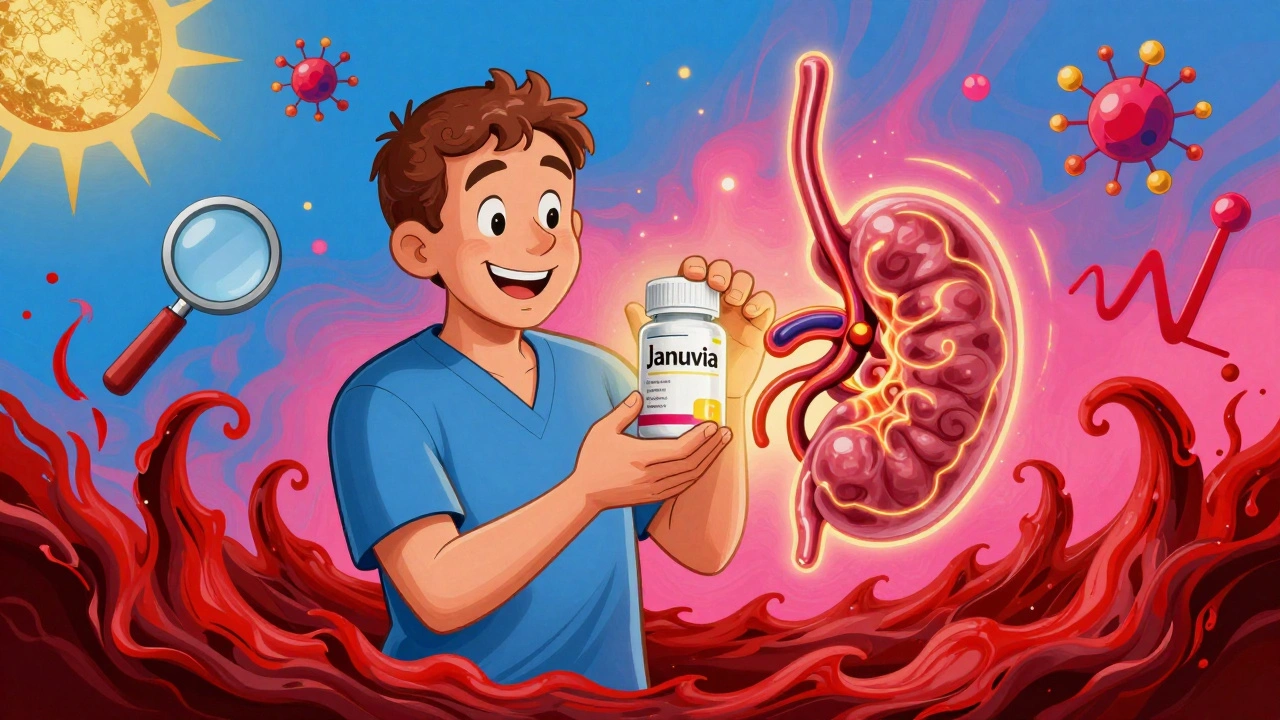
Pancreatitis Risk Assessment Tool
Personal Risk Assessment
This tool helps you understand your potential risk of acute pancreatitis while taking DPP-4 inhibitors like sitagliptin (Januvia), saxagliptin (Onglyza), or linagliptin (Tradjenta). Based on clinical studies showing a 54% increased relative risk and 1 extra case per 834 patients treated for 2.5 years.
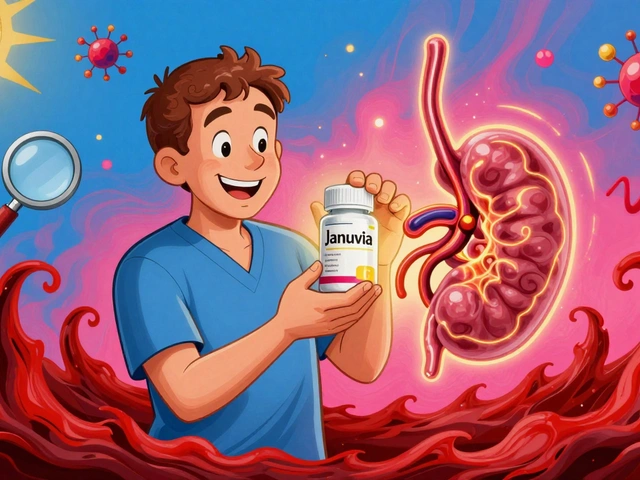
When you're managing type 2 diabetes, finding a medication that lowers blood sugar without causing weight gain or low blood sugar is a big win. That’s why DPP-4 inhibitors - also called gliptins - became so popular. Drugs like sitagliptin (a DPP-4 inhibitor approved in 2006, marketed as Januvia, used to improve glycemic control in adults with type 2 diabetes), saxagliptin (a DPP-4 inhibitor marketed as Onglyza, taken once daily to enhance insulin release after meals), and linagliptin (a DPP-4 inhibitor marketed as Tradjenta, excreted mainly through bile, making it safe for patients with kidney disease) are still prescribed to millions. But behind their convenience and mild side effect profile lies a quiet, serious risk: acute pancreatitis.
Pancreatitis Isn’t Just a Theoretical Risk - It’s Real
Let’s be clear: you won’t get pancreatitis from taking a DPP-4 inhibitor just because you’re on the drug. But your risk goes up. A lot of studies agree on this. One major analysis of nearly 54,000 patients found that those taking DPP-4 inhibitors had a 54% higher chance of developing acute pancreatitis than those on other treatments. Another 2024 study looked at real-world safety reports and found a reporting odds ratio of 13.2 - meaning pancreatitis cases were over 13 times more likely to be reported with these drugs than with others.
That sounds scary. But numbers need context. In absolute terms, that’s about one extra case of pancreatitis for every 834 people treated for two and a half years. For most, that’s a tiny risk. But for someone with a history of gallstones, heavy alcohol use, or high triglycerides? That risk isn’t tiny anymore. The UK’s MHRA confirmed this back in 2012, and the FDA updated labels for all DPP-4 inhibitors shortly after. These aren’t hypothetical warnings. They’re based on real cases.
What Does Pancreatitis Feel Like?
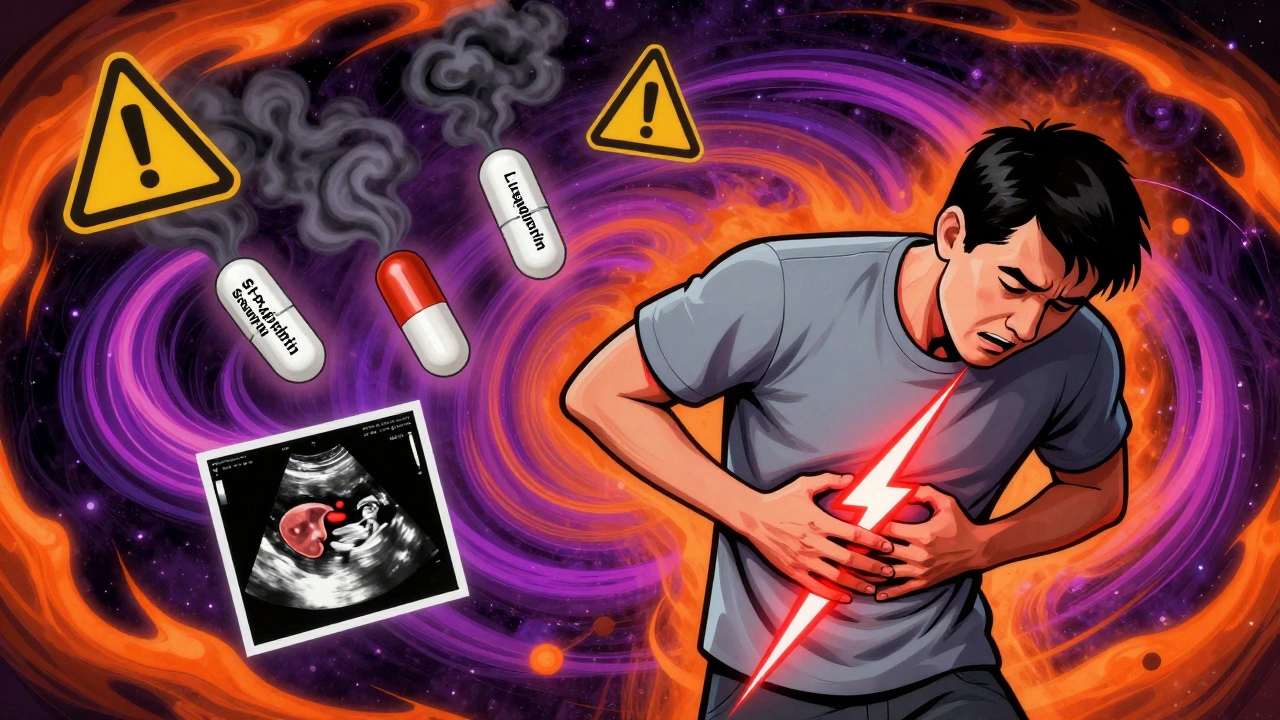
Pancreatitis isn’t a stomachache. It’s not indigestion. It’s a sharp, deep, constant pain in the upper belly that often radiates to your back. It doesn’t go away after eating or taking antacids. It gets worse when you lie flat. Many patients describe it as the worst pain they’ve ever felt - worse than labor, worse than kidney stones. Nausea and vomiting usually come with it. If you’re on a DPP-4 inhibitor and suddenly feel this way, don’t wait. Don’t assume it’s food poisoning. Call your doctor. Get checked.
Doctors don’t diagnose this by guesswork. They check your blood for elevated pancreatic enzymes - amylase and lipase - and often order an ultrasound to look for gallstones or swelling in the pancreas. In many cases, stopping the DPP-4 inhibitor leads to full recovery. But about 18% of reported cases were serious enough to require hospitalization. A few even led to death. That’s why guidelines say: if pancreatitis is suspected, stop the drug immediately.
Why Does This Happen? No One Knows for Sure
Here’s the frustrating part: science doesn’t have a clear answer. Animal studies didn’t reliably show pancreatitis. The drugs don’t directly damage the pancreas. It’s not an allergic reaction. Some researchers think it might be related to how incretin hormones affect pancreatic cells over time. Others wonder if certain people have a genetic vulnerability. One thing’s certain: people with diabetes already have a higher baseline risk of pancreatitis than those without. So is the drug causing it - or just revealing a hidden problem?
The truth is, we still don’t know the exact mechanism. That’s why regulatory agencies can’t say “this drug causes pancreatitis.” They say “this drug is associated with an increased risk.” It’s a subtle but important difference. Still, the data is consistent enough that every major health agency - FDA, EMA, MHRA - agrees: this is a real concern.
How Do DPP-4 Inhibitors Compare to Other Diabetes Drugs?
Not all diabetes medications carry the same risks. SGLT2 inhibitors - like empagliflozin and dapagliflozin - have a lower rate of pancreatitis than DPP-4 inhibitors. GLP-1 receptor agonists - like liraglutide and semaglutide - also carry a pancreatitis risk, but slightly lower than DPP-4 inhibitors. One 2024 study showed the reporting odds ratio for GLP-1 agonists was 9.65, compared to 13.2 for DPP-4 inhibitors.
But here’s the twist: GLP-1 agonists are now preferred for many patients because they also reduce heart disease risk and help with weight loss. DPP-4 inhibitors don’t do that. They’re weight-neutral and don’t cause low blood sugar - which is great - but they also don’t offer extra protection for your heart or kidneys. So while DPP-4 inhibitors are safer than older drugs like rosiglitazone, they’re no longer the top choice for many doctors.
And what about pancreatic cancer? That was a big fear early on. But multiple large studies, including one with over 55,000 patients, found no link between DPP-4 inhibitors and pancreatic cancer. That’s reassuring. The risk is pancreatitis - not cancer.
Who Should Avoid DPP-4 Inhibitors?
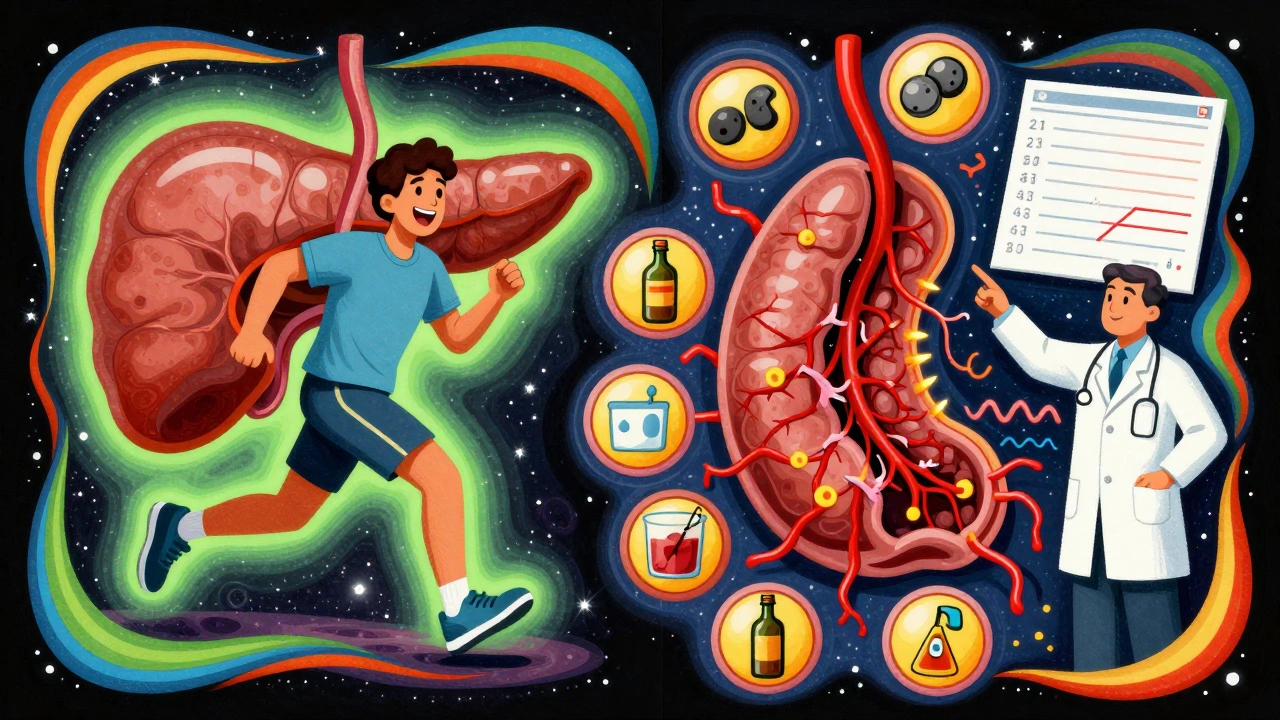
Not everyone needs to avoid them. But if you have any of these, talk to your doctor before starting:
- A history of pancreatitis (even one episode years ago)
- Chronic gallstones or bile duct disease
- High triglycerides (over 500 mg/dL)
- Heavy alcohol use
- Obesity with metabolic syndrome
Even if you don’t have these, your doctor should ask you about abdominal pain before prescribing. And if you’re already on a DPP-4 inhibitor and start having persistent stomach pain - no matter how mild - get it checked. Don’t wait for it to get worse.
What Should You Do If You’re on a DPP-4 Inhibitor?
If you’re currently taking one of these drugs, here’s what matters:
- Know the symptoms: severe, constant belly pain that goes to your back.
- Don’t ignore mild symptoms. A 2017 study in Diabetes Care said even mild gastrointestinal discomfort in someone on a DPP-4 inhibitor should prompt a blood test for amylase and lipase.
- Don’t stop the drug on your own - but don’t wait either. Call your doctor immediately if symptoms appear.
- Ask if switching to an SGLT2 inhibitor or GLP-1 agonist makes sense for you, especially if you have heart or kidney concerns.
Most people on DPP-4 inhibitors never have problems. But for the few who do, the consequences can be life-altering. That’s why awareness matters.
Why Are These Drugs Still Prescribed?
Because for most people, the benefits still outweigh the risks. DPP-4 inhibitors are easy to take - one pill a day. They don’t cause low blood sugar. They don’t make you gain weight. And they don’t harm your heart like some older diabetes drugs did. In 2022, they made up about 15% of all oral diabetes prescriptions in the U.S. Sitagliptin alone was the most prescribed in its class.
The American Diabetes Association still lists them as a recommended option in their 2023 guidelines. But they also say: be cautious. Monitor. Educate patients.
They’re not going away. But they’re no longer the first-line choice for most new patients. That’s changed. Newer drugs offer more benefits. And now we know the cost.
What’s Next?
Researchers are looking for genetic markers that might predict who’s more likely to develop pancreatitis on these drugs. If we can find those markers, we could test patients before prescribing - and avoid the problem entirely. Until then, the best tool is awareness.
Pharmacovigilance systems like the FDA’s Sentinel Initiative and the WHO’s global database keep tracking cases. Real-world data from 1.2 million patients in 2023 confirmed the risk is still there - but low. The absolute increase is about 0.14% higher than other treatments. That’s small. But it’s real.
For now, the message is simple: if you’re on a DPP-4 inhibitor, know the signs. If you’re considering one, talk about your personal risk. Don’t assume it’s safe just because it’s common. And if something feels wrong - don’t brush it off. Pancreatitis doesn’t wait.

December 2, 2025 AT 23:34
Makenzie Keely
Just read this and had to speak up: I’m a pharmacist, and I’ve seen too many patients ignore early signs of pancreatitis because they thought it was just "bad digestion." DPP-4 inhibitors are convenient, yes-but convenience shouldn’t override vigilance. The data is crystal clear: if you have gallstones, high triglycerides, or a history of alcohol use, this isn’t the drug for you. Period. I always run a quick risk assessment before prescribing. If your doctor doesn’t, ask why.
December 4, 2025 AT 10:35
Katherine Gianelli
Wow this hit different I’ve been on sitagliptin for 3 years and last month I had this gnawing pain that just wouldn’t quit I thought it was my burrito but it wasn’t turns out my lipase was through the roof they pulled me off it and I’m on semaglutide now and honestly my blood sugar’s better and I’ve lost 12 pounds I wish someone had warned me sooner
December 5, 2025 AT 12:07
Joykrishna Banerjee
Let’s be honest-this is just another case of regulatory overreach disguised as "patient safety." The absolute risk increase is 0.14%. That’s statistically negligible. Meanwhile, GLP-1 agonists cause nausea in 60% of patients and cost 10x more. The real issue here is pharmaceutical marketing pushing expensive alternatives while demonizing affordable, effective drugs. This isn’t science-it’s profit-driven fearmongering.
December 6, 2025 AT 12:19
Myson Jones
Thank you for writing this with such clarity. As a primary care provider, I appreciate when complex pharmacology is explained in a way that patients can actually use. I’ve started including a one-page handout on pancreatitis symptoms for every patient prescribed a gliptin. It’s not about scaring people-it’s about empowering them. And honestly? The fact that we’re even having this conversation shows how far we’ve come in patient-centered care.
December 8, 2025 AT 10:53
Kidar Saleh
My brother was on saxagliptin. One morning he woke up screaming, doubled over, convinced he was dying. ER. Pancreatitis. He didn’t even know what the word meant. He’s fine now-stopped the drug, cleared his gallstones-but the fear lingers. This isn’t just a medical footnote. It’s a life-altering event that could’ve been avoided with better awareness. Why isn’t this on the pill bottle?
December 10, 2025 AT 09:41
Chloe Madison
Y’all need to stop acting like this is some secret scandal. The FDA flagged this in 2012. The MHRA too. We’ve known. The real problem? Doctors still prescribe these like they’re candy because they’re easy. But easy doesn’t mean safest. If you’re overweight, have high triglycerides, or just love your daily soda-this isn’t your drug. Talk to your doc about SGLT2s. They’re better. Period.
December 10, 2025 AT 13:46
Vincent Soldja
Study says 54% increased risk. But baseline is low. So net increase is minimal. Therefore, not a major concern. End of discussion.
December 12, 2025 AT 05:19
Francine Phillips
I’m on linagliptin. Never had an issue. But I also don’t drink, have no gallstones, and my triglycerides are 110. Maybe the risk only matters if you’re already ticking other boxes? I get the fear, but blanket warnings feel excessive. I’m not scared-I’m informed.
December 13, 2025 AT 13:07
parth pandya
hi i am a med student from india and i read this and i think this is very important i never knew that dpp4 inhibitors could cause pancreatitis i thought they were safe i will tell my seniors about this thanks for sharing
December 14, 2025 AT 06:41
Albert Essel
I appreciate the nuance here. It’s not that DPP-4 inhibitors are dangerous-it’s that they’re not the *best* option for many anymore. We’ve moved past the era of "just lower the glucose." Now we care about heart health, weight, kidney function. This isn’t about fear. It’s about evolution. The fact that we’re even debating this means medicine is getting smarter.
December 14, 2025 AT 08:38
Gavin Boyne
So let me get this straight-we have a drug class that’s been on the market for 18 years, with a tiny but real risk of pancreatitis, and now everyone’s acting like it’s a new opioid crisis? Meanwhile, metformin causes lactic acidosis in 1 in 30,000 and nobody screams. Funny how the drug that doesn’t make you lose weight is the one we’re demonizing. The real villain here isn’t sitagliptin-it’s our obsession with weight loss as a proxy for health.
December 15, 2025 AT 23:43
Rashi Taliyan
My aunt died from pancreatitis after being on Januvia for 11 months. She had no history, no alcohol, no gallstones. The doctors said it was "idiopathic." But I know. I looked up the data. I cried for weeks. If this saves even one person from losing a loved one, then this post matters. Please don’t ignore the pain. Even if it’s "just" discomfort. It’s not normal.
December 17, 2025 AT 23:23
Kara Bysterbusch
As someone who’s been in and out of diabetes clinics for over a decade, I’ve seen the shift firsthand. Ten years ago, DPP-4 inhibitors were the shiny new thing-"no hypoglycemia, no weight gain!" Now? We’re asking, "What else does it do?" And the answer is… not much. Meanwhile, semaglutide gives you weight loss, heart protection, and better A1c. The fact that we’re still prescribing gliptins to people who could benefit so much more from something else? That’s not just outdated-it’s a missed opportunity for real health.
December 18, 2025 AT 09:43
Rashmin Patel
OMG I JUST REALIZED I HAVE ALL THE RISK FACTORS 😱 I have gallstones, my triglycerides are 600, I drink a little (ok, a lot), and I’m obese-yet my doctor still prescribed me linagliptin because "it’s kidney-safe" and I "don’t like injections." But now I’m scared. I’m going to ask for an SGLT2 inhibitor next visit. Also, I’ve been having dull pain after lunch for weeks… should I go to the ER? I don’t want to be that person who "overreacts" but I also don’t want to die. HELP.
December 19, 2025 AT 21:12
sagar bhute
Typical. Another article written by a doctor who’s never had to pay for their own meds. You people act like pancreatitis is some rare horror story. I’ve seen it in the ER-half the patients were on metformin or nothing at all. DPP-4 inhibitors are a drop in the ocean. Stop scaring people to sell more expensive drugs. This is just pharma’s way of pushing GLP-1s. Wake up.