
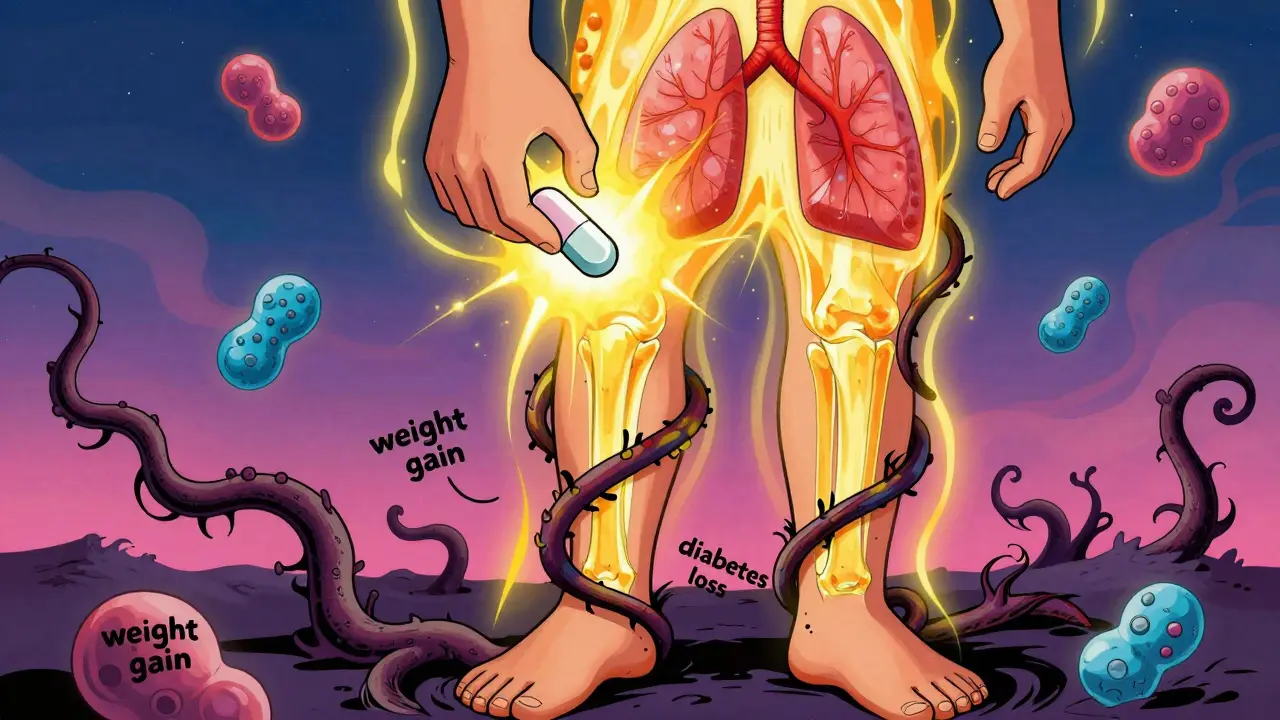
They work fast. Really fast. For many people, a single dose of prednisone turns a debilitating flare-up into something manageable within 48 hours. Joint pain? Gone. Swelling? Reduced. Breathing trouble? Easing. That’s the power of corticosteroids. But here’s the catch: what helps you today might hurt you tomorrow - or next year.
Why Corticosteroids Work So Fast
Corticosteroids, like prednisone and dexamethasone, are synthetic versions of cortisol, the hormone your body makes naturally to handle stress and inflammation. When you’re in crisis - say, a sudden lupus flare or a severe asthma attack - your body can’t produce enough. That’s where these drugs step in. They don’t just calm inflammation; they shut it down. Within hours, immune cells stop attacking your own tissues. Blood vessels stop leaking. Swelling drops. For acute situations, nothing else matches their speed.Compare that to DMARDs or biologics, which can take weeks or months to kick in. In an emergency, corticosteroids are the only tool that can buy you time. A 2021 study in Arthritis & Rheumatology showed corticosteroids cut disease activity scores by 2.1 points in just one week. NSAIDs? 0.7. Placebo? 0.3. The difference isn’t subtle - it’s life-changing.
The Hidden Cost of Quick Relief
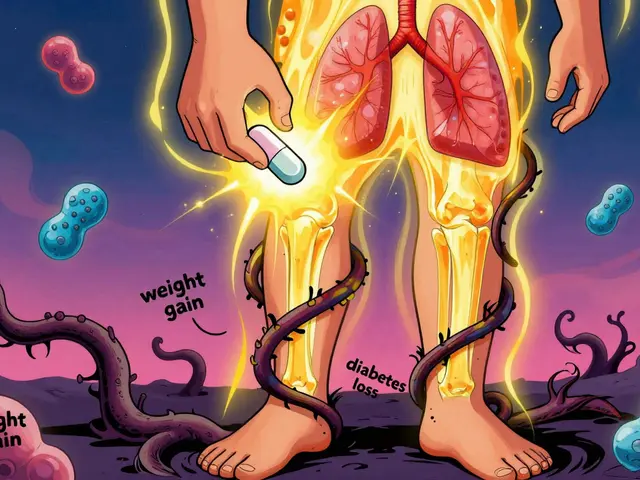
But that speed comes with a price tag you can’t ignore. A 30-day course of oral corticosteroids doesn’t just reduce inflammation - it rewires your body’s balance. Within days, you might notice weight gain, especially around your face and belly. That’s not just water retention. It’s fat redistribution, triggered by how these drugs alter your metabolism.Here’s what the data shows: people taking even short courses (5-30 days) face a 430% higher risk of sepsis, a 230% higher risk of blood clots, and a 90% higher chance of breaking a bone. These aren’t rare side effects. They’re predictable. A 2020 analysis of 1.5 million patient records by the American Academy of Family Physicians found these risks spike within the first month - even if you’re only on the drug for two weeks.
And it’s not just physical. Insomnia hits 63% of users. Mood swings, irritability, even panic attacks - they’re common. One Reddit user wrote: “I felt like a different person. Angry for no reason. Couldn’t sleep. Then I gained 15 pounds in three weeks.” That’s not just anecdotal. The Steroid Recovery Project’s 2023 survey of 1,200 users found 87% gained weight, 63% struggled with sleep, and 41% saw blood sugar levels climb high enough to need diabetes medication.
When Corticosteroids Are Used - and When They’re Not
You’d think doctors only prescribe these drugs when absolutely necessary. But they don’t. In the U.S., 21% of adults get at least one short-term corticosteroid prescription over three years. And nearly half of those prescriptions are for conditions where they offer little to no benefit - like the common cold, sinus infections, or back pain.Dr. Robert Simon of NYU Langone put it bluntly: “The 21% of adults getting steroids for upper respiratory infections? That’s a quality-of-care failure.” The evidence is clear: steroids don’t shorten the duration of a viral cold. They just add risk. Yet they’re still handed out like candy in urgent care clinics.
Where they actually help? Asthma attacks, COPD flares, autoimmune diseases like rheumatoid arthritis or lupus, and severe allergic reactions. For these, the benefit is undeniable. In asthma, steroids cut hospital stays by 1.8 days on average. In COPD, they reduce flare severity by 34%. But even then, guidelines say: five days max. Longer than that, and pneumonia risk jumps 15%.
Long-Term Use: The Silent Damage
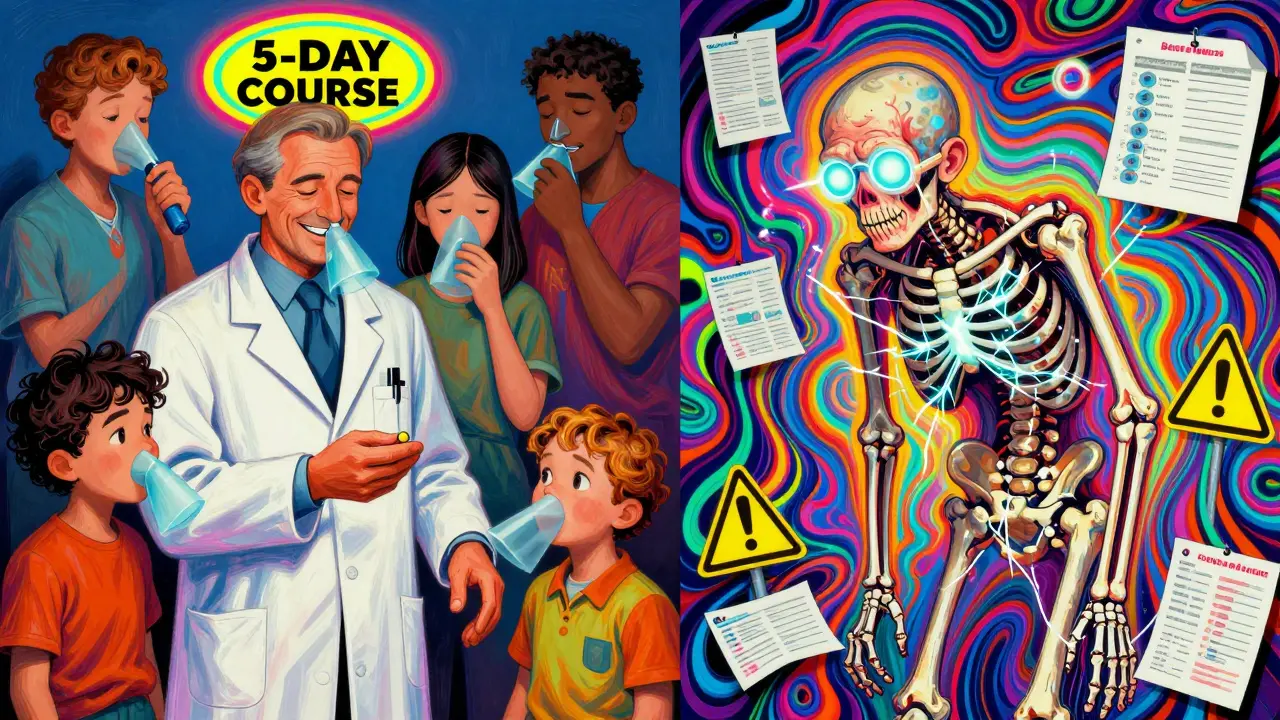
The real danger isn’t the first month. It’s what happens after three, six, twelve months. Bone loss starts within weeks. The first 6-12 months of daily steroid use can strip 3-5% of your bone density per year. That’s faster than menopause. By year two, fractures become common - hips, spine, wrists. And once the bone is gone, it doesn’t come back.Then there’s diabetes. Steroids make your liver pump out more glucose and your cells less responsive to insulin. A 2023 study found 7% of long-term users developed diabetes - even if they had no prior risk. And it often sticks around after stopping the drug.
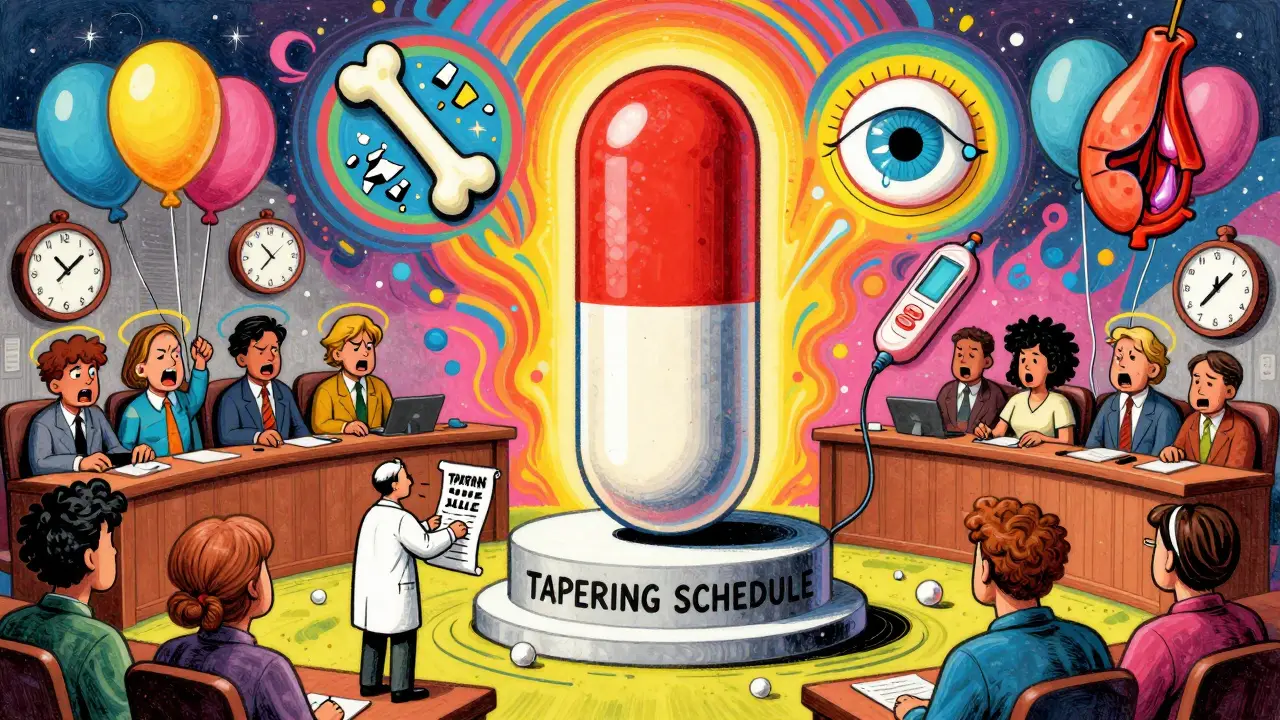
Cataracts? 12% of users on long-term therapy develop them. Muscle weakness? Nearly universal. Skin that bruises at the slightest touch? Routine. And adrenal insufficiency? If you stop suddenly after weeks of use, your body can’t snap back. You could go into shock - low blood pressure, vomiting, collapse. That’s why tapering isn’t optional. It’s life-saving.
What Doctors Should Be Doing - But Often Aren’t
There are clear guidelines. The American College of Rheumatology says: if you’re on more than 7.5mg of prednisone daily for more than three months, you need a DEXA scan for bone density. You need calcium and vitamin D. You need annual zoledronic acid infusions to protect your bones. You need monthly blood sugar checks. You need eye exams every quarter.But here’s the gap: only 42% of primary care providers follow all these steps. That’s not negligence. It’s systemic. Doctors are busy. Monitoring is time-consuming. Patients don’t always show up for follow-ups. So the risks pile up unnoticed.
Some health systems are fixing this. Since January 2024, Medicare Advantage plans require pre-authorization for any steroid course longer than 10 days. Electronic health records now flash warnings when a doctor tries to prescribe steroids for bronchitis or back pain. Early results? A 31% drop in inappropriate prescriptions.
The New Hope: Better Alternatives
The future isn’t just about using steroids less - it’s about replacing them smarter. In December 2023, the FDA approved fosdagrocorat, the first selective glucocorticoid receptor modulator. It works like a steroid to fight inflammation but avoids most of the metabolic damage. In trials, it cut hyperglycemia risk by 63% compared to prednisone at the same anti-inflammatory dose.That’s huge. It means one day, patients might get the relief without the weight gain, the diabetes, the brittle bones. But it’s not a magic bullet. It’s still new. And it’s expensive. For now, the best tool remains the old one - but used with discipline.
What You Should Do If You’re Prescribed Corticosteroids
If your doctor prescribes steroids, ask these questions:- Is this truly necessary? Could this be managed with something safer?
- What’s the shortest possible course? Can we aim for 5-7 days instead of 14?
- Do I need bone protection? Calcium? Vitamin D? A DEXA scan?
- Should I check my blood sugar while on this?
- Will I need to taper off? What happens if I stop suddenly?
And if you’re already on them? Don’t stop cold turkey. Talk to your doctor. Track your weight, your mood, your sleep. Report any vision changes, chest pain, or unusual bruising. The side effects aren’t inevitable - but they’re silent until it’s too late.
The Bottom Line
Corticosteroids are not evil. They’re powerful. Like fire. They save lives when used right. But leave them on too long, and they burn everything down. The goal isn’t to avoid them entirely - it’s to use them like a scalpel, not a sledgehammer. Short course. Low dose. Clear exit plan. Constant monitoring. That’s how you get the relief without the ruin.For millions, these drugs are the difference between hospitalization and home. For others, they’re the start of a slow, invisible decline. The difference? How they’re used.
Are corticosteroids addictive?
Corticosteroids aren’t addictive in the way opioids or benzodiazepines are - they don’t create cravings or euphoria. But your body can become dependent on them. If you take them for more than a couple of weeks, your adrenal glands stop making natural cortisol. Stopping suddenly can cause adrenal crisis - low blood pressure, nausea, fainting. That’s why tapering is mandatory after extended use. It’s not addiction. It’s physiology.
Can I take corticosteroids for a cold or flu?
No. There’s no evidence corticosteroids help with viral infections like colds or flu. They suppress your immune system, which might actually make the infection worse or prolong it. Studies show 47% of short-term steroid prescriptions in the U.S. are for these kinds of conditions - and it’s a major driver of preventable harm. If your doctor suggests steroids for a sinus infection or bronchitis, ask for alternatives.
How long do steroid side effects last?
Some side effects fade after stopping: weight gain, mood swings, and insomnia usually improve within weeks. But others are permanent. Cataracts, osteoporosis, and steroid-induced diabetes can stick around for life. Bone density doesn’t fully recover. Vision changes from cataracts need surgery. That’s why even short courses should be treated with caution - the damage can outlast the relief.
Are steroid injections safer than pills?
Injections - like cortisone shots in a joint - are generally safer because the drug stays localized. Less enters your bloodstream, so fewer systemic side effects. But they’re not risk-free. Repeated injections can damage cartilage and tendons. Also, if you get a shot in your spine or near a major blood vessel, complications can be serious. They’re best for localized problems - a bad knee or shoulder - not whole-body inflammation.
Is there a natural alternative to corticosteroids?
There’s no natural substance that matches the potency of corticosteroids for acute inflammation. Turmeric, omega-3s, and CBD may help with mild, chronic inflammation - but they won’t stop a lupus flare or severe asthma attack. Don’t confuse “natural” with “equivalent.” Using them instead of steroids in a crisis can be dangerous. They’re supplements, not substitutes, for serious conditions.
What’s the safest way to stop taking corticosteroids?
Never stop cold turkey after more than two weeks of use. Your body needs time to restart cortisol production. Tapering means slowly reducing the dose over days or weeks - sometimes months - depending on how long you were on it. For courses longer than 14 days, guidelines say taper over at least 7 days. Your doctor should give you a clear schedule. If you’re unsure, ask for written instructions. Missing a dose or stopping too fast can trigger adrenal crisis.


February 1, 2026 AT 10:27
Kimberly Reker
Okay but let’s be real - I got prescribed prednisone for a bad allergic reaction last year and it was like a miracle. One day I could barely breathe, next day I was walking around like nothing. But then I gained 12 pounds in two weeks and felt like a rage monster. My mom said I sounded like a cartoon villain. I didn’t even know I was that loud.
Still, I’d take it again if I had to. Just… maybe never again.
February 2, 2026 AT 10:36
Sarah Blevins
The data presented in this article is methodologically sound and aligns with current clinical guidelines from the American College of Rheumatology and the American Academy of Family Physicians. The statistical significance of increased sepsis risk (430%) and fracture incidence (90%) in short-term users warrants immediate attention in primary care settings. Further, the underutilization of bone density monitoring (42% compliance) represents a systemic failure in preventive medicine.
February 4, 2026 AT 06:35
Jason Xin
Yeah, I’ve seen this play out in clinic. Doc hands out a 10-day script like it’s a coupon for free coffee. Then three weeks later, the same patient comes back with high blood sugar and can’t walk because their hip hurts. We all know steroids work. But nobody wants to be the guy who says ‘no’ when someone’s gasping for air.
It’s not the drug. It’s the culture.
February 5, 2026 AT 13:13
Carolyn Whitehead
Honestly I think this post is so important and I’m glad someone finally said it out loud
I was on steroids after my lupus flare and I didn’t know what was happening to me until my best friend said ‘you’re not you’ and I started crying because she was right
but also like… I’m alive so I don’t regret it just wish we talked more about the cost
also pls take calcium
February 7, 2026 AT 06:02
Diksha Srivastava
This is so true! I’m from India and here doctors give steroids for everything - even colds. My cousin got a shot for a cough and ended up with diabetes. No one warned her. We need more awareness here too.
But I’m so glad there’s new meds like fosdagrocorat coming. Hope it gets affordable soon!
February 7, 2026 AT 13:00
Sidhanth SY
My uncle’s been on prednisone for 8 years for RA. He’s got cataracts, osteoporosis, and a whole pharmacy of supplements. But he’s still walking. So I get why people keep taking it.
Still, if we had better alternatives, why are we still gambling with bones and blood sugar? It’s like using a chainsaw to cut a piece of paper.
February 9, 2026 AT 12:31
Adarsh Uttral
bro i got steroids for my eczema and i swear i turned into a zombie for a month
no sleep, ate like a bear, cried over tv shows
but my skin looked brand new
idk if it was worth it but i’d do it again
February 11, 2026 AT 00:20
Blair Kelly
Let me just say this: if your doctor is prescribing steroids for a sinus infection, they’re either lazy, overworked, or don’t care. And if you’re letting them do it? You’re complicit.
This isn’t ‘medical care’ - it’s pharmaceutical negligence dressed up as convenience. I’ve seen patients lose their vision, their bones, their sanity - all because someone didn’t want to say ‘try antihistamines first.’
Stop normalizing this. It’s not ‘just a pill.’ It’s a chemical reset button - and you’re not supposed to press it unless your house is on fire.
February 11, 2026 AT 04:38
Katie and Nathan Milburn
While the clinical rationale for corticosteroid use in acute inflammatory conditions is well-documented, the ethical imperative to minimize iatrogenic harm requires systemic intervention. The current paradigm of reactive, rather than proactive, monitoring represents a critical gap in patient safety protocols. Institutional reforms, including mandatory electronic health record alerts and standardized patient education pathways, are not merely advisable - they are non-negotiable.
February 12, 2026 AT 23:29
Darren Gormley
😂😂😂 oh wow another ‘corticosteroids are dangerous’ article. Next you’ll tell me water is bad if you drink too much. Or that fire can burn you. Shocking.
Also, I got a steroid shot for my knee last year. Now I can hike again. So yeah, I’m not crying about the 10 pounds I gained. I’m dancing on my new knee. 🕺💃
Doctors are just trying to help. Not everyone’s a walking lab report.
February 14, 2026 AT 07:35
Mike Rose
why do people make this so complicated? it’s just a pill. if it helps you feel better, take it. if you get fat or tired, oh well. life’s hard.
my bro took it for his back and now he’s got diabetes. he’s mad. i told him ‘bro you got relief, now deal with the side effects.’
stop being dramatic.