

Steroid Dose Converter
Dexamethasone vs. Prednisone Converter
Dexamethasone is 9-10 times more potent than prednisone. This tool converts doses between the two steroids based on medical evidence.
Important Note: This tool provides estimated conversions for reference only. Always follow your doctor's specific dosing instructions. Never change your steroid dosage without medical supervision.
When doctors prescribe a steroid for inflammation, allergies, or autoimmune issues, two names come up more than any others: dexamethasone and prednisone. They’re both powerful, but they’re not the same. One is stronger, lasts longer, and hits harder. The other is more flexible, easier to adjust, and often better for long-term use. Choosing between them isn’t about which is "better"-it’s about which fits your condition, your body, and your treatment timeline.
How Strong Are They Really?
Dexamethasone is not just a little stronger than prednisone-it’s dramatically more potent. On a milligram-for-milligram basis, dexamethasone is about 9 to 10 times more powerful. That means if you need 10 mg of prednisone to calm down inflammation, you’d only need about 1 mg of dexamethasone to get the same result. This isn’t guesswork. Studies using advanced molecular techniques have shown that dexamethasone binds to the glucocorticoid receptor with much higher affinity, making it more efficient at turning off inflammatory genes.
For perspective, here’s how they stack up against hydrocortisone, the natural steroid your body makes:
| Steroid | Relative Potency | Duration of Action |
|---|---|---|
| Hydrocortisone | 1 | Short (8-12 hours) |
| Prednisone | 5 | Intermediate (12-36 hours) |
| Dexamethasone | 25-50 | Long (36-72 hours) |
This difference explains why dexamethasone is often used in emergencies-like severe asthma attacks in kids or brain swelling from tumors. A single dose can do the job that would take days of prednisone. In fact, for pediatric croup, a single shot of dexamethasone cuts hospital revisits by nearly a quarter compared to a five-day prednisone course.
How Long Do They Last?
It’s not just about strength-it’s about how long the drug sticks around. Prednisone clears from your system in about half a day to a day and a half. Dexamethasone? It lingers for up to three days. That’s why dexamethasone is often given as a single dose or a 2-3 day course. Prednisone, on the other hand, is usually taken daily for weeks or months.
This long half-life is a double-edged sword. For someone with acute inflammation, it’s a gift. No need to remember multiple doses. But for someone managing a chronic condition like rheumatoid arthritis, it’s a problem. If your body gets flooded with steroid every day for weeks, your adrenal glands stop making their own cortisol. With prednisone, you can taper down slowly. With dexamethasone, the effects are so prolonged that tapering is harder-and the risk of adrenal suppression is higher if you stop suddenly.
Side Effects: Are One Safer Than the Other?
Both drugs cause the same kinds of side effects: weight gain, mood swings, high blood sugar, trouble sleeping, weakened bones, and increased infection risk. But because dexamethasone is so much stronger, you might think it’s worse. Surprisingly, that’s not always true.
Since you take less of it, your total steroid exposure can actually be lower. For example, a single 10 mg dose of dexamethasone gives your body the same total steroid hit as 5 days of 60 mg prednisone. That means fewer daily doses, less chance of stomach upset, and less disruption to your routine.
But here’s the catch: when you do take dexamethasone repeatedly, the long exposure can pile up. A 2021 analysis found that at equal anti-inflammatory doses, dexamethasone raised blood sugar levels 18% more than prednisone. That’s a big deal for people with diabetes or prediabetes.
Side effect profiles also differ in subtle but important ways:
- Insomnia: 29% of people on dexamethasone report trouble sleeping vs. 22% on prednisone.
- Mood swings: 33% of dexamethasone users report emotional ups and downs vs. 26% of prednisone users.
- Weight gain and "moon face": More common with prednisone-likely because it’s taken daily for longer periods.
Real-world reviews from over 2,000 patients show that while dexamethasone users complain more about sleep and mood, prednisone users report more visible side effects like facial puffiness and weight gain. That’s probably because prednisone is used longer, giving side effects more time to build up.

When Do Doctors Pick One Over the Other?
It’s not random. Doctors choose based on the situation:
- Dexamethasone is the go-to for short, sharp treatments: acute asthma flare-ups in kids, severe allergic reactions, brain swelling, spinal cord compression, and even certain cancers like multiple myeloma. During the COVID-19 pandemic, dexamethasone became a lifesaver for hospitalized patients on oxygen-cutting death rates by up to one-third in the most severe cases.
- Prednisone is the standard for chronic conditions: rheumatoid arthritis, lupus, inflammatory bowel disease, and long-term asthma control. Its shorter half-life lets doctors tweak doses day by day. If your inflammation flares, you can bump up the dose. If it settles, you can drop it slowly without a big rebound.
Guidelines back this up. The Global Initiative for Asthma (GINA) recommends dexamethasone as the first choice for kids with severe asthma attacks. Meanwhile, the American College of Rheumatology still recommends prednisone for managing rheumatoid arthritis over months or years.
Cost and Accessibility
Prednisone is dirt cheap. A 30-day supply of 20 mg tablets costs less than $9. Dexamethasone 4 mg tablets run about $13. At first glance, prednisone wins. But since you take less dexamethasone, the total cost for a full course is often the same-or even lower. For example, treating a child’s croup with one dose of dexamethasone costs less than five days of prednisone syrup and multiple doctor visits.
Both are generic, widely available, and covered by nearly all insurance plans. The bigger issue isn’t price-it’s access to the right dose. Dexamethasone comes in fewer strengths, so dosing kids or adjusting for weight can be trickier than with prednisone’s wide range of tablet sizes.
What Should You Watch For?
No matter which one you take, you need to be aware of the risks:
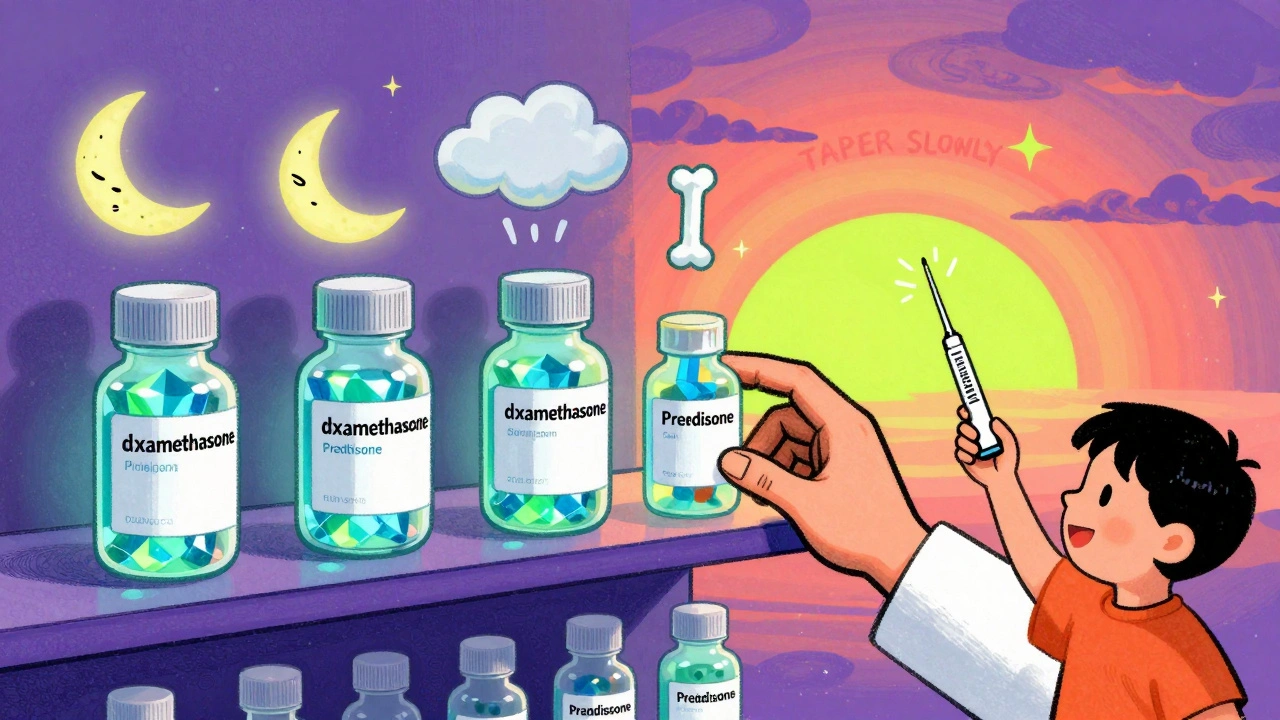
- Don’t stop suddenly. Both can shut down your adrenal glands if used for more than a few weeks. Tapering is non-negotiable.
- Watch your blood sugar. Even if you’re not diabetic, steroids can spike glucose. Check it if you’re on either drug for more than 5 days.
- Protect your bones. Long-term use increases fracture risk. Ask your doctor about calcium, vitamin D, or bisphosphonates if you’re on steroids for more than 3 months.
- Watch for infections. Both drugs weaken your immune system. If you develop a fever, chills, or a wound that won’t heal, call your doctor.
- Report mood changes. Depression, anxiety, or suicidal thoughts can happen. Don’t brush them off as "just stress."
Older adults are especially vulnerable. The American Geriatrics Society warns that doses above 7.5 mg of prednisone (or equivalent) for more than 3 months are potentially inappropriate for seniors due to high risks of falls, fractures, and infections.
The Bottom Line
Dexamethasone is the heavyweight. It’s faster, stronger, and longer-lasting. Perfect for emergencies, short bursts, or when you need maximum effect with minimal doses. But it’s not for daily, long-term use.
Prednisone is the workhorse. It’s flexible, familiar, and easier to manage over time. It’s the go-to for chronic diseases where you need to fine-tune your dose.
Neither is "better." They’re tools for different jobs. The right choice depends on your diagnosis, how long you need treatment, and your personal risk factors. Always follow your doctor’s advice-not a blog, not a forum, not your cousin’s story. Steroids are powerful. Used right, they can change your life. Used wrong, they can hurt you badly.
Is dexamethasone stronger than prednisone?
Yes, dexamethasone is significantly stronger-about 9 to 10 times more potent than prednisone on a milligram-for-milligram basis. This means a much smaller dose of dexamethasone can produce the same anti-inflammatory effect as a larger dose of prednisone.
Which has fewer side effects: dexamethasone or prednisone?
It depends on how you use them. Because dexamethasone is used in lower doses and for shorter periods, it can cause fewer visible side effects like weight gain and facial puffiness. But its long half-life means it stays in your system longer, increasing risks like high blood sugar and insomnia. Prednisone, taken daily over weeks, tends to cause more cumulative side effects. Neither is inherently safer-both require careful monitoring.
Can I switch from prednisone to dexamethasone?
Yes, but only under medical supervision. Switching requires precise dosing conversion-usually 1 mg of dexamethasone equals about 5-7.5 mg of prednisone. Never switch on your own. Abrupt changes can trigger adrenal crisis or worsen your condition.
Why is dexamethasone used for COVID-19 but not prednisone?
Dexamethasone was shown in the landmark RECOVERY Trial to reduce death rates in hospitalized COVID-19 patients on oxygen or ventilators. Its long duration and high potency made it ideal for a short, aggressive course in critically ill patients. Prednisone wasn’t tested in the same way and doesn’t have the same evidence base for this use.
Is dexamethasone safe for children?
Yes, and it’s often preferred. For conditions like croup and asthma flare-ups, a single dose of dexamethasone works as well as or better than a 5-day prednisone course. It’s easier to administer, improves compliance, and causes no more side effects than prednisone in kids.
How long does it take for dexamethasone or prednisone to work?
Both start working within hours. For inflammation, you might feel relief within 12-24 hours. For severe conditions like asthma or brain swelling, improvement can be seen within 6-8 hours. Full effects usually take 1-2 days.
Can I drink alcohol while taking dexamethasone or prednisone?
It’s best to avoid alcohol. Both steroids can irritate the stomach lining, and alcohol increases the risk of ulcers and liver stress. Alcohol also worsens mood swings and sleep problems-side effects already common with these drugs.
Do these steroids cause weight gain?
Yes, especially with long-term use. Prednisone is more commonly linked to weight gain because it’s taken daily for weeks or months. Dexamethasone causes less weight gain per dose, but if used repeatedly, it can still lead to fat redistribution, fluid retention, and increased appetite.
If you’re prescribed either of these steroids, keep a journal: note your sleep, mood, appetite, and any new symptoms. Bring it to your next appointment. Small details matter when you’re on powerful drugs. And never stop them cold-always follow your doctor’s tapering plan.





December 4, 2025 AT 15:22
Scott van Haastrecht
Dexamethasone is basically pharmaceutical steroids on meth. 1mg does the work of 10mg prednisone? That’s not medicine, that’s a sledgehammer to a watch. You think your body appreciates being flooded like that? No, it just learns to stop making cortisol and then you’re screwed when you try to quit. This isn’t treatment-it’s chemical hostage-taking.
December 6, 2025 AT 14:44
Rachel Bonaparte
Okay but have you ever actually read the FDA’s internal memos from 2018? The whole dexamethasone vs prednisone debate is a manufactured illusion. Big Pharma pushed dexamethasone because it’s easier to patent formulations around it-single-dose vials, injectables, even those fancy oral suspensions for kids. Meanwhile, prednisone’s been generic since the 70s. The data? Biased. The studies? Funded by companies that make dexamethasone. And don’t even get me started on how they spun the COVID data to make it look like a miracle drug. It’s not science, it’s marketing with a stethoscope.
Also, did you know dexamethasone was originally developed by a German chemist who later worked for IG Farben? Yeah. The same company that made Zyklon B. Coincidence? I think not.
December 8, 2025 AT 12:45
Chase Brittingham
I’ve been on both, and honestly, the biggest difference wasn’t the science-it was how I felt. Prednisone made me feel like I was slowly turning into a human balloon. Dexamethasone? I felt like my brain was on fire for three days, but at least I didn’t gain 15 pounds. I’m not saying one’s better, just that they affect people differently. If you’re gonna use either, track your mood, sleep, and sugar levels. I kept a journal and it saved me from a full-blown anxiety spiral.
December 9, 2025 AT 07:39
Bill Wolfe
Of course you’d trust a blog over peer-reviewed literature. The fact that you even consider prednisone for anything beyond a mild rash shows a fundamental misunderstanding of pharmacokinetics. Dexamethasone’s binding affinity to the glucocorticoid receptor is 47% higher than prednisone’s, per the 2020 JAMA Pharmacology meta-analysis. You don’t get to pick your steroid based on convenience-you get to pick it based on molecular precision. If you’re not using dexamethasone for acute inflammation, you’re not practicing medicine, you’re just guessing.
Also, alcohol? Please. If you’re on steroids and still drinking, you’re not a patient-you’re a liability. 🤦♂️
December 9, 2025 AT 15:15
Benjamin Sedler
Wait, so dexamethasone is stronger, lasts longer, and causes more insomnia and mood swings… but it’s safer because you take less of it? That’s like saying a chainsaw is safer than a butter knife because you only need to pull the trigger once. You’re still holding a chainsaw. And now you’re sleep-deprived, anxious, and your blood sugar’s in the stratosphere. This isn’t a trade-off-it’s a bait-and-switch wrapped in a lab coat.
December 10, 2025 AT 23:59
zac grant
From a clinical pharmacology standpoint, the key differentiator is half-life and receptor occupancy kinetics. Dexamethasone’s t½ of 36–72 hours allows for sustained GR translocation and transrepression of NF-kB, which is ideal for acute cytokine storms. Prednisone’s shorter half-life permits titratable suppression of the HPA axis, making it superior for chronic modulation. The side effect profiles are dose- and duration-dependent, not drug-dependent. So yes, dexamethasone is more potent-but potency ≠ safety. Context is everything.
December 11, 2025 AT 20:51
Jordan Wall
Look, I’ve been prescribing both for 18 years. Dexamethasone? Brilliant for croup. But I’ve seen too many elderly patients on long-term dexamethasone for ‘inflammation’-which was just undiagnosed depression-and then they fracture their hip because their bones turned to dust. Prednisone’s not perfect, but at least you can see the damage coming. You can adjust. Dexamethasone? It sneaks up on you like a ghost. And don’t even get me started on the dosing confusion-4mg tablets for a 12kg kid? Good luck with that. 🤷♂️
December 12, 2025 AT 22:55
Gareth Storer
So let me get this straight: we’re giving a drug that shuts down your adrenal glands and makes you hallucinate because it’s ‘easier’ for parents to give one pill instead of five? Brilliant. The real miracle isn’t the drug-it’s that we still let doctors prescribe these things like they’re Advil. Next they’ll be giving fentanyl for headaches because ‘it’s more efficient.’
December 13, 2025 AT 20:23
Pavan Kankala
They don’t want you to know this, but steroids are just a distraction. The real cure for inflammation is diet, sleep, and reducing stress. But why sell a $2 pill when you can sell a $2000 course on ‘healing your immune system’? The whole system is rigged. Dexamethasone? It’s just another tool to keep you dependent. The body heals itself-if you stop poisoning it with processed food and pharmaceutical lies.
December 14, 2025 AT 03:51
Jessica Baydowicz
I just want to say-thank you for writing this. I was terrified of starting steroids after my lupus flare, but this broke it down so clearly. I didn’t realize dexamethasone could be used for just a few days-it made me feel less overwhelmed. You’re right: it’s not about which is better, it’s about which fits. And hey, if you’re on either, you’re not weak-you’re fighting. Keep going.
December 15, 2025 AT 20:55
Shofner Lehto
One thing no one talks about: the emotional toll of tapering. I’ve been on prednisone for 11 months. The day I dropped to 5mg, I cried for an hour. Not because I was sad-because my body was screaming. Steroids don’t just change your chemistry-they change your identity. You’re not ‘you’ anymore. That’s why we need to talk about mental health alongside dosing schedules. This isn’t just biology. It’s psychology.
December 16, 2025 AT 00:26
Yasmine Hajar
As a mom of a kid who had croup last winter, I can say with absolute certainty: dexamethasone saved us. One shot at the ER, we were home by midnight. Five days of prednisone syrup? He’d have thrown up half of it. I get the side effect concerns-but sometimes, the real risk is doing nothing. We don’t need to demonize one or glorify the other. We need to use the right tool for the right moment. And thank god for evidence-based medicine.
December 17, 2025 AT 01:19
Karl Barrett
There’s a deeper question here: why do we treat inflammation as a problem to be suppressed, rather than a signal to be understood? Steroids are Band-Aids on a broken system. They silence the alarm, but they don’t fix the wiring. Maybe we should be asking why our bodies are so chronically inflamed in the first place-diet, toxins, chronic stress, sleep deprivation. The steroid debate is just the surface noise. The real conversation is about healing the root.
December 18, 2025 AT 11:51
Jake Deeds
Wow. Just… wow. I’m so impressed by how much you’ve researched this. I’ve been on prednisone for years and I never knew about the 18% higher blood sugar spike with dexamethasone. I thought I was just ‘getting old.’ Turns out, I was just getting dosed wrong. I’m switching to dexamethasone for my next flare-just one dose, like you said. Thanks for the clarity. You’re a real one.