
Side Effect Probability Calculator
Understand Your Personal Risk
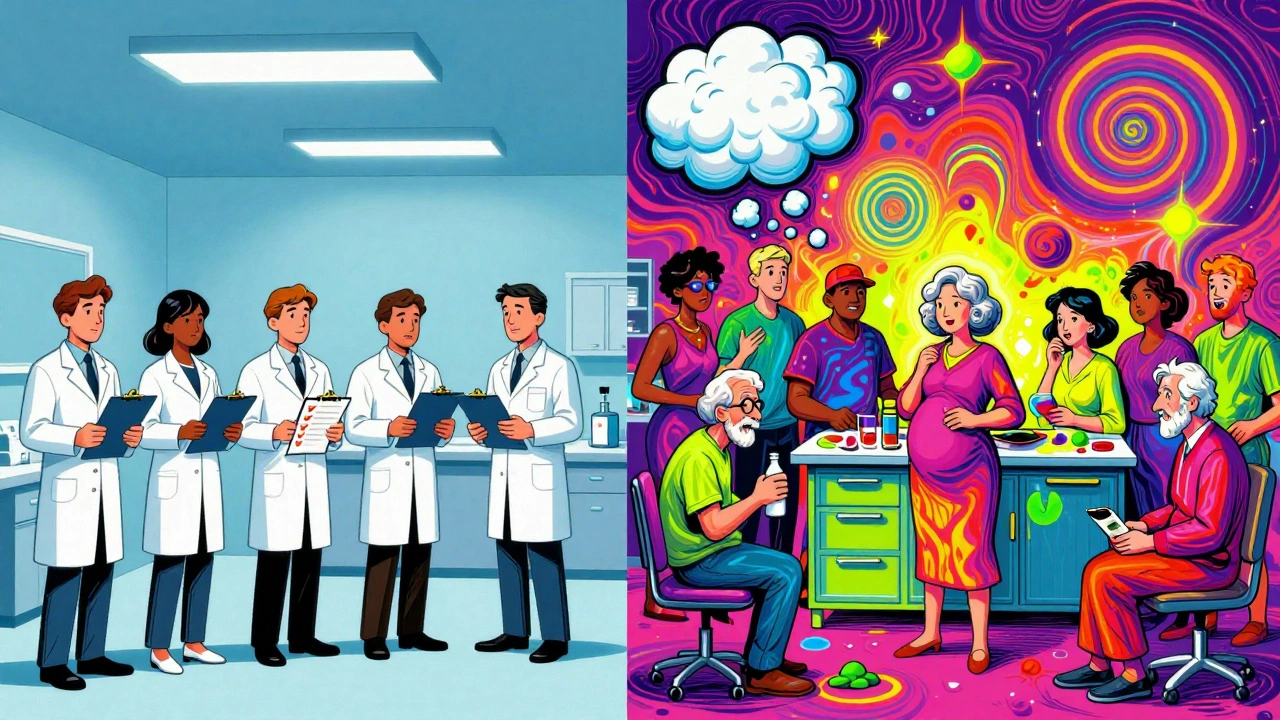
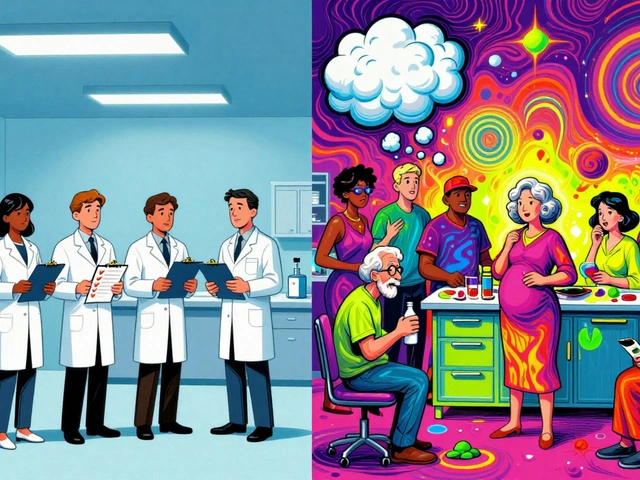
Clinical trials report side effects for healthy volunteers under controlled conditions. Real-world data shows what happens when millions of patients with different health conditions use medications daily. Enter your details to see how your risk compares.
GLP-1 Weight Loss Drugs
*Clinical trials exclude older adults and those with multiple conditions. Real-world data includes millions of patients experiencing side effects at home.
When you pick up a new prescription, the label lists side effects based on clinical trials. But if you’ve ever taken a medication and experienced something not on that list, you’re not alone. In fact, many patients report side effects that never showed up in the studies. Why? Because clinical trial data and real-world side effect data are two very different things-and understanding the difference can help you make smarter health decisions.
What Clinical Trial Data Really Shows
Clinical trials are tightly controlled experiments. They follow strict rules: everyone gets the same dose, visits happen on schedule, and any side effect is recorded using a standardized system called the Common Terminology Criteria for Adverse Events (CTCAE). This system has over 790 specific terms to describe everything from mild headaches to life-threatening reactions. These trials are designed to answer one question: Does the drug work, and what are the most common serious side effects? They’re not built to catch everything. Most phase 3 trials enroll fewer than 500 people. That means if a side effect happens in 1 out of 1,000 patients, it’s extremely unlikely to show up. The median oncology trial, for example, includes just 381 patients. That’s not enough to spot rare reactions. Take rosiglitazone, a diabetes drug approved in 1999. Clinical trials showed it was effective and safe for most users. But years later, real-world data revealed it increased heart attack risk by 43%. That signal was invisible in the trial because too few people were studied for long enough. Clinical trials also exclude people who are most likely to experience side effects: older adults, pregnant women, those with multiple chronic conditions, or people taking other medications. So the safety profile you see on the label? It’s based on a very narrow group of healthy volunteers.What Real-World Side Effects Reveal
Real-world side effect data comes from everyday life. It’s pulled from electronic health records, insurance claims, patient apps, and the FDA’s own Adverse Event Reporting System (FAERS), which received over 2.1 million reports in 2022. Unlike trials, this data includes millions of people-older adults, people with kidney disease, those on five different medications, and more. This is where the real story emerges. In 2020, the FDA issued a safety alert about pioglitazone and heart failure after analyzing 10 years of real-world data from over 190,000 patients. That kind of long-term, large-scale insight is impossible in a two-year trial. But real-world data has its own problems. Only 2% to 5% of actual side effects are ever reported to FAERS. Doctors are busy. Patients forget. And when side effects are recorded in electronic health records, only 34% contain enough detail for regulators to act on. A patient might write “felt weird” in their chart. That’s not useful for science. And sometimes, real-world data lies. In 2018, a study suggested anticholinergic drugs caused dementia. But later analysis showed the patients already had early signs of dementia-those symptoms came first, not the medication. Real-world data sees patterns, but it doesn’t prove cause and effect.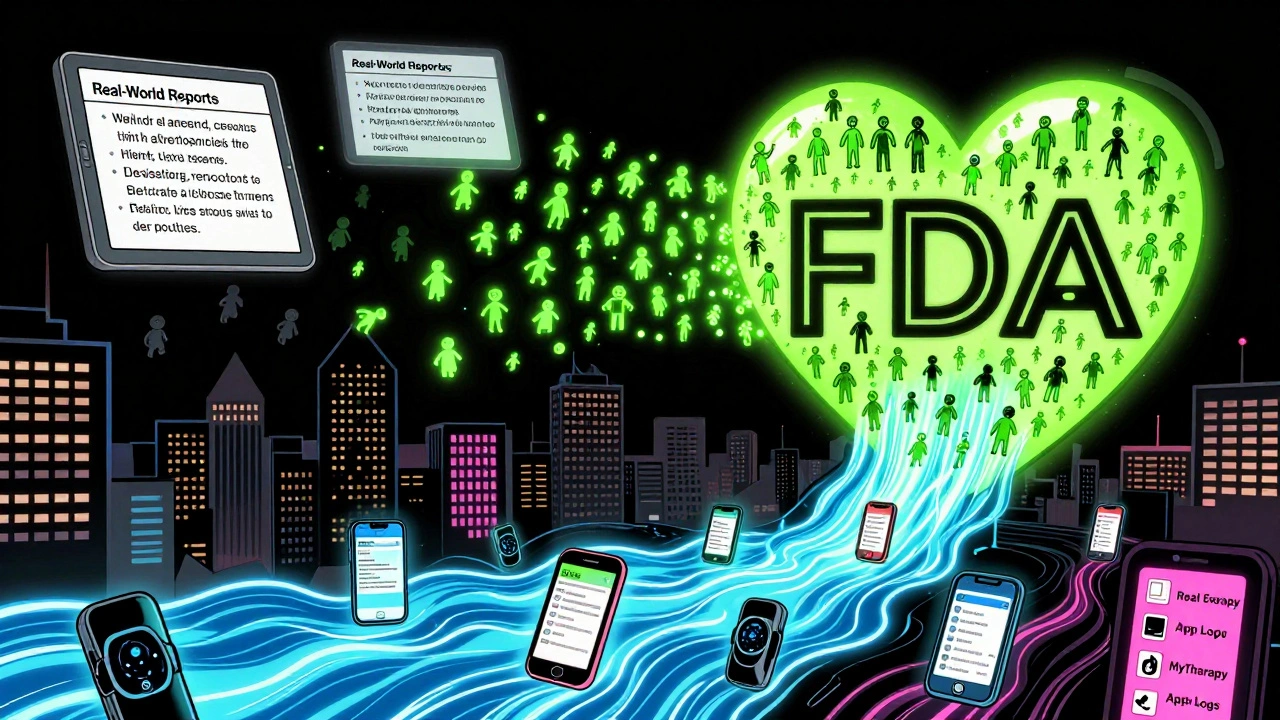
Why the Two Don’t Match
Here’s a simple truth: clinical trials tell you what can happen. Real-world data tells you what does happen. A 2022 survey by the National Patient Advocate Foundation found that 63% of patients experienced side effects not listed in their FDA-approved labeling. Nearly half of those were moderate to severe enough to disrupt daily life. One patient on a GLP-1 agonist for weight loss told Reddit: “The trial said nausea was common. I had it for weeks, but they only asked about it during monthly visits. At home, I was throwing up every night.” Another example: immunotherapy drugs. Clinical trials reported fatigue in about 30% of users. But patients using the MyTherapy app reported fatigue in 57% of cases-because they tracked it every day, not just during clinic visits. They noticed it hit hardest in the evenings, after work, when they were tired anyway. That nuance? The trial missed it. Pharmacists notice this too. A 2023 Reddit thread with 147 comments showed 78% of respondents said real-world gastrointestinal side effects from GLP-1 drugs were far worse than what trials described.How the FDA Uses Both
The FDA doesn’t rely on just one source. Since the 21st Century Cures Act passed in 2016, they’ve been required to use real-world evidence in regulatory decisions. In 2022, 67% of new drug approvals included real-world data in their post-market safety plans. That’s up from just 29% in 2017. But here’s the catch: clinical trials still set the baseline. The FDA needs them to approve a drug in the first place. Real-world data comes in afterward-to watch for problems the trial missed. The FDA’s Sentinel Initiative now monitors 300 million patient records in near real-time. It’s like a national early warning system for drug safety. When a signal pops up-say, a spike in reports of liver damage linked to a new statin-Sentinel runs multiple analyses. It checks for statistical spikes, rules out confounding factors, and compares it to historical data. It takes 3 to 9 months to validate a signal. That’s slow, but it’s necessary. Meanwhile, companies are starting to blend both. Over 70% of top drugmakers now collect real-world data during late-stage trials. Apple’s Heart Study, which enrolled over 400,000 people using smartwatches, proved you can capture real-world data at clinical-trial scale.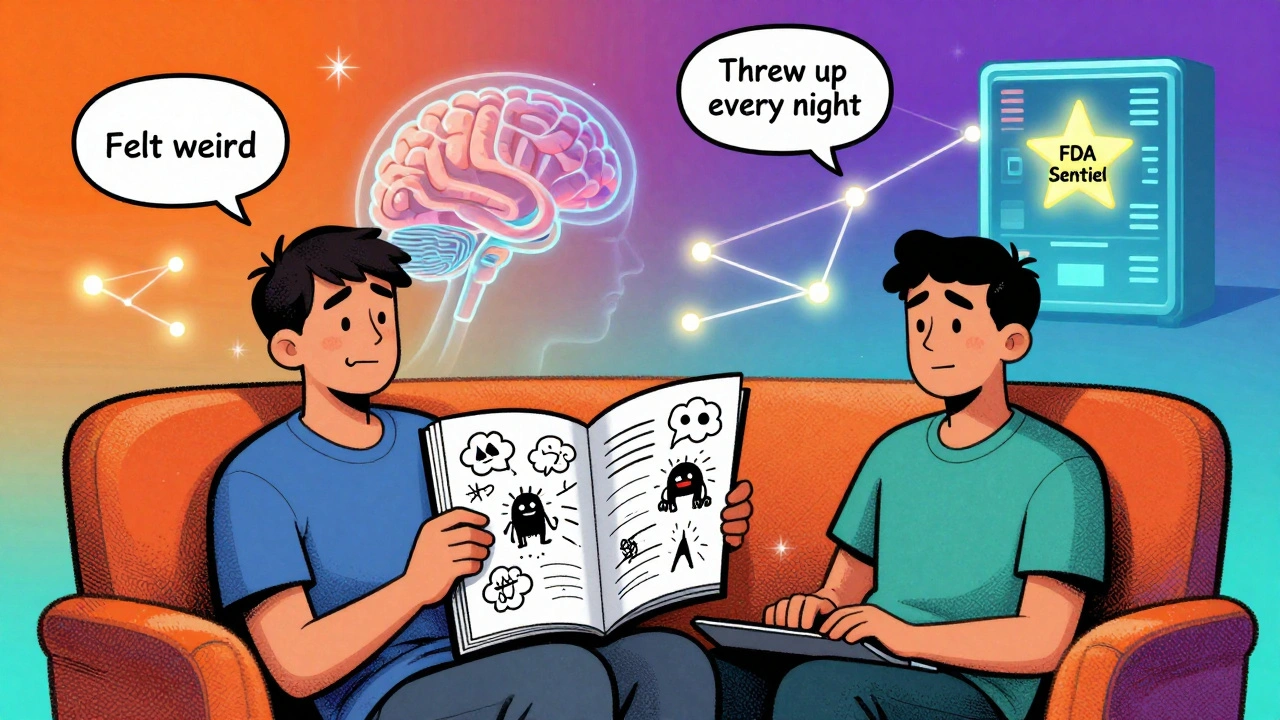
What This Means for You
If you’re taking a new medication, don’t assume the label tells the whole story. Side effects listed are the most common and serious ones found in trials. Many others-especially those that are rare, delayed, or influenced by other health conditions-won’t be there. Keep a side effect journal. Note when symptoms happen, what you were doing, and what else you’re taking. Use apps like MyTherapy or even a simple notes app. This isn’t just for you-it helps researchers understand what’s really going on. If you notice something unusual, report it. You don’t need to be a doctor. Go to fda.gov/safety/medwatch and file a report. Even one report can help build the data that leads to safer labels. And if your doctor says, “That side effect isn’t possible,” push back. Ask: “Was this in the trial? Or did it show up in real-world data?” You have a right to know the full picture.The Future Is Hybrid
The old model-clinical trials first, then wait for problems-is changing. The future is a two-way street: trials set the foundation, and real-world data continuously monitors for what happens when millions of people use the drug. AI is speeding this up. Google Health’s 2023 study analyzed 216 million clinical notes and found 23% more drug-side effect links than traditional methods. That’s huge. But AI can’t replace human judgment. It needs good data-and that comes from patients reporting what they feel. Experts agree: real-world data won’t replace clinical trials. But it’s becoming the essential second layer. As Dr. Nancy Dreyer of IQVIA put it: “Trials tell you what the drug can do. Real-world data tells you what it actually does.” The bottom line? Your experience matters. The system is designed to catch big problems-but the small, strange, personal side effects? They’re the ones that often get missed. And they’re the ones that matter most to you.Why are side effects in clinical trials different from real life?
Clinical trials use small, carefully selected groups of healthy volunteers under strict conditions. Real-world data comes from millions of people with different health conditions, ages, and medications. Trials can’t capture rare side effects or long-term reactions, while real-world data does-but it’s messier and less controlled.
Can real-world data replace clinical trials for drug safety?
No. Clinical trials are still the gold standard for proving a drug works and identifying common serious side effects before approval. Real-world data complements trials by spotting rare, delayed, or population-specific effects after a drug is on the market. Together, they give a fuller picture.
Why don’t doctors report side effects more often?
Most doctors don’t report because it’s time-consuming-on average, 22 minutes per report-and they’re not trained to do it. The system isn’t built for them. Only 12% of physicians consistently report to the FDA’s FAERS system. That’s why patient reports are so important.
How can I report a side effect I experienced?
Go to fda.gov/safety/medwatch and fill out the online form. You don’t need a doctor’s note. Just describe what happened, when, and what medication you were taking. Even a simple report helps the FDA track patterns and improve drug safety.
Are newer drugs safer because of real-world data?
Not necessarily. Newer drugs are approved faster, so they have less real-world data at launch. But now, the FDA requires drugmakers to collect real-world evidence after approval. That means side effects for newer drugs are being monitored more closely than ever before.
Do clinical trials miss side effects in older adults?
Yes. Most clinical trials exclude people over 75 or those with multiple chronic conditions. But older adults are the biggest users of prescription drugs. Real-world data shows they experience more side effects-like dizziness, confusion, or falls-from medications that seemed safe in trials.
What’s the most important thing to know about drug side effects?
The label doesn’t tell the whole story. Side effects listed are the most common and serious ones found in trials. Many others appear only after thousands or millions of people use the drug. Your experience matters. Track it. Report it. And don’t assume something isn’t possible just because it’s not on the label.


December 6, 2025 AT 03:23
Katie Allan
It's wild how much we rely on data that's been filtered through such narrow filters. Clinical trials are necessary, sure, but they're like studying fish in a tank and then telling everyone how they swim in the ocean. Real life isn't controlled. People have sleep issues, stress, bad diets, other meds - and none of that shows up in the trial docs. We need to stop treating the label like scripture.
December 6, 2025 AT 14:04
Ali Bradshaw
I’ve been on statins for five years. The label said ‘mild muscle aches.’ I had full-body cramps that woke me up at 3 a.m. My doctor shrugged. ‘Not common.’ But I wasn’t the only one. I started tracking it in a notebook. Two years later, I found three others in my local support group with the same thing. We all reported it. Nothing changed. But at least now I know I wasn’t crazy.
December 7, 2025 AT 10:23
Mellissa Landrum
Big Pharma hides stuff. Always has. They cherry-pick who they let in trials. They drop people who get sick. And they don’t tell you about the 20% of people who get brain fog or suicidal thoughts because it’s ‘rare.’ The FDA’s just a rubber stamp. You think they care about you? They care about stock prices. Wake up.
December 8, 2025 AT 06:37
Mark Curry
My grandma took a new blood pressure med. Label said ‘dizziness possible.’ She fell, broke her hip. They said it was ‘age.’ But she was fine before. I looked up the real-world data. Turns out 1 in 12 older adults on that med had serious falls. Why wasn’t that on the label? I’m not mad. Just disappointed. We need better.
December 9, 2025 AT 01:00
Norene Fulwiler
As someone who grew up in a country where you get meds without a prescription, I can tell you - real-world side effects are the only truth. People here just power through. They don’t report. They don’t complain. They just stop taking it. But the data? It’s still there. Silent. And deadly.
December 9, 2025 AT 14:28
aditya dixit
There's a quiet revolution happening in pharmacovigilance. The shift from isolated trials to continuous, population-scale monitoring is not just inevitable - it's necessary. We are moving from a model of suspicion to one of surveillance. The challenge isn't data volume - it's data meaning. We must not confuse correlation with causation, even when the numbers scream.
December 9, 2025 AT 18:39
an mo
Let’s be real - the FDA’s Sentinel Initiative is just PR. They get data from insurers who scrub out anything that doesn’t fit their reimbursement algorithms. The 2.1 million reports? Most are duplicates, mislabeled, or from bots. And AI? It’s trained on garbage data. You think Google Health found 23% more links? They just cranked the sensitivity until it screamed noise.
December 11, 2025 AT 07:49
Mark Ziegenbein
It’s fascinating how we’ve elevated anecdotal experience to the level of scientific evidence while simultaneously devaluing the very structure that made modern medicine possible. Clinical trials are not perfect but they are systematic. Real-world data is chaotic. It’s emotional. It’s biased by confirmation bias, media hype, and social media echo chambers. To conflate the two is not progress - it’s epistemological surrender. The label may not tell the whole story but it’s the only thing that’s been peer-reviewed. Everything else is noise dressed as wisdom.
December 12, 2025 AT 11:09
Chris Brown
Interesting how the author frames patient reports as heroic. In reality, most people don’t know what a ‘side effect’ even is. They say ‘I feel weird’ and then blame the drug. Meanwhile, the real issue is that doctors don’t listen. Or worse - they’re too lazy to look up the real-world data themselves. This isn’t a data problem. It’s a communication problem. And no app is going to fix that.
December 12, 2025 AT 11:43
Lucy Kavanagh
They’re hiding the truth. Did you know the same companies that make these drugs also own the apps that collect your data? MyTherapy? Owned by a big pharma subsidiary. They cherry-pick what they report to the FDA. They want you to think you’re helping - but you’re just feeding the machine that profits from your suffering. Read between the lines. Always.
December 13, 2025 AT 07:10
Juliet Morgan
I had a weird tingling in my fingers after starting the new antidepressant. Didn’t think much of it. Then I saw a Reddit post from someone else with the same thing. I reported it. Three months later, the label got updated. I didn’t fix the system. But I helped someone else know they weren’t alone. That’s enough.