
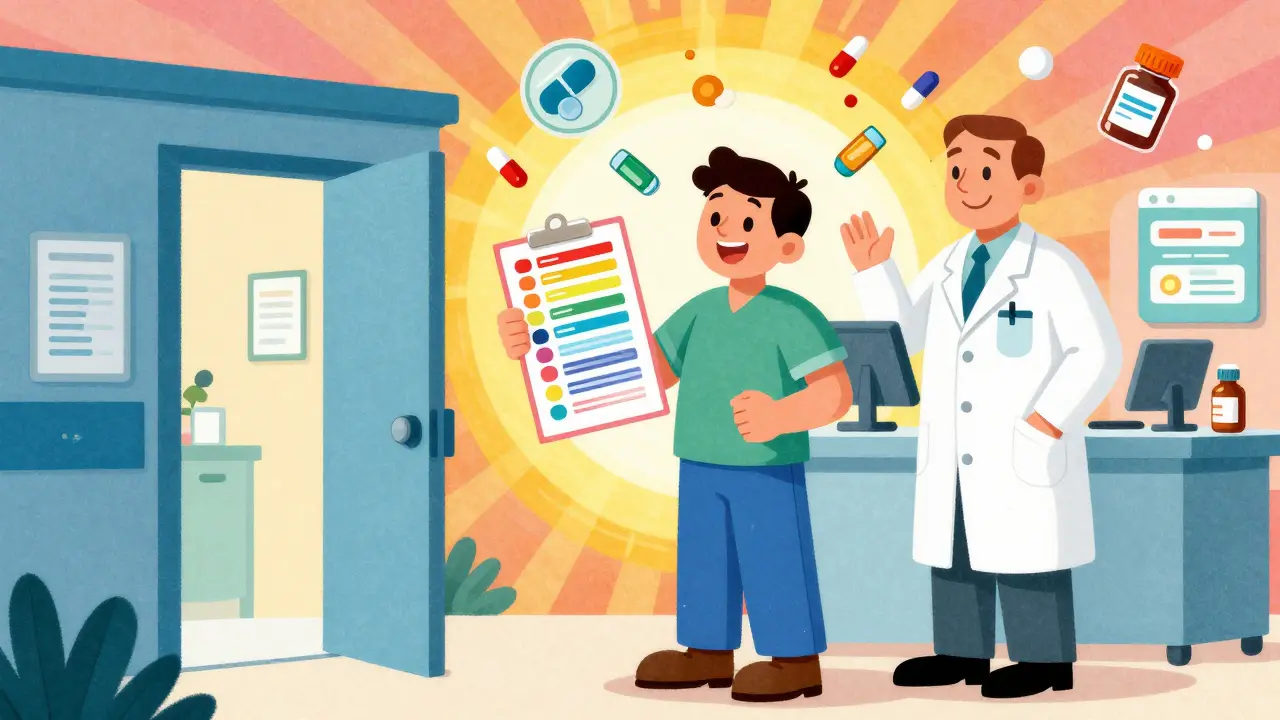
When you leave the hospital, your medication list can change-sometimes dramatically. A blood thinner might be stopped. A new painkiller is added. Your diabetes pill gets a higher dose. But if no one checks whether those changes actually match what you’re taking at home, you’re at risk. About one in three patients experience a medication error in the first 30 days after discharge. Many of these errors are preventable. The key? Coordinating your medication plan with your doctor or pharmacist after you leave the hospital.
Why Medication Reconciliation Matters
Medication reconciliation isn’t just paperwork. It’s a safety check. It means comparing your current home medications with what was prescribed at discharge. The goal? To catch mistakes before they hurt you.Here’s how common it is: studies show 30% to 70% of patients have at least one mismatch between what they were taking before hospitalization and what they’re told to take after. These mismatches cause about 18% to 50% of all medication errors after discharge. That’s not a small risk. It’s a major one.
Think about it: you might’ve been taken off your blood pressure pill during your hospital stay because your numbers were low. But when you get home, no one tells you to start it back up. Or maybe you were given a new antibiotic, but your pharmacist didn’t know you’re already on a blood thinner-and together, they can cause dangerous bleeding.
The Centers for Medicare & Medicaid Services (CMS) tracks this as a quality measure called NQF 0097. Hospitals and doctors are measured on whether they reconcile medications within 30 days of discharge. Why? Because medication errors lead to 6.5% of all hospital readmissions. That’s over 21 billion dollars a year in avoidable costs.
What Happens During Medication Reconciliation
Reconciliation isn’t just about listing pills. It’s about understanding what you’re actually taking-and why.Here’s what a full reconciliation includes:
- All prescription medications
- Over-the-counter drugs (like ibuprofen or antacids)
- Vitamins and supplements (even fish oil or melatonin)
- Topical creams, eye drops, inhalers
- Herbal remedies and alternative treatments
The process requires comparing three lists:
- Your home medication list (what you were taking before admission)
- Your discharge medication list (what you’re supposed to take now)
- Your current medication list (what you’re actually taking after discharge)
If these don’t match, someone needs to fix it. Maybe a pill was accidentally left off. Maybe a dose was changed without clear instructions. Maybe you stopped taking something because you felt better-and no one knew.
According to the American Society of Health-System Pharmacists (ASHP), reconciliation must happen in writing and be clearly documented in your outpatient medical record. It’s not enough for a nurse to say, “I talked to them.” It has to be written down.
Who Should Do It? The Role of Pharmacists
You might assume your doctor handles this. But research shows the best results come from pharmacists.A 2023 study in the Journal of the American College of Clinical Pharmacy found that when pharmacists led reconciliation, medication discrepancies dropped by 32.7%. Hospital readmissions fell by 28.3%. That’s not a small improvement-it’s life-changing.
Why pharmacists? They’re trained to spot drug interactions, dosing errors, and adherence issues. They know which medications are commonly missed or misused. And they can spend the time needed to ask the right questions: “Are you taking this pill every day?” “Did you fill the prescription?” “Did you stop the old one?”
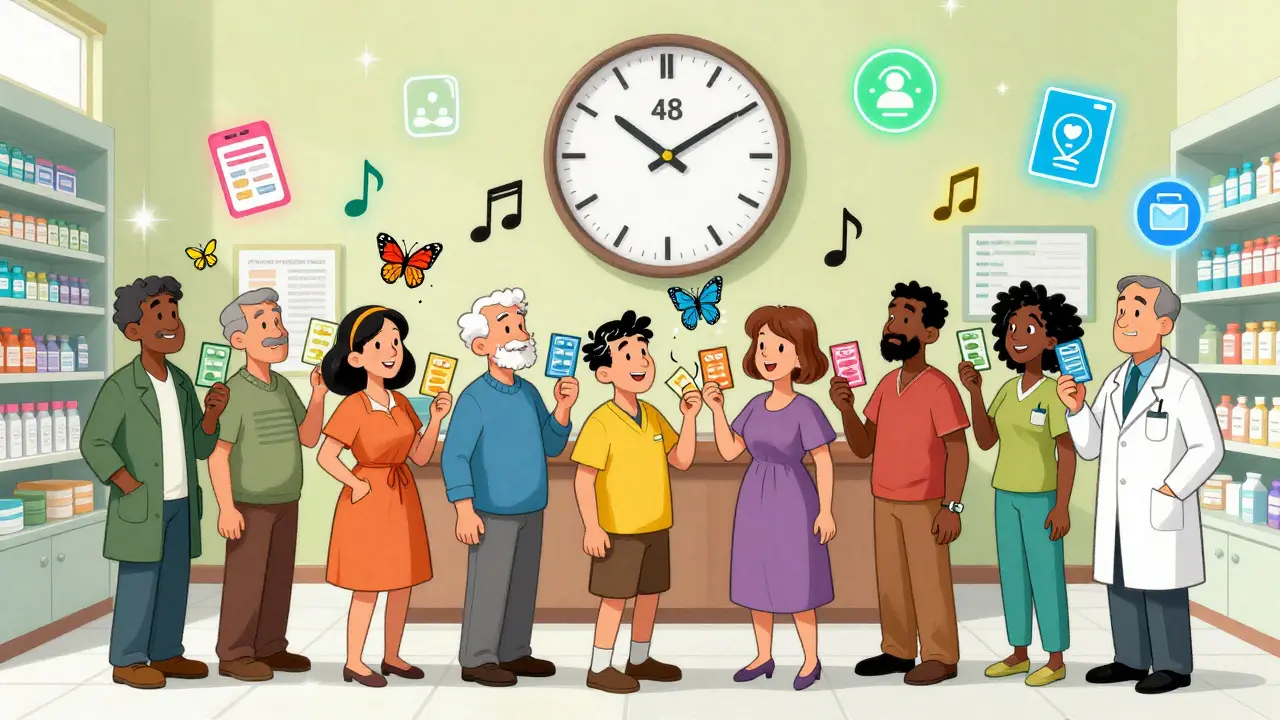
Many top-performing hospitals now embed pharmacists in discharge teams. These pharmacists review your medications before you leave, explain changes in plain language, and follow up within 48 hours. Some even call you on day 3 or day 7 after discharge to make sure you’ve picked up your prescriptions and aren’t having side effects.
One model called PipelineRx combines EHR data, pharmacy fill records, and direct patient calls to build a complete picture. Their method increases accuracy by 41% compared to standard provider documentation.
How to Prepare Before You Leave the Hospital
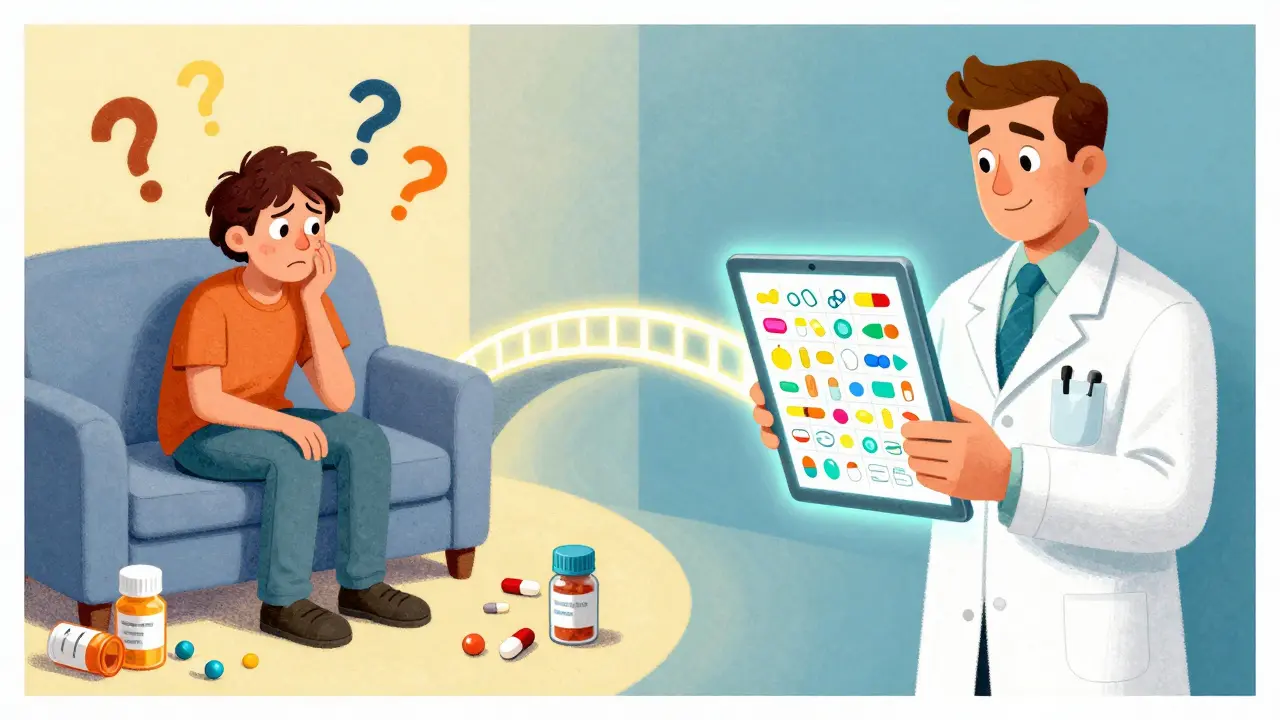
Don’t wait for someone else to fix this. Be your own advocate.Before discharge, do this:
- Bring a current list of everything you take-at home, in your purse, on your phone. Include names, doses, and how often you take them.
- Ask: “What’s changed since I got here?” Write down every new, stopped, or changed medication.
- Ask: “Why was this changed?” Don’t accept “We just did it” as an answer. You need to know the reason.
- Ask: “What should I do if I feel worse?” Get clear instructions on warning signs.
- Ask for a written discharge summary with your updated medication list. Don’t leave without it.
Many patients don’t realize they’re entitled to this. If you’re not given a list, ask again. If you’re told, “We’ll send it to your doctor,” ask: “Can I get a copy for myself?”
What Happens After You Get Home
Leaving the hospital doesn’t mean the job is done. The next 30 days are critical.Here’s what you should do:
- Within 7 days, schedule a follow-up with your primary care doctor or pharmacist. If you don’t have a PCP, go to a community pharmacy that offers medication reviews.
- Take your written discharge list and your home list to the appointment.
- Ask the provider: “Do these match? Are any of these new? Are any missing?”
- If you haven’t filled a new prescription, tell them why. Was it too expensive? Did you forget? Did you think you didn’t need it?
- Ask if any medications can be simplified. For example, can two pills a day become one?
Many people stop taking medications because they don’t understand them. Or they’re afraid of side effects. Or they think the doctor will notice if they’re not taking it. That’s dangerous. Your provider needs to know what you’re doing-so they can help you.
Common Pitfalls and How to Avoid Them
Even with good intentions, mistakes happen. Here are the most common ones-and how to stop them:- Assuming the hospital told your doctor: Hospitals don’t always send records on time. Don’t assume. Follow up.
- Not checking refill dates: If you were given a 30-day supply, but your next appointment is in 45 days, you’ll run out. Ask for a bridge prescription.
- Ignoring OTC meds: People forget to mention aspirin, antacids, or herbal teas. These can interact with prescriptions.
- Thinking “I’ll remember”: Memory fails. Write it down. Use a pill organizer. Set phone alarms.
- Waiting for the doctor to call: Most doctors won’t. You need to initiate the conversation.
One patient in Charleston stopped his blood thinner after discharge because he felt fine. He didn’t tell his doctor. Two weeks later, he had a stroke. He survived-but barely. His reconciliation didn’t happen because no one asked.
Technology and Tools That Help
You don’t have to do this alone. Tools exist to make it easier:- Medication apps: MyTherapy, Medisafe, or even your phone’s Notes app can track what you take and when.
- Electronic health records: Many clinics now have portals where you can view your updated medication list online.
- AI alerts: Some EHRs now flag potential conflicts automatically-like if a new drug interacts with one you’re already on.
- Telehealth reconciliation: Some providers now offer phone or video visits just to review meds. Ask if this is available.
Top-performing hospitals use automated alerts to notify providers when a patient hasn’t had a reconciliation within 30 days. If your provider doesn’t have this system, ask why-and suggest they implement one.
What If You’re Still Confused?
You’re not alone. Medication plans can be overwhelming. Here’s what to do:- Ask for a medication therapy management (MTM) session. Medicare and many private plans cover this for patients on multiple medications.
- Visit a community pharmacy with a clinical pharmacist. Many offer free med reviews.
- Bring a family member or friend to your appointment. Two sets of ears are better than one.
- If you’re still unsure, call your hospital’s discharge coordinator. They can help connect you to resources.
Don’t guess. Don’t assume. Don’t wait. If you don’t understand a medication, ask again. Until you do.
What if my doctor didn’t reconcile my medications after discharge?
If your doctor didn’t reconcile your medications, don’t wait. Schedule a visit with your pharmacist or primary care provider. Bring your discharge summary and your home medication list. Ask them to compare the two. You have the right to a full medication review within 30 days of discharge. If your provider refuses or delays, contact your health plan’s patient advocate. Many insurance plans now require this service as part of their quality standards.
Can I get reimbursed for a post-discharge medication review?
Yes-if it’s done as a Transitions of Care (TRC) visit. CPT codes 99495 and 99496 cover these services and are billable to Medicare and many private insurers. But only one provider can bill per discharge. Typically, your primary care doctor handles it. If you see a specialist, they can’t bill for the same event. Some pharmacies and community health centers offer free or low-cost reconciliation services, even if they can’t bill insurance. Ask.
How do I know if a new medication is safe with what I’m already taking?
Always ask your pharmacist. They have access to drug interaction databases that most doctors don’t use in real time. Tell them everything you take-including supplements and OTC drugs. If you’re unsure, use a free online tool like Medscape’s Drug Interaction Checker, but never rely on it alone. Always confirm with a professional.
Why do hospitals stop some of my medications during my stay?
Hospitals often pause certain meds for safety. For example, blood thinners may be stopped before surgery. Diabetes drugs may be held if you’re not eating. But if they’re not restarted properly after discharge, it’s a mistake. Always ask: “Will I need to restart this? When? How?” Write it down.
What if I can’t afford my new prescriptions?
Don’t skip doses because of cost. Tell your doctor or pharmacist immediately. Many drug manufacturers offer free or low-cost programs. Pharmacies often have $4 generic lists. Some community clinics provide medications at no cost. You can also call 211 for local resources. Skipping meds is more dangerous-and more expensive-than finding help.
Next Steps for Patients and Providers
If you’re a patient: make your next appointment about your medications. Not your symptoms. Not your checkup. Your pills.If you’re a provider: implement a standardized reconciliation process. Use the ASHP MATCH Toolkit. Embed pharmacists in discharge teams. Train staff to ask: “Did you fill the prescriptions?” and “Are you taking them as directed?”
Medication reconciliation isn’t optional. It’s the difference between going home to recover-and going back to the hospital because something went wrong. It’s simple. It’s urgent. And it’s within your control.





January 5, 2026 AT 15:18
Charlotte N
So many people don't realize how easy it is to mess up meds after leaving the hospital... I had a cousin who stopped her blood thinner because she felt fine and ended up in the ER with a clot... no one ever asked her if she filled the script
January 5, 2026 AT 22:17
saurabh singh
Bro this is so real in India too... my aunt got discharged with 7 new pills and no one explained what any of them did... she started mixing them with her ayurvedic herbs and ended up in another hospital... pharmacists here are heroes if they even take 5 minutes to talk to you
January 7, 2026 AT 17:56
Allen Ye
The systemic failure here isn't just about paperwork-it's about the commodification of care. Hospitals are incentivized to discharge patients quickly, not to ensure continuity. The fact that reconciliation is tracked as a quality metric rather than a fundamental human right speaks volumes about how we've reduced medicine to a series of checkboxes. The pharmacist-led model works because it restores agency to the person who knows the most about the drugs-the ones who spend their lives studying interactions, bioavailability, adherence patterns, and patient psychology. Yet they're still treated as glorified pill dispensers in most institutions. We need to restructure reimbursement to reward time spent with patients, not volume of procedures performed.
January 9, 2026 AT 14:17
Shanna Sung
They're lying about the 30% error rate. It's way higher. They don't want you to know that hospitals deliberately drop meds to avoid liability-if you have a reaction, they say you were already on it. But if you die from something they didn't document? That's not their fault. I know someone who died after they stopped his anticoagulant and never told him. The paperwork said he was off it. He wasn't. They just erased it from the system
January 11, 2026 AT 01:40
melissa cucic
There’s a deeper philosophical question here: if a patient’s medication list is changed, but no one communicates it clearly, does the change even exist? The entire system operates on the assumption that information transfer is equivalent to understanding, but we know from cognitive science that comprehension requires active engagement-not passive receipt of a printed sheet. The fact that we rely on patients to self-advocate in a state of post-hospital disorientation reveals a profound moral failure in our healthcare design. We don’t just need reconciliation-we need epistemic justice.
January 12, 2026 AT 02:51
Jack Wernet
As someone who works in public health outreach, I’ve seen firsthand how language barriers and health literacy gaps compound this issue. A printed discharge summary in English means nothing to a non-native speaker who’s also elderly and stressed. We’ve started training community health workers to do home visits within 48 hours to walk through med lists with families using visual aids. It’s not perfect, but it cuts readmissions by nearly half in our region. Everyone deserves clarity, not just those who can navigate bureaucracy.
January 13, 2026 AT 14:02
mark etang
It is imperative that healthcare institutions prioritize the implementation of standardized, evidence-based medication reconciliation protocols as a non-negotiable component of transitional care. The data is unequivocal: pharmacist-led interventions significantly reduce adverse drug events and hospital readmissions. Institutions that fail to embed clinical pharmacists within discharge teams are not merely lagging behind best practices-they are endangering lives. This is not a suggestion. It is a professional and ethical obligation.
January 13, 2026 AT 17:27
jigisha Patel
Let’s be honest-most of these ‘reconciliation’ efforts are performative. The EHR auto-populates the discharge list from the admission list. The pharmacist doesn’t even talk to the patient. They just check a box. I’ve worked in three hospitals. Every single one. The system is designed to look like it’s working, not to actually work. And the 41% improvement from PipelineRx? That’s because they actually call patients. The rest? Paper theater.
January 13, 2026 AT 19:26
Jason Stafford
They’re hiding something. Why do hospitals only reconcile meds within 30 days? Because after that, if you die from a drug interaction, it’s not their problem anymore. They know most people won’t follow up. They know insurance won’t pay for it. They know the system is broken-and they’re banking on your silence. This isn’t negligence. It’s a business model. And if you think your doctor’s going to fix it? They’re too busy filling out forms to save your life.