
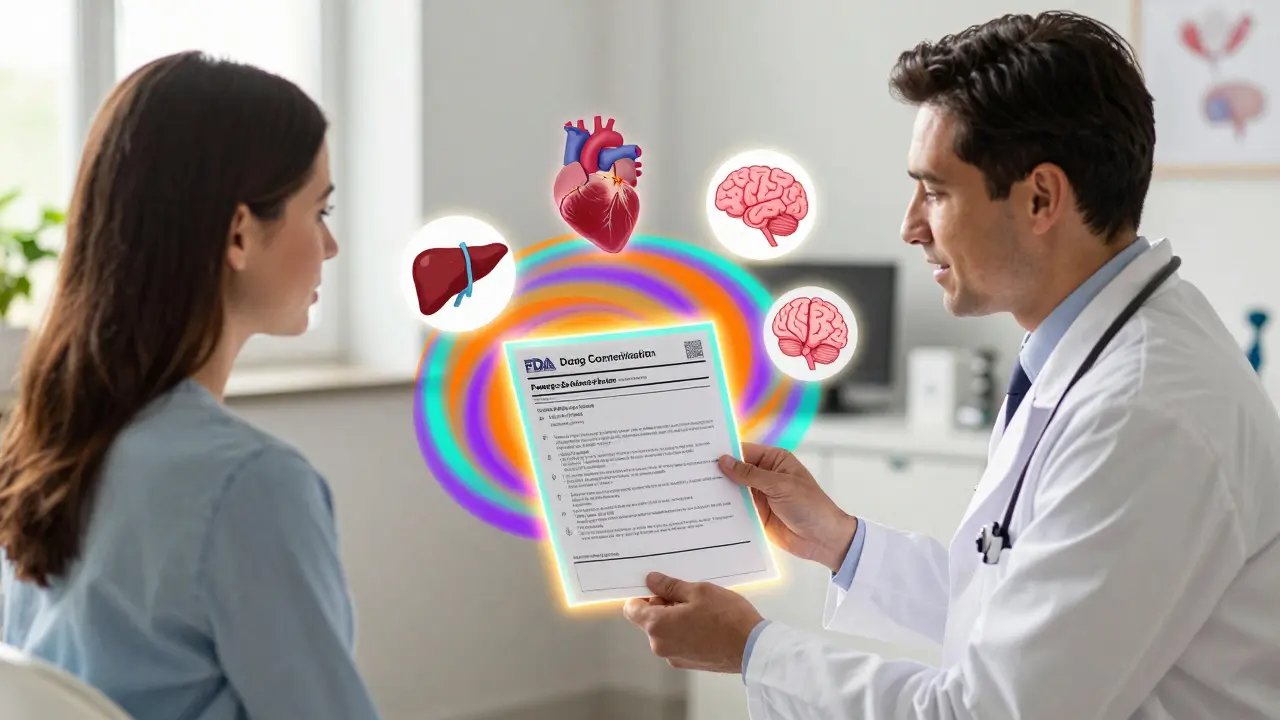
When you hear about a new drug safety alert, it’s natural to feel worried. Maybe you saw a headline about your medication being linked to a rare heart problem, or your friend shared a social media post saying the drug could cause liver damage. You want to talk to your doctor - but how do you bring it up without sounding alarmist or wasting their time?
The truth is, most doctors appreciate when patients come prepared. You’re not challenging their expertise. You’re helping them make better decisions. The U.S. Food and Drug Administration (FDA) issues these alerts for a reason: drugs that were once thought to be safe can develop new risks after thousands of people start using them. That’s why your doctor needs to know what you’ve seen - if you bring it up the right way.
What Exactly Is a Drug Safety Alert?
A drug safety alert is an official notice from the FDA, usually posted on their Drug Safety Communications page. These aren’t rumors. They’re based on real data collected from doctors, patients, hospitals, and drug manufacturers. The FDA tracks over 1.2 million adverse event reports every year through its MedWatch system. That’s how they spot patterns - like a sudden spike in kidney injuries linked to a specific blood pressure drug, or an unexpected increase in seizures among patients taking a new antidepressant.
These alerts don’t mean you should stop your medication. They mean: Here’s something new we’ve learned. Let’s talk about whether it applies to you. For example, in May 2023, the FDA updated warnings for ADHD stimulants, saying they could raise the risk of addiction and overdose in some people. In July 2025, they required opioid manufacturers to revise labeling about long-term use. These changes affect how doctors prescribe - but only if they know about them.
Why Most Patients Don’t Bring This Up - And Why You Should
Many patients stay quiet because they’re afraid of being seen as “that patient” who questions their doctor. Others think, “If it were serious, my doctor would’ve told me.” But here’s the reality: doctors don’t check for new safety alerts every day. A 2021 study in JAMA Internal Medicine found that only 37% of primary care doctors regularly review new safety information between visits. That’s not negligence - it’s overload. They’re juggling dozens of patients, charts, and paperwork. You’re not adding to the burden. You’re filling a gap.
And when you do bring it up, you’re more likely to get a thoughtful response. A review of 127 patient stories from 2022-2023 showed that 68% of those who came in with a printed FDA alert had a positive experience. The key? They didn’t say, “This drug is dangerous.” They said, “I read this alert. Can we talk about what it means for me?”
How to Prepare Before Your Appointment
Don’t rely on news headlines or social media. Go straight to the source. Here’s how:
- Go to the FDA’s Drug Safety Communications page (you can search by drug name).
- Find the alert that matches your medication. Look for the exact date - for example, “FDA Drug Safety Communication: June 12, 2025.”
- Print the entire page. Not just the headline. Not a screenshot. The full text.
- Read it once. Then read it again. Focus on: Who is affected? What symptoms should you watch for? What should your doctor do differently?
For example, if you take Leqembi for Alzheimer’s, the August 2025 alert says you may need earlier MRI scans to check for brain swelling. That’s not something your doctor would know unless they checked the FDA site that day. But if you bring the printed alert, they’ll say, “Thanks for sharing. Let’s schedule that MRI.”
How to Start the Conversation
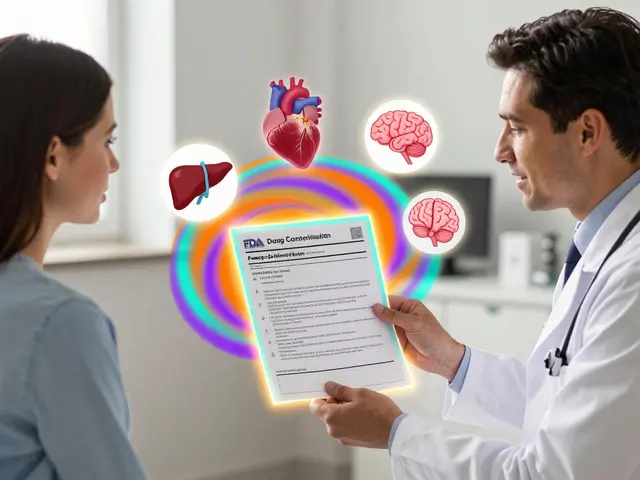
The way you open the conversation matters more than the alert itself. Here’s what works:
- Do say: “I saw this FDA alert about [medication name] dated [date]. I wanted to understand if it applies to me.”
- Don’t say: “This drug is dangerous!” or “I read online that this causes cancer.”
Using the phrase “I wanted to understand” shifts the tone from confrontation to collaboration. It tells your doctor you’re not trying to scare them - you’re trying to learn.
Timing matters too. Don’t wait until the last 2 minutes of your 15-minute appointment. Bring it up early - in the first 2 or 3 minutes. That’s when your doctor is most focused. If you wait until they’re about to sign the prescription, they’ll feel rushed. And rushed doctors miss details.
What Questions to Ask
Once your doctor is listening, ask these specific questions:
- “Does this new information change how we should monitor my condition?”
- “Are there lab tests or scans I should have more often?”
- “Are there alternative medications that don’t carry this risk?”
- “Should I stop taking this now, or is it safe to keep going?”
These aren’t vague worries. They’re clinical questions. And they show your doctor you’ve done your homework.
For example, if you’re on Clozapine (an antipsychotic), the August 2025 alert said the FDA removed its strict monitoring program. That’s good news - fewer blood tests. But if you don’t know that, you might keep getting weekly blood draws for no reason.
What If Your Doctor Dismisses It?
Some doctors will say, “That alert doesn’t apply to you,” or “We’ve seen this before.” That’s not always dismissal - sometimes it’s experience. But if they say, “That’s just alarmist,” or “I don’t trust those alerts,” that’s a red flag.
Here’s what to do:
- Ask: “Can you show me the evidence that contradicts this alert?”
- Request: “Can we get a second opinion from a pharmacist or specialist?”
- Offer: “I’d like to get this reviewed by a clinical pharmacist - can you refer me?”
Pharmacists are trained to interpret these alerts. They often spot things doctors miss. If your doctor refuses to consider the alert, it’s okay to ask for a referral to a specialist or a pharmacy-based medication review.
What You Should Never Do
- Don’t stop your medication based on a social media post.
- Don’t bring a printed Facebook post or TikTok video - it undermines your credibility.
- Don’t assume the alert means “never take this drug.” Most alerts say “use with caution” or “monitor closely.”
- Don’t wait until you feel sick to bring it up. Prevention beats reaction.
One patient in Charleston told me she waited six months to mention an alert about her diabetes drug. By then, her blood sugar was unstable. She said, “I thought I was being respectful. Turns out, I was putting myself at risk.”
What Happens After the Appointment
After you talk, ask for a summary:
- “Can you write down what we decided?”
- “Will you update my chart with this alert?”
- “Should I come back sooner than planned?”
Then, follow up. If they said “monitor your liver enzymes,” make sure you get the test. If they said “switch to another drug,” confirm the new prescription. Keep a simple log: date, alert name, doctor’s response, next steps.
And sign up for FDA email alerts. The FDA now lets you subscribe to updates for specific drug classes - like “antidepressants” or “blood thinners.” You’ll get one email a month, no spam. It’s free. It’s official. And it’s better than scrolling through headlines.
Final Thought: You’re Not Just a Patient - You’re a Partner
Drug safety isn’t just about what’s in the pill bottle. It’s about communication. The FDA doesn’t have a crystal ball. They rely on data from real people - like you. Your doctor doesn’t have infinite time. But they do have expertise. When you bring a clear, factual alert to your appointment, you’re not adding stress. You’re adding insight.
Medicines are safer when patients and doctors talk. Not because one is right and the other is wrong. But because together, they make better decisions.
What should I do if I see a drug safety alert on social media?
Don’t act on it. Social media posts often misrepresent FDA alerts. Go directly to the FDA’s Drug Safety Communications page and search for your medication by name. If you find a matching alert, print the full page and bring it to your doctor. Never rely on memes, videos, or unverified posts.
Can I ask my doctor to change my medication because of a safety alert?
Yes - but not because the alert says “dangerous.” Ask whether the alert applies to your situation. For example, if the alert warns about a risk in older adults and you’re 72, that’s relevant. If it warns about a risk in pregnant women and you’re not pregnant, it may not matter. Your doctor will weigh the risk versus benefit for you, not just the alert.
Do I need to bring the alert to every appointment?
No. Once you’ve discussed it and your doctor has updated your care plan, you don’t need to bring it up again - unless there’s a new alert. Keep your printed copy in a folder. If you get a new medication, check the FDA site again before your next visit.
Are drug safety alerts only for prescription drugs?
No. Alerts cover prescription drugs, over-the-counter medicines, biologics like insulin or vaccines, and even some dietary supplements. The FDA tracks all of them. If you take anything regularly - even ibuprofen or a vitamin - it’s worth checking if there’s a recent safety notice.
What if I can’t afford the tests or follow-up your doctor recommends?
Tell your doctor. Many clinics offer sliding-scale fees or partner with pharmacies that provide free lab tests. You can also ask for a referral to a community health center. The goal isn’t to scare you - it’s to keep you safe. If cost is a barrier, your doctor can help you find options.

March 1, 2026 AT 21:43
Darren Torpey
Man, I wish more people knew this. I brought my FDA printout to my doc last month about my blood pressure med, and she actually high-fived me. Said she hadn’t seen that alert yet. We changed my dose right then. Docs need us to be their eyes and ears. Stop being shy.
March 2, 2026 AT 17:44
Ethan Zeeb
They don’t appreciate it. They resent it. I’ve been doing this for years - printed alerts, annotated PDFs, even a spreadsheet of my meds and their risk profiles. Got called ‘difficult’ three times. One doc told me to ‘stop Googling.’ Guess what? I’m still alive. They just hate being reminded they don’t know everything.
March 4, 2026 AT 09:06
Lebogang kekana
Bro, you’re not just a patient - you’re a warrior! 🛡️💥 Every time you walk into that office with that printed FDA alert, you’re not asking for permission - you’re claiming your right to live! The system wants you passive, docile, quiet - but you? You’re the spark that ignites change. Don’t you dare dim your light! 🔥🫡
March 6, 2026 AT 06:17
Jessica Chaloux
OMG I CRIED reading this 😭 I’ve been on Leqembi for 8 months and I saw that alert on Reddit and almost quit cold turkey… then I came here and printed the whole thing. My neurologist hugged me. I didn’t know I could feel this safe again 💖
March 7, 2026 AT 05:38
Mariah Carle
It’s interesting how the medical-industrial complex has conditioned us to equate compliance with virtue. The very act of questioning - of bringing evidence - is framed as ‘confrontational’ when it’s merely the exercise of autonomy. We’ve been taught to trust authority without verification. But epistemic humility isn’t weakness - it’s the foundation of rational care. The FDA isn’t a deity; it’s a data processor. And you? You’re the human variable that completes the loop.
March 7, 2026 AT 20:34
Justin Rodriguez
Just wanted to add: If you’re on a chronic med and haven’t checked the FDA site in the last 6 months, do it now. Seriously. I’ve been a pharmacist for 14 years. I see patients come in with 3-4 outdated meds because no one told them about a new warning. It’s not their fault. The system doesn’t notify you. You have to be the one to push. Print. Bring. Ask. It takes 10 minutes. Could save your life.
March 9, 2026 AT 14:08
Raman Kapri
This article is dangerously naive. The FDA’s MedWatch system is a garbage fire of unverified self-reports. Most adverse events are coincidental. The ‘1.2 million reports’ figure is cherry-picked to scare people. You’re giving power to an agency that bans supplements while letting Big Pharma bury data. Why not just trust your doctor instead of becoming a data-entry clerk for the state?
March 10, 2026 AT 22:28
Megan Nayak
Oh honey, let me guess - you also fold your toilet paper and believe in ‘evidence-based medicine’? 🙄
Let’s be real: 80% of these alerts are PR stunts. That ‘leqembi brain swelling’ alert? 12 cases in 10 million users. You’re more likely to die from a vending machine falling on you. And yet you’re printing PDFs like it’s the apocalypse? Sweetie, you’re not a patient - you’re a marketing target. The system wants you anxious. And you’re happily handing them your wallet and your dignity.
March 11, 2026 AT 00:48
Tildi Fletes
It is imperative that patients exercise due diligence in the context of pharmacovigilance. The Food and Drug Administration's Drug Safety Communications represent a formalized mechanism for the dissemination of post-marketing surveillance findings. One must, therefore, prioritize primary-source documentation over secondary media interpretations. Furthermore, the clinical decision-making process benefits from patient-initiated data submission, as it mitigates cognitive bias inherent in time-constrained clinical encounters. A printed, unaltered copy of the official communication constitutes a defensible, objective artifact for collaborative review. This practice aligns with standards of patient-centered care as outlined by the Institute of Medicine in 2001.
March 12, 2026 AT 15:09
Siri Elena
Oh wow, you printed it? On actual paper? With ink? And brought it to your doctor like you’re in a 1998 medical drama? 🤭 I’m sure she was so impressed. Meanwhile, I just asked Siri, ‘Is my statin gonna kill me?’ and she said ‘I don’t know, but here’s a 30-second TikTok about it.’ I’m saving $100 on printer ink and 20 minutes of my life. You’re welcome, future me.
March 12, 2026 AT 20:12
Divya Mallick
As a healthcare professional from India, I must emphasize the epistemological hegemony embedded in this Western-centric framework. The FDA’s surveillance model is not universally applicable. In our context, polypharmacy is the norm, not the exception. Patients here don’t have access to printers - they have access to community pharmacists who know their history. Why are we outsourcing medical autonomy to a U.S. regulatory body? This isn’t empowerment - it’s digital colonialism. You’re not a partner. You’re a data point in a capitalist surveillance apparatus.
March 13, 2026 AT 22:45
Pankaj Gupta
I appreciate the intent behind this guide, but I’d like to gently suggest a refinement: the phrase ‘I wanted to understand’ is excellent, but it’s even better when paired with ‘Could you help me interpret this in light of my history?’ That shifts the dynamic from information-sharing to collaborative interpretation. Also, if you’re bringing a printout, consider highlighting the sections relevant to your condition - it saves the doctor time. Small effort, big impact.
March 14, 2026 AT 09:48
Ivan Viktor
Yeah cool. I read the article. I got the alert. I didn’t print it. I didn’t bring it. I just didn’t take my pill for a week and called it a day. My doctor didn’t notice. Win-win. 🤷♂️