
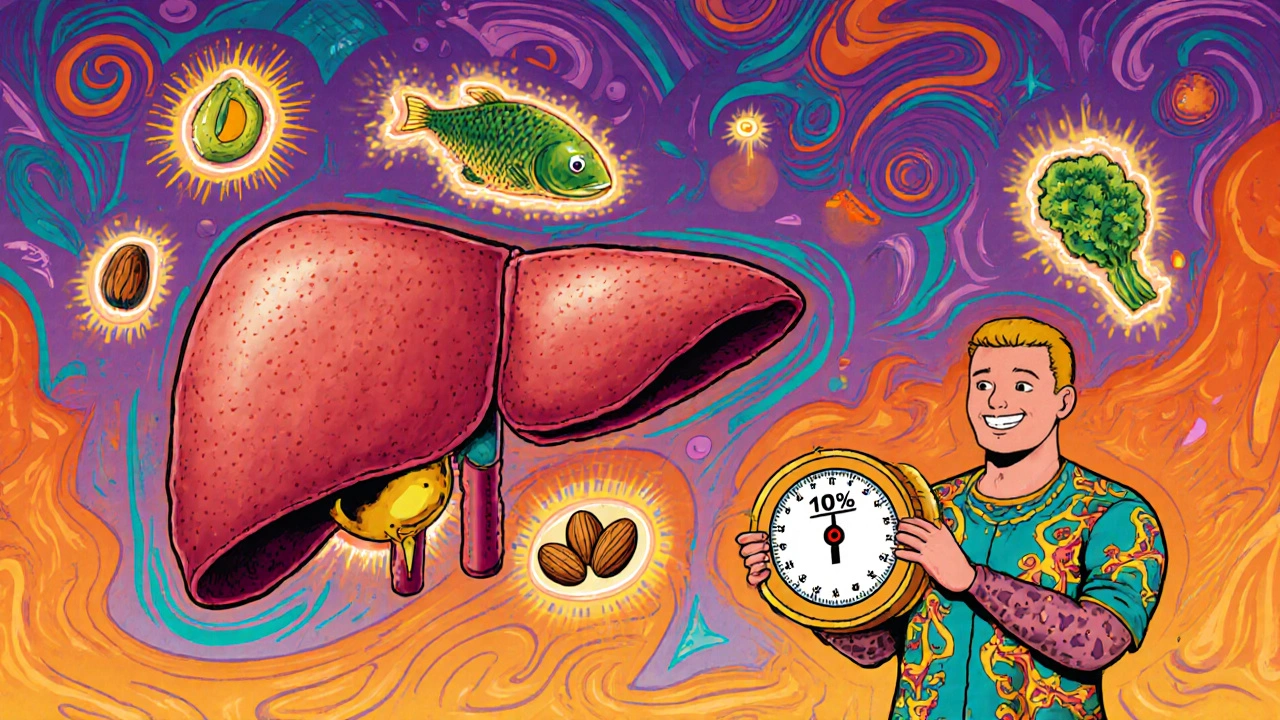
Non-alcoholic fatty liver disease (NAFLD), now called MASH (Metabolic Dysfunction-Associated Steatohepatitis), isn’t just about a fatty liver-it’s a sign your body’s metabolism is out of balance. About 1 in 5 adults in the U.S. has it, and without action, it can lead to scarring, liver failure, or even cancer. The good news? The most powerful treatment isn’t a pill. It’s weight loss. And the science is clear: losing even a small amount of weight can reverse liver damage.
Why Weight Loss Is the Foundation of MASH Treatment
Doctors used to think NAFLD was harmless unless it turned into cirrhosis. Now we know that fat in the liver triggers inflammation, which leads to fibrosis-and that’s where real danger starts. The key trigger? Excess body fat, especially around the belly. When fat cells overflow, they spill fatty acids into the liver. Your liver can’t process it all, so it stores it. That’s steatosis. Then inflammation kicks in. That’s MASH.
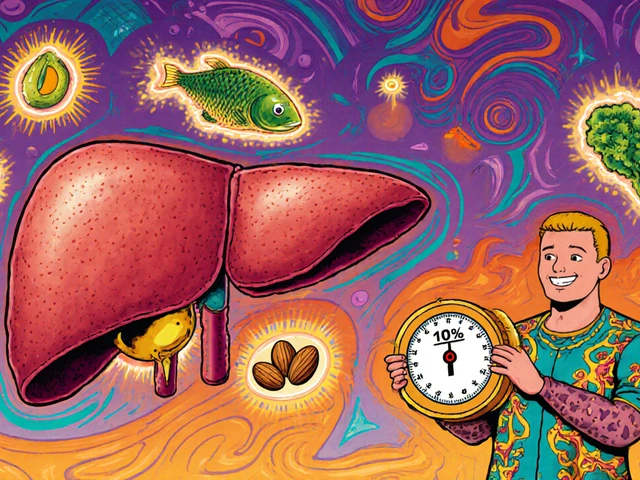
Studies show that losing just 5% of your body weight reduces liver fat by up to 30%. Lose 10% or more, and you can actually reverse scarring. That’s not speculation-it’s from clinical trials published by the American Association for the Study of Liver Diseases. One study tracked patients for three years: fewer than one in three lost 5% or more, and only a quarter kept it off. That’s the hard truth: weight loss works, but it’s not easy.
The Best Diet for MASH: Mediterranean, Not Low-Carb
You’ve heard of keto, Atkins, intermittent fasting. But for MASH, the evidence points to one clear winner: the Mediterranean diet. It’s not about cutting carbs completely. It’s about choosing the right ones.
This diet is packed with vegetables, fruits, beans, nuts, olive oil, and fatty fish like salmon. It limits processed foods, sugary drinks, red meat, and refined grains like white bread and pastries. A major meta-analysis found that people on this diet had significantly lower levels of ALT (a liver enzyme that spikes when the liver is damaged), less liver fat, and reduced liver stiffness-all signs of healing.
Why does it work? It reduces insulin resistance, lowers inflammation, and improves fat metabolism. A slice of whole-grain bread with avocado and eggs is better than a gluten-free cookie. A handful of almonds beats a bag of chips. You don’t need to count calories obsessively, but you do need to stop eating mindlessly. Portion control matters. So does cutting out liquid calories: soda, juice, sweetened coffee-all of it adds up fast.
Exercise: More Than Just Burning Calories
Exercise isn’t optional. It’s medicine. The Mayo Clinic recommends at least 150 minutes of moderate activity per week-that’s 30 minutes, five days a week. Brisk walking, cycling, swimming, or even dancing count. But here’s the catch: you don’t need to run a marathon. In fact, studies show that even without weight loss, regular physical activity reduces liver fat by 20%.
Strength training helps too. Muscle burns more calories at rest than fat. Two days a week of lifting weights or doing bodyweight exercises (squats, push-ups, lunges) can boost your metabolism long after you’re done. The best approach? Combine aerobic activity with resistance training. It’s more effective than either alone.
And don’t underestimate daily movement. Taking the stairs, walking after meals, standing while working-these small habits add up. One study found that people who took 7,000 steps a day had significantly less liver fat than those who took 4,000, even if their weight didn’t change.

Medication Breakthrough: Semaglutide (Wegovy) for MASH
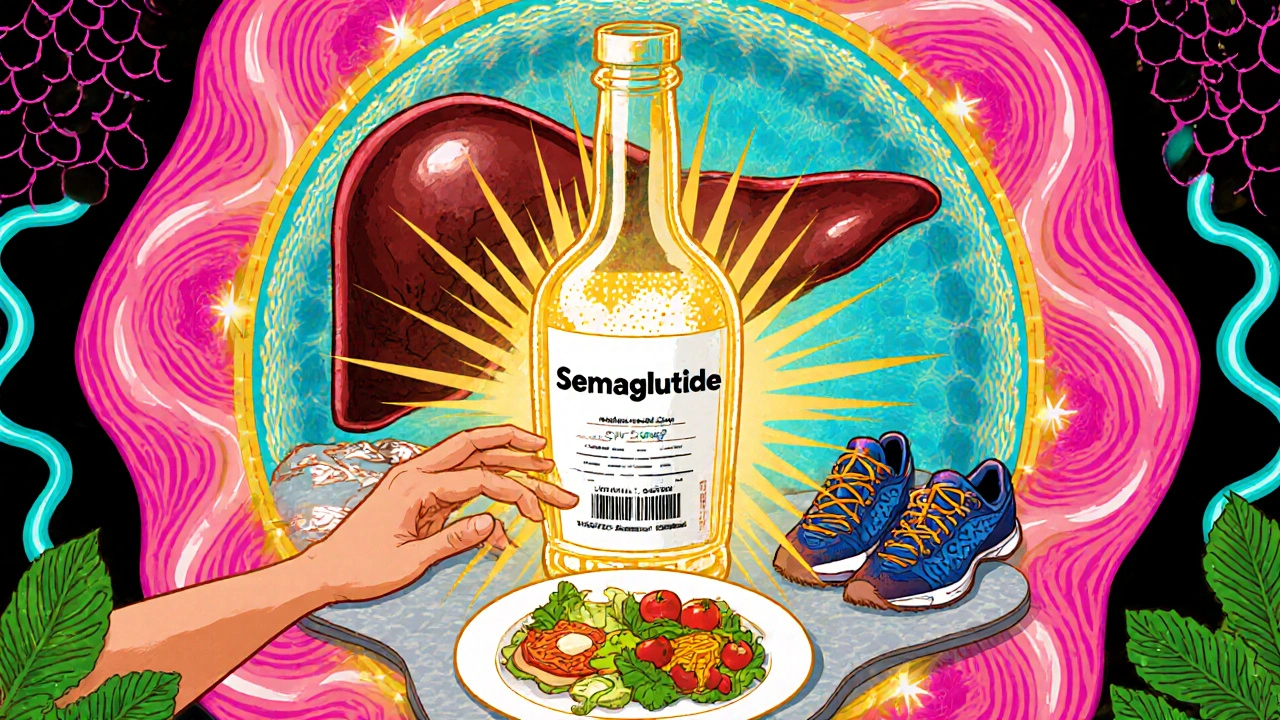
In August 2025, the FDA approved semaglutide (brand name Wegovy) for treating MASH in adults with moderate-to-advanced liver scarring. This was the first time a drug was approved specifically for liver disease caused by metabolic dysfunction-not just for weight loss or diabetes.
Semaglutide is a GLP-1 receptor agonist. It works by slowing digestion, reducing appetite, and helping your body use insulin better. In clinical trials, nearly 90% of patients stayed on the medication for over a year. Two-thirds saw less liver inflammation. More than one-third had actual improvement in fibrosis. That’s huge. For the first time, there’s a drug that doesn’t just manage symptoms-it reverses damage.
But here’s what you need to know: semaglutide isn’t a magic bullet. It works best when paired with diet and exercise. The same trial showed that people who combined the drug with lifestyle changes lost more weight and had better liver outcomes than those who relied on the drug alone.
Cost is a major barrier. Without insurance, Wegovy runs about $1,350 a month. Generic metformin, which some doctors still prescribe off-label, costs $4 to $40 a month-but studies show it has only modest effects on liver fat. Other weight-loss drugs like orlistat or SGLT2 inhibitors lack strong evidence for MASH. So far, semaglutide is the only one with clear histological benefits.
What About Other Medications?
Many patients ask: “Can I just take metformin?” It’s widely used for type 2 diabetes, and some small studies show slight improvements in liver enzymes. But when you look at liver biopsies-the gold standard-metformin doesn’t reliably reduce fat or fibrosis. It’s not a bad drug, but it’s not the answer for MASH.
Orlistat, which blocks fat absorption, showed a tiny signal of benefit in one trial, but no study proved it improves liver scarring. SGLT2 inhibitors (like empagliflozin) are promising because they help with weight loss and blood sugar control, but they’re still being studied for MASH. Right now, the data isn’t strong enough to recommend them as standard treatment.
GLP-1 agonists like semaglutide are clearly ahead. But they’re not for everyone. Side effects like nausea, vomiting, or diarrhea are common at first. Most people get used to them within weeks. If you have a history of pancreatitis or thyroid cancer, you can’t use them. Always talk to your doctor before starting any new medication.
Lifestyle Works Better Than You Think
Here’s the most important point: no medication has been proven to beat consistent lifestyle changes. In head-to-head trials, people who lost 10% of their weight through diet and exercise had the same or better liver improvements than those on semaglutide alone.
But here’s the catch: most people can’t do it alone. Weight loss plateaus. Cravings return. Motivation fades. That’s why support matters. Working with a dietitian, joining a weight-loss program, or seeing a behavioral therapist can double your chances of success. Many hospitals now offer MASH clinics that combine nutrition counseling, exercise coaching, and medical care-all in one place.
And don’t ignore the basics: if you have diabetes, keep your blood sugar under control. If your cholesterol is high, treat it. Avoid alcohol completely-even small amounts can speed up liver damage. Get vaccinated for hepatitis A and B. These steps aren’t glamorous, but they protect your liver while you lose weight.
What Comes Next?
The approval of Wegovy for MASH is a turning point. It proves that metabolic health and liver health are connected. It also opens the door for more research. Combination therapies-like semaglutide plus a new drug targeting liver inflammation-are already in trials. Longer-acting injections, once-a-month doses, and even oral versions are on the horizon.
But the real breakthrough won’t come from a new pill. It’ll come from making lifestyle change accessible. Insurance coverage for weight-loss drugs is still patchy. Many plans won’t cover Wegovy for MASH unless you’ve already tried diet and exercise. And even then, prior authorizations can take weeks.
What you can do now: start small. Cut out sugary drinks. Walk 20 minutes after dinner. Swap white rice for brown. Add one serving of vegetables to every meal. These aren’t drastic changes-they’re sustainable ones. And they add up.
The liver is one of the few organs that can regenerate. If you stop feeding it fat and inflammation, it can heal itself. You don’t need to lose 50 pounds. You don’t need to run marathons. You just need to be consistent. And with the right tools-diet, movement, and now medication-you have more power than ever to turn your liver around.
Can you reverse NAFLD with weight loss?
Yes. Losing 5% of your body weight reduces liver fat. Losing 10% or more can reverse scarring and inflammation. This is backed by clinical trials showing improved liver biopsies after weight loss. The earlier you start, the better the outcome.
What is the best diet for fatty liver disease?
The Mediterranean diet is the most proven. Focus on vegetables, fruits, whole grains, legumes, nuts, olive oil, and fatty fish. Avoid added sugars, refined carbs, fried foods, and processed meats. You don’t need to go keto or fast-just eat real food and stop drinking sugar.
How much exercise do I need for NAFLD?
At least 150 minutes per week of moderate activity like brisk walking, cycling, or swimming. Adding two days of strength training (bodyweight or weights) improves results. Even if you don’t lose weight, exercise alone reduces liver fat by up to 20%.
Is semaglutide (Wegovy) worth the cost for MASH?
If you have moderate-to-advanced liver scarring and can’t lose weight through lifestyle alone, yes. Semaglutide is the only drug proven to reduce liver fibrosis in MASH. But it’s expensive-around $1,350/month without insurance. Talk to your doctor about financial assistance programs or whether you qualify for insurance coverage based on BMI and liver biopsy results.
Can I take metformin instead of Wegovy for fatty liver?
Metformin may help with insulin resistance and slightly lower liver enzymes, but it doesn’t reliably reduce liver fat or fibrosis in MASH. It’s not a substitute for weight loss or semaglutide. Use it only if you have type 2 diabetes and your doctor recommends it for blood sugar control-not as a primary MASH treatment.
How long does it take to see liver improvement?
You may see lower liver enzymes (ALT) in 3-6 months. Fat reduction shows up on ultrasound or MRI within 6-12 months. Fibrosis improvement takes longer-usually 1-2 years of consistent weight loss and healthy habits. Patience and consistency matter more than speed.
What if I can’t lose weight on my own?
You’re not alone. Most people need help. Ask your doctor about a registered dietitian, a behavioral therapist, or a weight-loss program. If lifestyle changes aren’t enough, medications like semaglutide may be an option. Don’t wait until your liver is severely damaged-early action makes all the difference.



November 29, 2025 AT 11:42
Ifeoma Ezeokoli
Okay but can we talk about how wild it is that we’re finally treating the liver like it’s part of the whole body and not just some weird sidekick? 🌱 I’ve been eating Mediterranean-style for a year now-no crazy diets, just more beans, olive oil, and less sugar-and my ALT dropped like it was on a slide. No meds. Just food. 🙌
November 29, 2025 AT 16:14
Daniel Rod
Life’s funny-our bodies scream for balance, but we keep buying solutions that pretend the problem is ‘willpower.’ 🤔 The liver doesn’t care about your Instagram fitness pics. It just wants less sugar, more movement, and a little peace. Semaglutide helps? Cool. But if you don’t change how you live, you’re just delaying the reckoning.
November 30, 2025 AT 02:45
gina rodriguez
I love how this post doesn’t sugarcoat it-losing weight is hard, but it’s not impossible. I started with just swapping soda for sparkling water and adding a 15-minute walk after dinner. Tiny things. Now, 8 months later, I’ve lost 12% and my doctor said my liver looks ‘way better.’ You don’t need to be perfect. Just consistent. 💪
November 30, 2025 AT 10:54
Sue Barnes
Let’s be real-no one wants to hear this, but if you’re overweight and have fatty liver, you’re lazy. Stop blaming the system. Stop waiting for a pill. Your liver doesn’t care about your trauma or your job stress. It just sees fat. Lose it. Or accept the consequences. No excuses.
November 30, 2025 AT 12:04
jobin joshua
Bro I tried keto for 3 weeks and my liver enzymes went UP 😭 then I switched to just eating rice + dal + curry leaves daily and my ALT dropped in 2 months. Who knew Indian home food was the secret? 🤯
December 1, 2025 AT 00:01
Sachin Agnihotri
Okay, so-Mediterranean diet? Yes. But let’s not ignore that ‘Mediterranean’ in the U.S. often means ‘olive oil + avocado toast’ while still eating 3 bags of chips a week. Real Mediterranean? It’s mostly plants, no processed stuff, and meals eaten slowly with people. Not a trend. A lifestyle. 🌿
December 2, 2025 AT 05:15
Diana Askew
Wegovy is a Big Pharma trap. They don’t want you to heal with food-they want you addicted to $1,350/month shots. And who’s behind this? The same people who sold you low-fat margarine in the 90s. Your liver doesn’t need a drug. It needs a revolution. 🚩
December 3, 2025 AT 06:01
King Property
Look, you people are missing the point. The study you’re quoting? The one from AASLD? That was funded by Novo Nordisk. The same company that makes Wegovy. Of course they’re going to say it works. The real data? The placebo group improved just as much with just walking. You’re being sold snake oil wrapped in science jargon.
December 4, 2025 AT 22:01
Pawittar Singh
Guys, I’m from a small village in Punjab. We don’t have gyms. We don’t have Wegovy. But we walk 6km to work, eat roti with lentils, and never drink soda. My uncle, 68, reversed his fatty liver at 62 just by eating like his grandparents did. It’s not rocket science. It’s just… common sense. 🙏
December 5, 2025 AT 10:59
Josh Evans
Just started walking 20 mins after dinner. Already feel less bloated. No magic. Just moving. Also stopped drinking orange juice. Who knew that stuff was basically sugar water? 🤦♂️
December 7, 2025 AT 05:16
Allison Reed
Consistency over intensity. That’s the mantra. You don’t need to overhaul your life overnight. Just make one better choice today. Then another tomorrow. The liver doesn’t measure progress in weeks-it measures it in months. And it remembers every good choice you make.
December 7, 2025 AT 17:01
Jacob Keil
semaglutide is just a glorified appetite suppressant. they call it a ‘breakthrough’ but its just another drug that makes you feel like crap while you lose weight. real healing is in the food, not the pharmacy. also, why is everyone so obsessed with pills? we used to fix things with lifestyle. now we just want a button to press.
December 8, 2025 AT 22:59
Evelyn Salazar Garcia
Why do we even care? America’s gonna die anyway. Let them take their pills and their kale.
December 10, 2025 AT 08:36
Pranab Daulagupu
Metabolic health = systemic. NAFLD is a biomarker, not a disease. The liver’s just the canary. Fix insulin resistance, reduce visceral fat, improve gut microbiome-then the liver fixes itself. Pharma wants to treat the symptom. We need to treat the root. GLP-1 agonists? Tools. Not cures.