
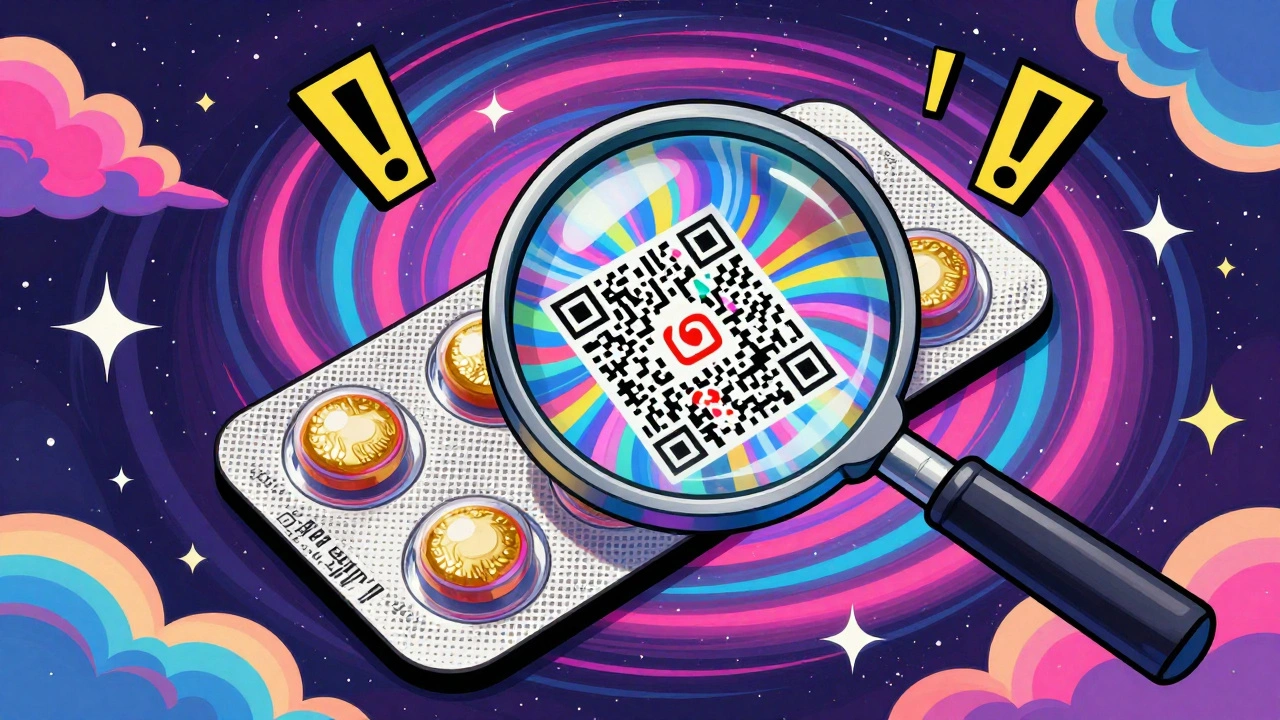
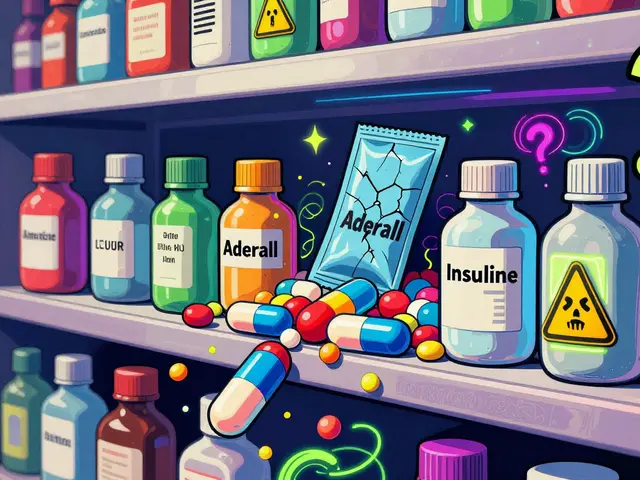
Every year, millions of people around the world take medications they believe are real-only to be taking something dangerous, or worse, nothing at all. Counterfeit medication packaging has become one of the most insidious threats in modern healthcare. These fakes don’t just look convincing-they often perfectly mimic the real thing. And if you’re buying medicine online, from a foreign pharmacy, or even picking up a refill at a suspiciously cheap local shop, you could be at risk.
The problem isn’t going away. In 2023, the World Health Organization estimated that 1 in 10 medicines in low- and middle-income countries are fake. But this isn’t just a problem overseas. In the U.S., the FDA reported over 4,800 cases of counterfeit drugs in 2022 alone. Most of these fakes come with packaging that looks identical to the real thing. So how do you tell the difference?
Start with the Basics: Visual Inspection
The first line of defense is simple: look closely. You don’t need special tools to catch some of the most common signs of fake medication. But you do need to know what to look for.
Check the spelling. One of the most frequent mistakes counterfeiters make is typos-wrong capitalization, missing letters, or awkward phrasing. For example, genuine Ozempic packaging has a specific font weight and spacing for the lot number. Counterfeit versions often use slightly bolder or thinner text. Even a 2% difference in font thickness can be a red flag.
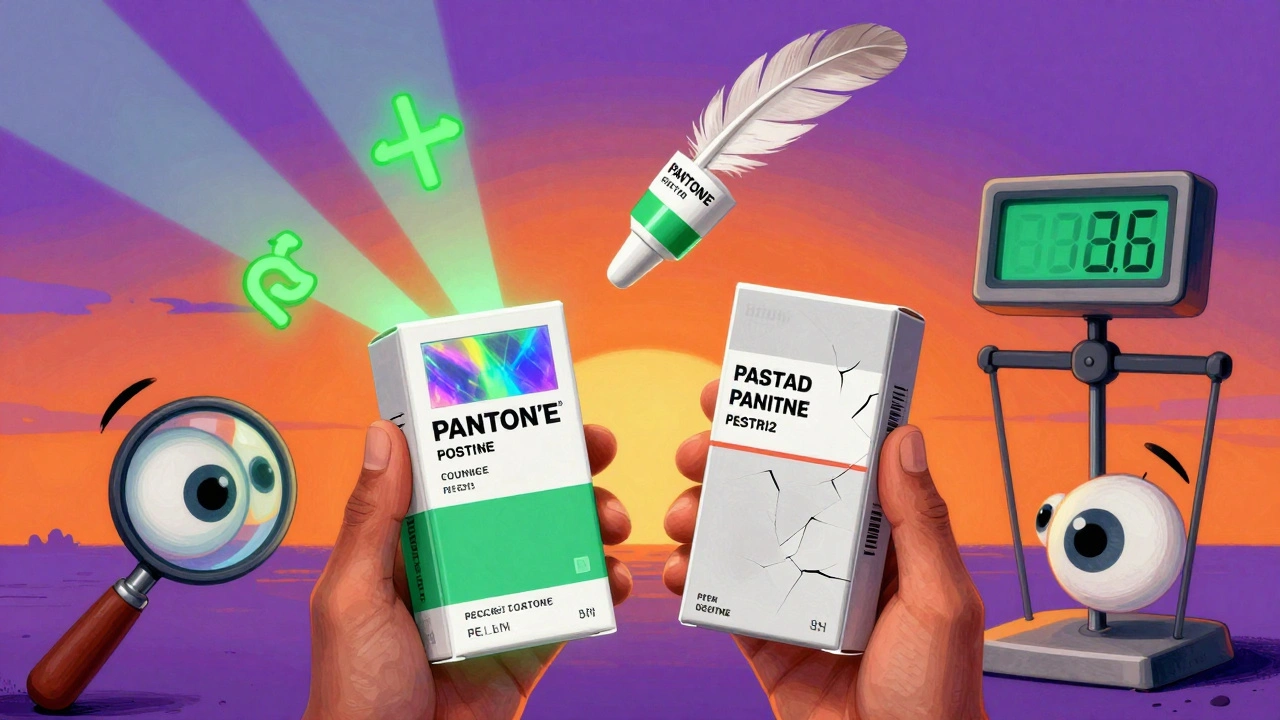
Look at the colors. Genuine packaging uses exact Pantone color codes. In 2019, a batch of fake Lipitor was caught because the blue on the box used Pantone 286C, which the manufacturer stopped using in 2002. The difference is invisible to the naked eye under normal light-but if you hold the package up to a bright LED light, the shade might look slightly off. Compare it side-by-side with a bottle you’ve used before.
Check the seal. Authentic blister packs have a uniform, crisp seal with no air bubbles, wrinkles, or uneven edges. Counterfeit versions often have a slightly uneven heat seal, or the foil backing might be too thin and tear easily. If the seal looks like it was pressed on with a cheap machine, it probably was.
Microscopic Clues: What the Naked Eye Misses
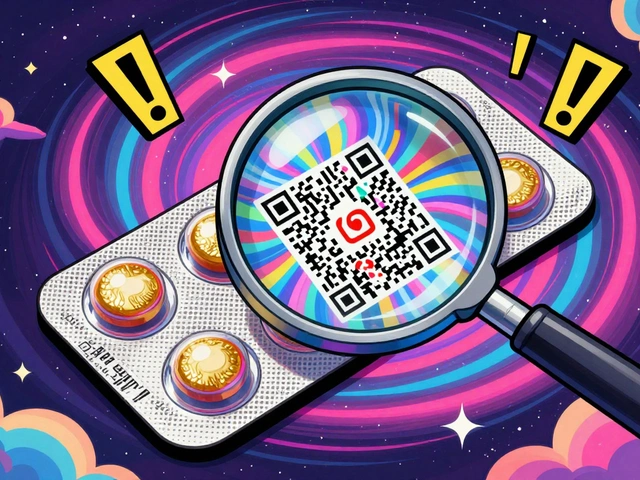
Most counterfeiters have gotten good at copying logos, colors, and text. But they still struggle with tiny details that require magnification. You don’t need a lab to spot these-you just need a 10x magnifying loupe, the kind pharmacists use.
Look at the tablet imprint. Real pills have clean, deep, consistent lettering. Counterfeit tablets often have shallow, blurry, or uneven imprints. One case documented by pharmacists on Reddit showed counterfeit Adderall tablets with imprints that were 0.12mm deep-compared to the genuine 0.15mm. That’s a difference you can’t feel, but you can see under magnification.
Check the print alignment. On authentic packaging, every line of text is perfectly aligned. Counterfeiters use consumer-grade printers that can’t match the precision of industrial presses. Look at the edges of the box, the barcode, or the lot number. If the text is slightly crooked, or the lines don’t line up perfectly, that’s a warning sign.
Look for microtext. Many genuine medications have tiny printed words-so small they look like a solid line to the naked eye. Under magnification, you’ll see phrases like “Pfizer” or “FDA Approved” repeated in a fine line along the edge of the blister pack. Fake versions often skip this entirely or print it as a blurry smudge.
Security Features That Can’t Be Copied Easily
Pharmaceutical companies aren’t sitting still. They’ve added layers of security that are hard to replicate without expensive equipment.
Holograms used to be common. But since 2018, counterfeiters have been able to copy 83% of them using cheap laser printers. So now, companies are moving to more advanced features. Look for:
- QR codes that link to official verification portals-like those required under the European Falsified Medicines Directive. Scan it with your phone. If it takes you to a generic website or a page that doesn’t match the drug name, it’s fake.
- UV-reactive ink. Shine a cheap UV flashlight (available online for under $10) on the packaging. Genuine products often have hidden text or symbols that glow under ultraviolet light. In 2022, 42% of counterfeit cases were caught this way-because the fake packaging didn’t fluoresce at all, or glowed the wrong color.
- Unique serial numbers. Since 2023, the U.S. Drug Supply Chain Security Act requires every prescription package to have a unique 2D barcode. You can verify it through the manufacturer’s website. If the code doesn’t scan, or the system says “invalid,” stop using it.
Some newer drugs use even more advanced tricks. Merck’s molecular tagging system embeds plant DNA into the packaging-detectable only with a $500 handheld reader. While you won’t have access to that, you can still check for the presence of any kind of tamper-evident seal. If the box opens too easily, or the seal peels off without resistance, that’s a red flag.
When the Package Looks Perfect-But Something’s Off
Here’s the scary part: 78% of advanced counterfeits look identical under normal inspection. That’s why experts say you need a layered approach.
One pharmacist in Charleston told me about a case where a patient brought in a bottle of Muro 128 eye drops. The box looked perfect. The seal was intact. The QR code scanned. But the packaging was slightly yellowed-just enough to stand out when held next to a fresh bottle. The real product uses a specific type of plastic that resists discoloration. The fake used cheaper material that degraded under heat and light.
Another clue: weight. Counterfeit packaging often uses thicker or thinner paper. In one case, counterfeit blister packs weighed 120gsm-while the real ones were 114gsm. That’s a 5% difference. You won’t feel it in your hand, but if you have a digital scale (like those used for mailing letters), you can weigh the empty box. If it’s noticeably heavier or lighter, it’s suspicious.
And don’t forget the smell. Some fake pills have a chemical odor-like plastic or bleach-because they’re made with industrial-grade fillers. One 2023 case involved counterfeit diabetes pills that smelled like drywall dust. The counterfeiters used crushed drywall as filler instead of lactose or cellulose. It’s not a foolproof test, but if something smells wrong, trust your nose.
What to Do If You Suspect a Fake
If you find something suspicious, don’t throw it away. Don’t take it. Don’t assume it’s a manufacturing error.
First, stop using it. Then, report it. The FDA’s MedWatch program handles over 4,800 counterfeit reports every year. Call 1-800-FDA-1088 or file a report online. Include photos of the packaging, the lot number, and where you bought it. Even if you’re not sure, report it. The FDA uses those reports to track outbreaks.
If you bought the medicine online, check the website. Legitimate online pharmacies are verified by the National Association of Boards of Pharmacy (VIPPS program). If the site doesn’t have a physical address, a licensed pharmacist on staff, or a VIPPS seal, it’s not trustworthy. Sites that offer “no prescription needed” or prices 80% lower than retail are almost always fake.
Pharmacies and clinics are required to report suspected counterfeits. If you’re a patient and you notice something wrong, ask your pharmacist to check it. They’re trained to spot these issues. Don’t be embarrassed to ask. It’s your safety.
What’s Being Done to Stop This
It’s not all bad news. The industry is fighting back.
The U.S. Drug Supply Chain Security Act, fully implemented in 2023, requires every prescription drug to have a unique digital identifier. That means every bottle, box, and blister pack can be traced from manufacturer to pharmacy. In serialized supply chains, counterfeit infiltration has dropped to 0.001%. In non-serialized ones, it’s still 1.2%.
Europe has been even more aggressive. Since 2019, all prescription drugs there must have both a unique identifier and an anti-tampering device. The result? Counterfeit rates dropped to 0.0005%.
Emerging tech is helping too. AI-powered systems trained on over 15,000 real and fake packaging images can now detect counterfeits with 92% accuracy. Companies like Pfizer are using handheld Raman spectrometers that can scan a pill in seconds and tell you if it’s real-with 98.7% accuracy. These devices cost $20,000, so they’re not for consumers yet. But they’re becoming standard in hospitals and pharmacies.
And in the future, we may see edible barcodes-tiny, unique patterns printed on pills using food-safe ink. MIT tested one system called CandyCodes that creates a unique identifier on each pill. You scan it with your phone, and the system checks it against a database. It’s 99.8% accurate.
Bottom Line: Stay Alert, Stay Informed
Counterfeit medication packaging is evolving. The fakes are getting smarter. But so are the tools to catch them.
You don’t need to be a scientist to protect yourself. Just be curious. Take 30 seconds to look at your medicine. Compare it to previous bottles. Check the seal. Scan the QR code. Call your pharmacist if something feels off.
And remember: if a deal seems too good to be true, it probably is. A bottle of Ozempic for $20? A generic version with no prescription? A website that doesn’t let you talk to a real pharmacist? Walk away.
Your health isn’t worth the risk.
How can I tell if my medication packaging is fake?
Look for spelling errors, mismatched colors, uneven seals, or blurry text. Use a 10x magnifier to check tablet imprints and microtext. Scan QR codes to verify with the manufacturer’s official site. Shine a UV light to see if hidden markings glow correctly. If the package feels too light or heavy, or smells odd, it could be counterfeit.
Can counterfeit drugs look exactly like the real ones?
Yes. Up to 78% of advanced counterfeits are visually identical under normal inspection. That’s why experts recommend layered verification: visual checks, microscopic inspection, and, when possible, spectral analysis or QR code verification. Never rely on just one method.
Where do most counterfeit medications come from?
The majority come from unregulated online pharmacies, especially those based outside the U.S. or EU. Over 68% of counterfeit cases reported to the FDA in 2023 were linked to online purchases. Even some international pharmacies that appear legitimate may source from unverified suppliers. Always buy from licensed, verified pharmacies.
Are there apps or tools I can use to check my medicine?
Yes. Many manufacturers provide QR codes that link to official verification portals. You can also use the FDA’s website to search for drug recalls and counterfeit alerts. Some companies, like Pfizer and Merck, offer free apps that let you scan packaging to verify authenticity. But there’s no universal app yet-always check the official manufacturer’s site, not third-party tools.
What should I do if I think I’ve taken a fake pill?
Stop taking it immediately. Contact your doctor or pharmacist. Report the incident to the FDA through MedWatch at 1-800-FDA-1088 or online. Save the packaging and take photos. If you experience side effects, seek medical help right away. Even if you feel fine, fake pills may contain harmful fillers or no active ingredient at all.
Is it safe to buy medicine from international pharmacies?
It’s risky. Only buy from pharmacies that are licensed in the U.S. and verified by VIPPS (Verified Internet Pharmacy Practice Sites). Many international sites sell counterfeit or unapproved drugs. Even if they claim to be “FDA-approved,” that’s often a lie. The FDA does not approve foreign pharmacies. Stick to U.S.-based, licensed pharmacies whenever possible.
Why do counterfeiters target certain drugs?
They go for high-demand, high-margin drugs. In 2021, the FDA reported counterfeit cancer drugs with up to 9,000% markup. Common targets include Ozempic, Viagra, insulin, Adderall, and blood pressure meds. These are expensive, in high demand, and often bought without prescriptions-making them easy to fake and sell illegally.
December 2, 2025 AT 13:50
Declan Flynn Fitness
Just picked up my insulin last week and did a quick UV check-no glow on the seal. Took it back to the pharmacy and they swapped it out immediately. Seriously, folks, don’t skip the flashlight. It’s a $10 tool that could save your life.
December 3, 2025 AT 16:54
Jaswinder Singh
I work in a pharmacy in Mumbai and we see this all the time. Fake Ozempic boxes with perfect printing but the blister pack is made of plastic that melts in your pocket. People buy it because it’s cheap. They don’t know the fillers are crushed glass and detergent. Stop buying from shady websites. End of story.
December 5, 2025 AT 08:56
Michelle Smyth
How quaint. You’ve reduced the existential crisis of pharmaceutical commodification to a checklist of visual heuristics. The real horror isn’t the counterfeit packaging-it’s the systemic collapse of trust in institutions that made this market viable in the first place. We’ve turned medicine into a commodity to be bartered on the dark web, then acted surprised when the barter system produced counterfeit goods. The solution isn’t a UV light-it’s dismantling the profit-driven healthcare architecture that incentivizes this grotesque economy.
December 5, 2025 AT 17:52
Walker Alvey
So you’re telling me I need a $20,000 spectrometer to know if my Adderall is real? Brilliant. Just brilliant. Next you’ll tell me to get a PhD in pharmacology before swallowing a pill. Maybe just stop taking drugs you don’t need.
December 6, 2025 AT 16:06
Patrick Smyth
I took my wife’s blood pressure meds last month and I swear they tasted like plastic. I didn’t say anything because I didn’t want to panic her. Then I saw this post. I’m so glad I didn’t wait. We went to the pharmacy and they confirmed it was fake. I cried. I just cried. Thank you for writing this.
December 7, 2025 AT 00:34
Bee Floyd
One of my favorite tricks? Compare the weight of the box with a known genuine one. I keep a small digital scale in my medicine cabinet now. I weigh empty boxes before I even open them. If it’s off by more than 5%, I call the pharmacy. It’s not paranoia-it’s just being a little extra. And honestly? Worth it.
December 7, 2025 AT 18:34
Adrian Barnes
It is not merely an issue of packaging integrity; it is a manifestation of the moral decay inherent in unregulated global pharmaceutical supply chains. The proliferation of counterfeit pharmaceuticals is symptomatic of a broader societal abandonment of epistemic responsibility. One cannot outsource the verification of life-sustaining substances to consumer-grade tools without accepting complicity in a system that commodifies human vulnerability.
December 7, 2025 AT 22:18
Courtney Co
I bought a bottle of generic metformin from a website that looked legit. It had the logo, the QR code, everything. Then I noticed the pills were slightly bigger and the coating felt gritty. I didn’t say anything for weeks because I didn’t want to admit I was stupid. Then I got dizzy. Then I went to the ER. Turns out the filler was talc and sugar. I’m alive. But I’m never trusting another website again. And I’m telling everyone I know.
December 8, 2025 AT 22:32
Shashank Vira
The real tragedy is not the counterfeiters-they are merely the visible symptoms. The disease is the commodification of health. We have turned the human body into a market segment. The packaging is just the label on the product. The real counterfeit is the belief that medicine can be optimized, outsourced, and sold like a smartphone. We are not consumers. We are patients. And we are being exploited.
December 9, 2025 AT 21:33
Sean McCarthy
Look. I’m not a scientist. I don’t have a magnifying glass. I don’t have a UV light. I just go to CVS. I buy from the same pharmacy. I ask the pharmacist. That’s it. If you’re overcomplicating this, you’re the problem. Just buy from a real pharmacy. Done.
December 10, 2025 AT 14:41
Jeremy Butler
The assertion that a 0.12mm vs. 0.15mm imprint depth constitutes a reliable diagnostic criterion is, in practical terms, untenable for the layperson. While the technical precision of pharmaceutical manufacturing is admirable, the dissemination of such granular data to non-specialist populations creates an epistemic burden that is neither equitable nor sustainable. The onus of verification should rest with regulatory bodies, not individual consumers.