
When you have diabetes, eating out doesn’t mean giving up social life-it means learning how to eat smarter. Restaurants aren’t designed with blood sugar in mind. Portions are huge, sauces are loaded with hidden sugar, and even "healthy" dishes can spike your glucose faster than you expect. But with the right strategy, you can enjoy meals out without the stress or the spike.
Use the Plate Method-No Math Required
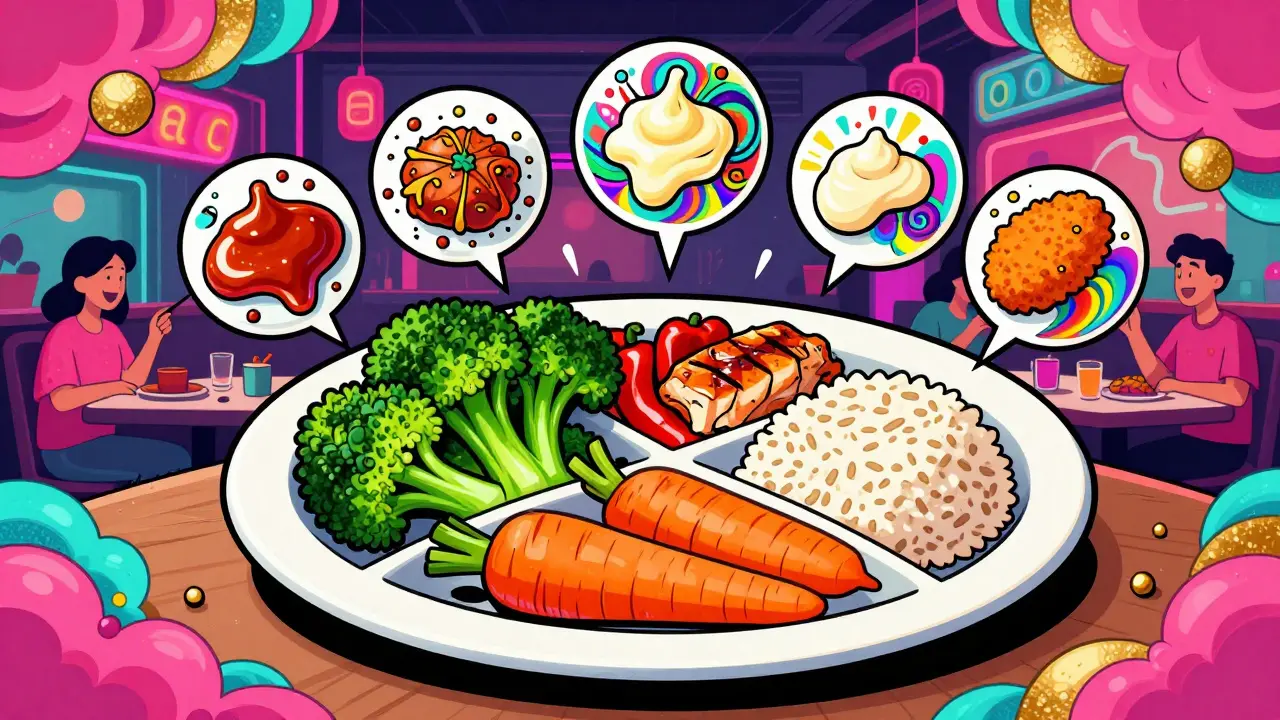
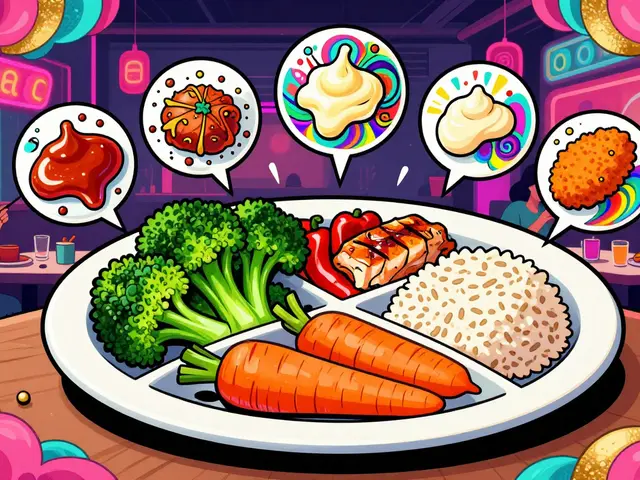
The Diabetes Plate Method is the simplest, most reliable way to eat out without counting every gram of carb. It doesn’t need a calculator or an app. Just picture a nine-inch plate. Fill half with non-starchy vegetables: broccoli, spinach, peppers, zucchini, or a side salad. That’s your volume anchor. One-quarter goes to lean protein-grilled chicken, fish, tofu, or lean beef. The last quarter? Carbs. But not just any carbs. Stick to 15-30 grams per meal. That’s about half a cup of rice, one small potato, or a single small roll. Most restaurants serve portions three times bigger than what you should eat. A plate of pasta? That’s not one serving-it’s three. A basket of bread? That’s 60 grams of carbs before you even order the main dish. The plate method cuts through the noise. It works whether you’re at an Italian bistro, a Mexican taqueria, or a Japanese sushi spot. Just adjust what fits the plate. Swap rice for extra veggies. Skip the fried appetizer. Ask for your protein without sauce.Watch Out for Hidden Carbs
You’d never guess how much sugar is hiding in your meal. Teriyaki sauce? One tablespoon has 10 grams of carbs. Creamy mushroom sauce? That’s 8-12 grams. Even "light" dressings can pack 5-7 grams per serving. Gravies, glazes, marinades-they’re all sugar traps. Look for red flag words on menus: crispy, breaded, creamy, au gratin, glazed, honey, sweet, or teriyaki. These almost always mean extra carbs. A grilled chicken salad sounds safe-until you learn the croutons and dressing add 35 grams of carbs. Ask for dressing on the side. Use no more than two tablespoons. Skip the bread basket entirely. If you’re unsure, ask your server: "Can you tell me what’s in the sauce?" Most places will tell you. Asian restaurants are especially tricky. Stir-fries often use cornstarch to thicken sauces. Even plain fried rice can have 40-50 grams of carbs. Opt for steamed protein with vegetables and ask for brown rice on the side-just half a cup. Thai curries? Skip the rice and ask for extra veggies instead.Portion Control Is Non-Negotiable
Restaurant portions are engineered to overwhelm. A typical steak entrée might be 12 ounces. You only need 3-4. That’s the size of a deck of cards. A side of mashed potatoes? That’s 1.5 cups. You only need half a cup. Here’s how to handle it:- Ask for a half portion of starchy sides-rice, pasta, potatoes. Most places will do it.
- Share your main dish with someone. Splitting a meal cuts carbs and calories in half.
- Ask for a to-go box when your food arrives. Pack up half before you start eating. You’ll avoid mindless overeating.
- Order an appetizer as your main. A grilled shrimp skewer or a small grilled chicken salad is often enough.
Plan Ahead-It’s Your Secret Weapon
Walking into a restaurant hungry and unprepared is a recipe for a glucose spike. The best thing you can do? Look up the menu online before you leave home. Most chains-Applebee’s, Olive Garden, Chili’s, even local sushi spots-have nutrition info on their websites. Look for meals with 45 grams of carbs or less. Mark a few options. You’ll feel confident when you arrive. Studies show people who check menus ahead reduce impulsive choices by 42%. That’s huge. You’re not just eating-you’re making a plan. And if you’re on insulin, knowing the carb count lets you dose accurately. Even if you’re on metformin, planning helps you avoid the post-meal crash.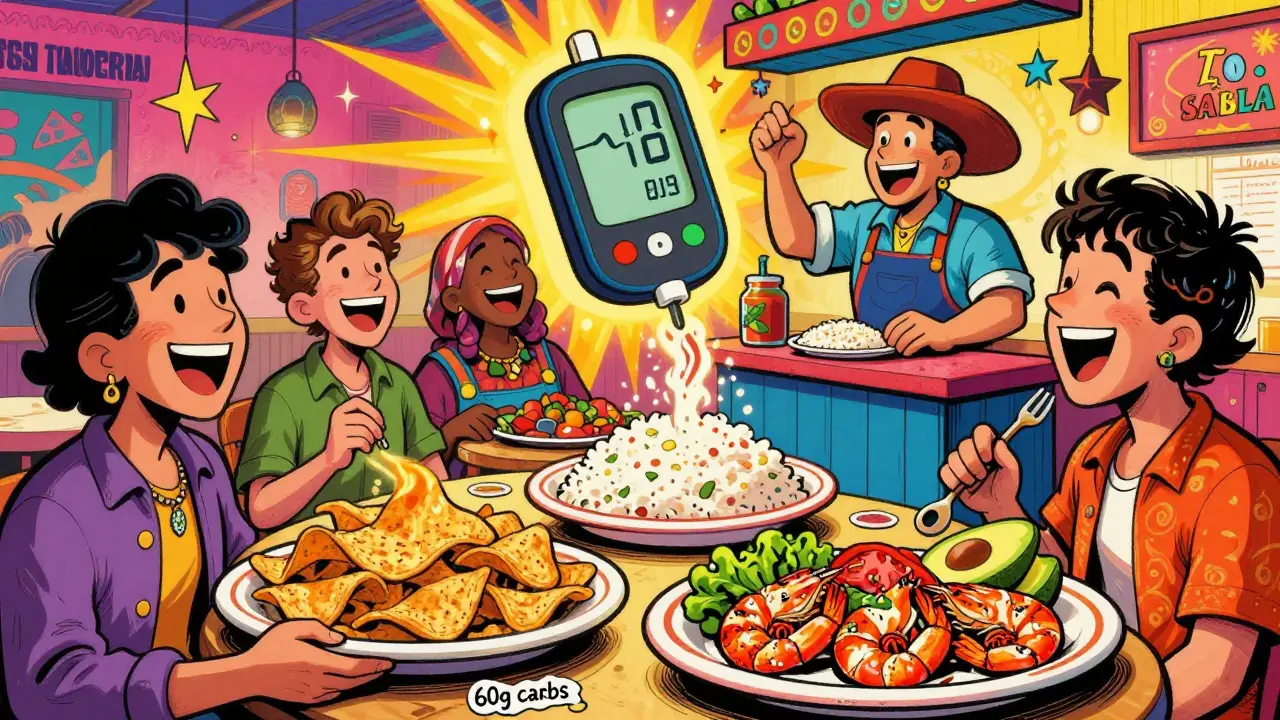
Use Technology-But Don’t Rely on It
The American Diabetes Association launched the "Restaurant Ready" app in 2023. It has verified carb counts for over 15,000 menu items across 500+ chains. Accuracy is 92%. That’s better than most restaurant labels. Use it. But don’t trust every menu tag. A 2023 ADA review found only 32% of restaurants list accurate carb info-even if they claim to. If you have a continuous glucose monitor (CGM), use it. Many people don’t realize their post-meal spike isn’t from the steak-it’s from the sauce. A CGM shows you exactly what works for your body. Some hospitals are now testing apps that sync your CGM data with restaurant menus. Early results show 32% better glucose control when diners get real-time feedback.What to Order-And What to Avoid
Here’s a quick guide for common cuisines:- Italian: Grilled fish or chicken with marinara (not alfredo), side of steamed veggies. Skip the bread. No pasta unless it’s half a serving.
- Mexican: Chicken or shrimp fajitas with peppers and onions, no rice or beans. Or a taco salad with lettuce, tomato, grilled meat, and light dressing.
- Chinese: Steamed chicken or tofu with broccoli. Ask for sauce on the side. No fried rice, no lo mein.
- Steakhouse: Lean cut of steak, grilled asparagus, side salad. Skip the baked potato and creamed spinach.
- Fast Food: Grilled chicken wrap (no sauce), side salad, water. Avoid wraps with tortillas-they’re loaded with carbs.
Bring Your Tools
Always carry a fast-acting glucose source-like glucose tablets or juice-in case your meal is delayed. About 23% of people with diabetes report a low-blood-sugar episode while dining out. Waiting 45 minutes for your food? You might need a snack. Bring your meter. Check your glucose before you eat and two hours after. That tells you what works. If you’re on insulin, know your carb-to-insulin ratio. If you’re not, still track what you eat. A simple notebook or phone note helps you spot patterns over time.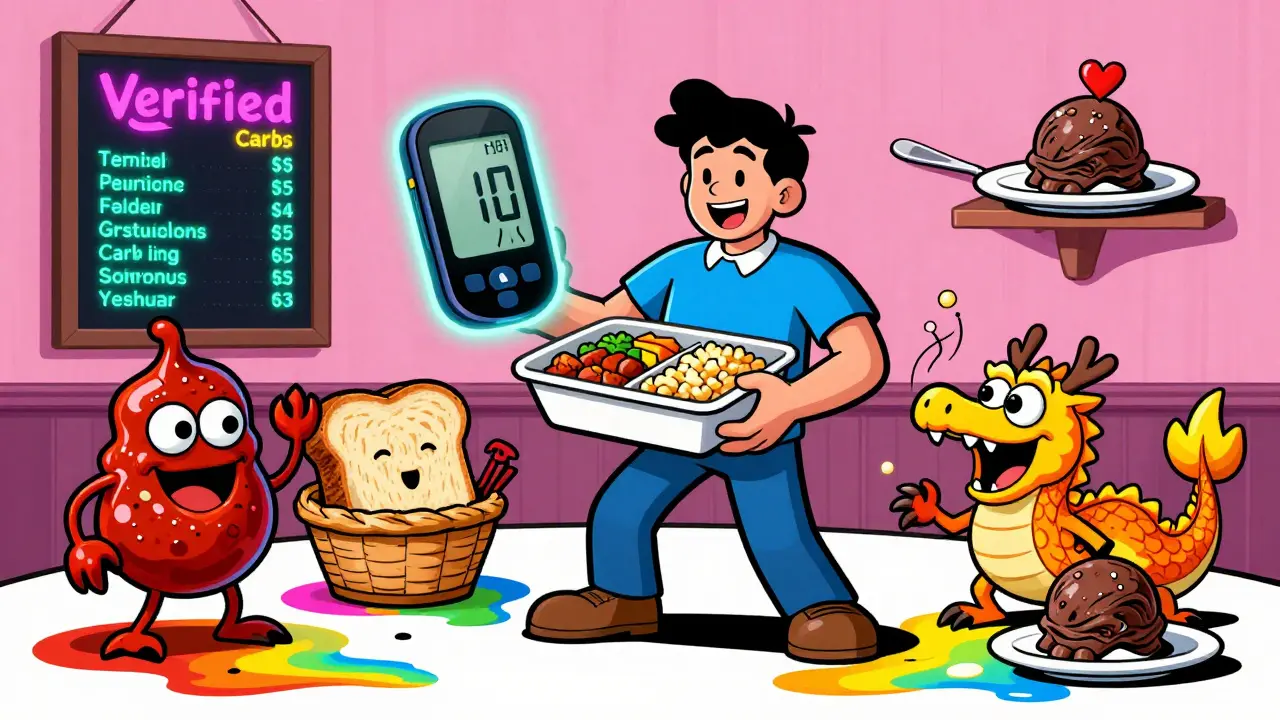
It’s Not Perfect-And That’s Okay
You’re not going to nail it every time. Some meals will spike your glucose. That’s normal. The goal isn’t perfection-it’s progress. One study showed people who used these strategies consistently for six months lowered their A1c by 0.8% to 1.2%. That’s a big win. And don’t feel guilty for asking for changes. Your health matters more than someone’s idea of "how a meal should be served." Most servers are used to requests. If they’re confused, just say: "I have diabetes and need to keep my carbs low. Can you help?" You’d be surprised how many say, "Of course. We can do that."What About Dessert?
Dessert doesn’t have to be off-limits. But it needs planning. If you want a small scoop of ice cream, skip the carbs at dinner. Have a salad and grilled chicken instead. Or share a dessert with your table. One bite is enough. Dark chocolate (70% or higher) is better than cake-it has less sugar and more fiber.Why This Works
This isn’t just advice-it’s science. The plate method is backed by the CDC and the American Diabetes Association. Portion control reduces calorie intake and prevents blood sugar spikes. Hidden carb awareness stops surprises. Planning reduces stress. Technology gives you data. All of it adds up. You don’t need to eat like a lab rat. You just need to eat with awareness. The goal is to enjoy life without letting diabetes control your choices. And you can do that-anywhere, anytime.Can I still eat pasta when I have diabetes?
Yes, but in small amounts. Stick to half a cup of whole grain pasta, paired with a large portion of vegetables and lean protein. Avoid creamy sauces-they’re high in carbs and fat. Tomato-based sauces are better. Always check the carb count on the package if you’re unsure.
Are salads always a safe choice?
Not always. Many salads come with croutons, dried fruit, cheese, and sugary dressings. A Caesar salad can have 40+ grams of carbs. Always ask for dressing on the side, skip the toppings you don’t need, and choose grilled chicken or shrimp as your protein. A simple garden salad with olive oil and vinegar is your safest bet.
What if the restaurant doesn’t have low-carb options?
You can still make it work. Order a grilled protein-chicken, fish, steak-and ask for double vegetables instead of rice or potatoes. Even at burger joints, you can ask for a lettuce wrap. Most places will accommodate if you ask politely. If they can’t, bring a small snack like nuts or cheese to balance your meal.
Do I need to count carbs every time I eat out?
Not if you use the plate method. It gives you a visual guide without numbers. But if you’re on insulin or want tighter control, counting helps. Use apps like Restaurant Ready or check online menus ahead of time. Over time, you’ll learn what portions equal 15-30 grams of carbs. It becomes second nature.
Why do I still spike after eating "healthy" food?
Because "healthy" doesn’t mean low-carb. A chicken wrap might have a whole wheat tortilla (30+ grams), plus sauce and veggies. A grilled salmon with quinoa? That’s 45 grams of carbs. Even fruit, nuts, and yogurt can add up. Always look beyond the label. Ask about sauces, sides, and cooking methods. Your body responds to total carbs-not marketing terms.
Can I drink alcohol while eating out?
Yes, but be careful. Beer and sweet cocktails are high in carbs. A 12-ounce beer has 10-15 grams. A margarita? Up to 30. Stick to dry wine, light beer, or spirits with soda water and lime. Never drink on an empty stomach-it can cause low blood sugar. Always check your glucose before and after.
How do I handle social pressure to eat more?
You don’t need to justify your choices. Say, "I’m watching my carbs for my health," and leave it at that. Most people understand. If someone pushes, it’s okay to say, "I’ve learned this works best for me," and change the subject. Your health comes first. You’re not being difficult-you’re being responsible.
What if I make a mistake and my blood sugar spikes?
Don’t panic. One spike doesn’t ruin your progress. Check your glucose, drink water, and move around a bit. If you’re on insulin, follow your correction plan. Learn from it: What caused it? Was it the sauce? The portion? The timing? Write it down. That’s how you get better-not by being perfect, but by being aware.




January 27, 2026 AT 22:28
Linda O'neil
The plate method changed everything for me. I used to stress over every carb count until I just started visualizing the plate. Half veggies, quarter protein, quarter carbs-it’s stupid simple and it works. No apps needed. I’ve been eating out twice a week for six months and my A1c dropped from 7.8 to 6.4. Seriously, try it.
January 29, 2026 AT 09:41
James Dwyer
I used to think eating out meant giving up control. Turns out, it just means being a little more intentional. Asking for sauce on the side? Done. Skipping the bread basket? Easy. Sharing a meal? Best decision ever. Diabetes doesn’t get to ruin my social life.
January 30, 2026 AT 11:06
jonathan soba
Let’s be real-this whole ‘plate method’ is just a repackaged version of portion control that nutritionists have been pushing since 2005. The real issue? Restaurants are designed to exploit insulin resistance. The food industry profits from your glucose spikes. This article treats symptoms, not the system. And don’t even get me started on ‘Restaurant Ready’-it’s a corporate partnership disguised as a tool.
January 31, 2026 AT 14:17
Chris Urdilas
Look, I used to think ‘healthy’ meant ‘low-carb’ until I realized my quinoa salad had more carbs than my old burger. Turns out, ‘healthy’ is just marketing with a side of guilt. I now order steak with a side of broccoli and ask for the potatoes to be ‘left in the kitchen.’ It’s not fancy, but it works. And no, I don’t care if the server thinks I’m weird. My glucose meter doesn’t judge.
Also, ‘light’ dressing? More like ‘light on nutrients, heavy on sugar.’ I’ve started bringing my own olive oil and vinegar. It’s embarrassing, sure-but so is passing out at the dinner table.
And yes, I’ve ordered a burger wrapped in lettuce. No, I don’t feel like a circus act. Yes, people stare. I smile and say, ‘It’s not for you, it’s for me.’
Also, if you’re on insulin and not checking your glucose before and after meals? You’re flying blind. And that’s not brave-it’s reckless.
Pro tip: If you’re at a buffet, walk the whole line first. Then pick one thing. One. And eat slowly. Your pancreas will thank you.
February 1, 2026 AT 13:51
Phil Davis
People act like this is some revolutionary guide. It’s not. It’s common sense. But I guess when you’ve been bombarded with ‘low-fat’ lies for decades, even basic math feels like a revelation.
I used to think ‘gluten-free’ meant ‘diabetes-friendly.’ Spoiler: it doesn’t. Same with ‘organic.’ Same with ‘natural.’ The sugar’s still there.
My favorite move? Ordering the appetizer as my main. Grilled shrimp skewers? Perfect. No rice, no sauce, no drama. And if they bring bread? I just push it to the side. No explanation needed.
February 1, 2026 AT 16:37
Irebami Soyinka
Y’all in the West be acting like you just discovered fire. In Nigeria, we’ve been eating with awareness since forever. We don’t need a plate method-we know our food. Plantain? Boiled, not fried. Rice? Small portion, with bitterleaf soup. No sauce, no sugar, no problem. You think this is hard? Try surviving on yam and palm oil with no insulin and no app. 😤
And don’t get me started on ‘light dressing.’ That’s just sugar with a fancy name. We call that ‘poison in a bottle.’
Stop looking for apps. Look at your grandma’s kitchen. She knew what to eat. You just forgot.
February 1, 2026 AT 20:57
Kevin Kennett
I love how this article doesn’t shame people for having a bad day. That’s rare. I had a meal last week where I ate the whole basket of bread. Felt awful. But I didn’t quit. I checked my glucose, walked around the parking lot for 15 minutes, and drank water. Then I ordered a salad for the rest of the night.
It’s not about being perfect. It’s about being consistent. And if you’re struggling? You’re not alone. I’ve been doing this for 12 years. Some days are harder than others. But you keep showing up. That’s what matters.
Also, if you’re on metformin and think you can eat whatever you want? You’re wrong. It’s not a magic pill. It’s a tool. Like a seatbelt. Doesn’t make you invincible.
And yes, I’ve asked for no sauce. Yes, I’ve asked for half portions. Yes, I’ve been told ‘we don’t do that here.’ I walked out. Came back the next week. They remembered me. Now they bring my steak with extra veggies without me asking.
It’s not about being difficult. It’s about being your own advocate. And that’s worth it.
February 3, 2026 AT 01:26
Jess Bevis
Steamed fish. Veggies. No rice. Done.
February 4, 2026 AT 04:26
Rose Palmer
It is imperative to underscore the scientific validity of the plate method as endorsed by both the Centers for Disease Control and Prevention and the American Diabetes Association. The empirical evidence supporting portion control and carbohydrate awareness is robust and unequivocal. Furthermore, the integration of continuous glucose monitoring technology has demonstrated statistically significant improvements in glycemic variability. I would encourage all individuals managing diabetes to adopt these evidence-based practices with diligence and consistency, as they constitute the gold standard in outpatient nutritional management.
February 4, 2026 AT 16:43
Kathy Scaman
So I tried the plate method at a Thai place last night. Ordered grilled chicken, asked for extra veggies, skipped the rice. Server looked at me like I asked for a unicorn. But I got it. Then I ordered a mango sticky rice dessert. Because I’m human. My glucose spiked to 210. I didn’t cry. I laughed. And I’ll do it again tomorrow. That’s the real secret. You don’t have to be perfect. You just have to keep showing up.
February 6, 2026 AT 02:27
Rhiannon Bosse
Okay but… what if the ‘Restaurant Ready’ app is just a Trojan horse for Big Pharma? I mean, why would the ADA launch an app that only works with certain chains? Coincidence? I checked the parent company-yep, they’re funded by a pharmaceutical conglomerate that sells insulin pens. And now they’re telling us to ‘use the app’? Hmm.
And don’t even get me started on ‘gluten-free’ tortillas. They’re just sugar bombs with a new label. I’ve seen the ingredient lists. It’s not food. It’s science fiction.
Also, why do all these ‘healthy’ restaurants use cornstarch in everything? It’s everywhere. Even in the ‘organic’ broth. I think they’re all in on it. The system wants us to spike so we keep buying meds.
And what about the servers? Do you think they’re told to lie about sauces? I swear, every time I ask, they give me a weird look. Like I’m asking for a secret code.
My theory? They’re all part of the Carb Conspiracy. And the plate method? It’s just a distraction. Keep your eyes open, folks. The real enemy isn’t the bread basket-it’s the people who designed it.