Kidney Safety: Protect Your Kidneys from Medication Risks and Hidden Dangers
When you take a pill, your kidneys, organs that filter waste and balance fluids in your body. Also known as renal system, they work nonstop to keep your blood clean and your electrolytes in check. But many everyday drugs — from painkillers to antibiotics — can quietly damage them, especially if you’re older, diabetic, or on multiple medications. Kidney safety isn’t just for people with existing disease; it’s something everyone needs to understand before popping another pill.
Your kidneys don’t scream when they’re under stress. Unlike a heart attack or a broken bone, kidney damage often shows up too late — after 50% of function is already gone. That’s why medication side effects, unintended harm caused by drugs even when taken correctly are so dangerous for renal health. NSAIDs like ibuprofen, certain antibiotics, and even some supplements can reduce blood flow to the kidneys or build up toxins if your filtering system is already slowed. And it’s not just about dosage. drug interactions, when two or more medications change how each other works in your body are a silent killer. For example, combining a diuretic with an ACE inhibitor might sound logical to a doctor, but if your kidneys are already strained, it can crash your renal function overnight.
People often don’t realize that kidney damage, the gradual loss of kidney filtering ability due to toxins, disease, or drugs can come from things you think are harmless. Herbal teas marketed as "detox"? Some contain aristolochic acid — a known kidney toxin. Over-the-counter weight loss pills? Many hide banned stimulants that spike blood pressure and stress your kidneys. Even dehydration from skipping water while taking a new medication can turn a minor issue into acute kidney injury. The good news? Most kidney damage from drugs is preventable if you know the warning signs: swelling in your ankles, fatigue, changes in urination, or unexplained nausea.
What you’ll find here isn’t a list of scary drug names. It’s a practical guide to how real people — like you — can protect their kidneys while still managing their health. You’ll see how to spot risky combinations, when to ask your doctor for a kidney check, and which common meds are most likely to cause trouble. Whether you’re on blood pressure pills, diabetes drugs, or just taking ibuprofen for back pain, these posts give you the tools to act before it’s too late. No fluff. No fearmongering. Just clear, real-world advice from people who’ve been there.
 9 December 2025
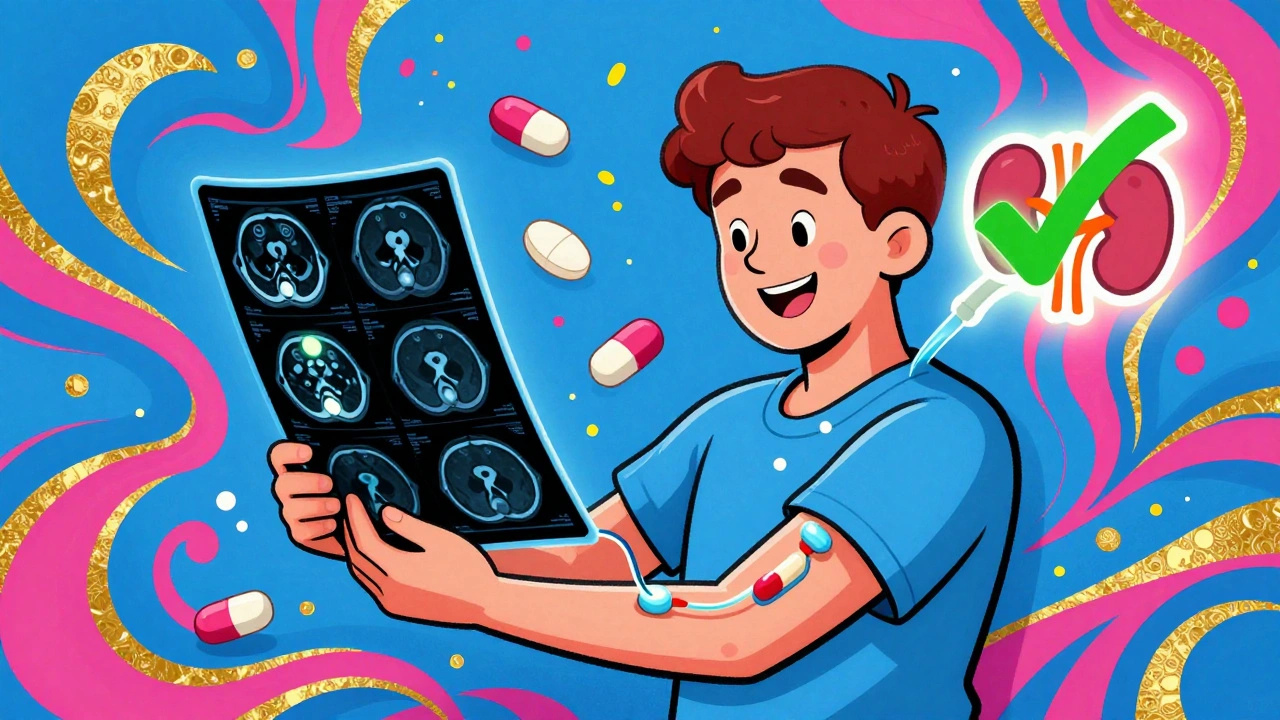
Metformin and Contrast Dye: What You Need to Know About Lactic Acidosis and Kidney Risk
Metformin and contrast dye don't need to be kept apart for most patients. Learn the real risk of lactic acidosis, who needs to stop metformin, and when it's safe to keep taking it during CT scans.