

When you start taking opioids for chronic pain, you’re told about the risks: drowsiness, nausea, addiction. But few warn you about the one thing that can make your life unbearable-opioid-induced constipation. It doesn’t fade away like nausea. It doesn’t improve with time. It gets worse. And if you don’t handle it right, you might end up quitting your pain meds altogether-even if they’re working perfectly.
Here’s the hard truth: 40% to 95% of people on long-term opioids develop this problem. That’s not rare. That’s the norm. And most doctors still don’t talk about it until you’re already stuck-literally. You’re not alone if you’ve tried Miralax, increased your fiber, or drank more water-and still nothing happened. That’s because opioid-induced constipation (OIC) doesn’t work like regular constipation. Your gut isn’t just slow. It’s frozen.
Why Opioid Constipation Is Different
Opioids bind to receptors in your intestines, not just your brain. These receptors control how much fluid your bowels absorb, how fast food moves through, and whether your muscles contract to push waste out. When opioids lock onto them, your gut stops working like it should. Secretions dry up. Muscles go slack. Stool hardens. And no amount of prunes or bran cereal fixes that.
That’s why standard advice-eat more fiber-can backfire. Fiber ferments in a sluggish gut. It swells. It causes bloating. It can even lead to fecalomas, which are hard masses of stool that block your intestines. The American Pain Society now says: Don’t push high-fiber diets for OIC. In fact, 25-40% of patients see their symptoms get worse with extra fiber.
First-Line Treatment: What Actually Works
If you’re on opioids and not already on a laxative, you’re behind. The first step isn’t fancy. It’s simple: osmotic laxatives. Polyethylene glycol (PEG), sold as Miralax, is the gold standard. Take 17-34 grams daily. It pulls water into your colon without irritating your gut. It’s safe for long-term use. It doesn’t cause cramps like stimulant laxatives.
Stimulant laxatives like senna or bisacodyl can help too, but they’re better for short-term use. They force your bowels to contract. Over time, your body can get used to them, and you’ll need more. Still, many patients start here because they’re cheap and available over the counter.
But here’s the catch: conventional laxatives fail 50-75% of the time for OIC. Why? Because they don’t fix the root problem. They’re trying to move a car with a dead battery. You need to restart the engine.
Second-Line Options: The Prescription Game Changers
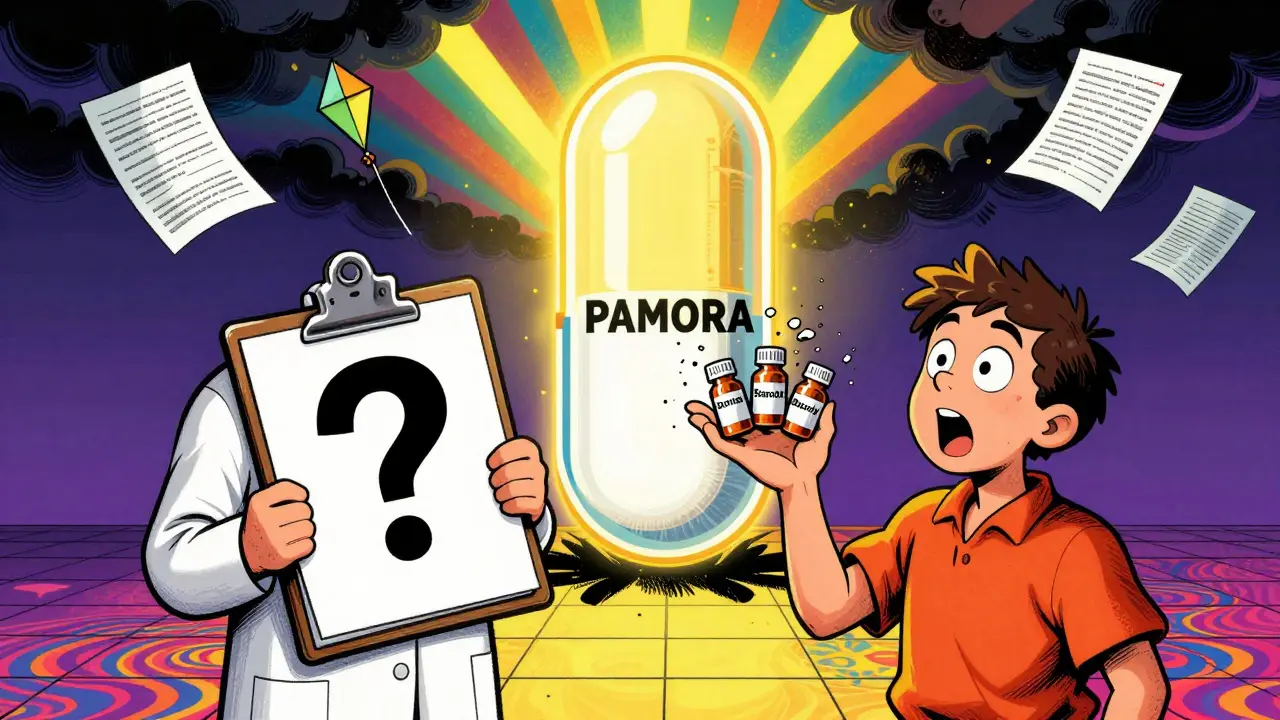
When laxatives don’t cut it, you need something that targets the opioid receptors in your gut-without touching your pain control. That’s where PAMORAs come in. These are drugs designed to block opioid effects in your intestines while leaving your brain’s pain relief intact.
Methylnaltrexone (Relistor®) is given as a shot under the skin. It works fast-often within 4 hours. It’s approved for people with advanced illness, like cancer or end-stage organ disease. Many patients love it. But it’s expensive. And 47% of users report pain or redness at the injection site. On Drugs.com, it has a 5.6/10 rating.
Naloxegol (Movantik®) is a pill. Taken once a day. Approved for chronic non-cancer pain. It’s easier than injections. Side effects? Mostly stomach pain and diarrhea. About 59% of users say it gives them moderate to significant relief. It costs $500-$1,200 a month, depending on insurance.
Naldemedine (Symcorza®) is also a daily pill. Approved in 2017 for adults with chronic non-cancer pain. In 2023, the FDA expanded its use to children as young as 12. It’s better tolerated than naloxegol, with fewer stomach issues. Average rating: 6.8/10. Still pricey. And 38% of users report abdominal pain.
Lubiprostone (Amitiza®) is different. It’s not a PAMORA. It’s a chloride channel activator. It makes your gut secrete fluid. FDA-approved for OIC since 2013. Works well-but 30% of people get nauseous. And it was originally only approved for women because early trials didn’t include enough men. Turns out, it works just as well in men. Still, many prescribers don’t know that.
Why Most People Don’t Get Proper Care
Here’s the scandal: only 15-30% of patients on long-term opioids get preventive laxatives, even though guidelines have said to do this since 2017. Why? Doctors don’t ask. Nurses aren’t trained. Patients don’t speak up because they think it’s normal.
One study found that 80% of nurses said a simplified OIC protocol was incredibly helpful. But only 19% of general practitioners agreed. Why? Because the old guidelines were too complex. Too many steps. Too many scales. Too many words.
Meanwhile, 68% of opioid users on Reddit say they’ve changed their laxative dose on their own because their doctor didn’t help. One man wrote: “I took three Miralax packets a day because my doctor said ‘try one.’ I was stuck for 10 days.”
And then there’s the cost. Insurance often requires you to try and fail three laxatives before covering a PAMORA. That’s called step therapy. It’s cruel. You’re not just wasting time-you’re suffering. And if you quit your opioid because of constipation, your pain comes back. You lose control.

What You Should Do Right Now
If you’re on opioids and haven’t been screened for constipation:
- Ask your doctor to check your bowel function using the Bristol Stool Scale or the OIC Severity Scale.
- Start polyethylene glycol (Miralax) at 17g daily. Increase to 34g if needed after 3 days.
- Drink water. Not a lot-just enough. You don’t need 10 glasses. 6-8 is fine. Too much can cause bloating.
- If no improvement in 5-7 days, ask about a PAMORA. Don’t wait. Don’t hope it gets better.
- Bring this article to your next appointment. Print it. Highlight the parts.
Don’t wait for your doctor to bring it up. They might forget. Or think you’ll just deal with it. You shouldn’t have to.
The Bigger Picture
The opioid-induced constipation market is growing fast. In 2023, it was worth $2.1 billion. By 2028, it’s expected to hit $3.4 billion. Why? Because 100 million Americans got opioid prescriptions in 2022. And 40-50 million of them are suffering from OIC.
New treatments are coming. A pill combining naloxone and PEG is in Phase III trials. If approved in 2024, it could be the first combo therapy that fixes both the constipation and the need to take multiple pills.
But until then, the tools are here. You just need to ask for them. And you need to know: you’re not weak. You’re not lazy. Your body is reacting to a drug that was never meant to be taken for years. You deserve relief.
Managing OIC isn’t about eating more kale. It’s about using the right science. The right meds. The right timing. And yes-it’s okay to demand better care.
Can I just use Miralax for opioid-induced constipation?
Miralax (polyethylene glycol) is the best first-line option for opioid-induced constipation. It’s safe, effective, and doesn’t irritate your gut. But it only works for about 25-50% of people with OIC. If you’ve been taking it for a week and still haven’t had a bowel movement, you likely need a stronger option like a PAMORA. Don’t keep increasing the dose hoping it’ll work-talk to your doctor instead.
Why won’t my doctor prescribe a PAMORA right away?
Many doctors follow outdated guidelines that say to try over-the-counter laxatives first. Insurance companies also require step therapy-you have to fail cheaper options before they’ll pay for a PAMORA. But this approach ignores how OIC works. It’s not a simple bowel slowdown. It’s a biological blockade. Waiting weeks or months to treat it can lead to opioid discontinuation, which hurts your pain control. Ask your doctor to explain why they’re delaying treatment.
Is it safe to take laxatives long-term with opioids?
Yes, osmotic laxatives like polyethylene glycol are safe for long-term use. They don’t cause dependency or damage your colon. Stimulant laxatives like senna or bisacodyl should be used cautiously over time-they can lead to tolerance. PAMORAs are also designed for ongoing use. The key is matching the treatment to your symptoms and adjusting as needed. Regular check-ins with your doctor every 4-6 weeks are recommended.
Can I take fiber supplements if I have opioid-induced constipation?
No-not without talking to your doctor first. While fiber helps general constipation, it can make OIC worse. Opioids slow gut movement, so fiber ferments and swells, causing bloating, gas, and even intestinal blockages. The American Pain Society and Mayo Clinic both advise against high-fiber diets for OIC. Stick to osmotic laxatives and hydration instead.
What’s the fastest way to get relief from OIC?
Methylnaltrexone (Relistor®) injections work the fastest-often within 4 hours. It’s the only option with this speed. But it requires a shot. For pills, naldemedine and naloxegol take 12-24 hours. If you need immediate relief, ask your doctor about a single dose of methylnaltrexone. Many patients use it as a rescue treatment while waiting for daily meds to kick in.
Will I have to take these meds forever?
Only as long as you’re on opioids. Once you stop taking them, your bowel function usually returns to normal within days or weeks. You won’t need ongoing treatment. But if you’re on opioids for chronic pain, you’ll likely need ongoing OIC management. Think of it like blood pressure medication-you take it because the condition doesn’t go away. It’s not addiction. It’s medical necessity.
Can children get opioid-induced constipation too?
Yes. In March 2023, the FDA approved naldemedine (Symcorza®) for children as young as 12 with OIC. This was a major step forward. Before that, treatment options for kids were limited to off-label laxatives or injections. Now there’s a safe, FDA-approved daily pill. If your child is on opioids for chronic pain, ask their doctor about OIC screening and treatment options.





January 25, 2026 AT 08:24
Alexandra Enns
Let me just say this - if you’re still taking Miralax for OIC, you’re doing it wrong. I’ve been on opioids for 7 years, and I watched my gut turn into a concrete slab until I demanded Relistor. No more ‘try fiber first’ nonsense. That’s like giving a drowning man a snorkel. The FDA approved PAMORAs for a reason - because laxatives are band-aids on a gunshot wound. And yes, I know the price sucks, but your colon doesn’t care about your deductible.
January 26, 2026 AT 04:59
Marie-Pier D.
Thank you for writing this. 🙏 I was so scared to speak up about my constipation - thought it was just ‘part of the deal.’ My nurse finally said, ‘You’re not weak, you’re just on a drug that hates your guts.’ I started Miralax, then asked for Movantik. Three days later, I cried in the bathroom because I finally felt normal again. You’re not alone. And you deserve relief. 💛
January 27, 2026 AT 05:06
Patrick Gornik
Let’s deconstruct the pharmacological hegemony here. The opioid receptor is a G-protein-coupled receptor - a molecular switchboard - and when mu-opioid agonists bind, they trigger Gi/o-mediated inhibition of adenylate cyclase, reducing cAMP, which in turn suppresses enteric neuronal firing and smooth muscle contractility. Ergo: peristalsis halts. Laxatives are epiphenomenal interventions. PAMORAs are the only true antagonistic countermeasures. The real scandal? Pharma’s lobbying to keep step therapy alive because it preserves revenue streams for OTC laxatives. This isn’t medicine - it’s market arbitrage disguised as clinical protocol.
Also, fiber? Please. It’s like pouring wet cement into a stopped sewer pipe. The American Pain Society is right - you’re not constipated, you’re biologically immobilized.
January 28, 2026 AT 03:19
Tommy Sandri
This is a well-researched and clinically relevant summary. The distinction between opioid-induced constipation and functional constipation is critically underappreciated in primary care settings. The data on PAMORA efficacy, particularly naldemedine’s approval in pediatric populations, represents a significant advancement in pain management safety. I would encourage clinicians to integrate routine bowel function screening into opioid therapy protocols, ideally using standardized tools such as the Bristol Stool Scale. Patient education remains the most underutilized intervention.
January 28, 2026 AT 06:18
Juan Reibelo
Okay, so… I’ve been on oxycodone for five years… and yes, I tried everything… fiber… prune juice… enemas… I even bought a stool softener that cost $80… and nothing… until my GI doc said, ‘Try naldemedine.’ One pill. Daily. And… I… finally… had… a… bowel… movement… without… crying… and… screaming… and… wondering… if… I’d… die… stuck… in… my… own… body…
It’s not ‘just constipation.’ It’s torture. And no, your doctor doesn’t know this. You have to teach them.
January 28, 2026 AT 22:55
Luke Davidson
Bro I was in the ER last month because I hadn't pooped in 14 days and my stomach looked like a basketball. The nurse looked at me like I was a myth. But then she read the article I printed and said 'ohhhhhhhhhhhhh' and called my pain doc. We switched me to Movantik. I'm not gonna lie, I cried in the bathroom that night. Not from pain. From relief. You're not broken. Your body just needs the right key. And you deserve to have it.
January 29, 2026 AT 22:25
asa MNG
ok so i was on miralax 3x a day for 2 years and my doc said ‘ur fine’ but i was literally bleeding from straining and my butt looked like a raisin?? so i started taking naldemedine on my own bc i was tired of being a prisoner in my own colon. now i poop like a normal human. also my dog smells better. no joke. 10/10 would recommend not dying of constipation. ps my insurance denied it 3 times so i paid cash. worth every penny. 💩🔥
January 31, 2026 AT 03:21
Josh McEvoy
imagine being so constipated you start questioning your life choices… then you take a pill and suddenly… you’re free… like… really free… like… you can go to the mall… and not think about your colon… for 5 minutes…
relistor saved me. no cap. 🥲
January 31, 2026 AT 05:15
Heather McCubbin
People who take opioids are just lazy. If you really wanted to poop you’d drink more water and eat kale. This whole thing is just another excuse to get more drugs. You think you’re sick? You’re just weak. My grandma took morphine for cancer and never complained about constipation. She had grit. You need grit. Stop whining and go eat some bran muffins.
January 31, 2026 AT 20:36
Amelia Williams
You guys are literally changing lives with this info. I showed this to my 16-year-old cousin who’s on opioids after spinal surgery. Her doctor didn’t even mention OIC. Now she’s on naldemedine and actually laughing again. This isn’t just medical advice - it’s a lifeline. Thank you for speaking up. Keep going. We’re rooting for you.
February 1, 2026 AT 09:54
Viola Li
Why are we even giving opioids to people with chronic pain? This is what happens when you let Big Pharma run medicine. Constipation is the least of your problems. Addiction, overdose, depression - this is a system designed to keep people dependent. You think PAMORAs are the answer? No. The answer is to stop prescribing opioids like candy. This article is just a band-aid on a broken system.
February 2, 2026 AT 18:08
Dolores Rider
you know what’s really happening?? the government is putting laxatives in the water supply to keep us docile. that’s why miralax doesn’t work - it’s part of the mind control. they want us stuck so we don’t protest. and the PAMORAs? they’re only available to rich people because the elites don’t want the masses to be free. i know this because my neighbor’s cousin’s dog got a prescription and now it’s running around like a wild thing. they’re testing this on animals too. i’m not crazy. i’m just awake.