

Most people with fatty liver don’t know they have it-until something goes wrong. By the time symptoms show up, the damage might already be serious. That’s why understanding the difference between NAFLD and NASH matters more than ever. These aren’t just medical terms. They’re warning signs on a spectrum that can lead to cirrhosis, liver failure, or even cancer-if ignored.
What’s the Real Difference Between NAFLD and NASH?
NAFLD stands for Non-Alcoholic Fatty Liver Disease. It’s an umbrella term for when fat builds up in your liver-not because you drink alcohol, but because of how your body handles sugar, fat, and insulin. Think of it like a garage filled with too many cars. The liver doesn’t break them down fast enough, so they pile up.
But not all fatty livers are the same. NAFLD splits into two paths:
- NAFL (Non-Alcoholic Fatty Liver): Just fat. No inflammation. No cell damage. This is the early stage. Most people here won’t ever develop serious problems.
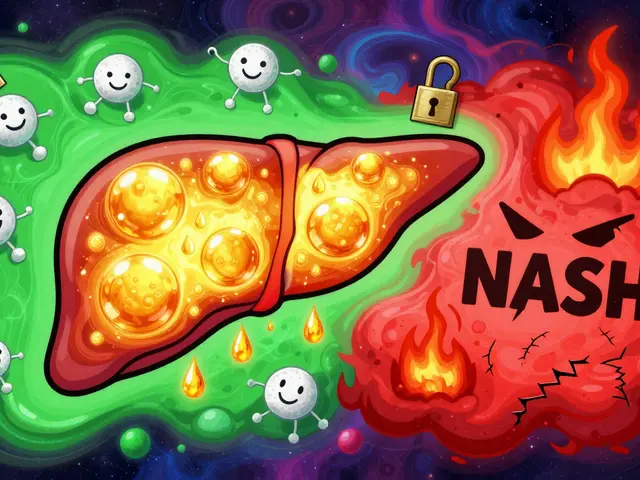
- NASH (Non-Alcoholic Steatohepatitis): Fat plus inflammation and liver cell injury. This is where things turn dangerous. The liver starts to scar.
The shift from NAFL to NASH isn’t random. It’s driven by metabolic chaos-high blood sugar, belly fat, high triglycerides, and insulin resistance. When these factors team up, your liver doesn’t just store fat. It starts to fight itself.
Fibrosis: The Silent Scarring Process
NASH doesn’t just stay as inflammation. Over time, it turns into fibrosis-the buildup of scar tissue. Think of it like a wound that never fully heals. Every time the liver gets damaged, it tries to repair itself. But too much repair = too much scar tissue.
Fibrosis is scored from 0 to 4:
- Stage 0: No scarring
- Stage 1: Minor scarring around blood vessels
- Stage 2: Scarring spreads to more areas
- Stage 3: Bridging fibrosis-scars start connecting, like bridges across the liver
- Stage 4: Cirrhosis. The liver is hardened, shrunken, and can’t function properly.
Here’s the scary part: 20-40% of people with NASH will develop cirrhosis within 10 to 20 years. And once you hit stage 3 or 4, your risk of liver cancer jumps. A 2022 study found that NASH patients with advanced fibrosis had a 10-year liver-related death rate of 12-25%. For those with early-stage disease? Just 0.5-2%.
The real kicker? Fibrosis stage predicts outcomes better than whether you have NASH or not. Two people with NASH can have wildly different futures-one with stage 1 fibrosis might never progress, while another with stage 3 could be headed for transplant.
How Do You Know If You Have NASH or Just NAFL?
You can’t tell by symptoms alone. Most people feel fine. That’s why NAFLD is called a silent disease.
Here’s how doctors figure it out:
- Blood tests: ALT and AST levels are often elevated. Normal ALT is 7-55 U/L. If yours is consistently above 40, especially with no alcohol use, it’s a red flag.
- Ultrasound: Can detect fat in the liver when it hits 20-30% of liver weight. But it misses mild cases and can’t tell if there’s inflammation or fibrosis.
- MRI-PDFF: The most accurate non-invasive way to measure fat. It’s expensive, though, and not always available.
- FibroScan: Measures liver stiffness. A reading above 7.1 kPa suggests significant fibrosis. It’s quick, painless, and becoming more common in clinics.
- FIB-4 Score: A simple formula using your age, platelet count, ALT, and AST. Over 1.30? Possible advanced fibrosis. Over 2.67? High probability.
- Liver biopsy: Still the gold standard. Only way to confirm NASH and stage fibrosis. But it’s invasive. Doctors only recommend it if non-invasive tests suggest advanced disease.
Here’s the catch: Up to 30% of people diagnosed with NASH based on blood tests or scans don’t actually have the inflammation seen on biopsy. That means some people are being told they have a serious condition when they might not. It’s why experts stress caution and avoid jumping to conclusions without solid evidence.

Who’s at Risk?
If you have any of these, you’re in the high-risk group:
- BMI of 30 or higher (obesity)
- Type 2 diabetes (50-70% of NASH patients have it)
- High blood pressure (60-75% of NASH cases)
- High triglycerides or low HDL (“good” cholesterol)
- Waist size over 40 inches for men, 35 for women
- Obstructive sleep apnea
These aren’t random conditions. They’re all signs of metabolic syndrome-your body’s system for handling energy is broken. And your liver pays the price.
One study tracked over 1,200 people for 15 years. Only 12% of those with simple fatty liver (NAFL) developed advanced fibrosis. But 42% of those with NASH did. The difference isn’t small. It’s life-changing.
Can You Reverse It?
Yes. But only if you act early.
Weight loss is the most powerful tool we have. Losing 5-7% of your body weight can reduce liver fat. Losing 10% or more? That’s when inflammation and fibrosis start to reverse.
A patient on a liver support forum shared: “I lost 25 pounds in 18 months. My biopsy showed NASH. My repeat biopsy? No NASH. Just simple fatty liver.” That’s not a miracle. That’s science.
Exercise helps-even without weight loss. Just 150 minutes a week of brisk walking cuts liver fat by 20-30%. Cutting sugar (especially fructose in soda and processed foods) and avoiding trans fats is just as important.
There’s no magic pill. But in March 2023, the FDA approved resmetirom (Rezdiffra), the first drug specifically for NASH patients with moderate to advanced fibrosis. In trials, it improved fibrosis in 26% of patients versus 10% on placebo. It’s not a cure. But it’s a start.
There are 37 more drugs in phase 3 trials. The future is coming. But right now, your lifestyle is still your best medicine.

The Big Change: MASLD and MASH
In June 2023, liver experts from the U.S., Europe, and beyond agreed: it was time to rename these conditions.
NAFLD became MASLD (Metabolic Dysfunction-Associated Steatotic Liver Disease). NASH became MASH (Metabolic Dysfunction-Associated Steatohepatitis).
Why? Because “non-alcoholic” was misleading. It implied the problem was just about what you didn’t drink. The real issue? What you do eat, how you move, and how your body metabolizes energy.
The new definition requires at least one metabolic risk factor-like diabetes, obesity, or high blood pressure-to diagnose MASLD. It’s more accurate. And it removes stigma.
By 2030, experts predict over one-third of the global population will have MASLD. That’s 2.7 billion people. And NASH-related liver transplants could jump from 10% to 25% of all transplants in the U.S.
What Should You Do Now?
If you’re healthy and have no risk factors? Keep doing what you’re doing.
If you have obesity, diabetes, high blood pressure, or high triglycerides? Get tested.
- Ask your doctor for an ALT test.
- If it’s high, ask about a FibroScan or FIB-4 score.
- If you’re overweight, aim for 7-10% weight loss. Start with cutting soda, walking 30 minutes a day, and eating more vegetables.
- Don’t wait for symptoms. By then, it’s often too late.
Liver disease doesn’t happen overnight. But it doesn’t reverse itself either. The window to stop it is open right now. Don’t wait for the next scan to show damage. Act before it’s written in scar tissue.
Can NAFLD turn into NASH even if I’m not overweight?
Yes. While obesity is the biggest risk factor, people with normal weight can still develop NASH if they have insulin resistance, high blood sugar, or abnormal cholesterol. This is called "lean NASH" and makes up about 10-20% of cases. It’s often missed because doctors assume only overweight people are at risk.
Does alcohol make NAFLD worse?
Even small amounts of alcohol can accelerate liver damage in people with NAFLD or NASH. While NAFLD is defined as occurring in people who drink little to no alcohol, experts now advise complete abstinence. Alcohol adds extra stress to an already overloaded liver and speeds up fibrosis.
Are there any supplements that help with fatty liver?
Vitamin E has shown modest benefit in non-diabetic NASH patients in clinical trials, but only under medical supervision. Omega-3s may help lower triglycerides but don’t reliably reverse liver inflammation. Avoid supplements like green tea extract or high-dose vitamin A-they can actually harm the liver. No supplement replaces weight loss, exercise, and cutting sugar.
How often should I get my liver checked if I have NAFLD?
If you have simple fatty liver (NAFL) and no other risk factors, check ALT and FIB-4 every 1-2 years. If you have NASH or metabolic syndrome, get checked every 6-12 months. If your FIB-4 is above 1.3 or FibroScan shows stiffness over 7.1 kPa, you should see a liver specialist.
Can I still drink coffee if I have NASH?
Yes-coffee may actually help. Multiple studies show that drinking 2-3 cups of black coffee a day is linked to lower liver enzyme levels, less fibrosis, and reduced risk of liver cancer in people with fatty liver disease. Avoid sugary coffee drinks, but plain black coffee is safe and potentially protective.
Is a liver transplant the only option for advanced NASH?
For end-stage cirrhosis or liver failure, transplant is the only cure. But it’s not the first step. Most people with NASH never reach that point. Early intervention-weight loss, exercise, and now new drugs like resmetirom-can stop progression. Transplants are reserved for those who’ve lost most liver function. About 1 in 4 liver transplants in the U.S. will be due to NASH by 2030.
Final Thought: It’s Not Just About the Liver
Your liver doesn’t work alone. It’s tied to your heart, your pancreas, your blood vessels. When your liver gets fatty, your whole metabolism is off-kilter. That’s why people with NASH die more often from heart attacks than liver failure.
The good news? The same changes that help your liver-eating real food, moving daily, losing weight-also lower your risk of diabetes, heart disease, and stroke. Fixing your liver isn’t just about saving an organ. It’s about saving your life.

January 17, 2026 AT 02:43
Cheryl Griffith
I didn't realize how silent this disease is until my dad got his FibroScan last year-he was shocked he had stage 2 fibrosis. He’s 52, not overweight, no diabetes, just ate too much processed stuff for decades. Now he walks every morning and swapped soda for sparkling water. It’s scary how slow it creeps up on you.
Also, coffee. I started drinking black coffee like it’s medicine. And honestly? It’s the only thing I haven’t quit.
Don’t wait for symptoms. Get tested if you’ve got any metabolic red flags.
January 17, 2026 AT 10:12
Ryan Hutchison
Let’s be real-this isn’t a liver problem, it’s a cultural problem. We’ve turned America into a sugar factory with legs. Fast food chains are literally weaponizing fructose. And now we’re surprised people’s livers are turning to mush?
Meanwhile, Europe’s eating olive oil, vegetables, and actual meals. Their NAFLD rates are half ours. It’s not genetics. It’s policy. It’s corporate greed. It’s time we stop treating this like a personal failure and start holding Big Food accountable.
Also, resmetirom? Great. But why did it take 20 years and a billion dollars to approve a drug for a condition caused by soda and chips?
January 18, 2026 AT 15:47
Samyak Shertok
Oh wow. So the liver is just a metaphor for capitalism? Fat accumulation = overconsumption? Fibrosis = systemic collapse? I’m so moved.
Meanwhile, in India, we’ve had fatty livers since the 90s-because our grandmas fried everything in ghee and we called it ‘good for the soul.’ Now you Westerners are shocked?
Also, ‘lean NASH’? Cute. My cousin is 5’9”, 120 lbs, drinks 3 lattes a day with caramel syrup, and his ALT is 180. He thinks he’s ‘healthy’ because he does yoga.
Stop romanticizing the liver. It’s just a tired organ trying to survive your Instagram diet.
January 20, 2026 AT 08:56
Joie Cregin
My mom was diagnosed with MASLD last year. She cried for three days. Then she started meal prepping with my sister. Now they’re doing weekly Zumba videos together. She lost 14 pounds. Her FibroScan dropped from 8.9 to 6.2.
It’s not about perfection. It’s about showing up. Even if it’s just swapping one soda for sparkling water. Even if it’s just walking around the block after dinner.
And yes-coffee. Black. No sugar. Just me and my liver, sipping in peace. ☕️❤️
January 21, 2026 AT 08:14
Melodie Lesesne
I had a FIB-4 score of 1.4 last year. Scared the crap out of me. Went to my doctor and asked for a FibroScan. Turned out it was stage 1. Just fat, no inflammation. My doctor said, ‘You’re lucky.’
So I cut out the candy bars. Started eating more beans and greens. Walked after dinner. Didn’t track macros. Didn’t join a program. Just… changed a few habits.
Two years later, my FIB-4 is 0.8. No meds. No surgery. Just consistency.
It’s not sexy. But it works.
January 22, 2026 AT 10:04
Corey Sawchuk
My brother got diagnosed with NASH last year. He’s 38. Skinny. Runs marathons. No diabetes. Turns out he drinks 4 diet sodas a day and eats protein bars for breakfast.
Fructose. Hidden sugar. That’s the real villain.
He quit all the ‘healthy’ processed stuff. Now he eats eggs, spinach, and chicken. No shakes. No bars. Just food.
His ALT dropped 60 points in 6 months.
Don’t trust labels. Trust whole foods.
January 22, 2026 AT 23:52
Stephen Tulloch
Resmetirom? Pfft. I mean, sure, it’s a step. But let’s be real-this is just Big Pharma’s way of monetizing the guilt of people who ate one too many donuts.
I’ve got a 3-year-old who already has elevated ALT. His pediatrician said ‘watch his sugar.’
So I banned juice. Started making smoothies with kale and almond butter. He’s obsessed with blueberries now. He calls them ‘liver superheroes.’
Meanwhile, my cousin’s kid is on a keto diet and drinking kombucha like it’s holy water. Bro, he’s 5. He doesn’t need a probiotic cult.
Real food. No nonsense. That’s the cure. Not pills. Not hashtags.
Also, coffee is my co-pilot. ☕️💪
January 23, 2026 AT 03:18
Nicholas Gabriel
Let me just say this: I’ve been managing MASLD for five years now. I’m 54, overweight, prediabetic. I used to think, ‘I’m fine-I don’t drink.’ Then I got my FibroScan. Stage 3. I nearly passed out.
So I did the hard thing. Lost 28 pounds. Stopped eating anything with high-fructose corn syrup. Walked every day. Started taking vitamin E under supervision. My last biopsy? No NASH. Just simple steatosis.
And yes, I still drink coffee. Two cups. Black. Every morning. It’s my ritual.
To anyone reading this: It’s not about being perfect. It’s about being persistent. The liver is the most resilient organ we’ve got. But it needs you to show up. Every day.
Don’t wait for the next scan. Don’t wait for symptoms. Start today. Even if it’s just one less soda.
And if you’re a doctor? Stop assuming only obese people have this. Lean NASH is real. And it’s sneaky.
Thank you for this post. It’s the most accurate thing I’ve read in years.