
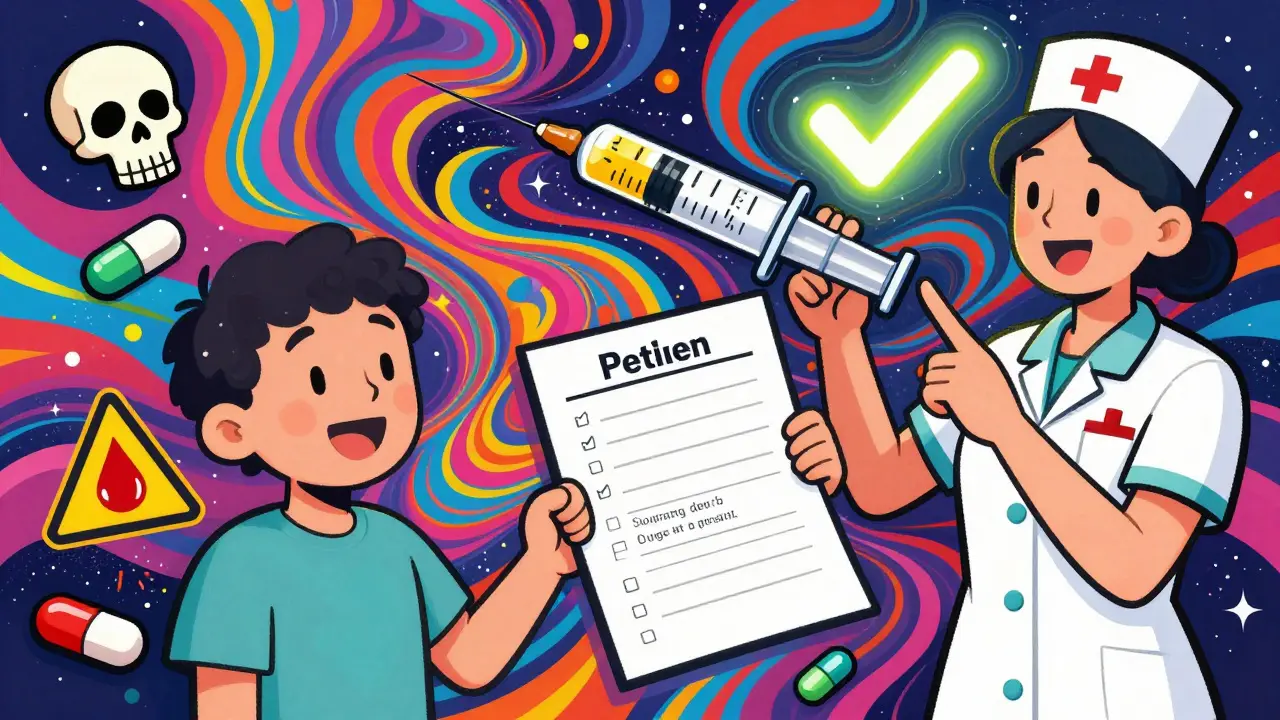
After surgery, you’re not out of the woods just because the procedure is over. The next few hours and days are just as critical-and one of the biggest risks isn’t infection or bleeding, but medication errors. Around 30% of all medication mistakes in hospitals happen in surgical settings, and nearly 1 in 5 of those cause real harm. You might think, "I’m just taking pain pills or antibiotics. How hard can it be?" But the truth is, even simple meds like opioids, antibiotics, or IV fluids can turn dangerous if handled wrong.
Why Post-Surgery Medications Are Riskier Than You Think
Surgery changes how your body handles drugs. Your metabolism slows. Your liver and kidneys aren’t working at full speed. You might be dehydrated, stressed, or on multiple meds at once. That’s why even a normal dose of painkiller can become too much. The CDC reports that unsafe injection practices led to 44 outbreaks between 2001 and 2011, infecting over 14,000 patients with hepatitis B and C. Most of those weren’t from dirty needles in public places-they happened in hospitals because someone reused a syringe or didn’t label a vial properly.The Four Rules No One Tells You About
There are four non-negotiable rules for using short-term meds safely after surgery. Break any one, and you increase your risk of harm.- Never reuse a syringe-even for yourself. The CDC says a new sterile syringe and needle must be used for every single injection. Even if you’re the same patient, even if there’s medicine left in the syringe, even if it’s just a quick shot. Reusing a syringe, even for a few minutes, can introduce bacteria into your bloodstream. That’s how infections start.
- Always label everything. If a nurse or tech fills a syringe, it must say the drug name, strength, and time it was prepared. No exceptions. Unlabeled syringes on the surgical field? They get thrown away immediately. A 2023 study showed hospitals that enforced labeling cut medication errors by 47%. One mistake: confusing 10 mg of morphine with 100 mg because the label was smudged or missing. That’s not a typo. That’s a death sentence.
- Verify before you take it. If someone hands you a pill or injects you with something, ask: "What is this? Why am I getting it?" Don’t assume. Nurses and anesthesiologists are human. They’re tired. They’re rushed. A 2022 survey found that 15-20% of meds in emergency surgeries were given without full verification because of time pressure. You have the right-and the responsibility-to ask.
- Don’t trust memory. Write it down. If you’re going home with pain meds, antibiotics, or anti-nausea pills, write down the name, dose, and schedule. Don’t rely on your phone’s notes app unless you’re sure it’s backed up. Paper works better. A 2021 study found that patients who wrote down their med schedule had 67% fewer adverse reactions at home.
High-Risk Medications You Might Get After Surgery
Some drugs are more dangerous than others-even in small doses. These are called "high-alert medications," and they’re used commonly after surgery:- Opioids (oxycodone, hydromorphone, fentanyl): These are the most common cause of fatal overdoses after surgery. The risk spikes if you’re also taking sleeping pills, anxiety meds, or alcohol. Never mix them.
- Heparin: Used to prevent blood clots. Too much? You bleed internally. Too little? You get a clot that can kill you.
- Insulin: If you’re diabetic or stressed from surgery, your blood sugar can swing wildly. Even a 1-unit error can cause seizures or coma.
- Vasopressors (norepinephrine, phenylephrine): These raise blood pressure. If given too fast or in the wrong vein, they can burn through tissue or cause a heart attack.
- Neuromuscular blockers: Used during surgery to paralyze you. If you’re still feeling them after waking up, you can’t breathe. That’s why nurses check your muscle strength before you leave recovery.
These meds aren’t evil. They’re necessary. But they need extra care. Always ask: "Is this a high-alert drug? What’s the dose? What happens if I take too much?"

What Happens in the Operating Room (That You Don’t See)
You might think meds are given by doctors alone. But in the OR, it’s a team. Anesthesiologists, nurses, surgical techs, and pharmacists all handle medications. That’s why communication is everything.Here’s how it works:
- Read-backs: If a doctor says, "Give 5 mg of morphine IV," the nurse repeats it back: "Five milligrams of morphine, intravenous, correct?" This cuts verbal errors by 55%, according to ACOG.
- Two-person verification: For high-alert drugs, two staff members check the label, dose, and patient ID before giving it. One person reads it. The other confirms.
- Barcode scanning: Hospitals with barcode systems scan your wristband and the med before giving it. This reduces errors by 39%, according to pilot studies.
But here’s the catch: 78% of medication administration happens outside the pharmacy’s direct control. That means the OR, the recovery room, the ICU-they’re all wild west zones. That’s why labeling and communication matter more than ever.
What You Can Do Before You Go Home
Your job doesn’t end when you leave the hospital. Here’s how to stay safe after discharge:- Get a written med list. Don’t accept a verbal rundown. Ask for a printed sheet with: drug name, dose, frequency, reason, and duration.
- Check expiration dates. Some meds come in small vials that expire 24-72 hours after opening. If you’re using them at home, throw them out after that window.
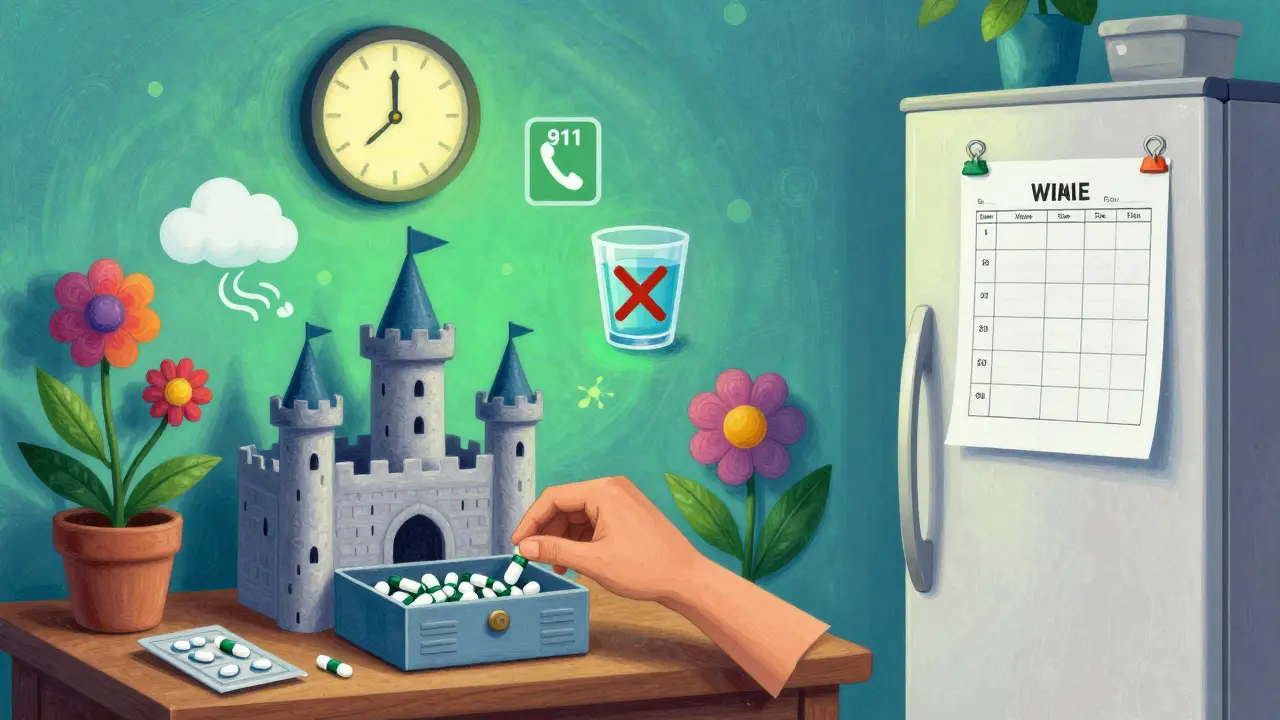
- Store meds safely. Keep opioids locked up-even from your own kids. A 2023 study found that 40% of teens who misused prescription painkillers got them from home medicine cabinets after a parent’s surgery.
- Know the warning signs. If you’re dizzy, confused, breathing slower than 10 breaths per minute, or can’t stay awake, call 911. That’s not normal. That’s an overdose.
- Don’t refill early. If your prescription says "take 3 times a day for 5 days," don’t take it for 7 days because you still feel sore. You’re not healing faster by taking more. You’re risking dependence.
What Hospitals Are Doing to Fix This
The good news? Things are getting better. Facilities that fully follow the 2022 ISMP guidelines for perioperative safety saw a 73% drop in serious medication errors over five years. Hospitals are now:- Using smart syringes that auto-verify dose and drug type
- Installing barcode scanners in recovery rooms
- Training surgical techs to double-check every label
- Requiring mandatory read-backs for all verbal orders
But progress isn’t universal. Ambulatory surgery centers-where many minor procedures happen-have only a 63% adoption rate of full safety protocols. Academic hospitals? 87%. That gap matters. If you’re having surgery at a small outpatient center, ask: "Do you use two-person verification for high-alert meds? Do you label every syringe?" If they hesitate, consider another facility.
Common Mistakes (And How to Avoid Them)
Here are the top 5 mistakes patients and staff make:- Using the same syringe for multiple doses. Even if it’s for the same patient. Always use a fresh one.
- Leaving unlabeled meds on the table. If it’s not labeled, it’s trash. Period.
- Assuming the nurse knows what you’re taking. Tell them every med you’re on-even supplements and over-the-counter drugs.
- Taking meds with alcohol. This is the #1 cause of post-op overdose. Don’t drink for at least 72 hours after surgery.
- Ignoring side effects. If you feel weird, say something. "I’m just tired" isn’t an excuse. It could be your body reacting to the meds.
Final Checklist: Before You Leave the Hospital
Use this before you sign out:- ☑ I have a written list of all meds I’m going home with
- ☑ I know the dose, frequency, and how long to take each one
- ☑ I know which meds are high-risk and what side effects to watch for
- ☑ I know how to store them safely (locked, away from kids)
- ☑ I know when to call 911 (slow breathing, confusion, fainting)
- ☑ I won’t take any meds with alcohol
- ☑ I won’t refill or extend my prescription without talking to my doctor
Surgery is a team effort. But the last line of defense? You. You’re the one who knows your body best. Don’t be afraid to ask. Don’t be afraid to speak up. Your safety isn’t just the hospital’s job-it’s yours too.
Can I reuse a syringe if I’m the only one using it?
No. Even if you’re the only person using the syringe, reusing it-even for a few minutes-can introduce bacteria into your bloodstream. The CDC mandates a new sterile syringe and needle for every single injection, regardless of the patient. This rule exists because of documented outbreaks of hepatitis and other infections caused by reused equipment in hospitals.
What should I do if I’m given an unlabeled medication?
Never accept it. Ask the nurse or provider to label it properly. If they can’t, refuse the medication and notify a supervisor. Unlabeled medications are a major safety hazard. Joint Commission standards require immediate discard of any unlabeled syringe or vial on the sterile field. Your life is worth the extra minute it takes to confirm what you’re getting.
Are opioids safe after surgery if I’ve never used them before?
They can be, but only if used exactly as prescribed. First-time users are at higher risk of overdose because their bodies haven’t built tolerance. Never take more than directed. Never combine them with alcohol, sleeping pills, or anxiety meds. If you feel unusually drowsy, confused, or have slow breathing (less than 10 breaths per minute), call 911 immediately.
How do I know if my hospital follows safe medication practices?
Ask directly: "Do you use two-person verification for high-alert drugs like opioids and heparin? Do you label every syringe before use? Do you require read-backs for verbal orders?" Facilities that follow the 2022 ISMP guidelines will have clear answers. If they can’t explain their process, consider choosing a different hospital or surgery center.
What if I forget my meds at home after surgery?
Don’t skip doses or take someone else’s medication. Call your surgeon’s office or pharmacy immediately. Many hospitals offer 24/7 on-call services for post-op patients. If you need a replacement, they can often arrange a pickup or delivery. Never improvise-missing a dose of antibiotics or taking too much painkiller can both lead to serious complications.
Can I take herbal supplements after surgery?
Avoid them for at least 7-10 days after surgery unless your doctor says otherwise. Many supplements-like garlic, ginkgo, and fish oil-thin your blood and can increase bleeding. Others, like St. John’s Wort, interfere with anesthesia and pain meds. Always tell your surgical team about every supplement you take, even if you think it’s "natural" and harmless.
Next Steps for a Safer Recovery
If you’re preparing for surgery, ask these questions before the day arrives:- What medications will I get during and after surgery?
- Will I be given a written med plan before I leave?
- Do you use barcode scanning or two-person verification for high-risk drugs?
- How do you handle labeling and storage of meds in the OR?
If you’ve already had surgery, review your meds now. Check expiration dates. Lock up opioids. Write down your schedule. Talk to your pharmacist. You’re not just recovering from surgery-you’re managing a medication plan. Do it right, and you’ll heal faster. Do it wrong, and you could end up back in the hospital.






January 11, 2026 AT 10:35
Sean Feng
This is overkill. Just don't mix drugs with booze and you'll be fine.
January 12, 2026 AT 23:24
Alfred Schmidt
I can't believe hospitals still let this happen!!! SYRINGES AREN'T TOYS!!! I saw a nurse reuse one in recovery-she said, 'It's just a little leftover!'-and I nearly threw up. This isn't just negligence-it's a crime. Someone should sue them. I'm not exaggerating. I'm not dramatic. I'm just scared. I'm still shaking.
January 13, 2026 AT 01:24
Priscilla Kraft
This is so important!! 🙏 I had a cousin who got sepsis after a knee surgery because of an unlabeled syringe. She was fine one day, and the next? ICU. Please, please, please-ask questions. Even if you feel silly. I wish I’d asked more when my mom was in the hospital. You’re not being a pain-you’re saving your life. 💪❤️
January 14, 2026 AT 08:47
Christian Basel
The pharmacokinetic and pharmacodynamic shifts post-op are non-trivial, especially in the context of hepatic and renal hypoperfusion. The high-alert nature of opioids, heparin, and vasopressors necessitates a systems-based approach to error mitigation-barcoding, read-backs, and two-person verification are evidence-based interventions that reduce iatrogenic harm by up to 73% per ISMP 2022. If your facility isn't compliant, you're essentially gambling with your life.
January 14, 2026 AT 08:57
Priya Patel
omg this is so real!! i had surgery last year and they gave me this tiny vial with no label and i just took it bc i was dizzy and in pain 😭 but then i asked the nurse and she was like 'ohhh shoot sorry' and threw it away. i was so scared. y'all gotta speak up!! it's not rude-it's survival 😌❤️
January 14, 2026 AT 17:17
Jason Shriner
Wow. So the solution to medical incompetence is... asking nicely? I'm sure the guy who got hepatitis from a reused syringe was just too shy to say 'hey, that needle looks familiar.'
January 14, 2026 AT 23:51
Sam Davies
Ah yes, the classic 'you're the last line of defense' narrative. How quaint. The burden of preventing systemic failure is placed squarely on the shoulders of the sedated, disoriented, and post-op patient. Truly, the pinnacle of modern healthcare. I'm sure the board of directors will sleep better tonight knowing you're now responsible for catching their errors.
January 16, 2026 AT 18:19
Matthew Miller
This article is a joke. You think patients are going to remember all this? Most people are on opioids and can't even spell their own name. This is just virtue signaling for nurses who want to feel like heroes. The real problem? Understaffed hospitals, overworked staff, and zero accountability. You don't fix this with checklists-you fix it with funding and consequences.
January 17, 2026 AT 16:11
Jennifer Littler
As a perioperative nurse, I can confirm: labeling and two-person verification are non-negotiable. We lost a patient two years ago because a syringe labeled 'NS' was actually 100mg of morphine. No one noticed. The barcode scanner wasn’t installed yet. I still wake up thinking about it. Please-don’t assume. Ask. Double-check. It’s not paranoia-it’s protocol.
January 17, 2026 AT 19:41
Vincent Clarizio
Let’s be honest here: the entire medical system is built on the assumption that patients are passive, compliant, and mentally present. But after surgery? You’re drugged, confused, nauseated, and possibly in pain. And now we’re supposed to become medical detectives? This isn’t empowerment-it’s exploitation. The system doesn’t trust us to be patients, but it demands we be pharmacists, safety auditors, and legal advocates. We’re not failing the system. The system is failing us. And until we stop putting the burden on the vulnerable, we’re just rearranging deck chairs on the Titanic.
January 19, 2026 AT 07:56
Alex Smith
I used to work in a small outpatient center. We didn’t have barcode scanners. We didn’t have two-person checks. But we did have a rule: if you didn’t write it down, it didn’t happen. Every med, every dose, every time. We used sticky notes on the wall. It was dumb. It was low-tech. But it saved lives. Sometimes the best safety system is the one you can see with your eyes, not the one you pay for.
January 20, 2026 AT 09:38
Roshan Joy
In India, we don't always have fancy scanners or labels. But we have family. I always ask my sister to sit with me during meds time. She writes everything down. She asks the questions. I just rest. Sometimes, the best safety net isn't a policy-it's a person who cares enough to care for you.
January 22, 2026 AT 02:12
Adewumi Gbotemi
This is good. But you know what? People in my village, they don't read. They don't know what 'heparin' is. So we teach them with pictures. A syringe with a red X. A pill with a no-alcohol sign. Simple. If you can't read, you can still understand a picture. This article is for people who can read. But what about the ones who can't?