
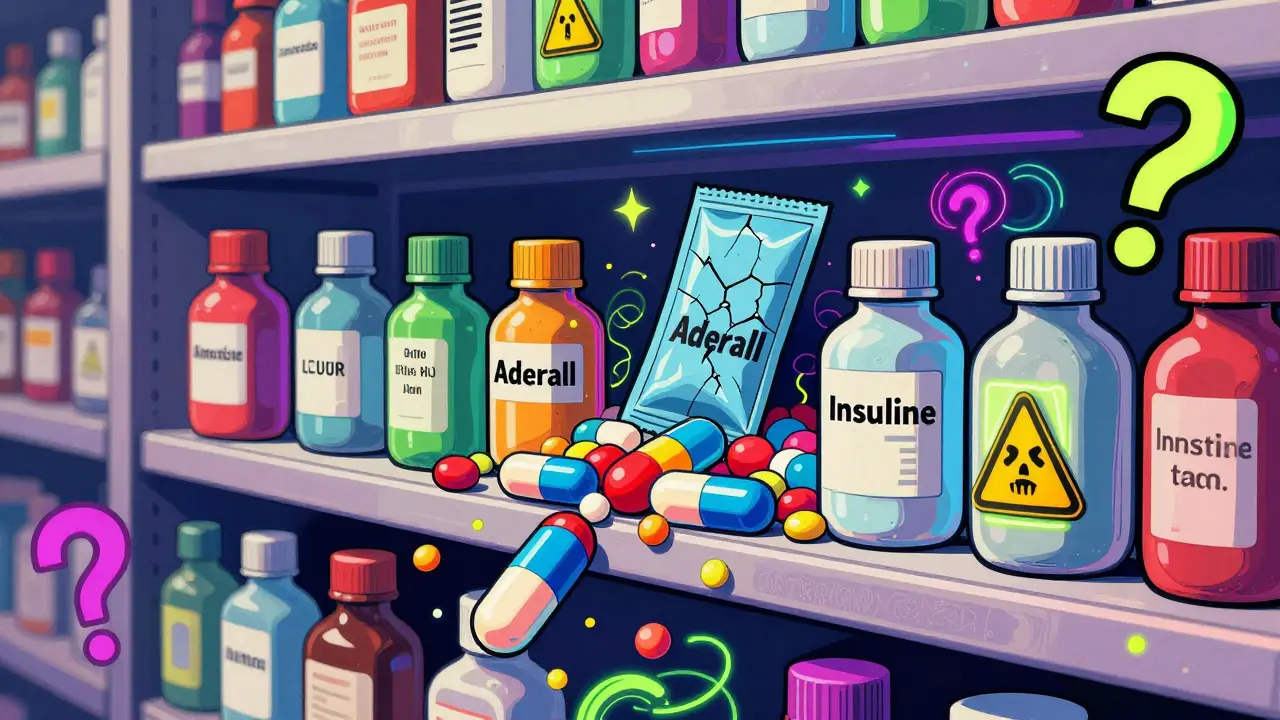
Every year, millions of people unknowingly take fake pills that could be deadly. These aren’t just poorly made generics-they’re dangerous imitations packed with the wrong chemicals, no active ingredient at all, or even toxic substances like fentanyl, rat poison, or floor cleaner. The problem isn’t going away. In 2022, the global market for counterfeit drugs hit $231.6 billion, and the U.S. saw a 127% jump in seized fake medicines between 2019 and 2022. Most of these fake drugs come from illegal online pharmacies-96% of which, according to the National Association of Boards of Pharmacy, break U.S. law. If you suspect a pill, liquid, or injection isn’t real, you’re not overreacting. You’re doing something critical: protecting yourself and others.
What Makes a Drug Counterfeit?
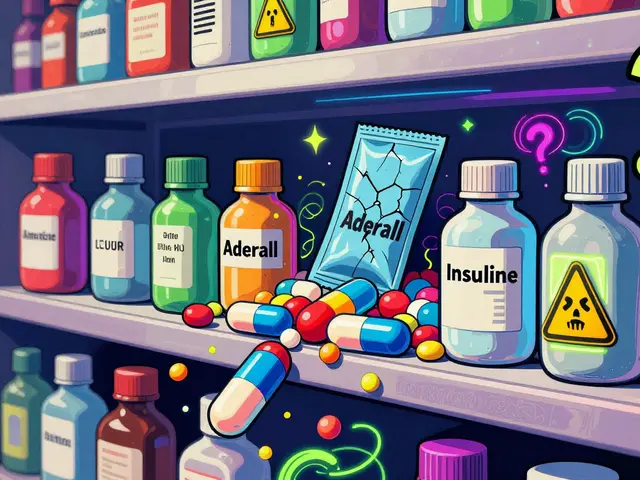
A counterfeit drug isn’t just expired or cheap. It’s deliberately fake. This means the packaging looks real, but inside? It’s a scam. Common signs include:- Spelling errors on the label-like "Aderall" instead of "Adderall"
- Missing or smudged lot numbers
- Pills that are the wrong color, shape, or texture
- Packaging that feels flimsy, has blurry printing, or doesn’t seal properly
- Medication that doesn’t work the way it should-or makes you feel worse
According to FDA data, 78% of counterfeit drugs have misspelled names, and 87% show packaging inconsistencies. If something feels off, trust your gut. Even if you’re not sure, reporting it could stop someone else from getting hurt.
Where to Report Counterfeit Drugs in the U.S.
In the United States, there are two main ways to report fake drugs-depending on what you’re trying to achieve.For most people: Use FDA MedWatch
If you took a pill that made you sick, or you bought something suspicious online, start with the FDA’s MedWatch program. It’s designed for consumers and healthcare providers. You don’t need to be a doctor. You just need to know what you bought, where you got it, and what happened.
Here’s what to gather before you report:
- The drug name and strength (e.g., "Metformin 500 mg")
- The lot number (usually printed on the bottle or box)
- The National Drug Code (NDC)-a 10-digit number on the packaging
- Where you bought it (website name, pharmacy, street vendor)
- Any side effects you experienced
- Photos of the packaging and pills (if possible)
Submit your report online at www.fda.gov/medwatch. You can also call 1-800-FDA-1088. Electronic reports are processed faster-87% get an acknowledgment within 72 hours. Paper forms? That can take up to 14 days.
Don’t wait to report just because you’re not sure. The FDA says reports with complete product details are 63% more likely to lead to a successful investigation.
For serious cases: Report criminal activity to FDA’s Office of Criminal Investigations (OCI)
If you believe someone is selling fake drugs on purpose-like an online pharmacy, a street vendor, or a fake clinic-you should also report it to the FDA’s Office of Criminal Investigations. This is for cases where you think a crime is happening.
OCI handles the criminal side: tracking down sellers, seizing shipments, and working with the DEA and local police. In 2022 alone, they opened 1,842 investigations and helped put 187 people in prison.
Go to www.fda.gov/oci to file a report. You’ll need:
- Exact dates you saw or bought the product
- Location (website URL, physical address, social media handle)
- Any photos or videos of the seller or product
- Proof you tried to preserve the product (don’t throw it away!)
High-priority OCI reports trigger field investigations within 48 hours. But they require more evidence. If you’re unsure, start with MedWatch first. They can forward your report to OCI if needed.
What About Other Agencies?
You might wonder: Should I call the DEA? The CDC? Local police?
Here’s the reality:
- DEA: Only handles fake controlled substances like opioids, Adderall, or Xanax. If your fake drug is one of those, you can report it at www.dea.gov/submit-tip. But if it’s something like insulin, blood pressure meds, or antibiotics, go to the FDA.
- Local police: Unless you witnessed a drug sale in person and can identify the seller, they won’t have the resources to investigate. They’ll likely refer you to the FDA anyway.
- Pharmaceutical companies: Pfizer, Roche, and others have direct hotlines. If you know the brand, call them. Roche says they respond to authenticity questions within 24 hours. But they can only act on their own products.
Bottom line: Start with the FDA. They’re the central hub. Other agencies play a role, but the FDA connects the dots.
What Happens After You Report?
Many people report fake drugs and never hear back. That’s frustrating. But here’s what’s really happening behind the scenes:
- Within 3 days: Your MedWatch report is reviewed and assigned a tracking number (if submitted online).
- Within 1-2 weeks: The FDA checks if other people reported the same product. If multiple reports come in, they flag it for inspection.
- Within 30 days: If evidence is strong, they may issue a public alert or seize shipments at ports.
- Months later: If criminal activity is confirmed, law enforcement may raid warehouses or shut down websites.
Don’t expect a phone call. The FDA doesn’t notify individuals unless they need more info. But if your report helped trace a fake insulin batch that reached 500 people? That’s a win. And you made it happen.
One pharmacist in South Carolina reported counterfeit insulin in 2022. She kept the original box with the lot number. Within 12 hours, the FDA traced the batch back to a warehouse in Texas. That one report led to 1,200 fake vials being pulled from circulation.
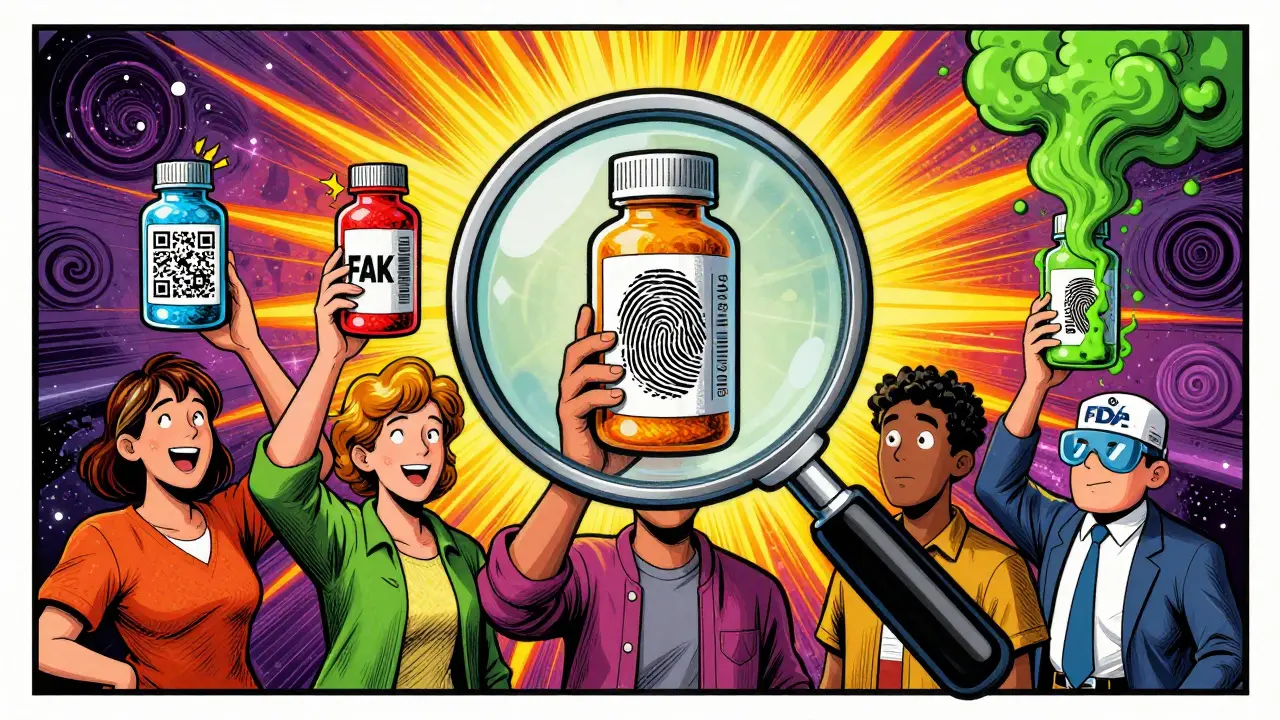
How to Preserve Evidence
This is the most important step-and the one most people mess up.
Do NOT throw away the packaging. Do NOT take more pills. Do NOT flush the medicine. Keep everything exactly as you found it.
Why? Because the lot number is the key. It’s like a fingerprint. It tells investigators where the drug came from, which distributor handled it, and who shipped it. Without it, your report is just a guess.
Put the pills and box in a sealed plastic bag. Take clear photos of:
- The front and back of the box
- The label with lot number and NDC
- Each pill from different angles
- Any receipts or emails from the seller
Studies show reports with photos are processed 89% faster than those without. Don’t skip this. It’s not extra work-it’s your most powerful tool.
International Reporting
If you bought fake drugs from a website based outside the U.S., you can still report it.
The World Health Organization (WHO) runs a global system for tracking falsified medicines. Submit a report at who.int/falsifiedmeds. They’ve received over 1,500 reports from 141 countries. But response times are slower-about two weeks.
For faster international action, use the Pharmaceutical Security Institute (PSI). They work with law enforcement in 144 countries and have multilingual support. Email [email protected]. Their system verified 98.7% of reports in 2023. But they ask for proof you’re a healthcare professional if you’re not in the U.S.
If you’re outside the U.S., check your country’s national drug regulator. Most have their own reporting portals.
Common Mistakes and How to Avoid Them
- Mistake: Reporting to the wrong agency. Solution: If it’s a prescription or over-the-counter drug, go to the FDA. If it’s a controlled substance like opioids, DEA works too-but FDA still covers it.
- Mistake: Waiting to report because you think "it was just one pill." Solution: One fake pill could be part of a batch that reached hundreds. Report it anyway.
- Mistake: Throwing away the packaging. Solution: Keep it. Take photos. Don’t touch the pills more than necessary.
- Mistake: Thinking you need to prove it’s fake. Solution: You don’t. The FDA’s job is to investigate. Your job is to alert them.
What’s Changing in 2026?
Reporting is getting faster. In early 2023, the FDA launched a pilot program where some drug boxes have QR codes. Scan it, and you’re taken straight to the reporting form. Pfizer and Merck are already using it.
By late 2024, the FDA plans to integrate blockchain tracking into the drug supply chain. That means every pill will have a digital trail from factory to pharmacy. Fake drugs will be caught before they even reach shelves.
And in 2025, WHO will launch a mobile app for reporting fake drugs-just snap a photo, and it auto-fills the details. You won’t need to type a thing.
These changes mean one thing: your report matters more than ever.
Frequently Asked Questions
Can I report a fake drug if I didn’t get sick?
Yes. You don’t need to have a bad reaction to report a counterfeit drug. Many people report fake pills because the packaging looks wrong, the price seems too low, or the website looks sketchy. Even if no one got hurt yet, reporting helps stop the shipment before it reaches more people.
What if I bought the drug from a foreign website?
You can still report it. The FDA tracks drugs imported from overseas, and they work with international agencies like INTERPOL and PSI. Provide the website URL, the name of the seller, and any order confirmation. Even if the seller is overseas, the FDA can trace where the drugs were shipped from.
Will I get in trouble for buying from an illegal website?
No. The FDA’s priority is public safety, not punishment. They don’t investigate consumers who unknowingly buy fake drugs. Your report helps them shut down the criminals-not you. Be honest, and your identity is protected.
How long does it take to get a response?
Electronic reports to MedWatch usually get an automated confirmation within 72 hours. But you won’t hear from an investigator unless they need more info. Investigations can take weeks or months. That doesn’t mean your report didn’t help-it means the system is working behind the scenes.
What if I’m a pharmacist or healthcare provider?
You have more options. You can report to MedWatch, but you can also contact the drug manufacturer directly. Companies like Roche and Pfizer have 24-hour hotlines for professionals. You can also alert your state pharmacy board. Your report carries more weight because you can confirm the product’s appearance and usage.
Next Steps
If you’ve found a fake drug:
- Stop using it immediately.
- Keep the packaging and pills-don’t throw them away.
- Take clear photos of the product and packaging.
- Go to www.fda.gov/medwatch and fill out the form.
- If you suspect criminal activity, also submit a report to the FDA’s Office of Criminal Investigations at www.fda.gov/oci.
- Call your doctor if you’ve taken the drug and feel unwell.
Every report you make is a step toward safer medicines for everyone. You’re not just protecting yourself-you’re protecting your neighbor, your parent, your child. Don’t wait. Report it today.



January 20, 2026 AT 07:59
Lydia H.
Just saw a guy on the bus taking a pill that looked totally off-wrong color, no markings. I didn’t say anything, but now I’m glad I read this. We all need to speak up, even if it feels awkward.
January 21, 2026 AT 20:16
Jacob Hill
I’ve reported two fake prescriptions in the last year-both from sketchy Amazon sellers. The FDA responded within 48 hours with a tracking number. Keep the box. Take photos. Don’t flush it. Seriously. One lot number can save a life. I’m not exaggerating.
January 23, 2026 AT 07:32
Lewis Yeaple
While the information presented is largely accurate, it is imperative to note that the FDA's MedWatch system is not the sole mechanism for reporting counterfeit pharmaceuticals. The Drug Enforcement Administration maintains a parallel, albeit more narrowly scoped, reporting protocol for controlled substances. Furthermore, the integration of blockchain technology into the pharmaceutical supply chain, as referenced, remains in the pilot phase and is not yet universally implemented. One must exercise caution not to overstate the efficacy of current technological safeguards.
January 24, 2026 AT 16:11
Jackson Doughart
This is one of those rare posts that doesn’t just inform-it empowers. I’ve worked in pharmacy for 17 years, and I’ve seen how easily people dismiss a weird-looking pill as "just a different batch." But it’s never just a batch. It’s a silent threat. Thank you for outlining the steps so clearly. I’ll be sharing this with my patients tomorrow.
January 25, 2026 AT 08:13
Malikah Rajap
Wait, so… if I bought Adderall off a guy in a parking lot who said it was "from his cousin’s pharmacy," and now I’m shaking and my heart feels like it’s trying to escape… is that… like… a *bad* sign? Because I didn’t take it all, but I kinda wish I hadn’t taken any? Like, I feel bad for the guy who sold it, but also… he’s probably just trying to survive? But also… fentanyl?? I’m so confused. Can we just… hug more?
January 26, 2026 AT 23:43
sujit paul
These so-called "authorities" are part of the system that lets this happen. The FDA? The DEA? They’re owned by Big Pharma. Why do you think they only act after hundreds die? Why do you think they never shut down the Chinese factories? They need the fear. They need you to believe you’re powerless. The real solution? Stop trusting pills. Eat turmeric. Drink lemon water. Your body knows better than any lab.
January 28, 2026 AT 14:59
Tracy Howard
It’s pathetic that we have to rely on a U.S. agency to police global pharmaceutical crime. Canada has had a national drug traceability system since 2018. We don’t need QR codes or blockchain-we need sovereignty. And frankly, if you’re buying medicine from a website that doesn’t end in .ca or .gov, you deserve what you get.
January 30, 2026 AT 13:36
Aman Kumar
Let me be blunt: the entire pharmaceutical-industrial complex is a Ponzi scheme built on chemical dependency. The FDA doesn't "investigate"-they sanitize. The lot numbers? Fabricated. The NDC codes? Assigned by corporate lawyers. You think your photo of a pill matters? It’s a digital ghost. The real criminals are the ones who wrote the regulations. You're not reporting a pill-you're reporting a lie.
January 30, 2026 AT 23:52
Jake Rudin
It’s funny… we spend so much time worrying about fake drugs, but we don’t question why they exist in the first place. Why are life-saving pills so expensive? Why are people turning to shady websites? The system created the problem. Reporting is just a bandage. The cure? Universal healthcare. Or at least price controls. But no one wants to talk about that.
February 1, 2026 AT 21:51
Josh Kenna
My grandma took a fake blood pressure pill last year. She didn’t even know. Ended up in the hospital. I didn’t know what to do until I found this post. I kept the bottle, took pics, reported it. Two weeks later, the FDA sent a letter saying they’d pulled 12,000 pills from 3 states. I cried. I didn’t think one old lady’s bottle could do that. It did. So if you find something weird? Don’t hesitate. Just report it.
February 3, 2026 AT 01:47
Christi Steinbeck
You’re not being paranoid-you’re being brave. I used to think "it’s probably fine" until my cousin almost died from fake insulin. Now I carry a flashlight in my purse just to check pill colors. It’s weird, but it’s worth it. Keep reporting. Keep speaking up. You’re literally saving lives.
February 4, 2026 AT 08:57
Valerie DeLoach
As someone who’s worked with refugees and undocumented folks who rely on imported meds, I want to say: this guide is vital. Many don’t know where to report. Many fear deportation. Many think no one cares. But they do. And this post gives them a voice. Please share it in Spanish, Tagalog, Arabic. We need this in every language. Safety isn’t just a U.S. privilege.
February 4, 2026 AT 09:06
Erwin Kodiat
I used to roll my eyes at people who reported fake meds. Thought they were overreacting. Then I saw a Reddit thread where someone found a counterfeit Xanax with actual rat poison in it. That changed everything. Now I check every pill like it’s a bomb. It’s not paranoia-it’s peace of mind. Thanks for the clear steps.
February 5, 2026 AT 11:46
Phil Hillson
Why are we even talking about this? The whole system is rigged. You report a pill and they send you a robot email. Meanwhile, the same companies that make the real stuff are the ones making the fake ones under different names. I’m not reporting anything. I’m just gonna take my chances. At least I know what I’m getting.
February 7, 2026 AT 07:39
Jacob Hill
@6960-bro, I get the cynicism. But I reported a fake metformin batch last year. They traced it to a warehouse in New Jersey. Turned out the distributor was also selling real meds under the same label. The FDA pulled 40,000 bottles. Your "chances"? They just got better. Don’t be the reason someone else dies because you thought it was pointless.