
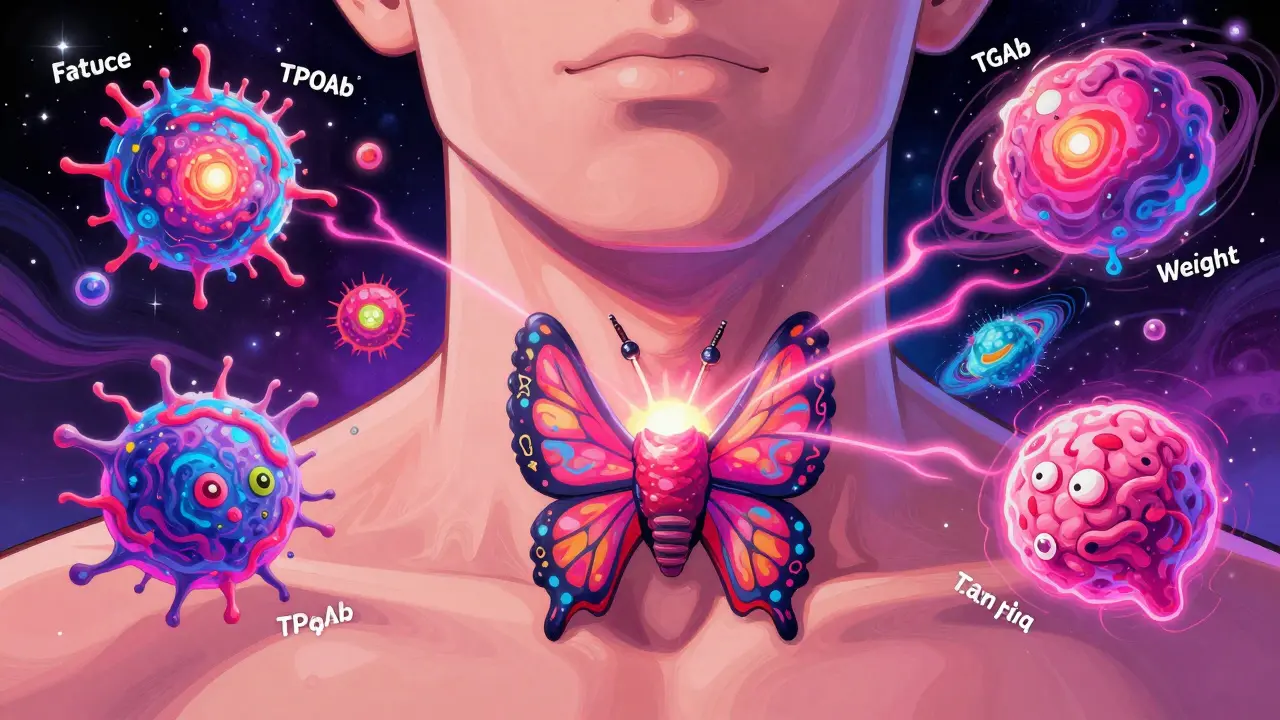
Hashimoto’s thyroiditis isn’t just another thyroid problem. It’s an autoimmune war inside your body, where your immune system turns on your own thyroid gland. This isn’t rare-it’s the most common cause of hypothyroidism in places like the U.S., Canada, and Europe. About 1 in 50 adults has it, and for women over 50, that number jumps to 1 in 10. Most people don’t realize they have it until their TSH levels start creeping up, fatigue sets in, and weight won’t budge no matter what they do.
What Happens When Your Immune System Attacks Your Thyroid
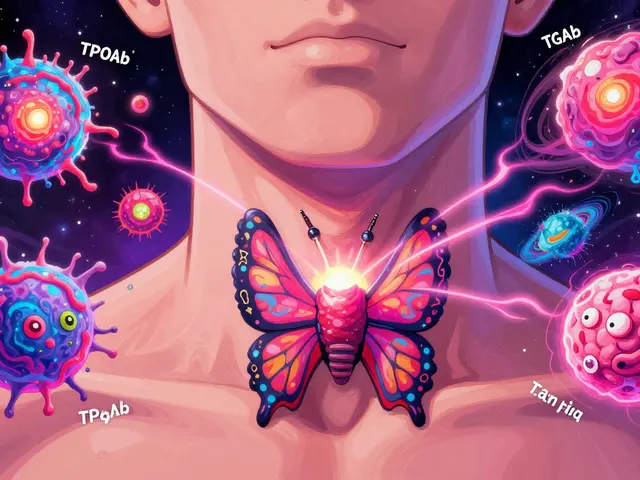
Your thyroid is a small butterfly-shaped gland at the base of your neck. It makes hormones that control your metabolism, energy, heart rate, and even your mood. In Hashimoto’s, your immune system mistakes thyroid cells for invaders. It sends in T-cells and produces antibodies-mainly thyroid peroxidase antibodies (TPOAb) and thyroglobulin antibodies (TgAb)-that slowly destroy the gland.
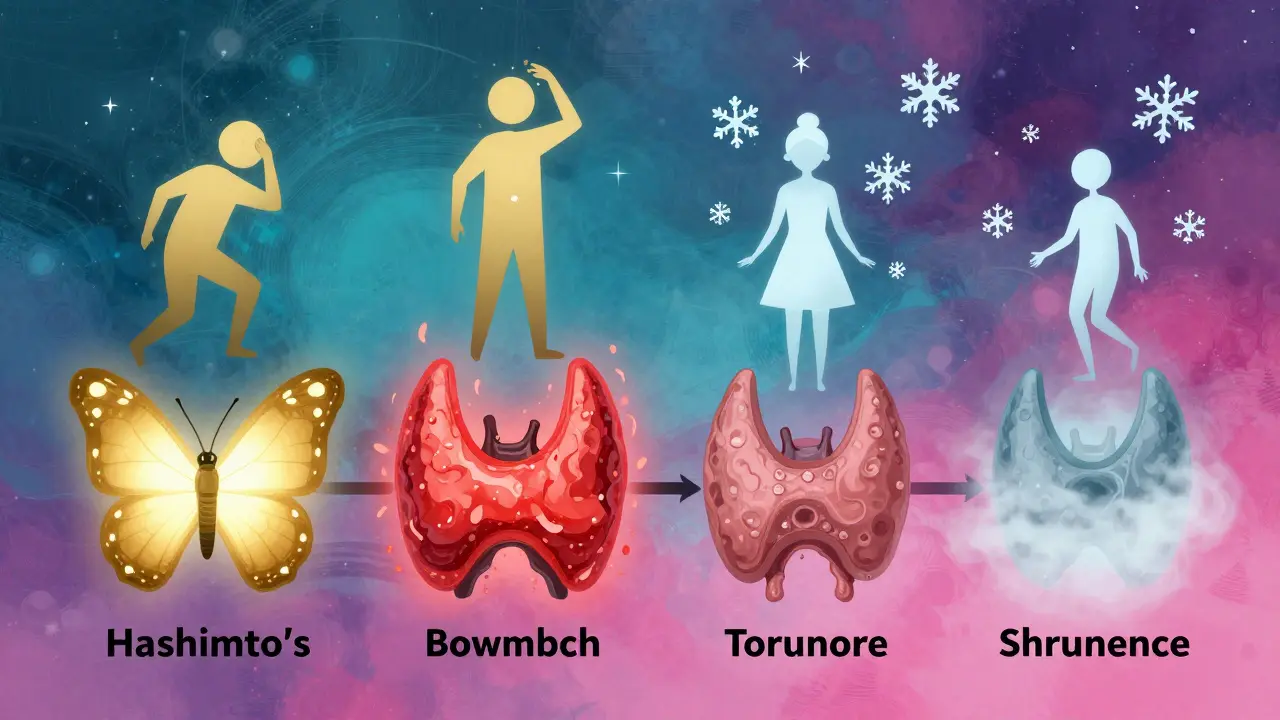
This isn’t sudden. It happens over years. Many people test positive for these antibodies for a decade before their thyroid starts to fail. That’s called Phase 1: euthyroid but antibody-positive. No symptoms yet. Just a blood test result that raises eyebrows. Then comes Phase 2: subclinical hypothyroidism. Your TSH rises above 4.5 mIU/L, but your free T4 is still normal. You might feel a little tired, colder than usual, or notice brain fog. Doctors often wait. But waiting too long can make things worse.
By Phase 3, your thyroid can’t keep up. TSH shoots past 10 mIU/L, free T4 drops, and symptoms become undeniable: dry skin, hair loss, constipation, depression, heavy periods, and unexplained weight gain. The thyroid may swell into a goiter, then shrink later as it’s destroyed-Phase 4. This isn’t just a hormone imbalance. It’s a slow, silent destruction.
TSH Isn’t Just a Number-It’s Your Body’s Alarm System
TSH, or thyroid-stimulating hormone, is made by your pituitary gland. When your thyroid slows down, your brain says, “Wake up!” and pumps out more TSH to force it into action. So high TSH means your thyroid isn’t producing enough. That’s why doctors use it as the main marker for Hashimoto’s.
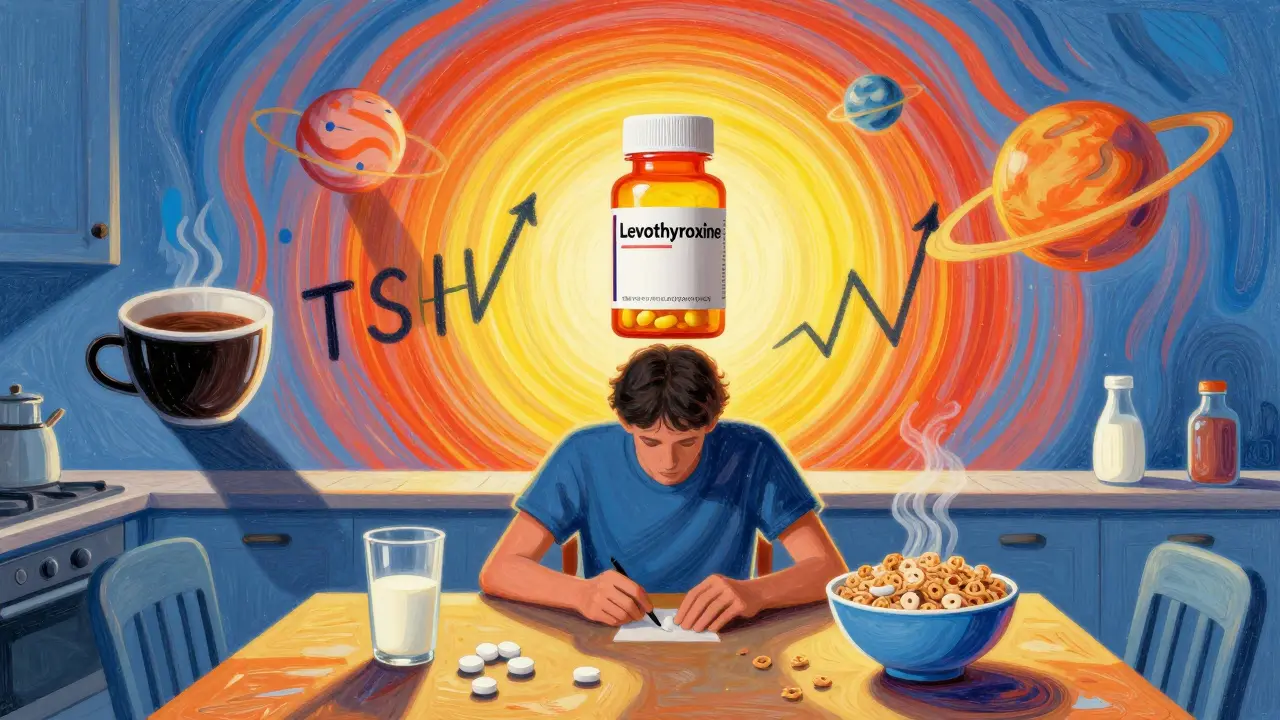
But here’s the catch: TSH isn’t perfect. In 5-10% of Hashimoto’s cases, antibodies interfere with the test and give false highs. That’s why free T4 must be checked alongside it. If your TSH is “normal” but you still feel awful, your free T4 might be low. And if you’re on levothyroxine, your TSH can dip temporarily after taking your pill. That’s why blood tests must be done in the morning, before you take your medication, and always at the same time of day.
For most adults, the target TSH range is 0.5 to 4.5 mIU/L. But that’s a broad guideline. A 25-year-old woman trying to get pregnant? Her target should be under 2.5 mIU/L-studies show miscarriage risk jumps 2.3 times if TSH is higher. An 80-year-old with heart disease? A TSH up to 6.0 might be safer than pushing it too low and risking atrial fibrillation. One size doesn’t fit all.
Levothyroxine: The Standard, But Not Always Simple
Levothyroxine is the go-to treatment. It’s a synthetic version of T4, your body’s main thyroid hormone. You take it once a day on an empty stomach, usually first thing in the morning. But absorption is tricky. Calcium supplements, iron, coffee, soy, and even high-fiber meals can block it. If you take your pill and then a calcium tablet 30 minutes later, you might as well have skipped the dose.
Doctors start with a low dose-usually 25 to 50 mcg-and adjust every 6 to 8 weeks. Why? Because it takes 4 to 6 weeks for your body to fully respond. Too fast, and you risk heart palpitations or bone loss. Too slow, and you stay miserable.
And here’s something most patients don’t know: your dose changes with the seasons. In winter, TSH naturally rises 15-20% in temperate climates. That’s why many people feel worse in January and need a small dose bump. Weight gain? That increases your need for levothyroxine. Weight loss? You might need less. It’s not static. It’s dynamic.
Still, 10-15% of patients stay symptomatic even with a “normal” TSH. That’s when some ask about adding T3 (liothyronine). But multiple studies, including a 2017 meta-analysis of over 1,000 patients, found no consistent benefit over levothyroxine alone. The American Association of Clinical Endocrinologists says don’t use it routinely. Only consider it if TSH is normal, symptoms persist, and free T4 is low-after 6 months of optimized treatment.
The Hidden Triggers: Gluten, Stress, and Seasonal Shifts
Hashimoto’s isn’t just about pills. It’s about triggers. Many patients notice flare-ups after stress, illness, or certain foods. One of the most talked-about triggers is gluten. While there’s no proof gluten causes Hashimoto’s, people with celiac disease or non-celiac gluten sensitivity often have higher thyroid antibodies. Cutting gluten doesn’t cure it, but for some, it reduces inflammation and helps stabilize antibodies.
Stress is another silent enemy. Cortisol, your stress hormone, directly interferes with thyroid hormone conversion. High cortisol means less T4 turns into active T3. That’s why burnout, sleep loss, or emotional trauma can make you feel hypothyroid-even if your labs look fine.
And then there’s “hashitoxicosis.” Sounds like a typo, but it’s real. In the early stages, the immune attack causes thyroid cells to leak stored hormones into the blood. You get temporary hyperthyroidism: rapid heartbeat, anxiety, weight loss, tremors. It lasts weeks, then crashes into hypothyroidism. Many patients think they’ve been misdiagnosed. They haven’t. It’s just the disease’s first cruel trick.
Testing Right: When and How to Get Accurate Results
Bad lab results lead to bad decisions. Here’s how to get it right:
- Test in the morning, before taking your levothyroxine
- Avoid biotin supplements for at least 24 hours before testing (they can throw off TSH by 20-30%)
- Use the same lab each time-different assays give different results
- Don’t test right after illness or major stress-wait 4-6 weeks
- Keep a log: date, dose, symptoms, sleep, diet, stress levels
Most endocrinologists now use electronic systems that track TSH trends over time. But in primary care, only 63% of doctors follow consistent testing protocols. That’s why many patients get shuffled between doctors, each ordering tests differently. If you’re not seeing improvement, ask for a copy of your full lab history. Trends matter more than single numbers.
What’s Next? The Future of Hashimoto’s Treatment
Levothyroxine has been the gold standard for 70 years. But research is changing. Scientists are now looking at the immune side of Hashimoto’s-not just the hormone replacement. Trials are testing drugs that block specific T-cells involved in the attack. One study in Nature Medicine found that 25% of treatment-resistant patients have antibodies that block TSH receptors-something thought to only happen in Graves’ disease. That could mean future treatments target the root cause, not just the symptom.
By 2030, personalized medicine may guide TSH targets based on your genes. Variants in genes like CTLA-4 and PTPN22 are linked to more aggressive disease. If you carry them, your ideal TSH might be lower than average. Right now, that’s research. Soon, it could be routine.
For now, the best strategy is simple: know your numbers, test consistently, take your pill correctly, and don’t ignore symptoms just because your TSH is “in range.” Hashimoto’s isn’t a diagnosis you check off. It’s a lifelong partnership with your body. And the more you understand it, the better you’ll manage it.
Can Hashimoto’s be cured?
No, Hashimoto’s thyroiditis cannot be cured. It’s a lifelong autoimmune condition. Once the immune system starts attacking the thyroid, the damage is permanent. But it can be managed effectively with levothyroxine. Most people live normal, healthy lives with proper treatment. The goal isn’t to reverse the disease-it’s to replace what’s lost and keep symptoms under control.
Why does my TSH keep changing even though I take my pill every day?
Even with perfect dosing, TSH can fluctuate due to seasonal changes, weight shifts, stress, illness, or even changes in your gut absorption. Winter raises TSH by 15-20% in many people. Gaining or losing weight changes your dose needs. Stress and poor sleep lower active thyroid hormone levels. And if you’re taking supplements like calcium or iron, they can block absorption. That’s why regular testing and dose adjustments are part of the process-not a sign you’re doing something wrong.
Should I avoid gluten if I have Hashimoto’s?
There’s no universal rule, but many people with Hashimoto’s report feeling better on a gluten-free diet. That’s likely because gluten can trigger gut inflammation and increase intestinal permeability (“leaky gut”), which may worsen autoimmune activity. If you have celiac disease or suspect gluten sensitivity, avoiding gluten is essential. If not, try eliminating it for 3 months and track your symptoms. If you feel more energy, less brain fog, or fewer flares, it may be worth continuing.
Can I stop taking levothyroxine if I feel better?
No. Once your thyroid is destroyed by Hashimoto’s, it won’t recover. Stopping levothyroxine will cause your TSH to rise again, and symptoms will return-often worse than before. Even if you feel fine, your body still needs the hormone replacement. Think of it like insulin for diabetes: you don’t stop because you feel good. You keep taking it because your body can’t make its own.
Is it safe to take levothyroxine long-term?
Yes. Levothyroxine is one of the safest and most studied medications in medicine. It’s identical to the hormone your body naturally makes. When taken at the correct dose, it doesn’t cause weight gain, heart damage, or bone loss. In fact, untreated hypothyroidism is far riskier. The real danger is taking too much-so regular TSH testing is key. With proper monitoring, long-term use is not just safe-it’s essential.
What’s the difference between brand-name and generic levothyroxine?
Both contain the same active ingredient, but there can be small differences in fillers and absorption between brands. The FDA requires all levothyroxine products to have a narrow therapeutic index, meaning even small changes can affect your TSH. If you switch from Synthroid to a generic, or between generics, your dose may need adjustment. Stick with one brand if possible. If you must switch, get your TSH checked 6-8 weeks later.
What to Do Next
If you’ve been diagnosed with Hashimoto’s, your next step isn’t panic-it’s action. Get your full lab panel: TSH, free T4, TPOAb, and TgAb. Track them over time. Keep a symptom journal. Find a doctor who listens. If your current provider dismisses your symptoms because your TSH is “normal,” it’s time to find someone who understands this disease goes beyond numbers.
And if you’re not diagnosed yet but suspect Hashimoto’s-fatigue that won’t quit, hair falling out, cold intolerance, brain fog-ask for the antibody tests. Don’t wait for TSH to hit 10. Early intervention makes a difference. You don’t have to live like this. You just need to know how to ask the right questions.



December 29, 2025 AT 06:12
Gran Badshah
Been on levothyroxine for 8 years. My TSH was 12.5 when I started. Now it’s 2.1. I still feel like a zombie half the time. Doctors just say 'you're in range' like that’s magic. It’s not. My brain still foggy, my hair still falling out. Why don’t they test free T3 too?
December 29, 2025 AT 22:59
Ellen-Cathryn Nash
Gluten is the root of all autoimmune evil. If you’re eating bread, pasta, or even soy sauce, you’re basically feeding your immune system a buffet of destruction. I went gluten-free and my TPOAb dropped by 60% in 3 months. Your thyroid isn’t broken-it’s betrayed. Stop enabling the betrayal.
December 30, 2025 AT 13:46
Samantha Hobbs
OMG YES. I took my pill with coffee one morning and my TSH went nuts. I thought I was crazy. Then I read this and realized I’d been sabotaging myself for YEARS. Now I take it with water at 5am before anything else. Game changer. 🙌
January 1, 2026 AT 12:43
Nicole Beasley
Just got my labs back-TSH 5.8, free T4 normal. Doctor said ‘it’s fine.’ I cried in the parking lot. I’m 32, I can’t sleep, I gain weight eating salad, and my brain feels like it’s wrapped in cotton. Why does no one listen? 😭
January 2, 2026 AT 08:48
sonam gupta
India has more thyroid cases than US but no one talks about it. Doctors here give you medicine and send you away. No testing no tracking no nothing. You die quietly. This post is truth.
January 3, 2026 AT 10:54
Julius Hader
Just want to say-levothyroxine isn’t a cure, it’s a lifeline. Like wearing glasses for bad vision. You don’t stop because you can see okay. You keep wearing them because your eyes still can’t focus on their own. Be kind to your body. It’s doing its best.
January 5, 2026 AT 03:18
Mimi Bos
so i switched from synthroid to levothryoxine generic and my tsh went from 3.2 to 7.8. i thought i was doing everything right. turns out the fillers matter. now i’m back on synthroid and i feel human again. also i stopped eating soy. no joke. 🤷♀️
January 5, 2026 AT 15:02
Payton Daily
Let’s be real. Hashimoto’s isn’t a disease-it’s a spiritual awakening forced by your body screaming ‘I’m not okay!’ You think it’s about TSH? Nah. It’s about your soul rejecting the modern world. Gluten? Stress? Toxins? All symptoms of a civilization that forgot how to live. The pill just masks the truth. You need to go off-grid, eat ancestral food, and meditate under a tree. That’s the real cure. Not some lab report.
January 7, 2026 AT 07:46
Kelsey Youmans
Thank you for this meticulously researched and empathetically presented overview. The emphasis on longitudinal tracking of biomarkers, the nuance of TSH variability across demographics, and the caution against premature T3 supplementation are clinically sound and profoundly important. Many patients are underserved by fragmented primary care models. This piece offers a necessary corrective.
January 8, 2026 AT 06:45
Sydney Lee
Anyone who doesn’t test for reverse T3 is practicing pseudoscience. TSH is a lazy metric. Free T4? Meaningless without T3 uptake. And don’t get me started on the pharmaceutical industry’s cozy relationship with endocrinology. Levothyroxine is a Band-Aid on a severed artery. Real medicine addresses immune dysregulation-not hormone replacement as a profit-driven placebo. Wake up.
January 8, 2026 AT 14:58
oluwarotimi w alaka
US doctors are paid by pharma to keep you on levo. They don’t want you to know about iodine therapy or selenium. They don’t want you to know that your thyroid can heal if you stop eating GMOs and fluoride. The government hides this. I’ve seen it. My cousin in Nigeria got cured with coconut oil and sun. Why? Because they don’t sell that in a pill.
January 10, 2026 AT 09:54
Debra Cagwin
You’re not alone. I’ve been where you are-feeling invisible because your labs ‘look fine.’ But your symptoms are real. Keep advocating. Track your patterns. Find a functional doctor if your current one won’t listen. You deserve to feel like yourself again. One small step at a time. You’ve got this. 💪❤️
January 10, 2026 AT 16:25
Hakim Bachiri
So... I took my pill at night instead of morning. My TSH dropped 2 points. I didn’t change anything else. So maybe it’s not the dose. Maybe it’s the damn timing. Also I drink almond milk. Is that bad? I think it is. I’m confused now. I hate this disease.
January 11, 2026 AT 17:08
Celia McTighe
Thank you for sharing this. I’ve been fighting this for 12 years. I started with a TSH of 18. Now I’m at 1.8. I still have bad days. But I learned to listen to my body more than my lab report. I eat clean, sleep like my life depends on it, and I say no to everything that drains me. It’s not perfect-but I’m alive. And that’s enough for today. 🌿