

After a heart attack, bypass surgery, or other major cardiac event, many people wonder: Can I ever exercise again? The answer isn’t just yes-it’s you must. But not just any exercise. The difference between safe, effective recovery and dangerous overexertion comes down to one thing: cardiac rehabilitation.
Cardiac rehab isn’t a luxury. It’s a proven, life-saving program. Studies show people who complete it cut their risk of dying within five years by 30%. They’re also 47% less likely to be readmitted to the hospital. Yet, only 20-30% of eligible patients in the U.S. even enroll. Why? Transportation issues, work schedules, or simply not knowing it exists. If you’ve had a heart event, this is your roadmap.
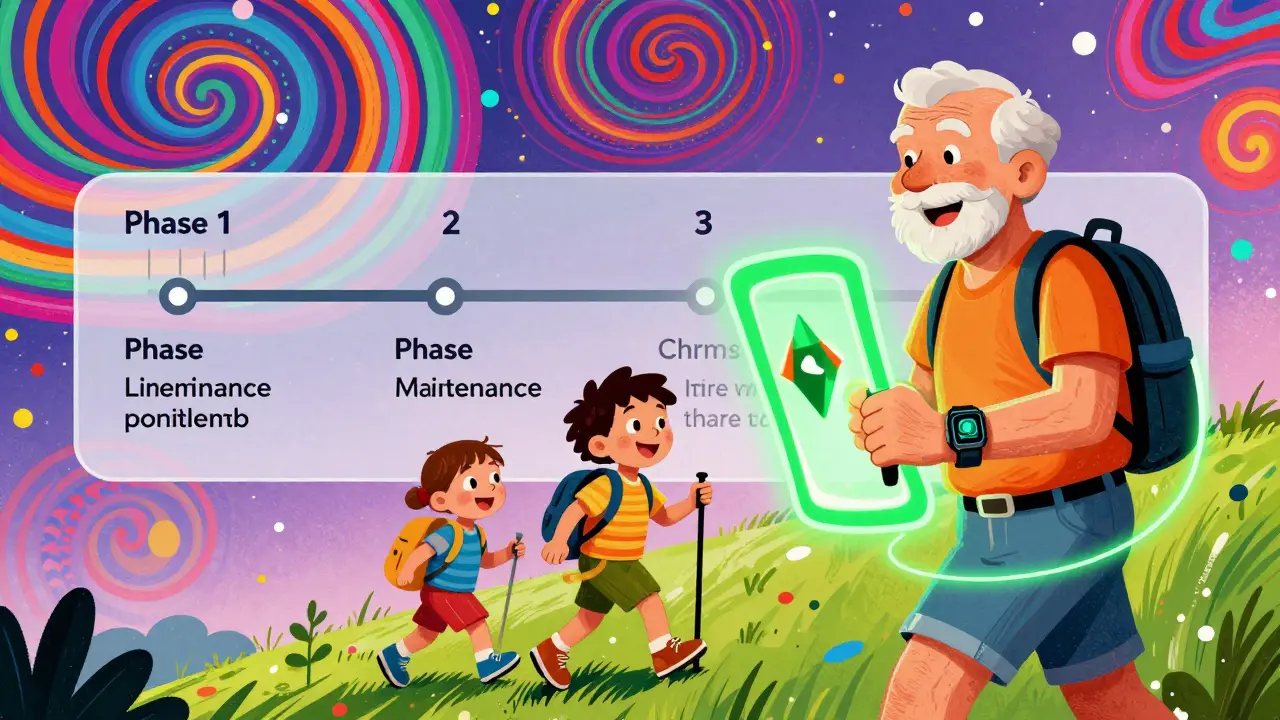
Phase 1: The Hospital Days - Move Gently, Move Often
Your rehab starts before you leave the hospital. At this stage, your heart is healing, not rebuilding. The goal? Prevent blood clots, keep circulation moving, and avoid muscle loss. No lifting, no pushing, no rushing.
Here’s what works:
- Seated marching: Lift one knee at a time, 10-15 reps per leg. Keep it slow.
- Ankle pumps: Point your toes up, then down. Do 20 reps every hour.
- Deep breathing: Inhale through your nose for 4 counts, hold for 2, exhale through your mouth for 6.
These aren’t workouts. They’re survival moves. Activity stays under 2 METs-about the effort of walking slowly around the house. If you feel dizzy, short of breath, or get chest pressure, stop. Right now. No exceptions.
Many patients feel anxious during this phase. That’s normal. But in supervised rehab, 82% of people report feeling less scared about moving after just four weeks. Why? Because they learn what’s normal-and what’s not.
Phase 2: Outpatient Recovery - Build Your Foundation
This phase starts after discharge, usually within a week. You’ll attend supervised sessions 2-3 times a week for 6-12 weeks. This is where real progress happens.
Exercise is carefully dosed. The standard starts at 5-10 minutes of walking per day. Not a brisk stroll. Not a power walk. A slow, steady pace where you can talk without gasping. That’s the talk test-a simple rule: if you can’t speak in full sentences, you’re going too hard.
Your heart rate target? Add 20-30 beats per minute to your resting heart rate. If your resting rate is 70, aim for 90-100 during exercise. But don’t fixate on the number. Use the Rating of Perceived Exertion (RPE) scale. Aim for 11-14 out of 20. That’s “light to somewhat hard.”
Here’s what you’ll do:
- Walking on flat ground
- Stationary cycling at low resistance
- Light resistance bands for arms and legs (no heavy weights)
- Stretching for shoulders, hips, and hamstrings
Progress is slow. Week 1: 10 minutes. Week 4: 25 minutes. Week 8: 30-40 minutes. The goal isn’t speed. It’s consistency. And yes-beta-blockers will lower your max heart rate. That’s fine. Your rehab team adjusts for it. Don’t try to match your pre-heart-attack numbers.
Phase 3: Long-Term Maintenance - Your New Normal
Once you finish formal rehab, you’re not done. You’re just getting started. The American Heart Association recommends at least 150 minutes of moderate aerobic activity per week. That’s 30 minutes, 5 days a week. Or 75 minutes of vigorous activity, like brisk walking uphill or stair climbing.
But here’s the twist: you don’t need to go hard to stay safe. A 2024 JAMA Cardiology study showed that for stable patients, high-intensity interval training (HIIT)-short bursts of harder effort followed by recovery-can be safer and more effective than steady, moderate exercise. How? It improves heart function faster, with no extra risk when done under proper guidance.
Still, most people do best with:
- Brisk walking 5 days a week
- Light strength training twice a week (bodyweight or light dumbbells)
- Stretching daily
And here’s the key: never skip the warm-up or cool-down. Spend 5-10 minutes easing in and out. Your heart needs time to adjust.

What to Watch For - Warning Signs You Must Not Ignore
Exercise should feel challenging, not dangerous. Know these seven red flags:
- Chest pressure, pain, or tightness
- Pain radiating to your arm, neck, jaw, or back
- Dizziness or lightheadedness
- Irregular or racing heartbeat
- Sudden, unusual shortness of breath
- Slurred speech or confusion
- Sudden weakness in one arm or leg
If any of these happen, stop. Sit down. Call your doctor. Don’t wait. Don’t hope it goes away. This isn’t about being “tough.” It’s about staying alive.
Supervised vs. Self-Directed: Why You Can’t Skip the Program
You might think: “I’m healthy now. I’ll just walk on my own.” But here’s the data:
- 27% of people who exercise alone exceed safe heart rate limits.
- 17% of non-rehab patients push too hard in the first month and end up in the ER.
- Those in supervised rehab recover 25% faster and cut their 5-year death risk by 30%.
Why? Because rehab isn’t just about exercise. It’s about education. You learn your personal limits. You get real-time feedback. You’re monitored. And if something goes wrong, help is right there.
Plus, rehab teams help with the other stuff: quitting smoking, managing blood pressure, lowering cholesterol, dealing with anxiety. These are just as important as the walking.
Barriers and Breakthroughs
Only 30-40% of eligible patients join rehab. Why? Transportation. Work. Cost. But things are changing.
Medicare covers 36 sessions after a heart event. Many private insurers do too. And now, hybrid programs are rising. The Cleveland Clinic launched “Cardiac Rehab Connect” in January 2024-12 in-person sessions, 24 virtual ones, using FDA-cleared wearable monitors. Patients stick with it 89% of the time.
Wearables now track heart rate, rhythm, and even oxygen levels. AI tools are being tested to adjust your workout in real time. Mayo Clinic’s pilot showed 28% better adherence with smart feedback.
And the science keeps evolving. New guidelines now say low-risk patients can start walking within 24 hours of a procedure-down from 48. That’s a big shift. Early movement saves muscle, prevents clots, and boosts mood.
Real Talk: What Patients Say
From rehab forums and patient surveys, common tips emerge:
- “Schedule exercise when my meds are strongest-usually mid-morning.”
- “I keep a symptom journal. If I feel tired after walking, I cut back the next day.”
- “I walk inside the mall when it’s cold. It’s safe, flat, and I can stop for coffee.”
- “I didn’t believe I could do this. Now I hike with my grandkids.”
One Mayo Clinic study followed 1,200 people who finished 36 rehab sessions. At one year, 92% were still exercising on their own. Only 45% of those who skipped rehab stuck with it.
Cardiac rehab doesn’t just rebuild your body. It rebuilds your confidence. And that’s worth more than any statistic.
What If You Can’t Get to a Program?
If rehab isn’t an option, here’s your bare minimum:
- Get clearance from your doctor. Ask for a stress test if you haven’t had one.
- Start with 5 minutes of walking per day. Add 1 minute every 3 days.
- Use the talk test. If you can’t talk, slow down.
- Check your heart rate. Don’t go more than 20-30 beats above your resting rate.
- Keep a log: what you did, how you felt, any symptoms.
- Call your doctor if anything feels off.
It’s not ideal. But it’s better than nothing. And if you can, push for access. Talk to your insurance. Ask your doctor for a referral. Don’t accept “no” as the final answer.
Final Thought
Exercise after a heart event isn’t about getting back to who you were. It’s about becoming someone stronger-someone who knows their limits, listens to their body, and chooses daily action over fear. You’ve survived the event. Now, let rehab help you live.
Can I start exercising right after a heart attack?
Yes-but only under medical supervision. In the first 24-48 hours, gentle movement like ankle pumps and seated marching is encouraged to prevent blood clots. More intense activity waits until you’re cleared by your care team, usually within a few days. Never start on your own.
Is it safe to do strength training after a heart event?
Yes, but only after Phase 2 and under guidance. Start with light resistance bands or bodyweight exercises. Avoid heavy lifting, holding your breath, or straining. Aim for 2 days a week, not daily. Your rehab team will help you choose safe exercises.
Do I need to monitor my heart rate during exercise?
Yes, especially early on. Use a heart rate monitor or check your pulse manually. Your target is your resting heart rate plus 20-30 beats per minute. If you’re on beta-blockers, your max may be lower. Your rehab team will give you your personal range.
What if I feel anxious about exercising?
Anxiety is common-68% of patients feel it. Supervised rehab reduces that fear dramatically. Talking with a therapist, joining a group, or using a symptom journal helps. Remember: the risk of not moving is higher than the risk of moving safely.
Can I do high-intensity workouts like HIIT after a heart event?
Yes-for stable patients who’ve completed Phase 2 and been cleared by their doctor. A 2024 study found HIIT is safe and more effective than moderate exercise for improving heart function. But it must be done under supervision at first. Never try it on your own.
Does insurance cover cardiac rehab?
Yes. Medicare covers 36 sessions after qualifying events like heart attack or bypass surgery. Most private insurers cover it too. Check your plan, but don’t assume you’re ineligible. Ask your doctor for a referral-you may be surprised.
How long does cardiac rehab last?
Formal rehab typically lasts 6-12 weeks, with 2-3 sessions per week. But recovery doesn’t end there. Phase 3 is lifelong. The goal is to make safe, regular exercise a permanent habit-not a temporary program.
What if I live in a rural area with no rehab center?
Hybrid and telehealth programs are growing fast. Many now offer virtual sessions with remote monitoring via FDA-cleared wearables. Ask your doctor about options. Even if you can’t get to a center, you can still get supervised guidance remotely.
Exercise after a heart event isn’t about punishment. It’s about power. You’ve already survived the worst. Now, you get to choose how you live the rest of your life.



March 24, 2026 AT 19:19
Amber Gray
I did 30 mins of walking daily after my stent and now I hike with my grandkids 🥳 No rehab center? I just used my apple watch and kept it under 100 bpm. Trust ur body. They overcomplicate stuff. 💪
March 25, 2026 AT 13:30
Danielle Arnold
Wow. 36 sessions. And you still have to ‘log your symptoms’? Sounds like a corporate wellness program designed by someone who’s never had a heart attack. I just walked. Got tired. Stopped. Lived. 🤷♀️
March 25, 2026 AT 14:19
Donna Fogelsong
They say ‘supervised rehab cuts death risk by 30%’-but who funds these studies? Big Pharma? Wearable manufacturers? The CDC? They’re selling you a program while hiding the real solution: stop eating processed carbs and get off the couch before it’s too late. 🚨
March 27, 2026 AT 08:51
Seth Eugenne
This is one of the most thoughtful, human takes I’ve read on cardiac recovery. The talk test, the RPE scale, the emphasis on consistency over intensity-it’s all so grounded. If you’re scared, start small. You’re not failing if you walk 5 minutes. You’re winning. 🙏❤️
March 28, 2026 AT 20:58
rebecca klady
I skipped rehab because I thought I was fine. Big mistake. Got chest tightness 3 weeks later. Now I do my walks with my dog. She’s the best motivator. And yes, I still check my pulse. Old habits die hard.
March 29, 2026 AT 23:33
Namrata Goyal
Cardiac rehab? In the US? Lmao. You mean the $10k/month ‘wellness package’ that only rich folks get? Meanwhile, in India, we just walk to the market. No monitors. No forms. Just life. You’re over-medicalizing survival.
March 30, 2026 AT 16:10
Jefferson Moratin
The real question isn’t whether you can exercise after a cardiac event-it’s whether society values the dignity of slow recovery. We glorify speed, output, and performance. But healing is quiet. It’s repetition without applause. The body doesn’t care about your goals. It only cares about your patience.
March 30, 2026 AT 17:04
Caroline Dennis
Phase 1: 2 METs. Phase 2: RPE 11-14. Phase 3: 150 min/week. This isn’t fitness. It’s physiological recalibration. You’re not training. You’re retraining autonomic tone. And yes-HIIT works for stable patients. But only if HRV and BP are stable. Don’t skip the biomarkers.
April 1, 2026 AT 04:21
Zola Parker
They say ‘exercise rebuilds confidence’… but what if your confidence was already broken? What if you’re afraid to move because your heart betrayed you once? No amount of walking fixes that. Sometimes, the real rehab is therapy. Just saying.
April 1, 2026 AT 06:31
florence matthews
I’m from Ghana. We don’t have rehab centers. But we have community. My neighbors walk with me. My aunt makes herbal tea. My cousin checks my pulse. Healing isn’t a program. It’s a village. 🌍❤️