

DOAC Dosing Calculator
Enter the patient's creatinine clearance (in mL/min) to determine appropriate dosing for direct oral anticoagulants (DOACs). Kidney function is critical for safe dosing of these medications.
Important Considerations
When someone takes a blood thinner, they’re not just preventing a stroke or clot-they’re walking a tightrope between two dangers. Too much thinning, and they bleed. Too little, and they clot. It’s not a guesswork game. It’s science, precision, and constant monitoring. For millions of people on anticoagulants, especially as they age, this balance is the difference between staying out of the hospital and ending up in the ER with a life-threatening bleed.
What Anticoagulants Do-and Why They’re So Risky
Anticoagulants, or blood thinners, don’t actually thin your blood. They interrupt the clotting process. That’s why they work so well for conditions like atrial fibrillation, deep vein thrombosis, and mechanical heart valves. But that same mechanism makes bleeding a real and common risk. About 1 to 3% of people on these drugs have a major bleed each year. For someone over 75, that risk doubles or even triples. And it’s not just age. Kidney function matters just as much. If your creatinine clearance drops below 50 mL/min, your bleeding risk goes up by 100%.
There are three main classes of anticoagulants today: vitamin K antagonists (like warfarin), direct oral anticoagulants (DOACs), and heparins. Each has different risks, monitoring needs, and reversal strategies. Warfarin has been around since the 1950s. It’s cheap-about $4 a month without insurance-but it’s finicky. You need regular INR tests. If your INR is below 2.0, you’re not protected. Above 3.0, you’re bleeding risk skyrockets. Studies show that every 10% drop in time spent in the therapeutic range (TTR) means a 15% higher chance of major bleeding. Most patients never hit 70% TTR. That’s why so many end up hospitalized.
DOACs: Safer, But Not Foolproof
DOACs-like apixaban, rivaroxaban, dabigatran, and edoxaban-were supposed to fix warfarin’s problems. And they did, in many ways. They don’t need weekly blood tests. They have fewer food interactions. And overall, they cause 19-20% fewer major bleeds than warfarin. Apixaban stands out: in the ARISTOTLE trial, it cut major bleeding by 31% compared to warfarin.
But DOACs aren’t perfect. They’re expensive. Apixaban costs about $550 a month without insurance. And they’re cleared by the kidneys. If you have poor kidney function, the drug builds up. That’s why dosing rules exist: apixaban must be reduced if creatinine clearance is below 25 mL/min. Rivaroxaban needs adjustment if it’s below 50 mL/min. Miss that, and you’re asking for trouble.
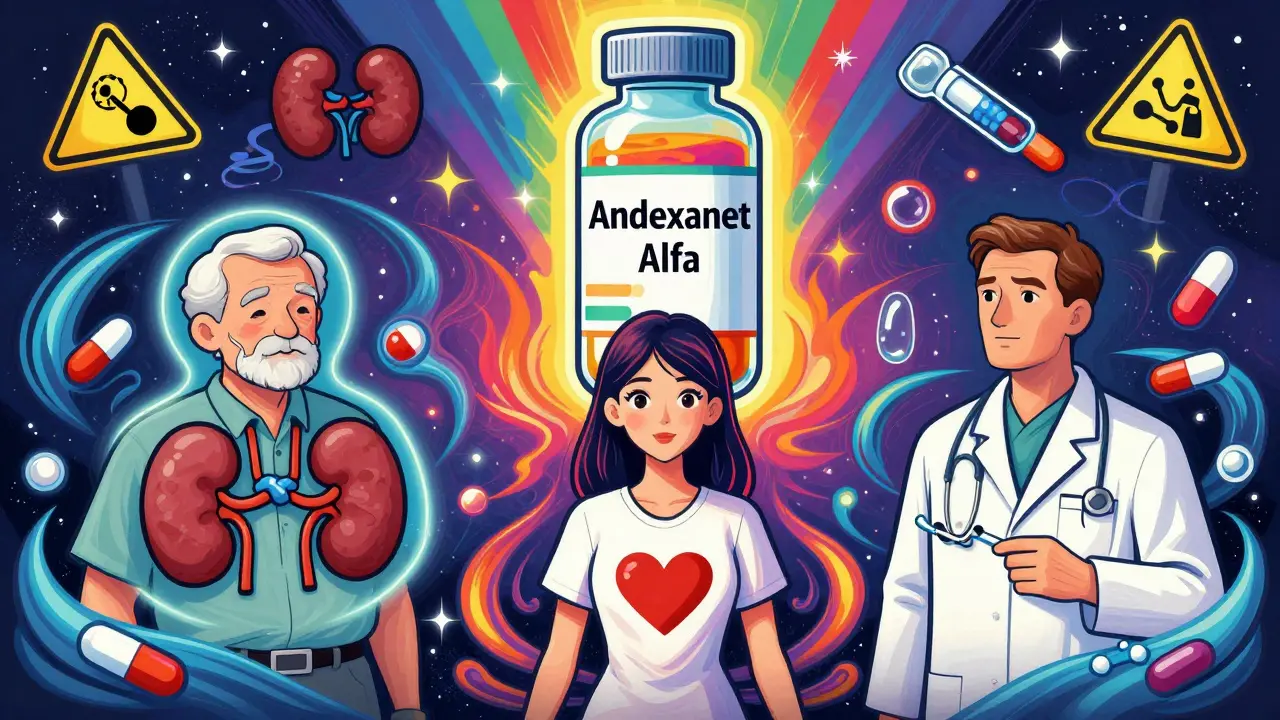
Another issue: reversal. Until recently, if someone on a DOAC had a brain bleed, doctors had no specific antidote. Now we have them-but they’re not always available. Idarucizumab reverses dabigatran. Andexanet alfa reverses apixaban and rivaroxaban. But andexanet alfa costs $13,000 per dose. Many hospitals don’t stock it. And even if they do, getting it approved takes time. In an emergency, that delay can be deadly.
When Heparins Are Still the Best Choice
Heparin and its derivatives (like enoxaparin) are still used in hospitals and for acute situations. They work fast. They’re given IV or under the skin. They’re often used before surgery or during pregnancy. But they come with their own dangers. Heparin-induced thrombocytopenia (HIT) happens in up to 5% of patients. It’s rare, but deadly: it causes clots instead of preventing them. And while protamine can reverse unfractionated heparin, it only partially reverses low molecular weight heparins. That leaves a gap in emergency care.
One key point: heparins are still the go-to for mechanical heart valves-especially mitral valves. DOACs have been shown to cause more clots in these patients. So even though DOACs dominate the market (75% of new prescriptions in 2022), warfarin and heparins still have critical roles.
How to Prevent Bleeding Before It Starts
Prevention isn’t just about picking the right drug. It’s about managing the whole picture.
- Check kidney function before starting and every 3-6 months. This isn’t optional. It’s standard. If the patient is over 75 or has diabetes, test even more often.
- Avoid dual therapy. Combining an anticoagulant with aspirin or clopidogrel increases bleeding risk by 50-70%. Only do this if absolutely necessary-like after a stent placement-and for the shortest time possible.
- Watch for drug interactions. Some antibiotics, antifungals, and even St. John’s wort can spike anticoagulant levels. Always review all medications, including supplements.
- Don’t stop abruptly. Stopping warfarin or DOACs suddenly can cause rebound clots. If a procedure is needed, follow guidelines for holding and restarting. For minor procedures, you may not need to stop at all.
- Know the signs of bleeding. Bruising that spreads, blood in urine or stool, headaches with dizziness, or sudden weakness could mean internal bleeding. Don’t wait. Go to the ER.
Reversal: What Works, When, and Why
If a major bleed happens, time is everything. You can’t wait for vitamin K to work-it takes 8 to 24 hours. For warfarin, the gold standard is four-factor prothrombin complex concentrate (4f-PCC). It works in 15 minutes. Give 25-50 units/kg. Then give vitamin K IV to keep the effect going. Fresh frozen plasma? It’s slower, harder to get, and less effective. Avoid it unless 4f-PCC isn’t available.
For dabigatran, idarucizumab is the answer. Give 5 grams IV. It works within minutes. For apixaban, rivaroxaban, or edoxaban, andexanet alfa is approved. But again, cost and access are huge barriers. Some hospitals have protocols to use activated charcoal if the patient took the drug within the last 2 hours. That’s not a reversal-but it can help.
For heparin, protamine reverses unfractionated heparin well. But it’s only about 60% effective against enoxaparin. There’s no perfect solution here.

When to Restart After a Bleed
Many doctors fear restarting anticoagulants after a bleed. But stopping too long can be worse. The American College of Cardiology says: if the patient’s risk of clotting is high-like someone with atrial fibrillation and a CHA₂DS₂-VASc score of 4 or higher-restart as soon as the bleeding is controlled. For low-risk patients-say, a provoked DVT that happened more than 3 months ago-you might stop permanently.
For brain bleeds, wait at least 4 weeks. For gastrointestinal bleeds, restart in 7-14 days if the source is treated. There’s no one-size-fits-all. But delaying too long increases stroke risk by 2-3% per week.
What’s Coming Next
Researchers are working on a universal reversal agent called ciraparantag. It could reverse all DOACs and even heparins with one drug. Early trials look promising. If it works, it could cut emergency deaths from anticoagulant bleeding by 30%.
Point-of-care tests for DOACs are also in development. Right now, we can measure warfarin with a quick INR test. We can’t do that for apixaban or rivaroxaban. New devices could give a reading in minutes, helping doctors decide if it’s safe to operate or if reversal is needed. Modeling suggests this could reduce bleeding events by 15-20%.
And in pregnancy? The Society of Family Planning now says many women on anticoagulants can safely have abortions in the first trimester with minimal blood loss-often under 100 mL. That’s a game-changer for reproductive care.
Final Takeaway
Anticoagulants save lives. But they kill too-when used carelessly. The best way to prevent hemorrhage isn’t just choosing the right drug. It’s knowing the patient’s kidneys, checking their other meds, testing regularly, and having a plan for emergencies. For every patient on a blood thinner, you need a personalized strategy. Not a one-size-fits-all protocol. Because when it comes to bleeding risk, small details make the difference between life and death.
Can you reverse DOACs like warfarin with vitamin K?
No. Vitamin K only works on warfarin and other vitamin K antagonists. DOACs like apixaban, rivaroxaban, and dabigatran work through completely different mechanisms. They require specific reversal agents: idarucizumab for dabigatran and andexanet alfa for factor Xa inhibitors. Vitamin K has no effect on DOACs.
Is warfarin still used today, or have DOACs replaced it completely?
Warfarin is still widely used, especially for mechanical heart valves, antiphospholipid syndrome, and patients with severe kidney disease where DOACs aren’t recommended. While DOACs make up about 75% of new prescriptions, warfarin remains the only option for some conditions. It’s also the only option for patients who can’t afford DOACs or lack access to reversal agents.
How often should kidney function be checked in someone on a DOAC?
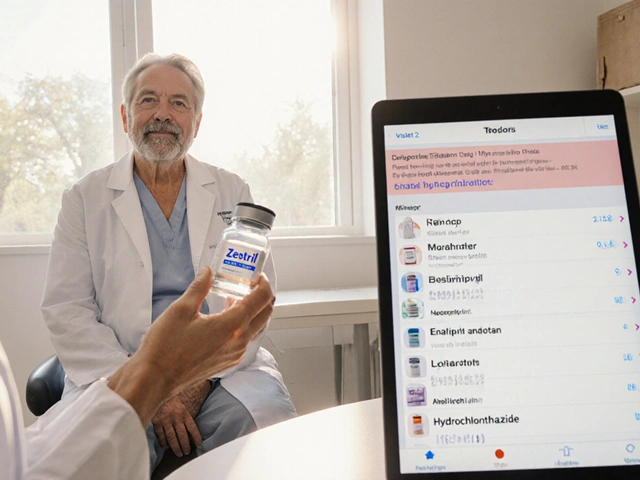
The American College of Cardiology recommends checking creatinine clearance at the start of treatment and every 3 to 6 months in stable patients. For those over 75, with diabetes, or known kidney issues, check every 3 months-or even more often if function is declining. A drop in kidney function can turn a safe dose into a dangerous one.
What’s the biggest mistake doctors make with anticoagulants?
The biggest mistake is assuming all anticoagulants are the same. Dosing, monitoring, reversal, and drug interactions vary dramatically between classes. Prescribing a DOAC without checking kidney function, or restarting warfarin without an INR, leads to preventable bleeds. Treating them like interchangeable pills is dangerous.
Can patients on anticoagulants safely have surgery?
Yes, but timing matters. For minor procedures like dental work or skin biopsies, most patients don’t need to stop their medication. For major surgery, guidelines recommend holding DOACs 1-2 days before (longer if kidney function is poor). Warfarin is usually stopped 5 days before. Always consult the patient’s cardiologist or hematologist. Never guess.
Do natural supplements affect anticoagulants?
Yes. Many supplements can increase bleeding risk. Garlic, ginkgo, ginger, fish oil, and high-dose vitamin E can all thin the blood. St. John’s wort can reduce warfarin’s effect, making clots more likely. Always ask patients about supplements-even those they think are "harmless."




March 20, 2026 AT 08:43
Kal Lambert
DOACs aren't magic. They're just better at avoiding warfarin's mess-but only if you check kidney function. Skip that step and you're gambling with someone's life. Simple as that.
March 21, 2026 AT 15:58
Kyle Young
It's fascinating how we've moved from warfarin's crude INR balancing act to DOACs that demand precision in dosing based on renal function. But the real question isn't which drug is better-it's whether our healthcare system is equipped to handle the complexity. Most clinics don't have the staffing or resources to monitor creatinine clearance every 3 months. We're prescribing advanced meds with 1950s infrastructure.
The irony? We call DOACs 'patient-friendly' because they don't need weekly blood draws. But now we're asking patients to understand kidney thresholds, drug interactions, and reversal agent availability-all while juggling co-pays for $550/month pills. That's not convenience. That's burden.
And then there's the reversal gap. We have antidotes, sure-but only if your hospital has $13,000 lying around for one dose of andexanet. That’s not medicine. That’s a lottery ticket for survival.
The future with ciraparantag sounds promising, but until then, we're patching a leaky boat with duct tape and hope. Maybe we need to stop treating anticoagulation like a checklist and start treating it like the high-stakes, individualized therapy it truly is.
March 22, 2026 AT 08:45
lawanna major
I appreciate how this post highlights the nuance behind what many see as a simple prescription. It’s easy to assume that because DOACs are newer, they’re inherently superior-but the data shows they’re just different. And sometimes, different isn’t better. It’s just more expensive and less accessible.
For elderly patients with declining renal function, warfarin remains a vital tool. Not because it’s perfect, but because it’s predictable-if you’re willing to do the work. The real tragedy isn’t the drug choice-it’s the systemic abandonment of monitoring, follow-up, and patient education.
Also, I wish more people understood that supplements aren’t harmless. I’ve seen too many patients come in with bruising from ginkgo and fish oil, convinced they’re just ‘natural support.’ Nature doesn’t care about your INR.
March 23, 2026 AT 03:32
Linda Olsson
Let’s be real-this whole anticoagulant industry is a pharmaceutical money machine. DOACs cost 100x more than warfarin. Why? Because they’re patent-protected. And now we’re told we need $13,000 antidotes? That’s not science. That’s profit-driven fearmongering.
And don’t get me started on ‘reversal agents.’ If they’re so critical, why aren’t they stocked in every ER? Because the hospitals don’t want to spend the money. The patients are the ones who pay the price-with their blood.
Also, ‘check kidney function every 3 months’? Who’s doing that? Medicare doesn’t cover it unless you’re in a clinical trial. This isn’t medicine-it’s a rigged game where the rich get safe care and the rest get lucky.
March 23, 2026 AT 20:26
Ayan Khan
As someone from a country where anticoagulants are often unavailable or unaffordable, I find this discussion deeply instructive. The precision described here-renal dosing, reversal agents, TTR monitoring-is a luxury many of us can only dream of.
In parts of Nigeria and India, warfarin is still the only option, and INR testing is a weekly pilgrimage to a distant lab. We don’t have andexanet alfa. We don’t have point-of-care tests. We have patients, families, and doctors trying to do their best with what they have.
This post reminds me that equity in medicine isn’t just about access to drugs-it’s about access to monitoring, education, and emergency infrastructure. A drug that requires a $13,000 antidote is not a global solution. It’s a privilege.
Perhaps the real innovation isn’t a new reversal agent-but a global system that ensures even the poorest patient can get their creatinine checked, their dose adjusted, and their bleeding managed.
March 25, 2026 AT 09:10
Emily Hager
I find it appalling that we are allowing pharmaceutical companies to dictate patient care through pricing and patent monopolies. The fact that a life-saving antidote costs more than a car is not a medical issue-it is a moral failure.
And yet, we praise DOACs as 'revolutionary' while ignoring the fact that they were designed to replace a $4/month drug with a $550/month one. This is capitalism masquerading as progress.
The 'personalized strategy' mentioned? That’s code for 'only the wealthy can afford safe treatment.' If you’re poor, old, or non-white, you’re statistically more likely to bleed out because your hospital doesn’t stock the antidote.
There is no science here. Only profit.
March 26, 2026 AT 17:33
Lauren Volpi
So let me get this straight-we’re supposed to trust a drug that needs a $13,000 antidote to work? That’s not medicine. That’s a scam.
And why are we still using warfarin? Because it’s cheap. But cheap doesn’t mean safe. It means we’re too lazy to fix the system.
Also, kidney function? Who checks that? My cousin’s grandma died because her doctor never tested her creatinine. Now she’s in a coma. Thanks, DOACs.
March 28, 2026 AT 01:15
Melissa Stansbury
I’ve been on rivaroxaban for 3 years. My doctor told me to get my kidneys checked every 6 months. I did it once. Then I forgot. Now I’m terrified every time I bruise.
I didn’t know vitamin K doesn’t work on DOACs until I read this. I thought it was a universal fix. I’m lucky I didn’t bleed out.
Also, my pharmacy said I could get a 90-day supply for $450 if I paid cash. I’m on SSDI. I can’t afford that. So I skip doses. I don’t know if that’s worse than bleeding.
March 29, 2026 AT 17:11
cara s
I’ve read this entire post three times, and I’m still not sure if I’m supposed to be reassured or terrified. On one hand, we have precise science-creatinine thresholds, TTR percentages, reversal agents with molecular specificity. On the other hand, the system that delivers this science is a patchwork of underfunded clinics, insurance denials, and ERs that don’t stock antidotes because ‘it’s not cost-effective.’
It’s like having a Ferrari with no gas station nearby. The car is amazing. The infrastructure? Nonexistent.
And then there’s the emotional toll. I have a friend on apixaban who refuses to travel because she’s afraid of being in a car accident far from a hospital with andexanet. She’s 62. She shouldn’t live like this.
Maybe the real breakthrough isn’t ciraparantag. Maybe it’s universal healthcare. Or at least, mandatory renal monitoring. Or maybe just… compassion.
March 30, 2026 AT 08:12
Amadi Kenneth
Wait-so you’re telling me that if I’m on a DOAC and I fall and hit my head, I might DIE because the hospital doesn’t have the antidote? And that antidote costs more than a house? And they don’t even stock it because it’s ‘too expensive’? This is insane. This is not healthcare. This is a horror movie. Who’s in charge here? The FDA? The AMA? The CEOs of Pfizer and Bristol-Myers? They’re laughing right now. They’re counting their money while old people bleed out in ERs. This is a war on the elderly. And I’m not even on a blood thinner-I’m just scared for my parents. They’re going to die because of a drug that’s supposed to save them. This is evil. This is criminal. Someone needs to go to jail for this.
April 1, 2026 AT 03:20
Kal Lambert
One more thing: if you're on a DOAC and you're over 75, don't wait for your doctor to bring up kidney function. Ask for it. Print out the ACC guidelines. Bring them in. Most docs are overwhelmed. They’re not ignoring you-they just don’t have time. But if you show up with the data, they’ll listen.