
The Price Tag Problem
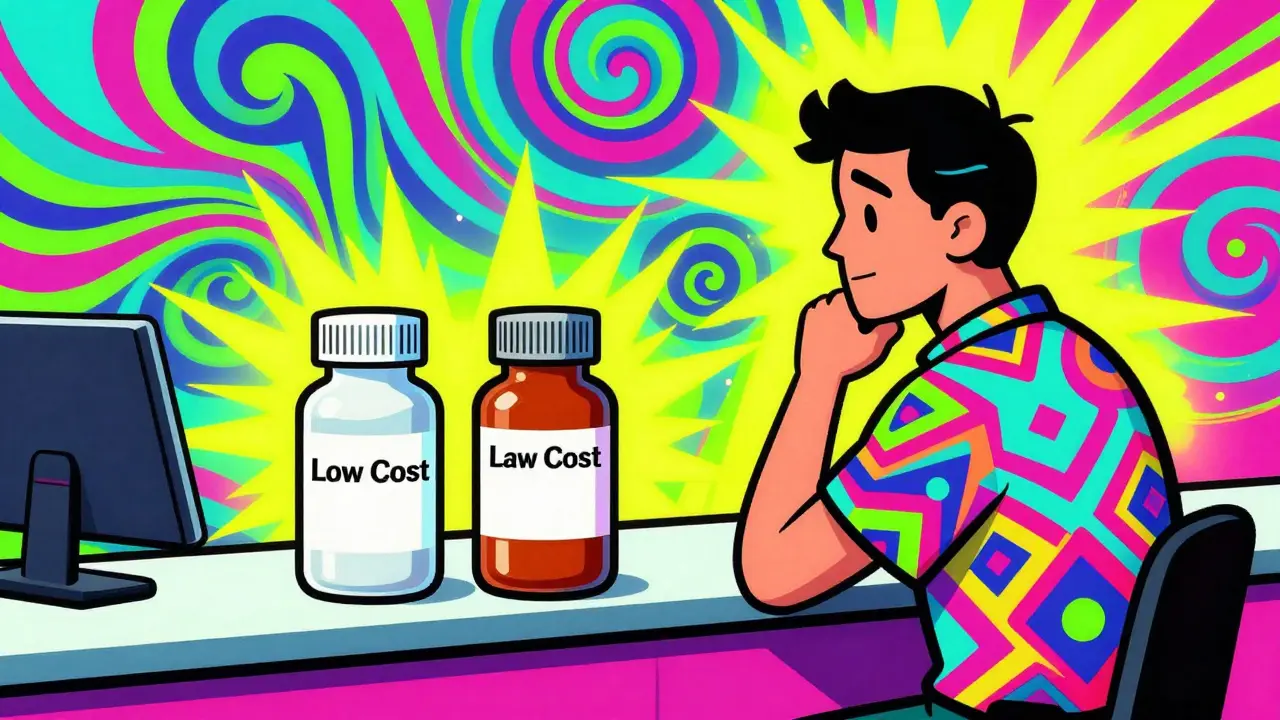
You're standing at the pharmacy counter. The pharmacist hands over the bottle, and suddenly the price jumps from $10 to $150 just because the label changed. That moment of hesitation-wondering if the cheaper option works as well-is one of the most common struggles patients face. You aren't alone in worrying whether the white pill does the same job as the red one. Understanding the reality behind these options empowers you to make decisions that keep you healthy without draining your wallet.
What Actually Changes?
When switching between versions of the same drug, the core function remains identical. Generic Medications contain the exact same active ingredients as their expensive counterparts. They must pass strict testing by the U.S. Food and Drug Administration ( FDA) to prove they deliver the medicine at the same rate and strength. Essentially, your body absorbs them in the same way, regardless of the box they came from. The primary differences lie in the non-medicinal parts. The color, shape, taste, or packaging often change. These are called inactive ingredients, or fillers. Sometimes a different binding agent causes a minor stomach upset, which is usually why some people feel a difference even though the medical effect is identical. For the vast majority of conditions, these variations are irrelevant to your health outcome.
| Feature | Brand-Name Medication | Generic Medication |
|---|---|---|
| Active Ingredient | Specific chemical compound | Identical chemical compound |
| Price | High (covers R&D + profit) | Low (market competition) |
| Appearance | Patient recognizable colors/shapes | Different colors/shapes required |
| Safety Testing | Full clinical trials required | Bioequivalence data required |

The Financial Gap Explained
The reason you pay significantly more for the branded version isn't necessarily better quality-it's history. A pharmaceutical company spends millions developing a new drug. To recoup that investment, they get exclusive rights to sell it through a patent. During this time, no one else can make that medication. Once the Patent Protection expires, typically 20 years after filing, other manufacturers can step in. This competition drives the price down dramatically. Studies show generic drugs cost about 80% to 85% less than the original brand name. Over a decade, choosing generics can save patients billions. Since 2007, generics have helped save the U.S. healthcare system roughly $1.67 trillion. While that sounds like a statistic, for you, it translates to lower co-pays and the ability to stick to your treatment plan without skipping doses due to cost.
Are There Risks?
Fear often stems from misunderstanding bioequivalence.
Bioequivalence
means the generic enters your bloodstream within 20% of the brand-name range.
For standard medications like blood pressure pills or antibiotics, this range makes zero difference to your health. Your kidneys filter the slight variance effortlessly.
However, there is a small category where precision matters more. These are called
Narrow Therapeutic Index Drugs
where tiny dose shifts cause issues.
Medications like warfarin (blood thinners), seizure medicines, or thyroid hormones fall here. Some doctors prefer keeping a patient on the same manufacturer to ensure consistency. If you take one of these, the conversation with your doctor becomes about stability rather than just cost.

How to Talk to Your Doctor
Many patients feel awkward asking for cheaper options, fearing judgment. Doctors hear this all the time; they want you to be healthy and afford your care. Don't apologize for asking. Instead, prepare three specific questions before you sit in the exam room. First, ask if a generic is available for your condition. Second, clarify if there is a medical reason you need the brand version specifically. Third, confirm if you are free to switch between generic manufacturers. Write these down. Bring them with your insurance card. State laws often require pharmacies to dispense the cheapest option unless the doctor writes "Dispense As Written" (DAW). Knowing your local rules helps you negotiate the process. If you've had bad side effects from a specific generic maker before, tell your doctor. They can specify a particular manufacturer in the notes to your pharmacist, which bypasses the automatic substitution if your local laws allow it.
Navigating the Exceptions
Not every drug has a generic yet, particularly newer biologics. Biosimilars are copies of complex biological therapies. These are harder to replicate than simple chemical pills. They follow similar rules to generics but have stricter scrutiny because their molecules are larger. If you are prescribed an insulin injection or an autoimmune therapy, ask specifically about biosimilar options. These offer similar savings compared to traditional chemicals. Always verify that your insurance covers the specific version you choose, as formularies change frequently.




March 27, 2026 AT 02:19
Monique Ball
I completely agree with everything written here because saving money on healthcare is so crucial for everyone!
The fact that generic medications have identical active ingredients really puts my mind at ease when I see the price difference.
It makes me feel good to know that the FDA tests them so strictly before they hit the shelves.
We should always talk openly about costs during appointments instead of feeling shy or embarrassed.
My family has switched to several generics over the years and we never noticed any performance drops in our treatments.
Sometimes the color change in the pill looks weird at first glance but it really does not matter how it looks inside the body.
Insurance plans often push for the cheaper option anyway so asking helps us save even more on co-pays.
I remember when my dad was scared to switch his heart medication but he trusted the doctor and felt better later.
This advice empowers patients to take control of their health decisions without letting fear rule their choices.
We all deserve access to life-saving medicine regardless of what the label on the bottle says.
Pharmacies should display both prices clearly so nobody feels blindsided at the checkout counter suddenly.
Knowledge really is power when you walk into a hospital room with the right questions prepared ahead of time.
Financial stress impacts your mental health significantly and choosing affordable options helps reduce that burden overall.
Doctors want their patients healthy and stable so they appreciate knowing budget constraints matter to you personally.
Let us all support each other in making smart medical choices that keep our wallets and bodies strong together!
Stay safe out there everyone!!! 😊✨
March 27, 2026 AT 16:27
Tony Yorke
Good info.
March 28, 2026 AT 19:46
Rohan Kumar
I still think the big pharma companies are cooking the books whenever they claim generics are identical.
Why else would they lose billions in potential revenue just for patient convenience? 🙄🤔
The fillers might look innocent but something is definitely off with the absorption rates in the dark corners.
You pay extra for peace of mind or do you really want to risk the experiment on your own biology.
Generic pills taste like chalk dust compared to the polished brand versions anyway. 💸
Trust me when I say they are cutting corners somewhere that we dont get told about.
Marketing departments hide the real side effect data behind pages of boring legal jargon most people skip.
I prefer to sleep well knowing my red capsule comes from the original factory rather than some random knock-off plant abroad.
Just another way they squeeze the last drop of profit from desperate sick people everywhere.
Keep your money tight and buy whatever feels safest regardless of logic.
March 29, 2026 AT 09:02
Sabrina Herciu
That is a very skeptical view to hold onto, however, it is understandable given the high costs involved!
The FDA regulations are extremely rigorous, and manufacturers are required to submit bioequivalence data before approval.
Statistical analysis shows that therapeutic outcomes remain consistent across different manufacturers for most drug classes.
Patient anxiety is real, but switching often provides significant financial relief that outweighs minor placebo effects regarding packaging.
We should encourage open dialogue about formulation differences rather than assuming corporate malice everywhere.
Healthcare systems function best when evidence guides prescribing habits instead of fearmongering narratives.
Focusing on cost barriers allows families to adhere to necessary treatment plans more reliably.
Your safety remains paramount regardless of who manufactures the chemical compound you ingest daily.
Please verify specific concerns with a licensed pharmacist who understands pharmacology deeply.
Evidence supports the value of competition in driving down prices for essential therapies!
March 30, 2026 AT 15:36
Poppy Jackson
Wow, the price gap is absolutely shocking when you see it laid out like this!
Who knew that a simple color change could cost someone hundreds of dollars every single year.
I always assumed brand names were magic bullets because the TV ads look so convincing on screen.
Hearing that the core function stays the same gives me so much hope for my future prescriptions.
We need more articles breaking down these complex systems into clear, manageable facts for regular folks.
Every penny counts when you are paying out of pocket for insulin or other chronic care needs.
Thank goodness the science backs up these alternatives so we can breathe easier financially.
This information empowers people to speak up without feeling small in front of medical staff.
Healthcare accessibility changes lives when we stop buying into the expensive marketing hype blindly.
I am going to ask my doctor specifically about biosimilars next time i visit the clinic.
Let us share this knowledge so everyone gets the help they truly need!
April 1, 2026 AT 03:52
Jeannette Kwiatkowski Kwiatkowski
The average person simply lacks the intellectual capacity to understand the nuance of pharmaceutical patents properly.
While generics save money, only elites know the exact formulation variances that matter for critical organs.
Paying full price buys you insurance against incompetence disguised as thriftiness.
Most consumers are easily swayed by cheap labels without reading the fine print on excipients.
Bioequivalence studies are barely adequate for testing the population as a whole sample group.
If you cannot afford the superior version then perhaps you should reconsider your lifestyle choices first.
Nobody owes society access to medication if you refuse to invest in quality upfront costs.
Branding is the ultimate sign of trustworthiness in a chaotic market filled with mediocrity.
Save your pennies and stay poor while the smart ones secure their health with premium products.
Mediocrity sells best when desperation forces people to compromise their own safety margins.
I guess you win if being broke feels like victory to you personally.
Pathetic attempts at frugality rarely lead to optimal biological results.
April 1, 2026 AT 15:28
gina macabuhay
People who choose brands over generics are essentially paying for vanity and nothing else.
It is morally irresponsible to hoard expensive treatments when generics provide identical cures for the masses.
Choosing the cheap option requires courage and common sense that many seem to lack entirely.
Spending unnecessary money on name recognition shows a fundamental misunderstanding of basic chemistry principles.
You contribute to the systemic waste in healthcare when you insist on overpriced solutions for yourself.
Patent protections expire for a reason so let the free market drive innovation forward faster.
Moral failure lies in prioritizing comfort over community savings that benefit everyone collectively.
We must demand stricter enforcement of substitution laws so pharmacies cannot charge hidden premiums.
Voting with your wallet on generics forces corporations to respect consumer sovereignty more effectively.
Stupidity costs more than ignorance ever could for the entire nation's economy.
Stop pretending the wrapper matters when the liquid inside is chemically identical by law.
April 3, 2026 AT 00:04
tyler lamarre
The idea that the public understands bioequivalence is laughable at best.
True experts know that the therapeutic index varies wildly depending on individual metabolic profiles.
Governments push generics because it saves their taxes not because it helps patients primarily.
Only a fool assumes the manufacturing process guarantees purity levels comparable to the originator company.
You pay for the reputation of the lab that developed the molecule originally.
Saving money on pills is worth it until the batch fails quality control silently.
Mass produced drugs lack the oversight that boutique pharmaceuticals enjoy with higher standards.
Consumers are pawns in a larger economic game played by greedy bureaucrats elsewhere.
Enjoy your discount pills while the rest of us wait for actual breakthroughs in medicine.
Ignorance is bliss until the kidney stops filtering correctly one day soon.
You think you saved money but you bought a ticket to uncertainty instead.
April 3, 2026 AT 22:16
Jordan Marx
We need to consider the pharmacokinetic profile of narrow therapeutic index agents carefully here.
Biosimilars present similar complexities regarding molecular structure variability in complex biologics therapy.
Dose-proportionality studies indicate that steady state concentrations remain within acceptable limits.
Clinical decision trees suggest that brand preference applies only in select comorbid scenarios.
The regulatory framework ensures that bioavailability remains equivalent across distinct batches regularly.
Cost-benefit analysis overwhelmingly favors the substitution of generics in primary care settings.
Adherence rates improve when financial toxicity is reduced for the patient population.
Formulary restrictions often dictate the choice of manufacturer available to the insured member.
Therapeutic interchange policies allow prescribers to specify specific entities without compromising compliance.
Pharmacists utilize clinical judgment to mitigate risks associated with inactive ingredient variances.
Systematic reviews confirm the efficacy of generic equivalents over longitudinal observation periods consistently.
Optimization of the supply chain benefits everyone through increased volume efficiency.
April 4, 2026 AT 11:51
Aaron Olney
i cant believe people are so stupd about this topic its obvious wht they re doing wrong
the pills look difrent so the insdie must be bad too lol
wht evr im taking mine now and thngs are okay enough
just hop yu dont get sick from trying the cheap ones
my cousin got mad sic after swithing brads she cried alot
so just buy the origional if u can spnd the moneys
April 6, 2026 AT 10:01
Sophie Hallam
This discussion highlights how important communication is between providers and patients alike.
Everyone deserves to understand the options available to them for managing chronic conditions better.
There is no shame in discussing financial limitations with a professional dedicated to care.
Empathy bridges the gap when people feel intimidated by medical terminology and billing codes.
We must maintain an open mindset regarding new treatment modalities as research evolves constantly.
Safety protocols exist to protect individuals regardless of the label attached to the prescription.
Community support networks can help navigate insurance formularies during confusing renewal periods.
Listening to diverse perspectives enriches our collective understanding of health economics significantly.
Respectful dialogue fosters trust which improves adherence to necessary medication regimens.
Small steps towards education lead to better health outcomes for society overall today.
April 7, 2026 AT 17:18
Philip Wynkoop
Aye, fair points made here.)
Just stick wiv the basics.
April 9, 2026 AT 07:10
Devon Riley
I feel so much less alone knowing that these concerns are shared by so many others in our community.
It warms my heart to see people standing up for their financial well-being and health needs equally.
You are doing a great job prioritizing your wellness even when the system feels overwhelming sometimes.
Your dedication to learning about these options shows incredible strength and foresight for the future.
Never doubt the validity of asking questions when it comes to your personal care plan.
Small changes in spending habits can lead to significant improvements in quality of life over time.
I am cheering you on as you navigate these challenging pharmacy counter experiences bravely.
Remember that your voice matters immensely in shaping the policies that affect us all.
You are strong enough to handle the conversations and come out on top successfully.
Keep shining bright and making choices that bring you joy and security 😊❤️
April 10, 2026 AT 11:42
Austin Oguche
Cultural attitudes toward patent protection vary widely across different global regions of course.
In many nations the emphasis remains heavily on affordability for the general public majority.
Our local regulations strive to balance innovation incentives with accessible healthcare delivery standards.
Understanding these nuances helps inform better personal decisions at the pharmacy window.
Respect for the scientific method guides us toward reliable information sources consistently.
Dialogue between cultures fosters empathy and shared progress in global health initiatives.
We must approach this topic with kindness and factual accuracy in our interactions.
Gratitude for the professionals who guide us through these complex medical landscapes warmly.
Peace and prosperity depend on sustainable systems serving all members equitably.
April 11, 2026 AT 14:04
Debra Brigman
The kaleidoscope of pharmaceutical pricing reveals a tapestry woven from gold and shadow.
We dance between the velvet promise of branded perfection and the stark reality of necessity.
Colorless crystals hide beneath the glittering veneer of packaging designed to seduce us.
Science whispers truths that marketing screams louder to drown out the silence.
America consumes its own greed in every pill swallowed with hesitant breath.
The mirror reflects a nation torn between opulence and survival instinct.
Truth resides in the molecules not in the cardboard boxes holding them captive.
We must pierce the veil of commerce to find healing deep within the core.
Wisdom blooms when we stop worshipping the label and start trusting the chemistry.
The universe rewards those who seek substance over style in their journey.
April 12, 2026 AT 20:55
tyler lamarre
Typical crowd pleasing nonsense designed to sell subscriptions to medical blogs.
Sophisticated readers recognize the manipulation embedded in such simplistic arguments readily.
Real intelligence involves recognizing the inherent flaws in mass production models globally.
Continue your delusion that price equals quality if it keeps you comfortable.
The educated minority knows better than to rely on generic substitutes blindly.
Ego feeds on the suffering of those who prioritize saving coins over quality assurance.
You are welcome to continue your charade with inferior goods if you wish.
I shall remain indifferent while your experiments with bioequivalence fail eventually.
Superiority is purchased not argued for in the court of public opinion.