

Taking a pill every day for years isn’t just a habit-it’s a lifeline. But for millions of people with chronic conditions like high blood pressure, diabetes, or rheumatoid arthritis, that daily routine becomes exhausting, confusing, or even overwhelming. The truth? medication adherence is one of the biggest challenges in long-term health care. And it’s not because people are lazy or forgetful. It’s because managing a lifelong medication regimen changes how you see yourself, your body, and your future.
Why Sticking to Your Meds Is Harder Than It Looks
Think about it: you’re not just taking a pill. You’re constantly reminded you have a condition that won’t go away. Every morning, you face the same choice: take it or skip it. Skip it once, and nothing happens. Skip it for a week, and your blood pressure spikes. Skip it for months, and you end up in the hospital. A 2017 CDC report found that nearly half of Americans with chronic illnesses don’t take their meds as prescribed. That’s not because they don’t care. It’s because the system doesn’t make it easy. Complex schedules, side effects, high costs, and the emotional toll of living with illness all pile up. And when you’re tired, stressed, or in pain, the last thing you want to do is remember another pill.The Five Coping Strategies That Actually Help
Research from a 2022 review of 15 studies shows five main ways people cope with long-term medication use. Not all of them work the same. Some help. Some hurt. Here’s what the data says:- Problem-solving / active coping - This is the gold standard. People who actively figure out how to overcome barriers-like setting phone alarms, using pill organizers, or talking to their pharmacist about side effects-are 78% more likely to stick with their meds. They don’t wait for things to get better. They change the situation.
- Emotion-focused coping - This includes things like journaling, talking to friends, or using mindfulness to deal with the stress of being sick. About 69% of studies showed this helps. It doesn’t fix the pill schedule, but it makes the emotional weight lighter.
- Seeking understanding - People who read up on their condition, ask their doctor questions, or join support groups tend to stay on track. Knowledge reduces fear. Fear drives nonadherence.
- Support seeking - Whether it’s a family member reminding you, a pharmacist calling to check in, or a support group sharing tips, having people around you makes a big difference. Team-based care models that include pharmacists and social workers boosted adherence to 89% in one study.
- Problem avoidance - This is the trap. Ignoring the problem, pretending it’s not serious, or skipping doses because “I feel fine today.” Half the studies found this led to worse adherence. It’s the coping strategy that backfires.
What Works Best? The Numbers Don’t Lie
If you want to know which strategy gives you the best shot at staying on track, the answer is clear: problem-solving. People who treat medication adherence like a puzzle to solve-not a chore to endure-have the highest success rates. One study of 120 rheumatoid arthritis patients found that those who stuck with their meds had significantly higher scores on active coping. They didn’t just take their pills. They planned for them. They adjusted their routines. They asked for help when they needed it. But here’s the catch: even the best coping strategy can fail if you’re overwhelmed by other factors. The same study showed that women were more likely to adhere than men. Older patients did better than younger ones. People with shorter disease duration stuck with their meds more easily. That means coping isn’t just about mindset-it’s about your life circumstances.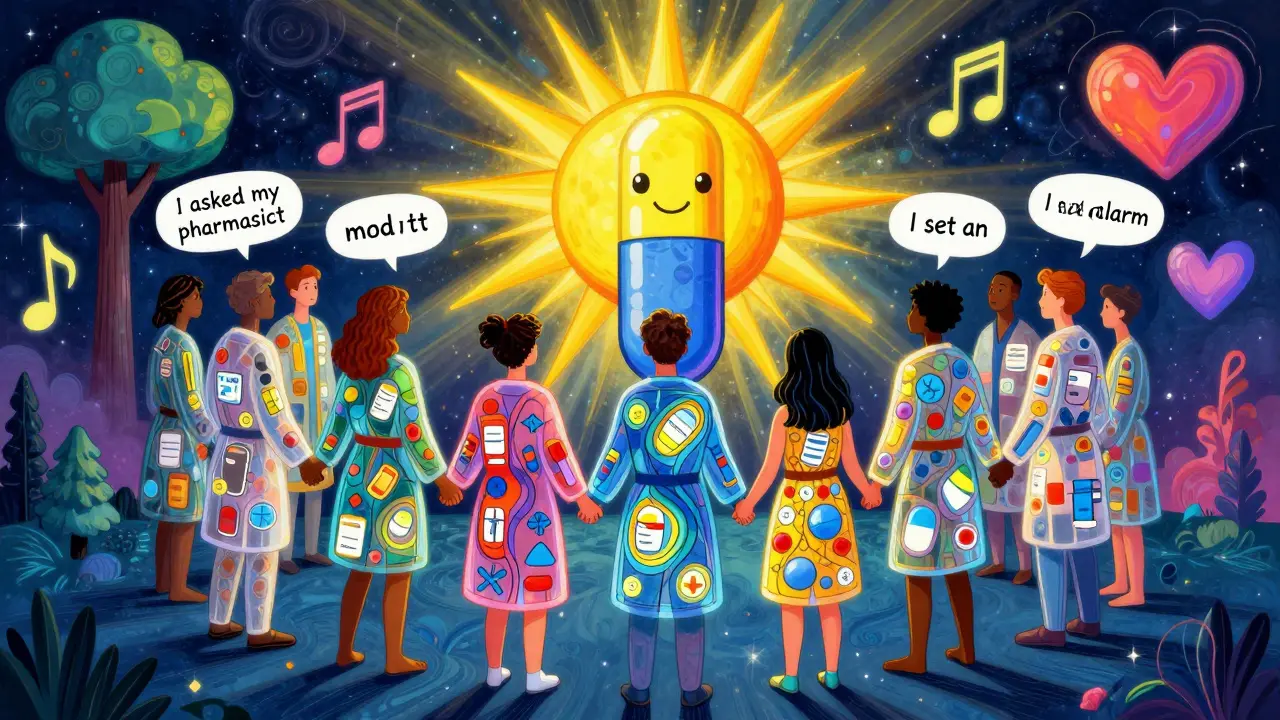
Real-World Tools That Make a Difference
You don’t need to be a superhero to stay on track. Here are practical, research-backed tools that actually work:- Pill organizers with alarms - Simple, cheap, and effective. A 2023 study found that using a weekly pill box with a timer increased adherence by 40% in older adults.
- Pharmacist-led medication reviews - Many people don’t realize their pharmacist can help simplify their regimen. Ask if you can combine pills, switch to once-daily versions, or switch to generics to cut costs.
- Text reminders from your clinic - A study showed automated refill reminders via text improved adherence by 25%. No apps needed.
- One-stop medication assistance - If cost is the issue, ask your doctor or pharmacist about RxAssist.org or patient assistance programs. Many drug companies offer free or low-cost meds to those who qualify.
- Family involvement - Having someone else know your schedule makes a huge difference. One man with heart failure told his daughter to text him every morning at 8 a.m. She did. He took his pill. He stayed out of the hospital for three years.
The Hidden Cost of Skipping Pills
It’s easy to think, “One missed dose won’t hurt.” But the ripple effect is real. Poor adherence leads to more ER visits, more hospitalizations, and more complications. The CDC estimates medication nonadherence costs the U.S. healthcare system between $100 billion and $300 billion every year. That’s not just a number. It’s real people-your neighbor, your parent, your friend-ending up in the hospital because a simple routine broke down. And it’s not just about money. It’s about quality of life. People who stick to their meds live longer, feel better, and have more control over their days. They don’t have to live in fear of a flare-up or a sudden decline.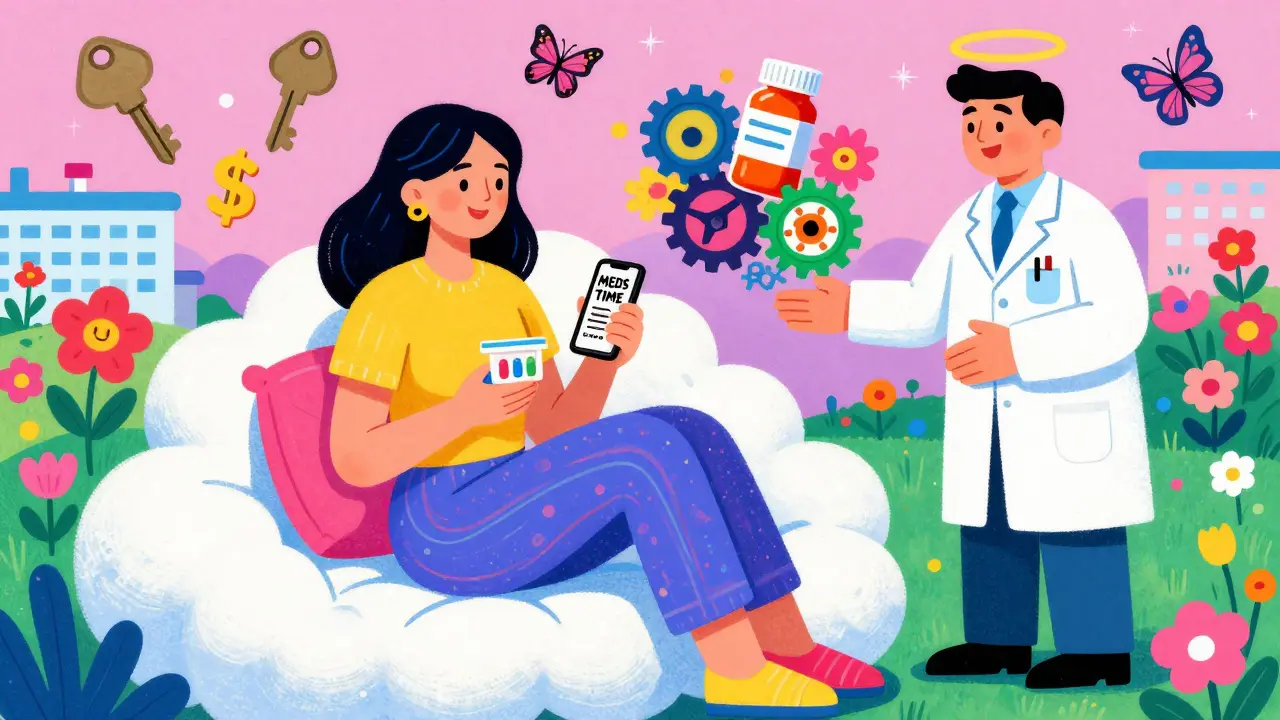
What Your Doctor Isn’t Telling You
Most doctors assume you’re taking your meds. They rarely ask. But you should bring it up. Say: “I’m having trouble keeping up with my pills. Can we make this easier?” You have the right to ask for:- Combination pills (two meds in one tablet)
- Once-daily dosing
- Generic alternatives
- Pharmacist consultations
- Help with insurance or co-pays
What to Do If You’re Falling Behind
If you’ve missed doses, don’t panic. Don’t feel guilty. Just start again-with a plan. Step 1: Write down every medication you take, including the dose and time. Step 2: Identify the biggest barrier. Is it cost? Side effects? Forgetting? Too many pills? Step 3: Pick one small change. Maybe you’ll use a pill box. Maybe you’ll set a daily alarm. Maybe you’ll call your pharmacist to see if you can switch to a cheaper version. Step 4: Tell one person. A partner, a friend, a sibling. Ask them to check in once a week. Step 5: Give yourself grace. You don’t have to be perfect. Just better than yesterday.Final Thought: This Isn’t About Willpower
Sticking to your meds isn’t about being disciplined. It’s about building a system that works with your life-not against it. The most successful people aren’t the ones with the strongest will. They’re the ones who found the easiest path. Your health doesn’t require perfection. It just requires consistency. And consistency comes from smart habits, not moral strength. Start small. Ask for help. Use the tools. You’ve already taken the hardest step-you’re here, looking for a way forward. That’s more than most people do.Why do I keep forgetting to take my medication even though I know it’s important?
Forgetting isn’t a character flaw-it’s normal. The brain gets used to routines, and when a habit isn’t tied to a clear trigger (like brushing your teeth after breakfast), it slips away. Try linking your pill to a daily action you never skip: brushing your teeth, eating breakfast, or turning off your alarm. Use a pill box with compartments for each time of day. Set a daily alarm labeled “MEDS” on your phone. These small cues make a big difference.
Can coping strategies really improve my health outcomes?
Yes. Studies show that people who use problem-solving and emotion-focused coping strategies are significantly more likely to stick with their meds. And better adherence means fewer hospital visits, lower risk of complications, and longer life. For example, one study found that patients using team-based care-including pharmacist support-had an 89% adherence rate after one year, compared to 74% without support. That’s not just a number. It’s more time with your family, fewer doctor visits, and better energy to do the things you love.
I’m on too many pills. Is there a way to simplify my regimen?
Absolutely. Many medications can be combined into one pill, or switched to once-daily versions. Talk to your pharmacist or doctor about your full list. Ask: “Can any of these be taken together?” or “Is there a generic or combination version available?” Reducing the number of pills you take each day is one of the most effective ways to improve adherence. In fact, studies show that people taking fewer pills are far more likely to stay on track.
What if I can’t afford my medication?
You’re not alone. Many people skip doses because of cost. But there are options. Ask your pharmacist about RxAssist.org, which lists patient assistance programs from drug manufacturers. Many companies offer free or low-cost meds to those with low income. You can also ask if a generic version is available. Sometimes switching from a brand-name drug to a generic cuts the cost by 80%. Don’t be embarrassed to ask. Your health matters more than pride.
My side effects are making me want to quit. What should I do?
Don’t stop without talking to your doctor. Many side effects fade after a few weeks as your body adjusts. But if they’re unbearable, there are alternatives. Your doctor might lower the dose, switch you to a different medication, or add another drug to counteract the side effect. For example, if a blood pressure pill causes dizziness, switching to a different class might help. Or if nausea is the issue, taking the pill with food might reduce it. The goal isn’t to suffer-it’s to find a version of your treatment that works for your life.






December 23, 2025 AT 19:23
Usha Sundar
Been on blood pressure meds for 8 years. Pill box + alarm labeled 'DONT BE A DUMBASS' saved me. No drama. Just do the thing.
December 25, 2025 AT 07:43
Joseph Manuel
While the article presents a superficially compelling narrative, it lacks methodological rigor in its citation of the 2022 review. The effect sizes cited are not adjusted for confounding variables such as socioeconomic status or health literacy, which are known to be stronger predictors of adherence than coping strategies alone. The conflation of correlation with causation undermines the credibility of the recommendations.
December 27, 2025 AT 07:37
Jillian Angus
i just take mine with coffee
it’s not perfect but it’s mine
some days i forget
some days i don’t care
but i’m still here
December 28, 2025 AT 20:05
Ademola Madehin
YALL NEVER TALK ABOUT THE FEELINGS
like when you stare at that pill bottle and you just wanna scream
why me why this why every damn morning
and then you take it anyway
and you cry in the shower
and no one sees it
but you’re still alive
so you take the next one
and the next
and the next
and that’s the real victory
not the pill box
not the alarms
just you
still here
December 29, 2025 AT 03:25
suhani mathur
Oh wow, a whole article about taking pills and no mention of Medicaid or the fact that 40% of Americans can’t afford their meds? How… quaint. Let me guess, the ‘problem-solving’ strategy involves magically making your insulin cheaper? Cute. Try telling that to the person rationing pills because their deductible is $7k. You’re not solving problems-you’re performing wellness theater.
December 29, 2025 AT 11:27
Diana Alime
i used to forget my meds all the time then i got a cat and now she sits on the pill box so i have to move her to take it lol
she’s kinda a little pill enforcer
also i typoed like 3 times in this comment so forgive me
my brain is fried from 3 meds and 2 anxiety attacks today
December 31, 2025 AT 07:33
Bartholomew Henry Allen
This is what happens when you let emotion replace discipline. America is weak. People need structure not pill boxes and texts. Take your medicine like a man. No excuses. No apps. Just responsibility. Our ancestors didn’t have reminders and they lived longer.
January 1, 2026 AT 20:24
claire davies
When I was first diagnosed, I thought I had to be this superhero who never missed a dose. Turns out, I just needed to be a slightly messy human who sometimes took her meds with cereal instead of breakfast, and sometimes forgot for three days and then cried and started again. The thing that helped most? Finding a support group where someone said, ‘I skipped mine last week too. Here’s how I got back on track.’ No judgment. Just ‘me too.’ That’s the magic. Not the alarm. Not the pill organizer. Just knowing you’re not alone in the quiet, messy, exhausting work of staying alive.
January 3, 2026 AT 12:21
Wilton Holliday
Love this post 😊
One thing I’d add-don’t underestimate the power of a weekly check-in with someone who doesn’t care about your ‘adherence score’ but just wants to know how you’re feeling. I had a friend text me every Sunday: ‘Pills taken? Or just vibes today?’
That’s all it took. No pressure. Just care. 🙌
You’re doing better than you think.