
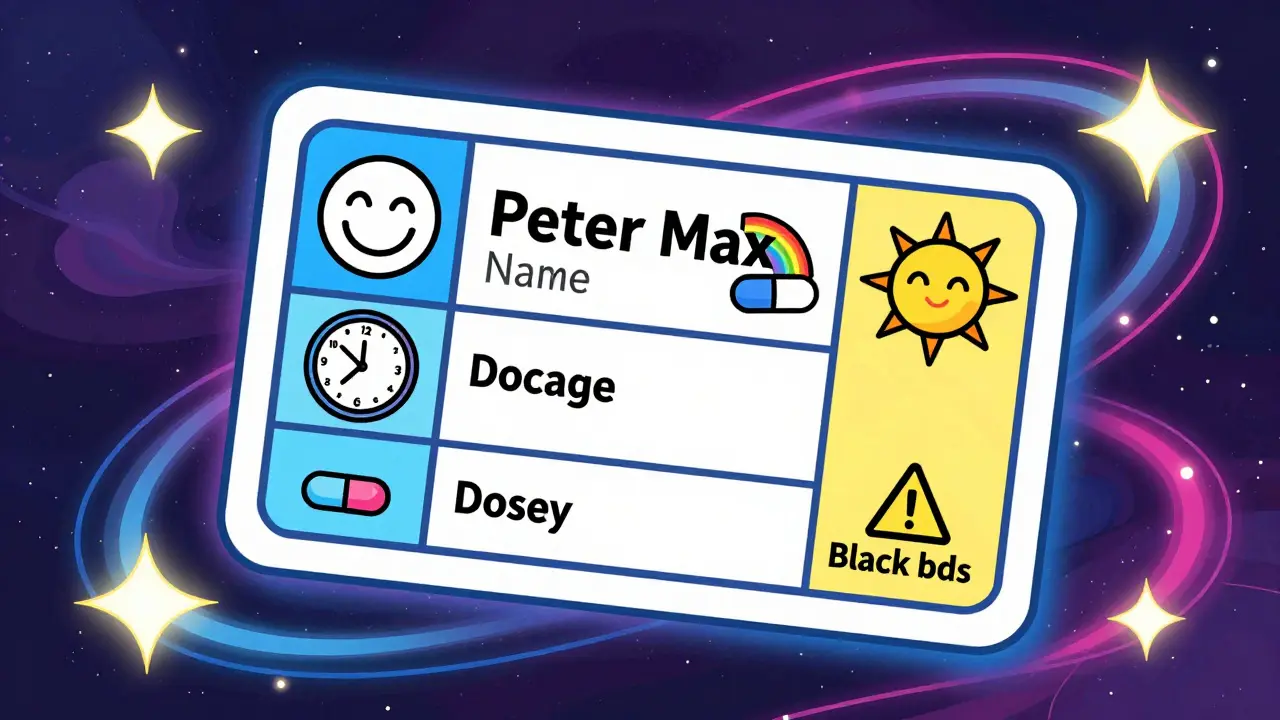
Every time you pick up a prescription, you get a small piece of paper with a lot of information on it. It might look like a jumble of letters, numbers, and symbols. But every part of that label is there to keep you safe. If you don’t understand what it says, you could take the wrong dose, mix up medications, or even risk serious harm. The good news? You don’t need a medical degree to read it. Once you know what each section means, your prescription label becomes a clear, simple guide-not a puzzle.
Your Name: The First Line of Defense
Your name is printed at the top of every prescription label. It’s not just for identification. It’s a safety guard. Every year, about 1.5 million medication errors happen in the U.S. because someone gets the wrong drug. Many of those happen when patients with similar names or similar prescriptions pick up the wrong bag. Your name on the label means the pharmacist checked: Is this medicine for you? Always double-check it. If it says "John Smith" and you’re Jane Smith, don’t take it. Walk back and ask.
The Medication Name: Brand vs. Generic
You’ll see two names here. The first is the brand name-like Abstral. The second is the generic name-fentanyl. The brand name is what the company calls it. The generic name is the actual medicine inside. Both are important. If your doctor switches you from a brand to a generic, it’s usually the same drug, same effect, but cheaper. But sometimes, the brand name is the only one that works for you. If you’re unsure, ask your pharmacist: "Is this the same as what I used to take?"
Dosage Strength: How Much Is in Each Pill?
This tells you exactly how strong each pill, capsule, or milliliter of liquid is. For example: "100 mcg" means 100 micrograms of fentanyl per tablet. If your label says "50 mg" for a blood pressure pill, that’s the amount of active drug in each tablet. Never guess. If your doctor says to take "one tablet," and you see two different strengths on the shelf, you need to know which one matches your prescription. Taking twice the dose because you misread the number can be deadly. Always compare the strength on the label to what your doctor told you.
Instructions: When, How, and How Often
This section tells you how to take the medicine. It might say: "Take one tablet by mouth every 6 hours as needed for pain." Or: "Take one capsule with breakfast every morning." Pay attention to words like "with food," "on an empty stomach," or "at bedtime." These matter. Some drugs work better or cause less stomach upset when taken with food. Others need to be taken alone. If it says "every 8 hours," that means roughly three times a day-not just when you remember. Set phone alarms if you need to. Missing doses or taking too often can reduce effectiveness or cause side effects.
Expiration Date: When It’s No Longer Safe
Every medication has a date after which it shouldn’t be used. That’s not a suggestion. It’s a safety rule. Most prescriptions expire 12 to 18 months after the pharmacy fills them. After that, the medicine can lose strength or break down into harmful substances. You might think an old pill is still fine because it looks the same. It’s not. The FDA says expired drugs can be less effective or even dangerous. If your label says "EXP 06/2025," don’t use it after June 2025. Toss it. Many pharmacies now offer free disposal bins for old meds. Ask.
Prescription Number (Rx#): Your Medication’s ID
This number is unique to your prescription. It’s how the pharmacy tracks your refill requests. If you call in for more, they need this number to pull up your record. If you get a new bottle and the Rx# is different from your last one, that’s normal-it’s a new fill. But if you get two different medications with the same Rx#, something’s wrong. Always check. This number also helps if you need to report a problem. If you have a bad reaction, your pharmacist will ask for the Rx# to trace exactly what you got.
Pharmacy and Prescriber Info: Who to Call
Look for the pharmacy’s name, phone number, and address. That’s your lifeline. If you have questions about side effects, interactions, or how to take it, call them. They’re trained to help. You’ll also see your doctor’s name. That’s not just for show. If you think the prescription is wrong, you can call your doctor and say: "I got this label from [Pharmacy Name], and the dose says 50 mg, but I thought you said 25 mg." They’ll check. Don’t assume it’s a typo. Confirm it.
Visual Description: What the Pill Looks Like
It might say: "White, round, film-coated tablet, imprinted with AB 100." This helps you spot if you got the wrong pill. Maybe you dropped your bottle and the pills spilled. Or maybe you opened a new bottle and they look different. If the color, shape, or imprint doesn’t match what you’ve taken before, don’t take it. Call the pharmacy. This is especially important for older adults or people taking multiple pills. A 2023 Cleveland Clinic study found that patients who used visual descriptions made 32% fewer mistakes than those who didn’t.
National Drug Code (NDC): The Barcode for Your Medicine
This is a 10- or 11-digit number that looks like a long string of digits. It’s not for you to remember. But it’s there so the pharmacy, insurance, and FDA can track exactly which drug, from which manufacturer, in which package size, you received. If there’s a recall, they’ll use this number to find you. You don’t need to do anything with it-but if you’re ever asked for it by a pharmacist or insurance rep, you’ll know where to find it.
Storage Instructions: Keep It Safe
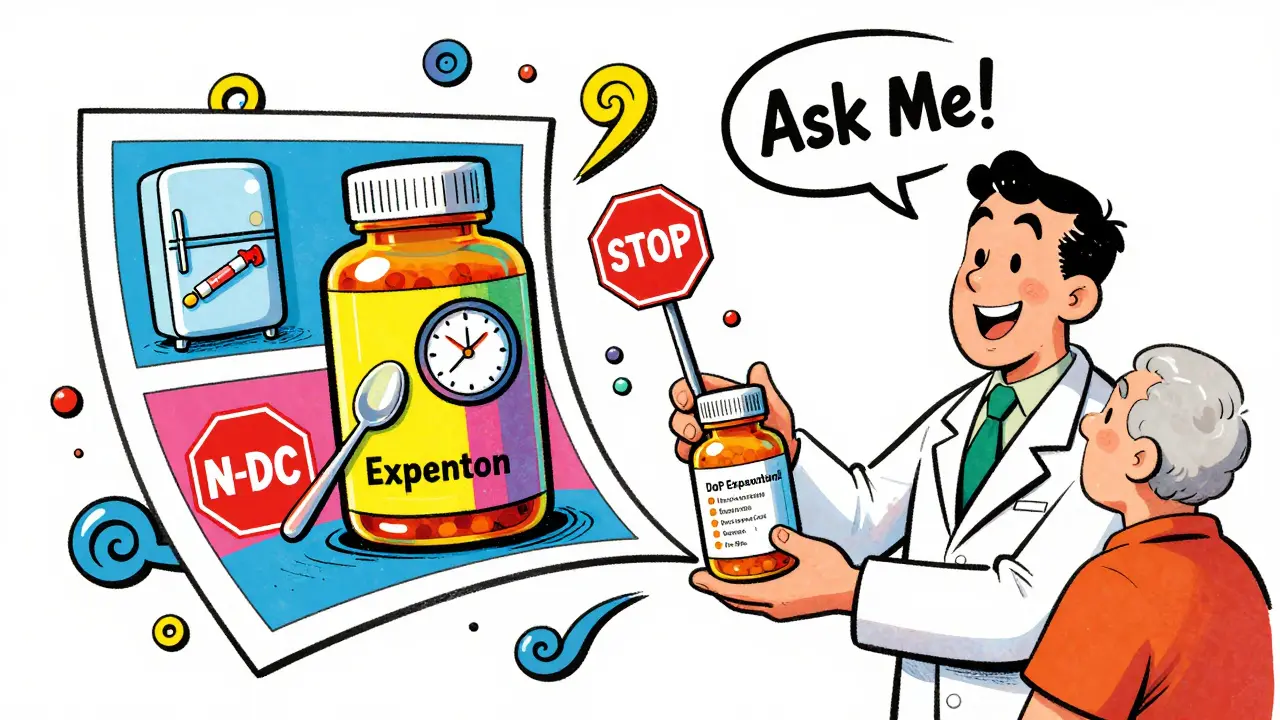
Some meds need to be kept in the fridge. Others must stay dry and cool. The label might say: "Store at room temperature, 68°-77°F." Or: "Keep in original container, away from moisture." If you keep your insulin in the medicine cabinet instead of the fridge, it won’t work right. If you leave your antibiotic in the bathroom, humidity can ruin it. Always follow these instructions. They’re not suggestions-they’re science.
Warning Labels: Red Flags You Can’t Ignore
These are the most important parts. They might say: "May cause drowsiness. Do not operate machinery." Or: "Avoid alcohol." Or: "Not for use in pregnancy." Some labels have a black box warning-the most serious alert the FDA gives. If your label has one, it means the drug has risks that could cause serious injury or death. Don’t skip reading these. If you’re not sure what a warning means, ask. A 2022 study showed patients who read warning labels were 45% less likely to have a bad reaction.
Why the Indication Matters More Than You Think
Most labels still don’t say why you’re taking the medicine. But they should. That’s the reason you’re on this drug. Is it for high blood pressure? Anxiety? Infection? If your label says "Take one tablet daily" but doesn’t say what it’s for, you might take it for the wrong reason. A 2020 FDA study found that 78% of patients who didn’t know why they were taking a drug took it incorrectly. Some took it when they felt fine. Others took it with the wrong food. If your label doesn’t include the reason, ask your pharmacist to write it in. Many pharmacies now do this voluntarily. It cuts wrong-drug errors by 55%, according to the Institute for Safe Medication Practices.
What’s Missing? What You Should Ask For
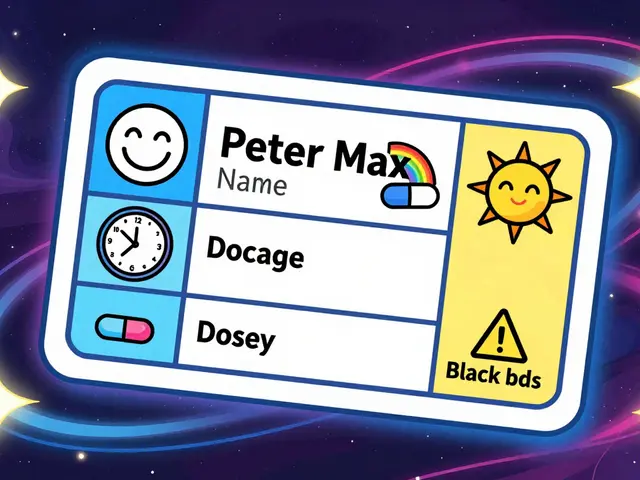
Even with all this, labels still have gaps. Only 38% of pharmacies routinely include the reason for use. Many still use abbreviations like "q.d." instead of "daily," or "tsp" instead of "teaspoon." These confuse people-especially parents giving medicine to kids. The USP recommends spelling everything out. If you see abbreviations, ask for clarification. Also, ask for a pictogram. Simple drawings of a pill, a clock, or a spoon can help people with low literacy or language barriers understand faster. The FDA says 71% of patients prefer labels with pictures.
How to Use This Knowledge Every Time
When you get a new prescription, pause. Don’t rush out the door. Take five minutes. Ask yourself these five questions:
- Is my name spelled right?
- What is the medicine called, and what is it for?
- How much do I take, and when?
- Is there a warning I need to watch for?
- When does it expire?
If you can’t answer them from the label, call the pharmacy. Don’t guess. You’re not being difficult-you’re protecting your health.
What’s Changing Soon
By 2025, the USP plans to require every prescription label to include the reason for use. That’s a big step. Right now, only a few states have this rule. But with over 150,000 medication errors prevented in pilot programs, it’s coming nationwide. Also, more pharmacies are starting to print labels in multiple languages and use larger fonts. The goal? No one should have to be a doctor to read their own medicine label.

January 6, 2026 AT 03:25
Leonard Shit
so i just realized my rx label says "take as needed" but i have no idea what it's for... guess i'm just gonna keep popping these little white pills like candy
January 7, 2026 AT 06:17
Tom Swinton
Man, I can’t believe how many people just grab their meds and run-like, seriously? You wouldn’t walk into a car dealership and drive off without knowing what the gas pedal does, but you’ll swallow a pill with no clue what it’s for? I’ve had patients come in with bottles full of mystery pills, and when I ask, they say, ‘My doctor gave it to me.’ Well, yeah-but did you ever ask WHY? The label’s not a fortune cookie. It’s your lifeline. Your name? Double-check it. The dosage? Compare it to your script. The warning about alcohol? Yeah, that’s not a suggestion-it’s a ‘don’t die’ notice. I’ve seen people end up in the ER because they took their blood pressure med with grapefruit juice. Grapefruit. Juice. It’s not magic. It’s chemistry. And if your label says ‘EXP 06/2025,’ don’t wait until June 25th to toss it. Toss it on June 1st. Your body will thank you. And if you’re one of those people who thinks ‘it still looks fine,’ let me tell you-my grandma took expired antibiotics for a sinus infection and ended up with a C. diff infection. That’s not a scare tactic. That’s a real story. So next time you get a prescription, pause. Read. Ask. Don’t be that person who Googles ‘what does this pill do’ while standing in line at the pharmacy. Just… ask the pharmacist. They’re paid to help you. And if they don’t explain it? Find a better one.
January 8, 2026 AT 10:40
Beth Templeton
label says ‘take with food’-so you eat a donut and call it a day
January 9, 2026 AT 17:06
Melanie Clark
Did you know the FDA allows pharmacies to use abbreviations like q.d. and t.i.d. because they’re too cheap to hire someone who can spell? And the NDC code? That’s how Big Pharma tracks you. Every time you refill, they log your habits. Your blood pressure meds? Your anxiety pills? Your sleeping aids? All cataloged. And don’t get me started on the ‘reason for use’ being missing-that’s intentional. They want you confused. They want you dependent. They want you coming back every month. The government knows this. But they won’t fix it because the pharmaceutical lobby spends billions. So next time you see a label, don’t just read it-question it. Who benefits from you not knowing why you’re taking this? Hint: It’s not your doctor.
January 9, 2026 AT 17:40
Katelyn Slack
i always forget to check my name on the label and once got someone else's thyroid med by accident... i was fine but now i double check every time
January 9, 2026 AT 20:38
Katie Schoen
the fact that some labels still say ‘q.d.’ instead of ‘daily’ is a crime. my mom is 72 and she thought ‘q.d.’ meant ‘quit daily’ so she stopped taking her blood pressure med for a week. she’s fine now but i had to drive 40 miles to explain that no, that’s not what it means. why are we still using latin in 2025?
January 11, 2026 AT 06:17
Saylor Frye
obviously the person who wrote this has never met a real pharmacist. most of them are just reading off a script while scrolling TikTok. the label is just a legal shield. the real safety net is whether your pharmacist remembers your name-and half the time they don’t.
January 11, 2026 AT 16:15
Tiffany Adjei - Opong
okay but have you considered that the visual description on the label is often outdated? I got a generic version of my antidepressant and the pill looked completely different from the last bottle-same NDC, same Rx#, same everything-but the color was off. I called the pharmacy and they said ‘oh, the manufacturer changed the coating.’ So now I have to Google every pill I get? That’s not safety-that’s a full-time job. And don’t even get me started on how the expiration dates are arbitrary. I’ve had insulin that was ‘expired’ for 3 months and it worked perfectly. The FDA is just trying to sell you new bottles.
January 12, 2026 AT 21:33
Harshit Kansal
bro i just got my first rx last week and i spent 20 mins reading the label like it was the bible. then i realized i had the wrong bottle. my bad. but now i know to always check the name. also why is the pharmacy number so tiny? like i need a magnifying glass to call them
January 14, 2026 AT 12:41
Gabrielle Panchev
Let me just say-this entire article is a beautiful, meticulously crafted piece of corporate propaganda designed to make you feel like you’re in control while actually reinforcing dependency on a broken system. You think checking your name prevents errors? It doesn’t. It just makes you feel better while the pharmacy still misfills 1 in 20 prescriptions. You think reading the instructions matters? It does-until the pharmacist mislabels the bottle, or the manufacturer switches the active ingredient without changing the packaging, or the insurance company forces a generic that’s bioequivalent in theory but not in practice. And don’t even get me started on the ‘reason for use’ being optional. That’s not an oversight-it’s negligence. And now we’re supposed to be grateful because they’re ‘starting to use larger fonts’? Please. If they truly cared, they’d eliminate abbreviations entirely, mandate pictograms for every label, and require a pharmacist to verbally confirm every script with the patient. But that would cost money. And money? That’s the only thing they care about. So yes, check your label. But don’t mistake vigilance for safety. You’re just a cog in a machine that profits from your confusion.