Renal Function: How Kidney Health Affects Medication Safety and Side Effects
When your renal function, the ability of your kidneys to filter waste and regulate fluids and electrolytes. Also known as kidney function, it plays a silent but critical role in how your body handles every pill you take. If your kidneys aren’t working well, even common drugs like ibuprofen, antibiotics, or diabetes meds can build up to dangerous levels. This isn’t theoretical—over 1 in 7 adults in the U.S. have some level of kidney impairment, and many don’t know it until a medication side effect hits hard.
Drug metabolism, how your body breaks down and clears medications doesn’t just happen in the liver. Your kidneys are the main exit route for most drugs and their byproducts. When renal function drops—even slightly—your body can’t flush out these compounds fast enough. That’s why doctors adjust doses for people with kidney disease. Take opioids, pain medications that rely heavily on kidney clearance. In someone with poor renal function, morphine or codeine can linger and cause respiratory depression. Same goes for DPP-4 inhibitors, diabetes drugs cleared by the kidneys. A simple blood test for creatinine or eGFR can tell your doctor if your kidneys are struggling, and whether a drug is safe to use.
It’s not just about dosing. Poor renal function also makes you more vulnerable to side effects you wouldn’t expect. Calcium supplements? They can raise your risk of kidney stones if your kidneys aren’t filtering properly. Iron pills? They might worsen inflammation in people with chronic kidney disease. Even something as simple as a diuretic can throw your electrolytes out of balance if your kidneys can’t respond correctly. The posts below show real cases: how liver and kidney health change opioid risks, why certain antibiotics need kidney checks, and how mineral interactions can backfire when your kidneys are compromised.
You don’t need to be a medical expert to understand this. If you’re on any regular medication—especially for diabetes, high blood pressure, or chronic pain—your kidney health matters. Ask your doctor for a basic kidney test. Know your eGFR number. And if you’ve ever been told you have "mild kidney issues," don’t ignore it. That’s often where dangerous drug reactions start. The collection below gives you the tools to connect the dots between your kidneys, your meds, and your safety—without the jargon.
 9 December 2025
Metformin and Contrast Dye: What You Need to Know About Lactic Acidosis and Kidney Risk
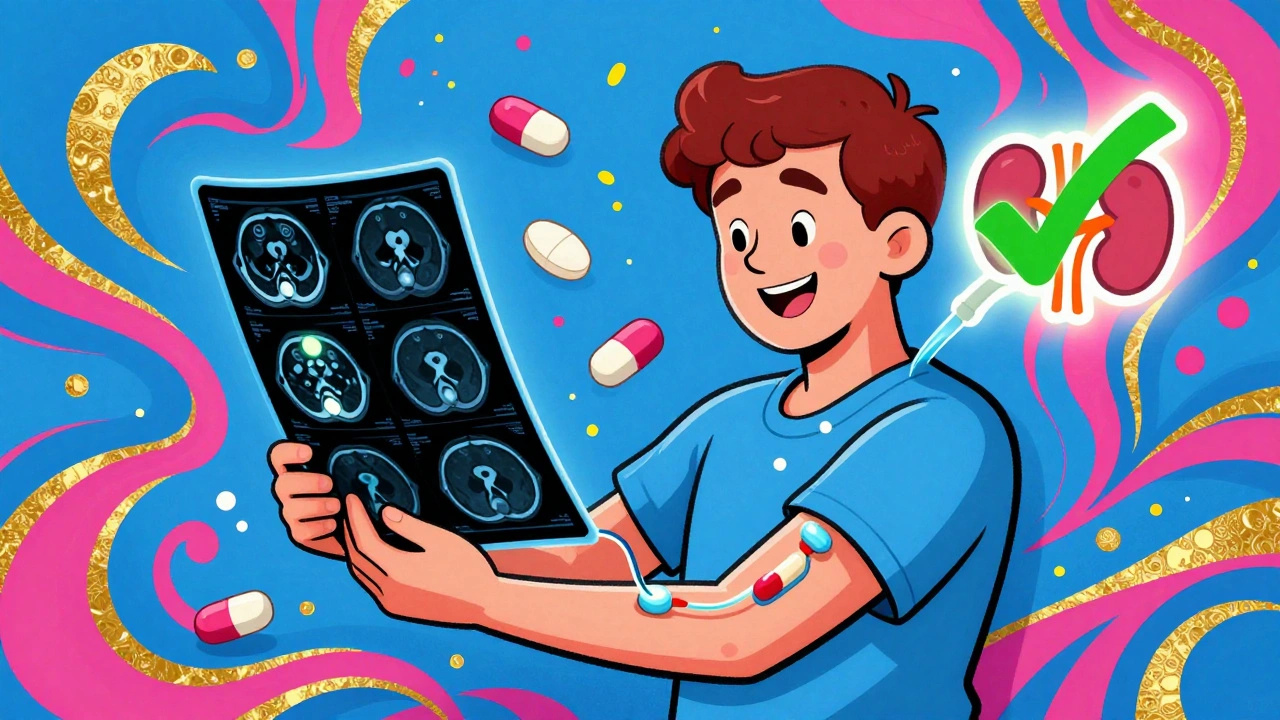
Metformin and contrast dye don't need to be kept apart for most patients. Learn the real risk of lactic acidosis, who needs to stop metformin, and when it's safe to keep taking it during CT scans.