MASH Diet: What It Is, How It Works, and What You Need to Know
When we talk about the MASH diet, a dietary approach designed to support liver recovery in people with mixed alcohol-related and nonalcoholic fatty liver disease. It's not a weight-loss plan—it's a survival strategy for a damaged liver. MASH stands for Metabolic dysfunction-associated steatohepatitis, which is the new name for what used to be called alcoholic steatohepatitis. This isn’t just about cutting back on booze. It’s about fixing how your body handles fat, sugar, and inflammation—all while your liver tries to heal.
The liver doesn’t heal on its own if you keep feeding it toxins. The MASH diet works by reducing fat buildup, lowering insulin resistance, and cutting inflammation. People on this diet often see real improvements in liver enzyme levels, fat reduction on scans, and even less scarring over time. It’s not magic. It’s simple: eat whole foods, ditch added sugar, avoid alcohol completely, and watch your portion sizes. This isn’t about counting calories—it’s about choosing foods your liver can actually process without screaming for help.
Related to this are nonalcoholic fatty liver disease, a condition where fat builds up in the liver even without heavy drinking, and alcohol-related liver disease, damage caused by long-term alcohol use. These two often overlap, and that’s exactly what MASH targets. You can’t treat one without addressing the other. That’s why the diet focuses on both metabolic health and complete alcohol avoidance. Even if you don’t drink much, if you’re overweight, have type 2 diabetes, or high triglycerides, you’re still at risk.
What you eat matters more than you think. Processed carbs, sugary drinks, and fried foods feed the fat buildup in your liver. Studies show that cutting out fructose—found in soda, candy, and even "healthy" fruit juices—can shrink liver fat faster than weight loss alone. Protein intake matters too. Lean meats, eggs, beans, and tofu help repair tissue. Omega-3s from fish or flaxseed reduce inflammation. And fiber? It’s your best friend. Vegetables, whole grains, and legumes slow sugar absorption and help your gut send the right signals to your liver.
People often ask, "Can I still have wine on weekends?" The answer is no. Alcohol, even in small amounts, keeps the liver in damage mode. The MASH diet requires total abstinence. It’s not a suggestion—it’s the foundation. Same with medications. Some painkillers, statins, and even herbal supplements can stress your liver further. Always check with your doctor before taking anything new.
There’s no pill that fixes MASH. No supplement will undo years of damage. But your fork? That’s powerful. The posts below show you exactly how diet connects to liver function, how certain medications interact with fatty liver, and what real people have done to reverse their condition. You’ll find advice on managing drug interactions with liver disease, how weight loss affects liver enzymes, and how to spot hidden sugars that sabotage recovery. This isn’t theory. It’s what works for people who’ve been where you are.
 28 November 2025
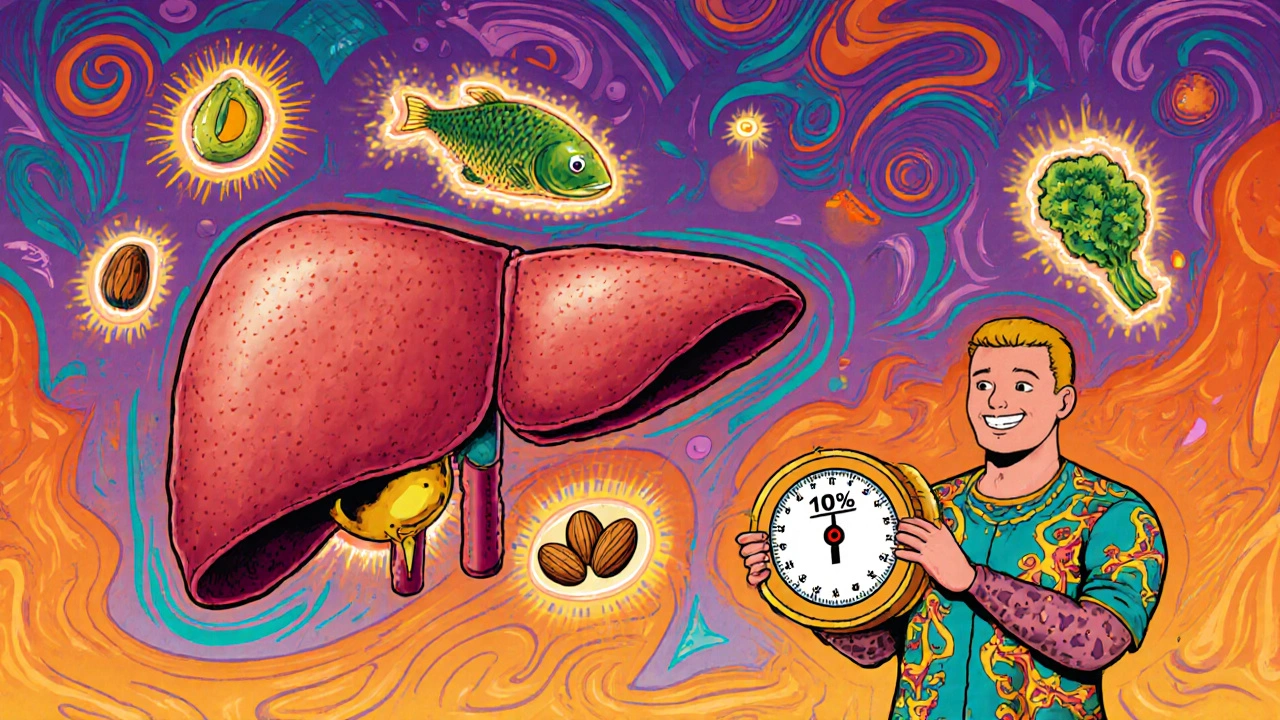
Weight Loss for NAFLD: Diet, Exercise, and Medication Options
Weight loss is the most effective treatment for MASH (fatty liver disease). Learn how diet, exercise, and the new FDA-approved drug semaglutide can reverse liver damage and improve metabolic health.