
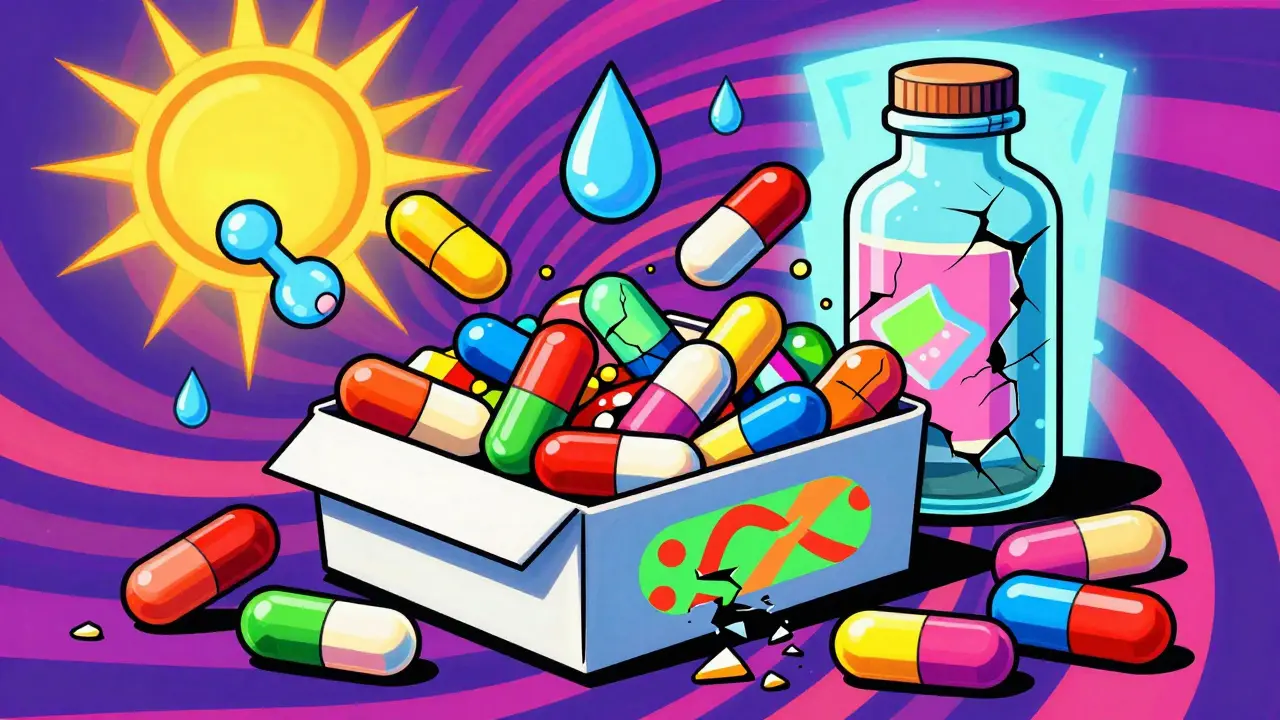
When you take medication out of its original bottle and put it into a pillbox or a pharmacy repackaged vial, you’re changing its environment. And that change can make the drug less effective-or even unsafe. Many people assume the expiration date on the original bottle still applies. It doesn’t. The FDA, USP, and leading pharmacy organizations all agree: once a medication leaves its original packaging, its stability is no longer guaranteed.
Why Original Packaging Matters
Pharmaceutical manufacturers design containers to protect drugs from light, moisture, oxygen, and temperature changes. A bottle of amoxicillin might come in a high-density polyethylene (HDPE) container with a desiccant pack inside. That design isn’t random-it’s science. HDPE has a moisture vapor transmission rate of 0.10-0.25 g/m²/day, meaning it blocks humidity effectively. But a standard pharmacy prescription vial? That rate jumps to 0.35-0.50 g/m²/day. That’s nearly double the moisture getting in.A 2019 study in the Journal of Pharmaceutical Sciences showed albuterol sulfate tablets stored in pharmacy vials degraded by 15.7% after 90 days at room temperature. In their original bottle? Just 3.2%. That’s not a small difference. That’s enough to make a rescue inhaler less effective during an asthma attack.
What Happens When Medications Degrade?
Drugs don’t just stop working-they can break down into harmful substances. Moisture causes hydrolysis. Light triggers photodegradation. Oxygen leads to oxidation. These aren’t theoretical risks. They’re measurable, documented problems.For example:
- Amoxicillin, a penicillin-based antibiotic, is highly hygroscopic. In a humid pillbox, it can clump and lose potency within 30 days.
- Nifedipine, a blood pressure medication, breaks down when exposed to light. Even brief exposure to fluorescent lighting can reduce its effectiveness.
- Atenolol, a beta-blocker, is relatively stable-but only if kept dry. In a non-desiccated container, its potency can drop by 10% in 90 days.
The FDA’s 2023 warning letter to a major pharmacy chain cited failure to assign proper expiration dates for repackaged drugs as a critical violation-leading to a 45-day shutdown. Why? Because degraded drugs don’t just fail to work. They can cause harm. A 2023 FDA lab analysis found 22% of repackaged medications tested beyond 90 days had degradation levels exceeding pharmacopeial limits. Only 3% of original-packaged drugs did.
Repackaged vs. Pillbox: Two Different Risks
Not all repackaging is the same. There’s a big difference between a pharmacy putting 30 days of pills into a labeled vial and a patient dumping five different medications into a plastic weekly organizer.Pharmacy repackaging is done under controlled conditions, often with amber vials and desiccants. But even then, most community pharmacies don’t have HPLC equipment to test for degradation. They rely on guidelines from USP, ASHP, and manufacturer data.
Pillbox medications are far riskier. When you combine drugs from different manufacturers in one container, you create unpredictable interactions. A 2022 study by the American Pharmacists Association found that 18.7% of pillbox combinations showed physical changes-caking, discoloration, or sticking-within two weeks. That’s not just inconvenient. It means the drug may not dissolve properly in your stomach, or worse, you’re ingesting a chemical byproduct.
How to Actually Test Stability
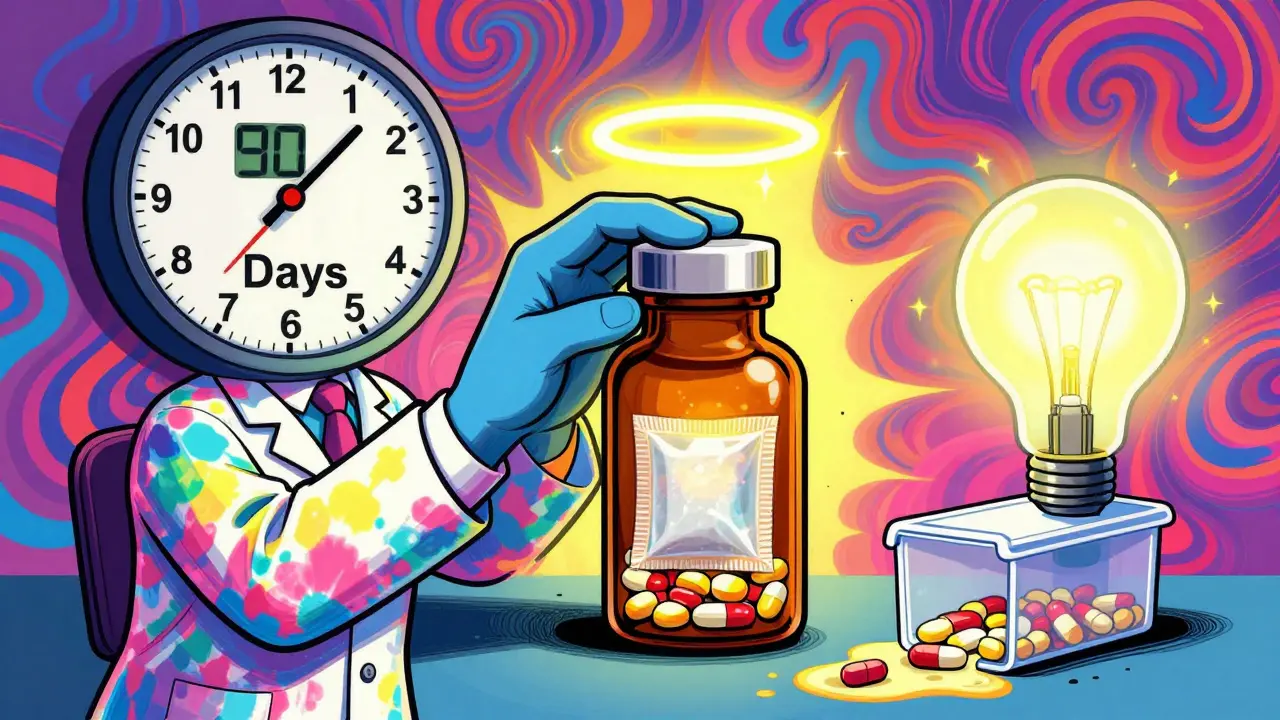
You don’t need a lab to make smart decisions-but you do need to know what to look for.Here’s what you can do:
- Check for physical changes: Look for discoloration, crumbling, sticking together, or unusual odors. A white tablet turning yellow? Don’t take it.
- Use desiccants: Add a silica gel packet to any repackaged container. A multicenter trial with 8,432 units showed desiccants extended stability by 47%.
- Store in amber containers: For light-sensitive drugs like nifedipine, verapamil, or nitroglycerin, use dark plastic or glass. Clear pillboxes are a no-go.
- Keep it cool and dry: Don’t store pillboxes in the bathroom or near the stove. Room temperature (25°C) is ideal. Humidity above 60% accelerates degradation.
- Don’t rely on the original expiration date: That date applies only to the original container. Once it’s repackaged, the clock resets.
For high-risk medications-like warfarin, digoxin, levothyroxine, or chemotherapy drugs-formal stability testing is required. That means HPLC analysis. Most community pharmacies can’t do this. That’s why experts recommend a maximum of 30 days for these drugs after repackaging.
What the Experts Say About Shelf Life
There’s no one-size-fits-all expiration for repackaged meds. It depends on the drug, the container, and the environment.According to the Parenteral Drug Association’s Technical Report No. 73 (2022):
- Amoxicillin: 30 days max
- Nifedipine: 60 days max (in amber container)
- Atenolol: 90 days max
- Most other solid oral dosage forms: 6 months max under ideal conditions
But here’s the catch: those 6-month limits assume perfect storage. Most homes aren’t perfect. The University of Florida’s Web-based Stability Database, launched in January 2023, tracks real-world data from 113 pharmacies. Their findings? Only 12% of repackaged medications kept beyond 90 days met potency standards without desiccants or amber packaging.
Regulations Are Catching Up
Forty-one out of 50 U.S. states now limit repackaged medication expiration to 6 months or less. Seventeen states impose even stricter limits-30 to 90 days-for certain drugs. The FDA’s 2023 draft guidance on container closure systems requires vacuum decay testing with detection limits of 5 microns or better. That’s serious. It means pharmacies will soon need to prove their containers don’t leak.The USP is finalizing Chapter <1790> by the end of 2024. It will require at least three testing points for medications used under 90 days. And starting January 1, 2024, any pharmacy accredited by the Pharmaceutical Compounding Accreditation Board (PCAB) must complete 8 hours of stability training per year.
What You Should Do Right Now
If you use a pillbox or get repackaged meds:- Ask your pharmacist: "What’s the real expiration date for this, based on how it’s stored?"
- Never reuse a pillbox that’s been exposed to moisture or heat.
- Write the repackaging date and expiration date on the container-don’t rely on memory.
- Discard any medication that looks, smells, or feels different.
- For critical drugs, ask if your pharmacy offers pre-packaged, sealed blister packs with verified stability dates.
Don’t assume safety because it’s "just a pillbox." The science is clear: packaging matters. Stability isn’t a suggestion. It’s a requirement for safety. And when it comes to your health, cutting corners isn’t worth the risk.
Can I use the original expiration date on repackaged medications?
No. The expiration date on the original bottle applies only to the drug in its original container with its original closure system. Once a medication is repackaged-whether by a pharmacy or at home-the environmental protection is compromised, and the shelf life changes. The FDA explicitly states that pharmacies must establish new expiration dates for repackaged products based on stability data, not the manufacturer’s date.
How long can I keep medications in a pillbox?
For most medications, 7 to 14 days is the safest window. After that, exposure to air, light, and humidity increases the risk of degradation. If you need longer-term storage, use a pharmacy-provided blister pack or a sealed amber vial with a desiccant. For high-risk drugs like warfarin or levothyroxine, never store longer than 30 days-even in a sealed container.
Do desiccant packs really help?
Yes. A 2023 multicenter trial involving over 8,400 repackaged units showed that adding a silica gel desiccant extended the stability of moisture-sensitive drugs by 47%. This is especially critical for antibiotics like amoxicillin, antifungals, and some heart medications. Always include a desiccant if your pillbox or vial doesn’t have one built in.
What should I do if my medication looks different?
If you notice discoloration, crumbling, sticking together, unusual odor, or changes in texture, stop using it immediately. These are signs of degradation. Even if it’s before the expiration date, the drug may no longer be safe or effective. Return it to your pharmacy for proper disposal and ask for a replacement with a new expiration date.
Are all pharmacies required to test repackaged meds?
No. Only accredited pharmacies (like PCAB-accredited ones) are required to follow formal stability testing protocols. Most community pharmacies rely on published guidelines and conservative expiration dates because they don’t have access to HPLC equipment. That’s why it’s important to ask your pharmacist about their process and why they assigned a specific expiration date.
What’s the biggest mistake people make with repackaged meds?
The biggest mistake is assuming the original expiration date still applies. Many patients and even some pharmacists believe that if the bottle says "expires 12/2026," the pills are safe until then-even if they’ve been in a pillbox for 6 months. That’s false. The original container’s integrity is gone. Stability is not guaranteed beyond the repackaging date, and degradation can begin within days under poor storage conditions.


January 24, 2026 AT 08:25
Juan Reibelo
Wow. I’ve been dumping my meds into a plastic box for years like it’s nothing. Now I’m sweating. That amoxicillin clumping detail? Yeah, I’ve seen that. Thought it was just old humidity. Turns out, I might’ve been taking weak antibiotics during my last sinus infection. Yikes.
January 24, 2026 AT 12:09
lorraine england
Okay, but let’s be real-most people don’t have time to test their meds like they’re in a lab. I’ve got 3 kids, a full-time job, and I’m lucky if I remember to take my pills, let alone check the moisture vapor transmission rate. So yeah, the science is solid, but practicality? Not so much.
January 24, 2026 AT 21:13
Elizabeth Cannon
guys i just threw a silica gel packet in my pillbox last week and i swear my blood pressure pills look way less sticky?? i bought them from the dollar store and they were all glued together 😭 i thought it was just me being messy but nooo it’s science. also i got a tiny amber jar from amazon for my nifedipine and now i feel like a med superhero 💪
January 25, 2026 AT 17:53
Phil Maxwell
Interesting read. I’ve never thought about the packaging much. I just grab my pills and go. But now I’m wondering-how many people are actually getting sub-therapeutic doses without knowing it? It’s scary how invisible this risk is.
January 27, 2026 AT 07:26
Shelby Marcel
so if i use a pillbox for 14 days is that okay? or should i be using like a special one? i dont know what to buy
January 28, 2026 AT 09:00
Josh McEvoy
MY MOM DIED BECAUSE HER WARFARIN DEGRADED IN A PILLBOX 😭 I WASN’T EVEN THERE WHEN IT HAPPENED. SHE THOUGHT IT WAS FINE BECAUSE THE BOTTLE SAID 2026. THE DOCTOR NEVER TOLD HER. I’M STILL ANGRY. PLEASE DON’T LET THIS HAPPEN TO ANYONE ELSE.
January 28, 2026 AT 22:13
Heather McCubbin
It’s not just about the pillbox-it’s about the entire system failing us. We treat medicine like it’s a commodity, not a life-sustaining tool. Pharmacies cut corners. Patients are too tired to ask. Doctors assume someone else is handling it. And we wonder why people get sicker. This isn’t negligence. It’s systemic collapse wrapped in a plastic container.
January 30, 2026 AT 06:32
venkatesh karumanchi
Thank you for sharing this. In India, many people reuse old pill bottles or use plastic bags. I never knew this was dangerous. I will tell my family and friends. Small changes can save lives. Stay safe, everyone.
January 31, 2026 AT 06:01
Jenna Allison
For high-risk meds like levothyroxine or digoxin, the 30-day rule is non-negotiable. Even with desiccants and amber containers, degradation starts faster than you think. I work in a pharmacy and we only repack these for 7-day supplies unless the patient has a sealed blister pack from a PCAB-certified vendor. If your med changes color, toss it. No exceptions.
February 2, 2026 AT 04:17
Sharon Biggins
Just talked to my pharmacist and she gave me a free amber vial with a desiccant for my atenolol. She said it’s better than my plastic box. I feel so much better now. You don’t need to be a scientist to protect your health-just ask. Seriously, just ask. It’s worth it.