Contrast Dye: What It Is, Risks, and How to Stay Safe
When you get an contrast dye, a special liquid used in medical imaging to make internal structures clearer on X-rays, CT scans, or MRIs. Also known as radiopaque contrast medium, it helps doctors spot tumors, blockages, or inflammation that would otherwise be invisible. Most people tolerate it just fine, but for some, it can trigger serious reactions—like kidney stress, allergic responses, or even long-term damage if you’re not screened properly.
There are two main types: iodine-based contrast, used in CT scans and X-rays, which can affect kidney function, and gadolinium-based contrast, used in MRIs, which carries a rare risk of tissue buildup in people with kidney disease. If you have diabetes, high blood pressure, or already have kidney problems, your risk goes up. That’s why doctors ask about your medical history before giving it—something you can’t skip, even if you’re in a hurry.
It’s not just about the dye itself. What you take before or after matters too. Medications like metformin for diabetes, or NSAIDs like ibuprofen, can make kidney damage more likely. Even dehydration plays a role. A simple drink of water before and after the scan can cut your risk significantly. And if you’ve ever had a rash, itching, or trouble breathing after a previous scan, tell your provider—even if it was years ago. That’s not just a detail; it’s a warning sign.
Some reactions happen right away—hives, nausea, a metallic taste. Others show up hours later, or even days. That’s why knowing what to watch for after you leave the hospital matters. You might not connect a rash or swollen ankles to the dye you got last week, but you should. And if you’re ever unsure, report it. The FDA’s MedWatch system exists so patients like you can help catch problems before they hurt others.
There’s no avoiding contrast dye if your doctor needs it—but you don’t have to accept it blindly. Knowing the risks, asking the right questions, and preparing your body ahead of time gives you real control. Below, you’ll find real stories and expert advice on how to handle side effects, what to tell your doctor, how to spot fake or expired products, and how to protect yourself from hidden interactions with other meds you’re taking. This isn’t just about scans. It’s about staying safe every time you take something into your body.
 9 December 2025
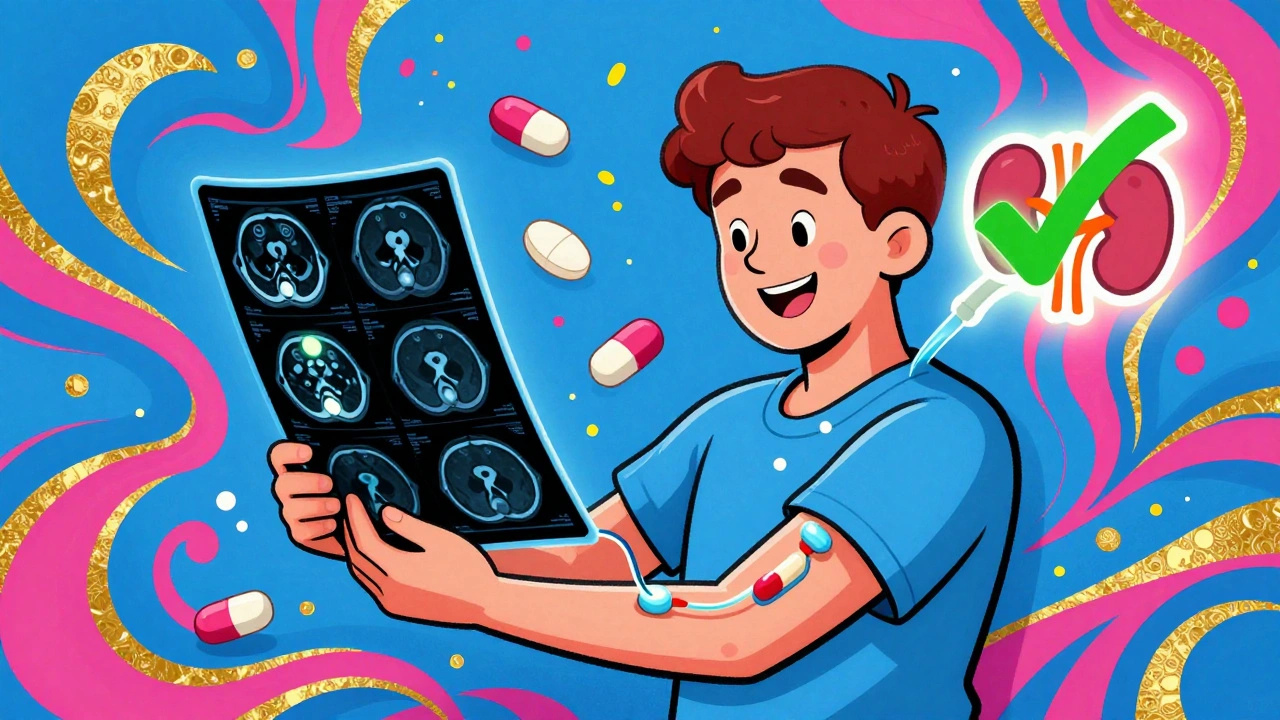
Metformin and Contrast Dye: What You Need to Know About Lactic Acidosis and Kidney Risk
Metformin and contrast dye don't need to be kept apart for most patients. Learn the real risk of lactic acidosis, who needs to stop metformin, and when it's safe to keep taking it during CT scans.