
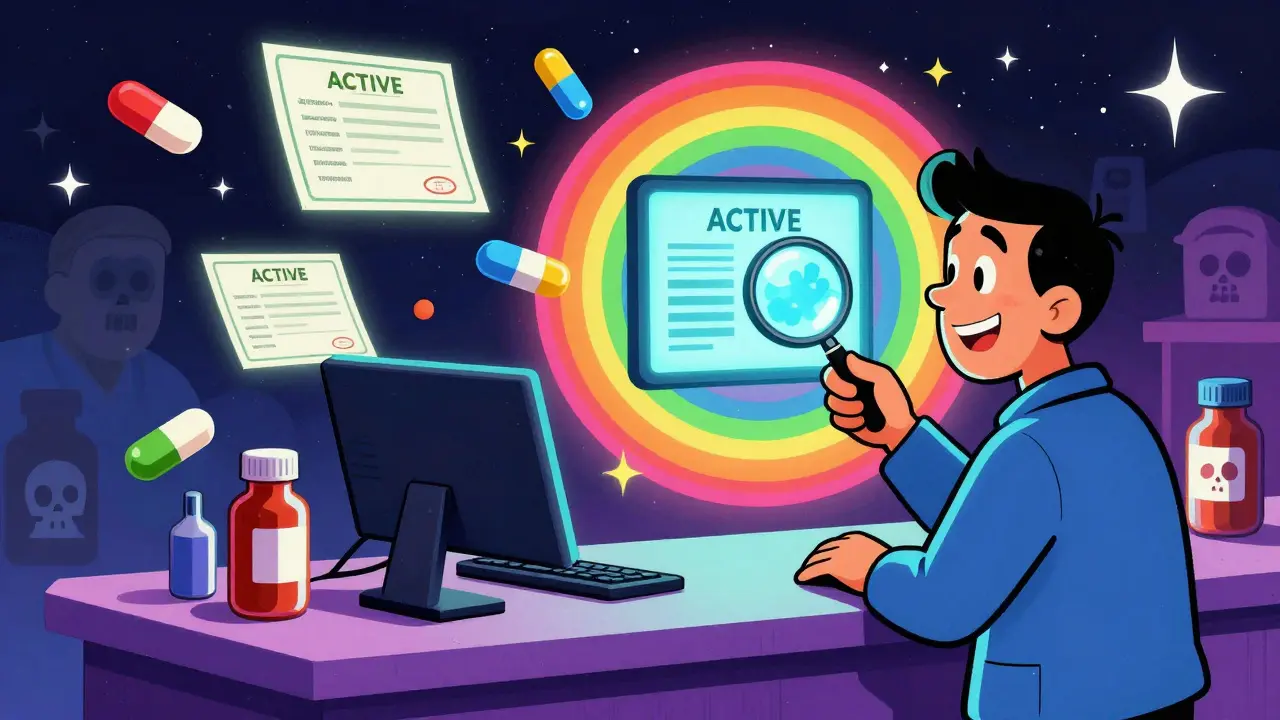
When you order medication online, you're trusting a website with your health. But how do you know if that pharmacy is real? Many online pharmacies operate illegally, selling fake, expired, or contaminated drugs. In 2022, the FDA shut down over 1,200 illegal online pharmacies-most of them hidden behind professional-looking websites. The only reliable way to protect yourself is to verify the pharmacy’s license before you buy. This isn’t just a safety tip-it’s a necessary step anyone who orders prescription drugs online must take.
Why Pharmacy Verification Matters
Counterfeit medications are a growing threat. A pill that looks like your blood pressure medicine could contain sugar, rat poison, or the wrong dose entirely. In 2023, the National Association of Boards of Pharmacy (NABP) found that 96% of online pharmacies they investigated were operating illegally. These sites don’t require prescriptions, don’t employ licensed pharmacists, and often ship from overseas without any oversight. Without verification, you’re gambling with your life.
States and federal agencies built pharmacy verification systems to stop this. These aren’t fancy apps or secret databases-they’re public, free tools run by state boards of pharmacy. They show whether a pharmacy is licensed, if its license is active, and if there are any disciplinary actions against it. A 2022 study by the American Pharmacists Association found that states with strong verification systems saw a 37% drop in prescription drug diversion cases. That means fewer people are getting addicted because fewer rogue pharmacies are slipping through.
How Verification Systems Work
Every U.S. state runs its own pharmacy license database. These are web portals you can access from any browser-no downloads, no sign-up (usually). You enter the pharmacy’s name or license number, and the system pulls up its official status. The information includes:
- License number
- Expiration date
- License status (active, suspended, revoked)
- Business address
- Disciplinary history (if any)
For example, Washington State’s system, called HELMS, updates within 24-72 hours after a license renewal. If a pharmacy’s license says “active,” it means they’re legally allowed to dispense drugs in that state. If it says “expired” or “revoked,” you should walk away-even if the website looks polished and has fake customer reviews.
But here’s the catch: each state has its own system. A pharmacy licensed in California isn’t automatically legal in Texas. If you’re buying from a pharmacy that ships nationwide, you need to check every state where they claim to be licensed. That’s where things get messy.
State vs. National Verification: What’s the Difference?
Most people start with their state’s system. It’s free and works fine if you’re only dealing with one state. But if you’re a pharmacy owner, a hospital, or someone who orders from multiple online sources, this becomes a nightmare.
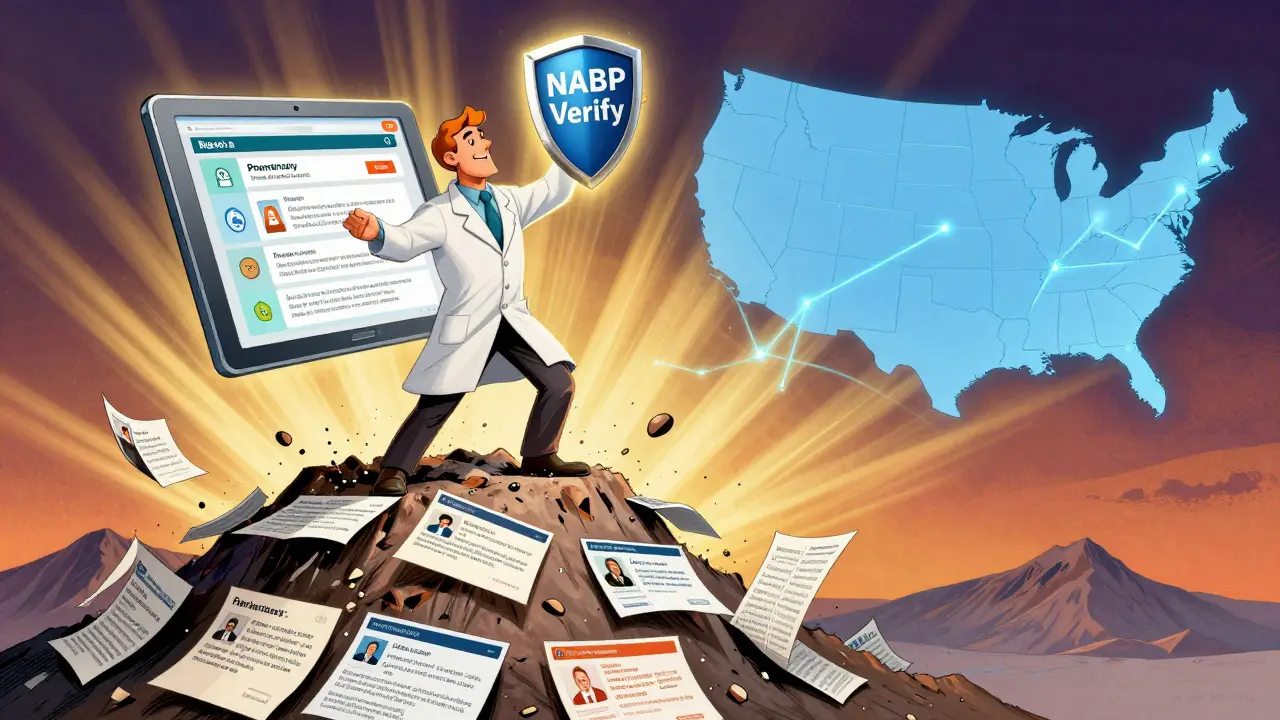
That’s where NABP Verify comes in. Launched in 2005, it’s a centralized database that pulls real-time data from 41 state boards. Instead of checking 5 different state sites one by one, you get a single report showing licenses across all of them. NABP Verify cuts verification time from over 40 minutes down to under 4 minutes. For large healthcare systems, that’s a game-changer.
But there’s a downside: it costs $79 a year. For an individual, that’s a hard sell. For a hospital with 50 pharmacists needing verification, it’s a no-brainer. In fact, 64% of hospital systems now use NABP Verify, according to a 2024 ASHP survey. But only 28% of individual consumers use it-mostly because they don’t know it exists.
There’s also PTCB’s system, which checks pharmacy technician certifications. But it doesn’t verify the pharmacy itself-just the techs. So if you’re checking a pharmacy, PTCB won’t help.
How to Verify a Pharmacy: Step-by-Step
Here’s how to do it right, using Washington State’s HELMS system as an example (the process is similar in most states):
- Go to the official state board website. For Washington, that’s doh.wa.gov. Never use Google search results-scammers fake these pages.
- Find the “License Verification” or “Search for a License” section. It’s usually under “Professionals,” “Regulations,” or “Healthcare Providers.”
- Enter the pharmacy’s exact legal name or license number. If you don’t know the number, try the business name. Be precise-misspellings will fail.
- Review the results. Look for the license status. “Active” is good. “Expired,” “Suspended,” or “Revoked” means don’t buy.
- Check the expiration date. If it’s within the next 60 days, call the pharmacy and ask if they’ve renewed. Some systems have a 72-hour delay after renewal.
- Look for disciplinary actions. Even a single complaint can be a red flag.
Pro tip: If the pharmacy claims to be “VIPPS accredited,” verify that too. VIPPS (Verified Internet Pharmacy Practice Sites) is NABP’s seal of approval. You can check VIPPS status directly on the NABP website. If they say they have it but you can’t find them on the VIPPS list, they’re lying.
Common Mistakes and Pitfalls
People make the same mistakes over and over:
- Using Google to find the verification site-scammers rank high in search results. Always go directly to the state board’s official website.
- Assuming a .com domain means legitimacy-illegal pharmacies use .com, .org, even .gov-looking domains.
- Only checking one state-if the pharmacy ships to 10 states, you need to verify in all 10.
- Trusting “customer reviews”-many are fake. A site with 500 5-star reviews can still be selling counterfeit insulin.
- Waiting until the last minute-if a license is expired, it can take weeks to get a replacement. Always verify 30 days before you plan to order.
One hospital in Chicago paid $250,000 in a lawsuit after hiring a pharmacist whose license had been revoked in Illinois-but they never checked the state database. They relied on a resume and a background check. The pharmacist had been banned for forging prescriptions. That kind of mistake happens more often than you think.
What’s Changing in 2025 and Beyond
The system isn’t perfect, but it’s getting better. In 2024, Washington State started upgrading its HELMS system to HELMS 2.0, which will cut search times to under 1.5 seconds and add API access for hospitals and pharmacies to automate checks. By late 2025, NABP expects 55 jurisdictions-including territories like Puerto Rico-to be connected in real time. That’s up from 41 today.
The FDA is also pushing for integration with electronic health records. Epic Systems, the biggest EHR vendor, now links directly to 27 state boards. That means when a doctor prescribes a drug, the system can auto-check if the pharmacy is licensed before the prescription even leaves the office.
Long-term, experts predict blockchain and biometric verification will replace current systems by 2028. Washington is already testing blockchain-based license tracking with Amazon Web Services. But for now, the old-school web portal is still your best defense.
What You Should Do Right Now
Here’s your action plan:
- If you’ve ordered from an online pharmacy in the last year, go back and verify its license now. Use the state where it’s based.
- If you’re planning to order, verify before you pay. Don’t trust the website’s claims-check the state database.
- If you’re a healthcare worker or manage prescriptions, ask your employer to adopt NABP Verify. The $79 fee is worth it to avoid liability.
- Share this with family members who buy medications online. Seniors are especially vulnerable.
There’s no app, no shortcut, no magic button. The only way to be sure is to do the work yourself. A few minutes of verification today could save you from a life-altering mistake tomorrow.
How do I know if an online pharmacy is legitimate?
Check its license through your state’s board of pharmacy website. Look for an active license, a physical U.S. address, and a licensed pharmacist on staff. Avoid pharmacies that sell prescription drugs without a prescription. Also, verify if they’re VIPPS-accredited via the NABP website.
Is NABP Verify worth the $79 annual fee?
For individuals who rarely order online, it’s probably not worth it. But for healthcare providers, pharmacies, or anyone managing prescriptions across multiple states, it saves hours and reduces risk. It’s the only system that checks all 41 connected states in real time, with fewer errors than checking each state individually.
Can I verify a pharmacy by its website URL?
No. Websites can be cloned or fake. Always use the official state board’s license verification portal. Search by the pharmacy’s legal business name or license number-not its domain. A .pharmacy or .gov-looking URL doesn’t guarantee legitimacy.
What if the pharmacy is based outside the U.S.?
U.S. verification systems only cover licensed U.S. pharmacies. Pharmacies based overseas are not regulated by U.S. boards and are almost always illegal. The FDA warns against buying from foreign online pharmacies because they’re not inspected and often sell unapproved or contaminated drugs.
How often should I verify a pharmacy’s license?
Verify before every new order, especially if it’s from a pharmacy you haven’t used in over 6 months. Licenses expire, disciplinary actions happen, and pharmacies can be shut down overnight. Don’t assume past approval means current safety.
February 8, 2026 AT 07:25
Kathryn Lenn
Oh wow, another government-approved checklist to feel safe while corporations sell us expired rat poison labeled as "premium insulin."
Let me get this straight-you want me to spend 20 minutes navigating state websites so I don’t die from a fake blood pressure pill… while the same FDA that shut down 1,200 sites last year lets Big Pharma hike prices 300% every January?
It’s not about verification. It’s about control. They don’t want you safe-they want you obedient. Check a license? Cool. Now go fill out Form 7B-3 in triplicate and wait six weeks for your "legitimate" prescription.
Meanwhile, Canada’s pharmacy system just texts you a QR code that auto-verifies the pill’s blockchain hash. But hey, we’re too busy "protecting consumer sovereignty" to adopt tech that actually works.
February 8, 2026 AT 22:47
John Watts
Hey everyone-seriously, this is one of those rare posts that actually matters.
My grandma nearly bought fake metformin off a site that looked like a hospital’s homepage. She thought the "FDA Approved" badge meant something. It didn’t.
After she called the state board and found the license was revoked 8 months prior, we sat down and made a simple cheat sheet: 3 steps, 2 minutes, no jargon.
If you’re reading this and you’ve got a parent, sibling, or friend on meds-send them this. No fluff. Just facts. We can save lives with 60 seconds of effort.
And yes, NABP Verify is worth $79 if you’re helping anyone else. It’s not a luxury-it’s a lifeline.
February 9, 2026 AT 01:09
Angie Datuin
Thanks for laying this out so clearly. I’ve been meaning to check my pharmacy’s license but kept putting it off. Now I know why.
February 9, 2026 AT 18:27
Ritteka Goyal
OMG I just checked my pharmacy and it was suspended in Texas but I ordered from them last month!!
Wait wait wait-did you know that in India we have a system called CDSCO that does this automatically? We don’t need 41 different state portals, we have one national portal with AI verification and SMS alerts!
And guess what? Our generic drugs are 90% cheaper and 100% safer because we don’t let greedy American corporations control the system.
Why are you still using old-school websites? Just go to c-d-s-c-o-dot-gov-dot-in and paste your pharmacy name. Done. No more stress. America needs to learn from us. We’ve been doing this right for decades.
Also, your FDA is corrupt. They take money from Pfizer. I read it on Reddit. So check your state site but also check your heart. Trust your gut.
February 9, 2026 AT 20:01
MANI V
You people are so naive.
You think checking a license makes you safe? That’s like checking if your car has seatbelts before driving through a minefield.
The entire system is rigged. Every state board is funded by the same pharmaceutical lobbyists who own the pharmacies they "regulate."
I know a guy who works at a state board-he told me they delete complaints if the pharmacy donates to their holiday party.
And NABP? Please. That’s just a front for the AMA and CVS.
Real safety? Buy nothing online. Go to a brick-and-mortar. Pay cash. Ask for the bottle’s lot number. Call the manufacturer directly.
Or better yet-don’t take pills at all. Your body can heal itself. The system just wants you dependent.
February 11, 2026 AT 13:36
Susan Kwan
Let me guess-you’re the same person who told your sister to "just check the website" before buying her insulin from a .pharmacy domain.
And then she got sick.
And now you’re here pretending you care.
Do the work. Or shut up.
February 12, 2026 AT 13:35
Random Guy
bro i just typed "best online pharmacy" into google and bought my adderall from the first site that looked like a hospital
turns out it was a guy in a garage in ukraine with a printer and a gmail account
my heart is still beating so i guess it worked?
also my dog licked the pill and now he’s a superhero
February 13, 2026 AT 17:10
Ryan Vargas
Verification is a performative illusion designed to pacify the masses while systemic corruption deepens.
The state databases are not neutral-they are curated artifacts of institutional capture. The license number you see? It’s a token, not a truth.
Consider this: if a pharmacy’s license is revoked, the system may reflect it within 72 hours. But what if the pharmacy simply rebranded under a new name? The database doesn’t track ownership chains. It doesn’t track shell corporations. It doesn’t track the fact that the same entity operates under 17 different names across 4 states.
The NABP Verify system? It’s marginally better, but still relies on voluntary reporting. And who reports? The same entities that profit from opacity.
Real verification requires blockchain-based immutable ledgers, cross-jurisdictional AI pattern recognition, and whistleblower-integrated audits.
What we have now? A placebo for anxiety. And the real danger isn’t counterfeit drugs-it’s the belief that this system protects you.
February 15, 2026 AT 10:56
Tasha Lake
Just wanted to add a technical note: if you're a clinician or admin managing multi-state pharmacy verification, you should look into the NABP API integration.
It’s RESTful, supports OAuth2, and returns structured JSON with license status, disciplinary flags, and even geographic coordinates of the physical location.
We’ve integrated it into our EHR workflow-when a prescriber selects a pharmacy, the system auto-checks against 41 states in under 300ms.
It’s not perfect (still no real-time updates from Puerto Rico), but it’s cut our verification errors by 92%.
Also, if your vendor says they "support VIPPS" but can’t return the NABP verification ID in the response, they’re lying. Ask for the schema. They’ll either panic or send you a PDF from 2017.