
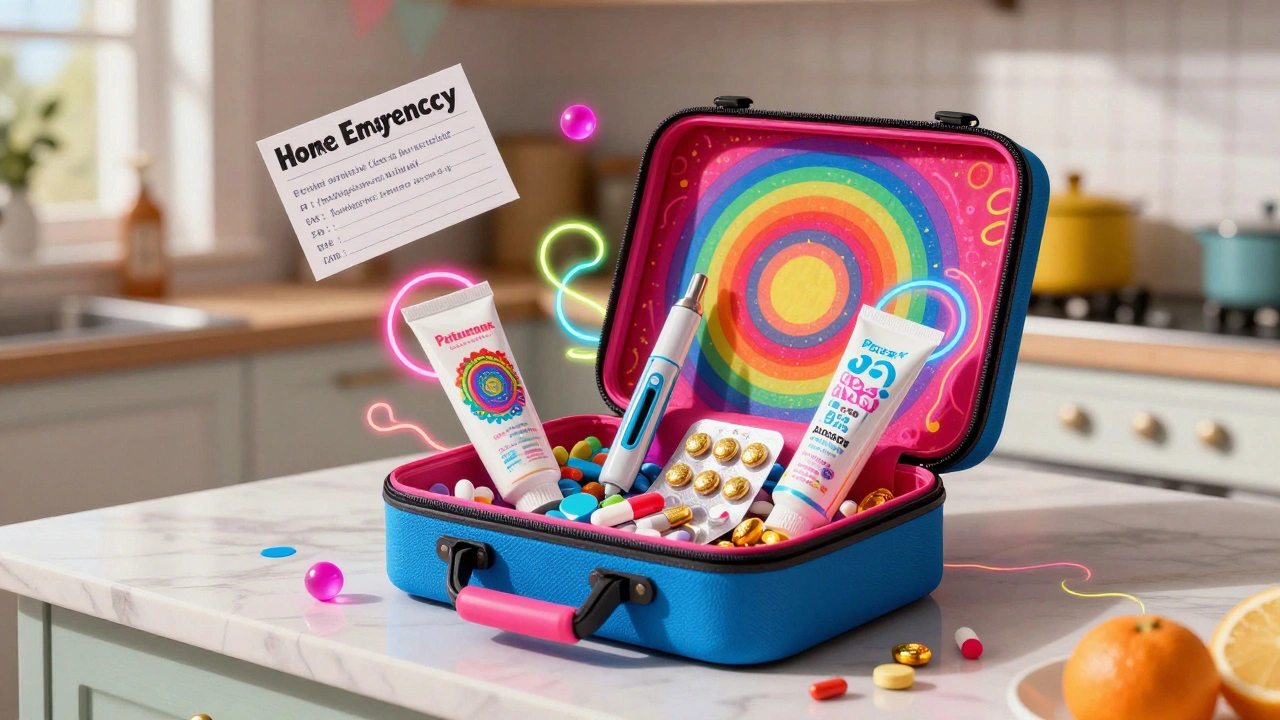
Medication Emergency Kit Checklist
Essential Items Checklist
Check the items you currently have in your emergency kit. If you're missing anything, we'll show you what to add next.
Emergency Contacts
Enter key contacts you should have readily available.
Why You Need a Home Emergency Kit for Medication Side Effects
More than 70% of American adults take at least one prescription drug. That means in nearly every household, someone is at risk of an unexpected reaction - from a mild rash to life-threatening anaphylaxis. Most people keep a first-aid kit for cuts and burns, but how many keep one for what happens when a pill goes wrong? A home emergency kit for medication side effects isn’t about replacing the ER. It’s about buying time. It’s about knowing what to do in those first critical minutes before you can get help.
What Belongs in the Kit - The Essentials
Your kit should be simple, targeted, and ready to use. Don’t just throw in random pills. Focus on the most common reactions and what actually works.
- Antihistamines (diphenhydramine/Benadryl): For itching, hives, swelling, or trouble breathing from allergic reactions. About 5-10% of people have some kind of reaction to medications, and this is often the first sign.
- Hydrocortisone cream (1%): For red, itchy skin rashes. Topical reactions happen in 2-3% of all drug side effects, and they can escalate fast if ignored.
- Antacids (like Tums or Rolaids): For nausea, heartburn, or stomach upset. Gastrointestinal issues are the #1 complaint from people taking meds - up to 30% of users report them.
- Imodium (loperamide): For sudden, severe diarrhea, especially after antibiotics. About 1 in 4 people on antibiotics get this.
- Epinephrine auto-injector (EpiPen): Only if your doctor prescribed it. If you’ve had a serious allergic reaction before, this isn’t optional. Anaphylaxis can kill in under 10 minutes.
- Glucose tablets: For people on insulin or diabetes meds. Low blood sugar can happen fast - and it’s easy to mistake for dizziness from another drug.
Don’t include activated charcoal. Despite what you might have heard, it doesn’t work for most drug overdoses and can make things worse if used without professional guidance.
Emergency Contacts - Don’t Rely on Memory
In a panic, you won’t remember numbers. Write them down. Keep them printed and visible.
- 1-800-222-1222: The Poison Help hotline. Free, 24/7, staffed by toxicology experts. They’ve handled over 2 million calls in 2022 alone.
- www.poison.org: For quick online advice - but call if symptoms are serious.
- Your primary doctor and pharmacist: Their direct numbers, not just the office line.
- Pediatrician (if you have kids): Never give aspirin to children. Ever. It can cause Reye’s syndrome, which kills 20-40% of those affected.
- 911: If someone is passing out, having chest pain, struggling to breathe, or having seizures - call immediately. Your kit helps you wait, not replace help.
Medical Records - Your Lifeline in a Crisis
When you get to the ER, they’ll ask: What meds are you taking? When? Any allergies? If you can’t answer, they guess. That’s dangerous.
Create a simple card for each person in the house. Include:
- All current medications (name, dose, frequency)
- Known allergies (including which reaction you had - rash? swelling? breathing trouble?)
- Previous bad reactions to drugs
- Chronic conditions (diabetes, heart disease, epilepsy)
- Emergency contact names and numbers
Use the 5 Rights of Medication Safety as your checklist: right person, right drug, right dose, right route, right time. If you’re unsure about any of those, don’t guess.
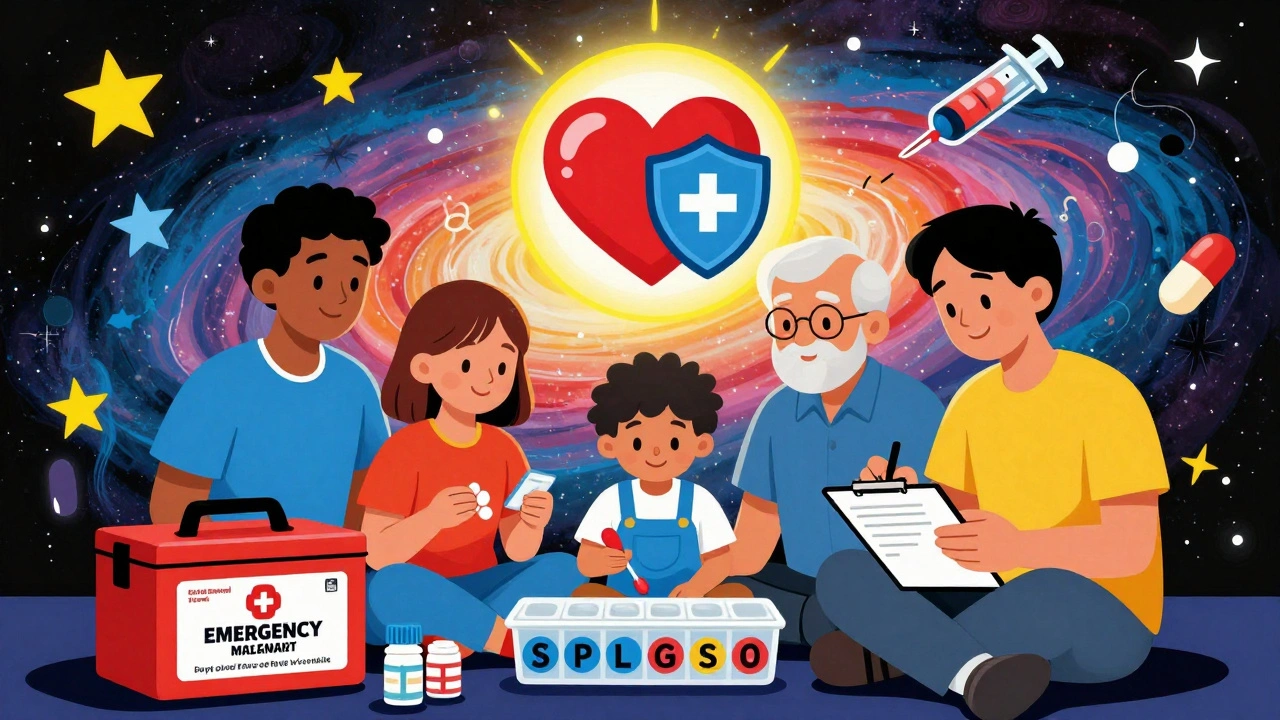
Storage and Maintenance - Keeping It Safe and Effective
A kit that’s expired, wet, or locked in a child’s room is useless.
- Store it in a cool, dry place: Not the bathroom. Heat and moisture ruin pills. A kitchen cabinet away from the sink works.
- Keep it locked or out of reach of kids: Over 60,000 children are treated each year for accidental poisoning. That’s preventable.
- Check every 3 months: Look at expiration dates. Medications lose potency over time - some by up to 50% before the printed date if stored poorly.
- Replace anything expired: Don’t wait. If your antihistamine is 6 months past its date, toss it. You need it to work.
- Keep meds in original bottles: Labels have dosing info, warnings, and lot numbers. Emergency staff need that.
Special Cases - Kids, Seniors, and Chronic Conditions
For children: Never use aspirin. Use acetaminophen (10-15 mg/kg) or ibuprofen (5-10 mg/kg) only if needed and only by weight. Keep a small syringe or dosing cup in the kit.
For seniors: Many take 4-5 medications daily. Use a pill organizer with large-print labels. Include a list of all meds with a photo of each pill. Many seniors mix up pills - and that’s how overdoses happen.
For diabetics: Always include glucose tablets or juice boxes. Low blood sugar from insulin or other meds can mimic dizziness or confusion from another drug. Treat it fast.
For people on antidepressants or beta-blockers: Don’t stop suddenly. Withdrawal can cause heart palpitations, seizures, or severe anxiety. If you’re going on vacation or the power goes out, keep a week’s supply in the kit.
What Not to Do - Common Mistakes
- Don’t mix OTC meds with prescriptions: Taking Tylenol with a cold medicine that already has acetaminophen? That’s how you overdose. Over 56,000 ER visits a year are from accidental acetaminophen overdose.
- Don’t use old advice: Activated charcoal, ipecac syrup, cold baths for fever - these are outdated and often harmful.
- Don’t assume it’s "just a side effect": If it’s new, sudden, or getting worse - call for help. A rash might be harmless. Or it might be Stevens-Johnson syndrome, a rare but deadly reaction.
- Don’t wait to talk to your pharmacist: Before adding any OTC drug to your routine, ask them. Pharmacists reduce medication errors by 35% just by checking for interactions.
Document Everything - Even If It Seems Minor
Keep a small notepad and waterproof pen in the kit. Write down:
- What symptom started
- When you took your last medication
- What you took from the kit
- How you felt 30 minutes later
This info is gold for doctors. Studies show detailed records improve diagnosis accuracy by 40% in drug-related emergencies.
When to Call 911 - The Hard Lines
Your kit helps you manage the small stuff. But some things need emergency help - now.
- Chest pain or pressure, especially if it spreads to your arm or jaw
- Difficulty breathing or swelling of the tongue/throat
- Loss of consciousness or seizures
- Sudden confusion, slurred speech, or weakness on one side
- Severe vomiting or diarrhea that won’t stop
If you’re unsure, call 911. Better to be safe. Emergency rooms see 75% of medication-related visits that could’ve been avoided with better home prep.
Final Thought - It’s Not About Fear. It’s About Control.
You don’t need to live in fear of your meds. But you do need to be ready. This kit isn’t about panic. It’s about knowing you’ve got a plan. It’s about not being helpless when your body reacts to something you trusted. Build it. Check it. Keep it. And when you need it, you’ll be glad you did.




December 8, 2025 AT 18:41
Arun Kumar Raut
This is so useful, especially for families with older folks or kids. I just built one last month after my dad had a bad reaction to a new blood pressure med. Simple stuff like glucose tabs and Benadryl in a ziplock by the kitchen counter made all the difference. No need to overcomplicate it.
December 10, 2025 AT 10:35
Carina M
While the intent is commendable, the recommendation to include over-the-counter pharmaceuticals without explicit medical supervision is, frankly, irresponsible. The proliferation of self-diagnosed pharmacological interventions undermines clinical authority and risks exacerbating polypharmacy, particularly among geriatric populations with comorbidities. A more prudent approach would involve mandatory consultation with a licensed clinical pharmacist prior to kit assembly.
December 11, 2025 AT 20:34
Tejas Bubane
Activeted charcoal is useless but you still list it? Really? And why are you telling people to replace meds every 3 months? Most pills last years if stored right. This feels like fearmongering dressed up as advice. Also why no mention of naloxone for opioid users? That’s a real lifesaver.
December 12, 2025 AT 22:18
Ajit Kumar Singh
Bro this is fire!! I live in rural India and we dont have ERs nearby so this is gold!! I printed it out and taped it to the fridge next to the rice cooker. My mom takes 7 pills a day and now she knows to call 1-800-222-1222 before she tries her neighbor's home remedy. Also no aspirin for kids?? DUH!! But good you said it!!
December 13, 2025 AT 17:35
Sabrina Thurn
It's critical to contextualize the inclusion of epinephrine auto-injectors within the framework of anaphylaxis risk stratification. Not all medication-induced reactions warrant preemptive epinephrine deployment; this should be reserved for individuals with a documented history of IgE-mediated hypersensitivity, confirmed via allergen-specific IgE testing or basophil activation assays. Furthermore, the use of glucose tablets should be paired with continuous glucose monitoring for insulin-dependent diabetics to prevent iatrogenic hypoglycemia.
December 15, 2025 AT 08:00
iswarya bala
omg yes!! i just started on antibiotics and got the worst diarrhea ever. i had imodium in my bathroom cabinet and it saved me. i didnt even know i needed this kit till now. i made one with my grandma’s old pill organizer and stuck the poison help number on it with duct tape. so simple but so smart. ty for this!!
December 16, 2025 AT 22:10
Philippa Barraclough
One might reasonably question the efficacy of maintaining a physical medical record card in an era where digital health platforms and encrypted mobile applications offer real-time, cloud-synced access to pharmaceutical histories, allergy profiles, and prescribing patterns. While the tactile nature of a printed card may provide psychological reassurance, its susceptibility to degradation, loss, or obsolescence raises concerns regarding reliability in acute clinical scenarios. Moreover, the suggestion to replace medications every three months appears inconsistent with pharmacokinetic stability data provided by the FDA, which indicates that most solid oral dosage forms retain potency well beyond their labeled expiration dates under optimal storage conditions.
December 17, 2025 AT 02:23
Tim Tinh
just made this for my mom’s cabinet. she’s 78 and takes like 8 meds. i put all the pills in a little box with labels so she can see em. also printed out the emergency numbers on a sticky note. she cried when she saw it. thanks for this. i think everyone should do this. even if you think you’re fine. you never know.
December 17, 2025 AT 11:37
Tiffany Sowby
Why are we encouraging Americans to rely on random internet advice instead of proper healthcare? This feels like a lazy substitute for insurance and doctor visits. And why is this even necessary in a country that can’t even guarantee access to basic meds? This isn’t empowerment-it’s a band-aid on a broken system.
December 17, 2025 AT 16:40
Brianna Black
This is not merely a guide-it is a manifesto of preparedness in an age of medical fragility. The elegance of simplicity, the dignity of foresight, the quiet heroism of a well-stocked cabinet-these are the hallmarks of true stewardship over one’s health. To neglect this is to surrender autonomy to chaos. I have distributed this to my book club, my yoga studio, and my elderly neighbor. We are not merely patients. We are guardians of our own survival.