

Antiemetic Selection Tool
What's causing the nausea?
When you're recovering from surgery, starting a new medication, or undergoing chemotherapy, nausea isn't just annoying-it can delay healing, increase hospital stays, and even lead to dangerous complications. Medication-induced nausea affects millions every year, and the right antiemetic can make all the difference. But with so many options-each with different side effects, costs, and timing-it’s easy to pick the wrong one. Choosing safely means understanding which drug works for which cause, not just grabbing the first one on the shelf.
What Causes Medication-Induced Nausea?
Not all nausea is the same. The trigger matters. Opioids like morphine or oxycodone slow gut movement, activating nausea centers in the brain. Chemotherapy drugs flood the body with toxins that signal the gut and brain to vomit. Anesthesia and post-op pain meds can trigger the vestibular system and chemoreceptor trigger zone. Each mechanism responds differently to treatment. If you treat opioid-induced nausea with an antihistamine like promethazine, you might get mild relief-but you won’t fix the root problem. That’s why matching the drug to the cause isn’t optional-it’s essential.The Seven Classes of Antiemetics and How They Work
There are seven main types of antiemetics, each targeting a different pathway in the body’s nausea system:- 5-HT3 antagonists (ondansetron, granisetron): Block serotonin receptors in the gut and brainstem. Best for chemotherapy and post-op nausea.
- Dopamine antagonists (droperidol, metoclopramide): Block dopamine receptors. Effective for post-op nausea and some opioid-induced cases.
- Corticosteroids (dexamethasone): Reduce inflammation and modulate brain signaling. Used as add-ons, not alone.
- Antihistamines (promethazine, dimenhydrinate): Help with motion sickness but weak for drug-induced nausea.
- Anticholinergics (scopolamine patch): Work best for motion sickness; slow to act, not ideal for acute cases.
- Sedatives (lorazepam, olanzapine): Calm the brain’s nausea centers. Surprisingly effective for severe cases.
- Opioid antagonists (nalmefene): Rarely used; only for opioid-specific nausea in rare cases.
For example, ondansetron works well for nausea after surgery because it blocks the serotonin surge caused by anesthesia. But if your nausea comes from opioids slowing your gut, metoclopramide’s prokinetic action-speeding up digestion-might be better. Mixing the wrong drug with the wrong cause leads to wasted time, extra doses, and avoidable side effects.
Top Antiemetics Compared: Efficacy, Cost, and Safety
| Drug | Typical Dose | Efficacy (PONV Prevention) | Onset of Action | Cost per Dose | Key Risks |
|---|---|---|---|---|---|
| Ondansetron | 4-8 mg IV | 65-75% | 5-15 minutes | $1.25 | Headache (32%), dizziness, QT prolongation |
| Droperidol | 0.625-1.25 mg IV | 67% (vs. 21% placebo) | 5-10 minutes | $0.50 | Akathisia (rare at low dose), QT prolongation (>1.25 mg) |
| Dexamethasone | 8 mg IV | 20-30% added boost | 4-5 hours | $0.25 | High blood sugar, insomnia, mood changes |
| Metoclopramide | 10-50 mg IV | 44% at 10 mg, 68% at 25 mg | 10-20 minutes | $0.75 | Extrapyramidal effects (1.5% at >300 mg/week), fatigue |
| Promethazine | 25 mg IV | 40-50% | 15-30 minutes | $0.40 | Tissue necrosis if leaked, sedation, hypotension |
Here’s what the data shows: droperidol is just as effective as ondansetron for post-op nausea but costs half as much. Dexamethasone doesn’t work fast enough to be used alone but boosts other drugs by 20-30%. Metoclopramide only works well at higher doses (25 mg or more), and even then, it can cause muscle spasms or restlessness-especially in older patients. And while ondansetron is popular, 32% of users report headaches, and it carries a black box warning for heart rhythm issues in people with long QT syndrome.

Who Gets Which Drug? Risk-Based Selection
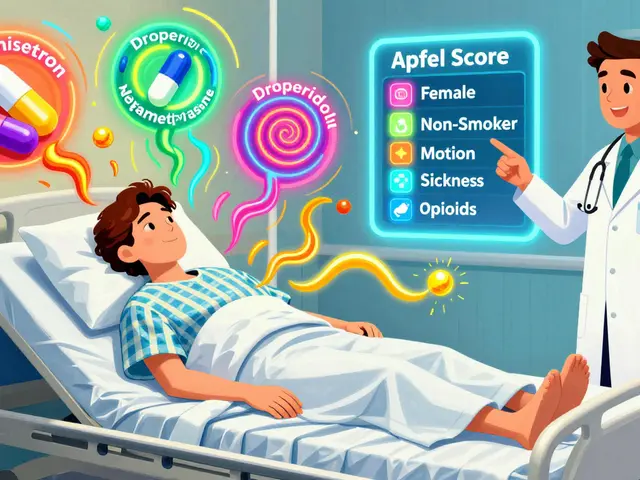
The Apfel score is the gold standard for deciding who needs antiemetics and which ones. It looks at four simple things:- Female sex (2.2x higher risk)
- Non-smoker (1.9x higher risk)
- History of motion sickness or past PONV (3.1x higher risk)
- Will receive opioids after surgery (1.5x higher risk)
If you have zero or one risk factor? You likely don’t need any prophylaxis. If you have two? One drug-either droperidol 0.625 mg or ondansetron 4 mg-is enough. If you have three or four? You need two drugs together: droperidol plus dexamethasone. This isn’t guesswork-it’s backed by data from over 20,000 patients.
Real-world results show this works. At Massachusetts General Hospital, combining dexamethasone 4 mg with ondansetron 4 mg cut rescue medication needs by 32% compared to ondansetron alone. In opioid-tolerant patients, droperidol outperforms ondansetron because it targets dopamine pathways more directly. And for elderly patients who can’t tolerate metoclopramide’s muscle side effects, olanzapine 2.5-5 mg is becoming a go-to alternative.
When to Avoid Certain Antiemetics
Not every drug is safe for everyone. Some carry hidden dangers:- Dolasetron is banned for IV use in many hospitals due to fatal heart rhythm risks.
- Ondansetron can prolong the QT interval-avoid in patients with heart conditions or those taking other QT-prolonging drugs like certain antibiotics or antidepressants.
- Metoclopramide should never be given at high doses (over 300 mg/week) or for long periods. It can cause irreversible movement disorders.
- Scopolamine patches take 4 hours to work. Don’t use them if you need immediate relief.
- Domperidone is restricted in the EU and not FDA-approved in the U.S. due to cardiac risks.
Even something as common as promethazine can cause tissue death if it leaks outside the vein. That’s why many hospitals now avoid IV promethazine entirely. Always check for drug interactions. Ondansetron is metabolized by CYP3A4-so if you’re on ketoconazole or grapefruit juice, your levels could spike dangerously.
Cost vs. Value: Why Generic Droperidol Is Often the Smart Choice
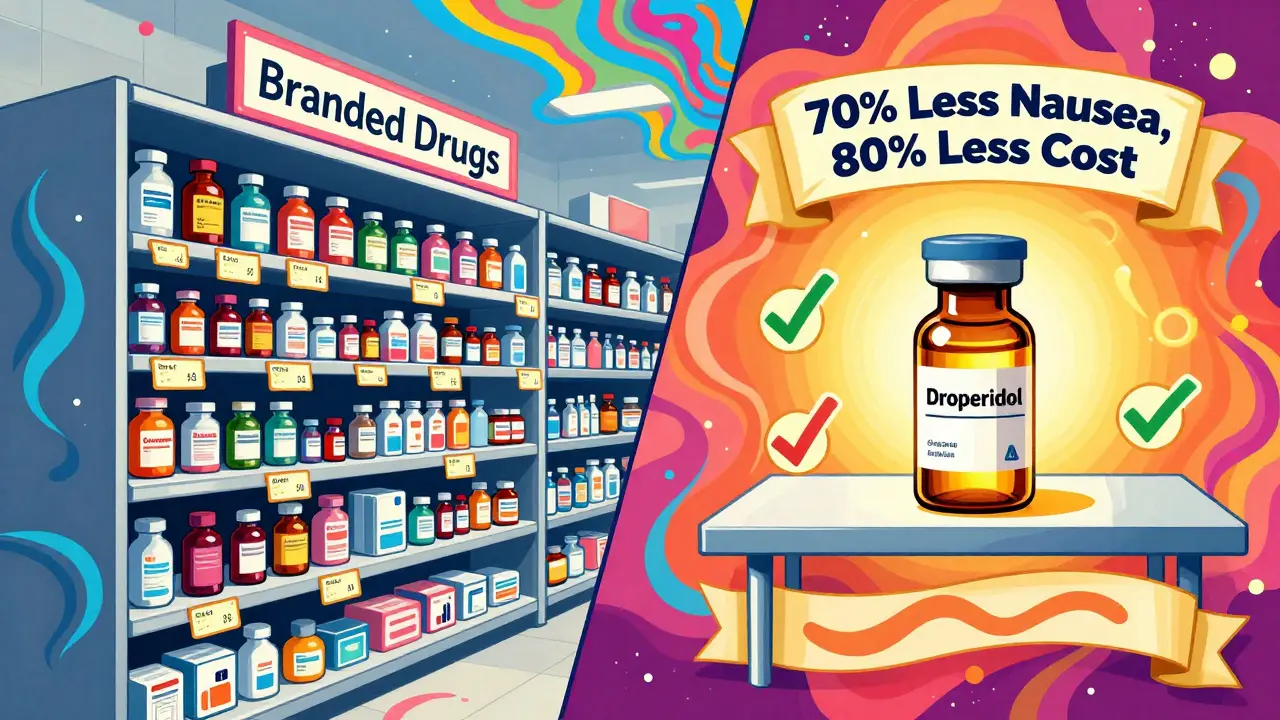
The market for antiemetics is huge-$5.8 billion in 2023. But most of that spending goes to expensive branded drugs like Akynzeo, which costs $350 per dose. Meanwhile, generic droperidol costs 80% less than ondansetron and works just as well for most cases. A 2023 IQVIA report found that hospitals using risk-based protocols and favoring low-cost generics saved 15-25% on antiemetic budgets without lowering outcomes.Why do so many still use ondansetron? Habit. Marketing. Fear of side effects. But the evidence is clear: low-dose droperidol (0.625-1.25 mg) is safe, fast, and effective. In one study, only 14.5% of patients on droperidol had post-op nausea, compared to 26.7% on tropisetron. And in Reddit’s r/Anesthesiology forum, dozens of anesthesiologists report using droperidol as their first-line choice for routine cases.
What’s New in 2026?
The field is evolving. In 2024, the FDA approved intranasal ondansetron (Zuplenz), giving patients who can’t swallow pills a fast, effective option with 89% bioavailability. New NK-1 receptor antagonists like rolapitant are showing promise for delayed chemotherapy nausea, with 78% effectiveness compared to 70% for older drugs. And researchers are starting to test genetic testing-CYP2D6 variants can make some people metabolize ondansetron too fast or too slow, affecting how well it works.But the biggest shift? Moving away from one-size-fits-all. The 2024 SAMBA guidelines say it plainly: “The future of antiemetic therapy lies in precision medicine.” That means matching the drug to the patient’s risk profile, their meds, their genetics, and their history-not just defaulting to the most expensive option.
Practical Tips for Patients and Providers
If you’re a patient:- Ask: “Is this nausea from my meds? What’s the best drug for this kind?”
- Don’t assume ondansetron is the only option-it’s not always the best.
- Report headaches, dizziness, or restlessness. These are side effects, not just “normal.”
If you’re a provider:
- Use the Apfel score before prescribing.
- Start with droperidol 0.625 mg for moderate-risk patients-it’s cheaper and just as effective.
- Combine dexamethasone with a 5-HT3 blocker for high-risk cases.
- Avoid metoclopramide in elderly patients unless you use 25 mg or higher-and even then, monitor closely.
- Track your institution’s antiemetic use. Many hospitals overprescribe by 30-40%.
Antiemetics aren’t just about stopping nausea. They’re about reducing stress, speeding recovery, and lowering costs. Choosing the right one isn’t magic-it’s science. And when you get it right, patients feel better faster, without unnecessary risks or bills.
What’s the most effective antiemetic for post-op nausea?
For most patients, low-dose droperidol (0.625-1.25 mg IV) is as effective as ondansetron but costs far less. For high-risk patients (three or more Apfel risk factors), combining droperidol with dexamethasone gives the best results-reducing nausea by up to 70% compared to no treatment.
Is ondansetron the best choice for chemotherapy nausea?
Ondansetron is effective for acute chemo-induced nausea, but for highly emetogenic regimens, combination therapy works better. The latest guidelines recommend a 5-HT3 antagonist like ondansetron or palonosetron, plus dexamethasone and an NK-1 antagonist like rolapitant. Single-agent ondansetron isn’t enough for strong chemo drugs.
Can I use promethazine for opioid-induced nausea?
Promethazine can help, but it’s not ideal. It works better for motion sickness than drug-induced nausea. It also carries risks like tissue damage if injected incorrectly and can cause excessive sedation. Droperidol or low-dose olanzapine are safer, more effective alternatives for opioid-related nausea.
Why is droperidol not used more often?
Droperidol was once limited due to concerns about QT prolongation and rare cases of sudden death. But studies show that at low doses (≤1.25 mg), the risk is extremely low-lower than many common antibiotics. The real barrier is outdated hospital policies and lack of awareness. Many providers still think it’s unsafe, even though the FDA removed its black box warning in 2021.
What’s the fastest-acting antiemetic?
Intravenous droperidol and ondansetron both work within 5-15 minutes. Intranasal ondansetron (Zuplenz) is also fast-under 10 minutes. Oral forms take longer (30-60 minutes). For acute nausea, IV or intranasal is preferred. Dexamethasone is slow-it takes 4-5 hours to peak-so it’s never used alone for sudden nausea.
Are there natural alternatives to antiemetics?
Ginger has mild anti-nausea effects and may help with motion sickness or early pregnancy nausea. But for medication-induced nausea-especially from chemo, opioids, or anesthesia-there’s no strong evidence that ginger or other herbs are effective enough to replace prescription antiemetics. Don’t rely on them in clinical settings.
What to Do Next
If you’re managing nausea for yourself or a patient, start by identifying the cause. Is it from surgery? Opioids? Chemo? Then use the Apfel score if it’s post-op. Don’t default to the most expensive or most advertised drug. Ask: Is there a cheaper, equally effective option? Is the patient at risk for side effects? Are we combining drugs wisely?The goal isn’t just to stop vomiting. It’s to restore comfort, reduce stress, and avoid complications-all without adding new risks. The right antiemetic, chosen with care, does exactly that.



January 8, 2026 AT 15:46
Ian Long
Finally someone who gets it. Droperidol is the unsung hero of post-op nausea. I've seen nurses hesitate to use it like it's poison, but at 0.625 mg? It's safer than ibuprofen. The fear is outdated, and hospitals are wasting money on ondansetron like it's gold.
My OR team switched last year. Rescue meds dropped 40%. No cardiac events. No drama. Just cheaper, faster relief.
Why do we still treat evidence like it's optional?
January 9, 2026 AT 12:16
Pooja Kumari
Okay but let’s be real-why does every medical post on Reddit sound like a drug rep presentation? I get it, droperidol is cheap, but what about the patients who feel like their body is being hijacked by muscle spasms or that weird inner restlessness? I’ve seen people on metoclopramide look like they’re trying to escape their own skin.
And don’t even get me started on dexamethasone giving someone insomnia and sugar spikes after surgery when they’re already in pain and scared.
It’s not just about efficacy, it’s about dignity. Why do we treat nausea like a bug to be crushed and not a signal that something’s off? Maybe the real problem isn’t the drug-it’s how we’re rushing to fix symptoms without listening to the person behind them.
Also, ginger tea is literally the only thing that helped me after chemo. Don’t act like natural doesn’t mean effective. Just because it’s not in a vial doesn’t mean it’s not medicine.
January 11, 2026 AT 06:01
Angela Stanton
Let’s break this down with some real metrics:
• Ondansetron: 65-75% efficacy, 32% headache rate, QT risk = Class I warning
• Droperidol: 67% efficacy, 0.5% akathisia at low dose, QT risk = negligible below 1.25mg
• Cost differential: 2.5x cheaper
So why is this even a debate? It’s not about preference-it’s about cognitive bias. Pharma marketing + confirmation bias + institutional inertia = $5.8B in avoidable spending.
Also, calling promethazine ‘weak’ is an understatement. IV promethazine is a 20% chance of necrosis. That’s not ‘risky’-that’s malpractice waiting to happen. Hospitals that still allow it are either negligent or asleep at the wheel.
And yes, I’m the one who reported the IV promethazine protocol at my hospital. Took 18 months. Worth it.
January 11, 2026 AT 11:28
Darren McGuff
As a nurse who’s seen this play out in ICU, ER, and post-op units for 17 years-I’m crying tears of joy that someone finally said this out loud.
I used to beg doctors to try droperidol. They’d say, ‘Oh no, that’s the one that causes death.’ And I’d say, ‘No, that’s the one that got pulled off the market because one guy got it at 10mg for psychosis.’
Low dose? Safe. Fast. Effective. And my patients thank me for it.
Also, the Apfel score? It’s not a suggestion-it’s a lifesaver. We started using it in our unit, and our PONV rates dropped from 38% to 11%. No magic. Just math.
Stop overtreating. Start personalizing. And for the love of all that’s holy, stop giving ginger to someone on chemo and calling it a treatment.
January 12, 2026 AT 07:28
Aron Veldhuizen
You’re all missing the deeper philosophical issue here.
Medicine has become a commodity. We don’t treat nausea-we optimize it. We don’t care about the patient’s experience-we care about the cost-per-episode metric.
The fact that droperidol is cheaper doesn’t make it better. It makes it more efficient. And efficiency is the new god of healthcare.
But what about the soul of care? The quiet moment when a nurse sits with a trembling patient and says, ‘I see you’re hurting’-not ‘I’m giving you 0.625 mg IV’?
When did we stop seeing patients as people and start seeing them as data points in a spreadsheet?
And while we’re at it-why does ‘natural’ always get dismissed as ‘unscientific’? Ginger has been used for millennia. Maybe the problem isn’t the remedy-it’s our arrogance.
Also, the FDA removed the black box warning in 2021. That doesn’t mean it’s safe. It means the regulators finally caught up to reality. We’re always late.
And I’m not even talking about the fact that 70% of antiemetic prescriptions are given without any risk assessment. That’s not medicine. That’s roulette.
January 12, 2026 AT 20:59
RAJAT KD
Droperidol works. Apfel score works. Stop overprescribing.
Done.
January 14, 2026 AT 18:06
Matthew Maxwell
It’s alarming how casually people dismiss the risks of droperidol. You cite low doses, but you ignore cumulative exposure. One dose here, another there-soon you’ve got a patient on multiple QT-prolonging agents, and then what? A cardiac arrest? And you’ll blame the patient’s comorbidities, not your protocol.
And don’t get me started on the promotion of generics as some moral victory. This isn’t about saving money-it’s about cutting corners under the guise of evidence.
Patients aren’t cost centers. They’re people. And if you’re choosing a drug based on price instead of safety, you’re not a clinician-you’re a vendor.
January 16, 2026 AT 16:55
Jacob Paterson
Oh wow. A whole 2,000-word essay on how to pick the cheapest antiemetic. Did you also write a whitepaper on how to pick the least expensive band-aid?
Let me guess-you think if it’s cheap, it’s automatically better. That’s not medicine. That’s Walmart pharmacy logic.
And let’s not forget: when droperidol causes akathisia, the patient doesn’t care that it’s 50 cents. They feel like their bones are crawling out of their skin.
Meanwhile, ondansetron? It’s not perfect, but it’s predictable. And predictability? That’s what saves lives when you’re tired, overworked, and running on coffee and regret.
Also, ginger. Ginger works. My aunt had chemo. She drank ginger tea. Didn’t vomit. You think that’s placebo? Try telling her that next time she hugs you.
Stop acting like your spreadsheet is the Bible.
January 17, 2026 AT 16:25
Johanna Baxter
I hate how everyone acts like they’re the only one who’s ever seen a patient suffer from nausea
I had post-op nausea for 3 days after my hysterectomy
They gave me ondansetron
It made me dizzy and gave me a headache
Then they gave me promethazine
It made me feel like I was drowning in syrup
Then my nurse just held my hand and said ‘it’ll pass’
And guess what
It did
Maybe the real treatment was not the drug
But someone who didn’t rush
And yeah I know I’m being dramatic
But I’m tired of being a data point
January 19, 2026 AT 01:04
Jerian Lewis
People keep saying droperidol is safe. But safety isn’t just about statistics. It’s about trust. And if your hospital’s policy still lists it as ‘high risk,’ then changing the protocol requires more than a Reddit post. It requires culture change. And culture doesn’t change because someone cites a 2021 FDA update. It changes when someone in charge says, ‘I’m tired of this too.’
Until then, we’re just rearranging deck chairs on the Titanic.
January 19, 2026 AT 18:12
Kiruthiga Udayakumar
As someone from India, I’m so happy to see this discussion. Here, we use ondansetron because it’s the only one the reps push. But I’ve seen patients who can’t afford it-so we give metoclopramide even though it’s risky for elderly.
But what if we had droperidol? It’s 50 cents. That’s a cup of chai.
Why are we letting profit decide who gets relief?
Also, ginger works. My grandma used it for everything. And she’s 82 and still walking.
Maybe we don’t need more drugs.
Maybe we just need more care.
January 20, 2026 AT 16:52
Catherine Scutt
Ugh. Another one of these ‘let’s cut costs’ posts.
Everyone’s obsessed with droperidol like it’s some miracle drug.
Have you ever seen someone get akathisia from it?
It’s terrifying.
And you’re just gonna say ‘oh it’s rare’?
It’s rare for you.
It’s not rare for the person shaking on the bed.
Also, why are you all ignoring the fact that most patients don’t even know what ‘Apfel score’ is?
They just want to stop feeling sick.
Maybe the real problem is we’re treating this like a math problem instead of a human one.
Just saying.