Adverse Events: What They Are, Why They Matter, and How to Report Them
When you take a medicine, your body reacts—and sometimes, that reaction isn’t harmless. An adverse event, an unintended and harmful reaction to a medication that occurs at normal doses. Also known as side effect, it can be as mild as a headache or as dangerous as liver failure. These aren’t rare glitches—they’re real, documented risks tied to nearly every drug on the market, from common painkillers to life-saving diabetes treatments. What most people don’t realize is that adverse events aren’t just bad luck. Many are predictable, preventable, and reportable. And when enough people report them, the FDA and global health agencies can issue warnings, change labels, or even pull drugs off shelves.
Take DPP-4 inhibitors, a class of diabetes drugs that can trigger acute pancreatitis in rare cases. Or clarithromycin, an antibiotic that can dangerously spike blood pressure meds like amlodipine, leading to fainting or stroke. These aren’t theoretical risks. They’re backed by real patient data, hospital reports, and FDA alerts. Even something as simple as taking calcium supplements, a common bone health aid that can block thyroid or antibiotic absorption at the wrong time can turn a safe drug into an ineffective one—or worse, a hidden danger.
That’s why reporting matters. If you or someone you know had an odd reaction after starting a new pill—rash, dizziness, nausea, unexplained fatigue—don’t brush it off. You might think it’s just a coincidence. But if ten others report the same thing, it becomes a pattern. That’s where MedWatch, the FDA’s official system for collecting adverse event reports from patients and doctors comes in. Your report doesn’t need to be perfect. Just the drug name, what happened, and when it started can help. It’s not just about you. It’s about protecting the next person who picks up that same prescription.
And it’s not just about new drugs. Even old, trusted meds like statins can cause muscle pain that stops people from exercising—something that’s often mislabeled as "just aging." But when genetic testing shows a person has the SLCO1B1 variant, that pain isn’t random—it’s a known risk tied to their DNA. Or consider how liver disease changes how opioids are processed, turning a standard dose into a potential overdose. These aren’t edge cases. They’re part of the bigger picture of how drugs interact with your body, your health history, and your environment.
Below, you’ll find real, practical guides that break down exactly how to spot, understand, and respond to adverse events. From how to read FDA safety alerts to knowing which supplements interfere with your meds, these posts give you the tools to stay safe—not just informed. You don’t need a medical degree to protect yourself. You just need to know what to look for—and when to speak up.
 4 December 2025
Clinical Trial Data vs Real-World Side Effects: What You Need to Know
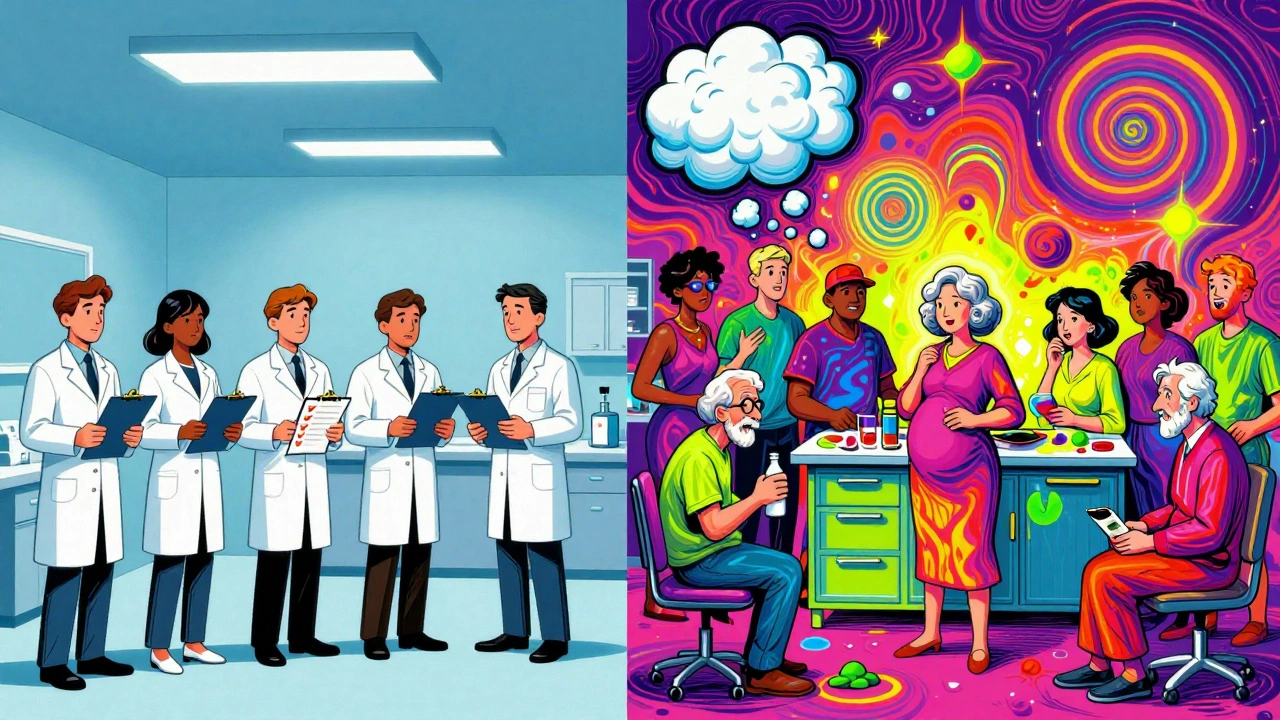
Clinical trial data shows what side effects are likely under ideal conditions. Real-world data reveals what actually happens when millions take the drug. Understanding both is key to safe medication use.