
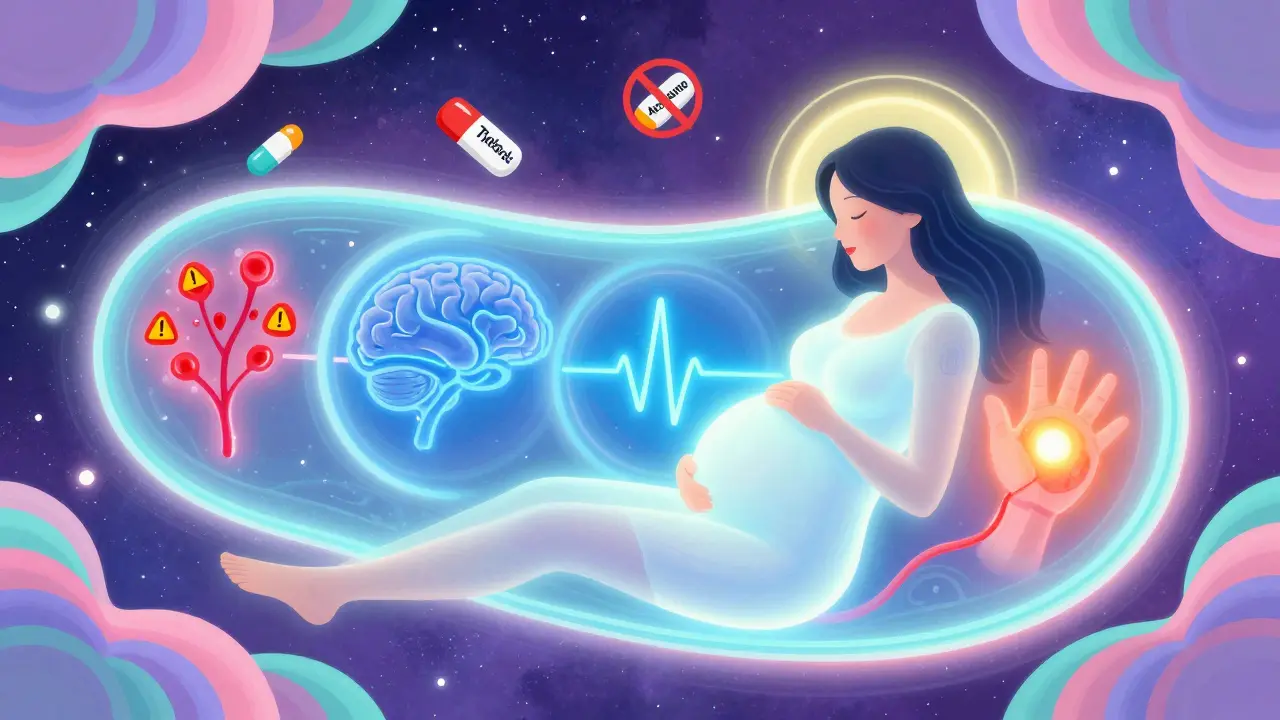
Pregnancy Medication Risk Checker
Medication Safety Assessment
This tool provides general guidance on medication safety based on trimester-specific risks. Always consult your healthcare provider for personalized advice.
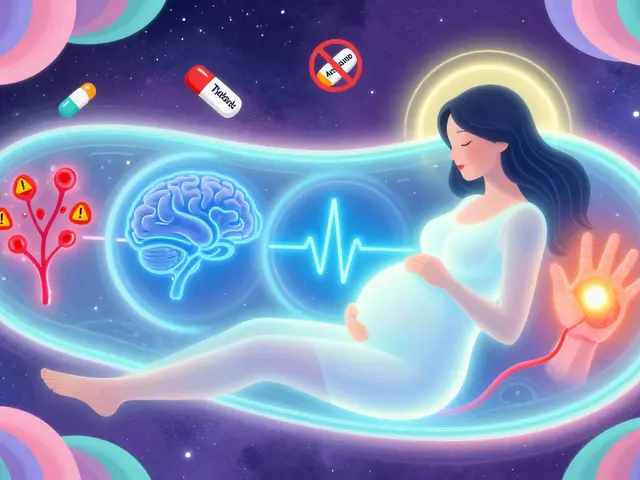
When you’re pregnant, taking any medication - even something as simple as an allergy pill or pain reliever - can feel like walking a tightrope. You need relief, but you’re terrified of harming your baby. The truth is, medication risks during pregnancy aren’t the same at every stage. What’s dangerous in week 6 might be perfectly safe in week 20. And what’s harmless in the second trimester could cause serious problems in the third. Understanding these windows isn’t about fear - it’s about making smarter, safer choices.
First Trimester: The Most Critical Window
The first trimester - from conception to week 12 - is when your baby’s organs form. This is the time when most major birth defects occur, and it’s also when medication exposure carries the highest risk. But here’s the catch: not all medications are risky, and not all timing matters the same way.
From day 1 to day 20 after fertilization, most drugs follow an "all-or-nothing" rule. If the embryo is going to be damaged, it usually doesn’t survive. If it survives, it likely wasn’t harmed. That’s why some women who took a medication before they knew they were pregnant don’t need to panic. But after day 20, things change. This is when organ development kicks into high gear.
For example, isotretinoin (Accutane) is infamous for causing severe brain, heart, and facial defects - but only if taken between days 21 and 55 after conception. That’s roughly weeks 5 to 9 of pregnancy. Even a single dose during this window can increase the risk of defects by 50 times compared to no exposure. That’s why the iPLEDGE program requires two negative pregnancy tests before prescribing it, monthly tests during use, and one month of contraception after stopping.
Another example is paroxetine (Paxil). Studies show it slightly increases the risk of heart defects - but only if taken between days 20 and 24 after fertilization. That’s a tiny window, just a few days. Outside of it, the risk drops to near baseline. Meanwhile, sertraline (Zoloft) shows no increased risk of birth defects at all during the first trimester, making it a preferred choice for depression when medication is needed.
Antinausea meds like ondansetron (Zofran) are another case. A large study of 1.8 million pregnancies found a small increased risk of heart defects - but only when taken before week 10. After that, no significant risk was found. This is why doctors now often delay prescribing it until after the first trimester unless nausea is severe.
Second Trimester: Shifting From Structure to Function
By week 13, most of your baby’s major structures are formed. That means the risk of physical deformities drops sharply. But that doesn’t mean it’s risk-free. Now, the concern shifts from structural defects to how drugs affect brain development, growth, and organ function.
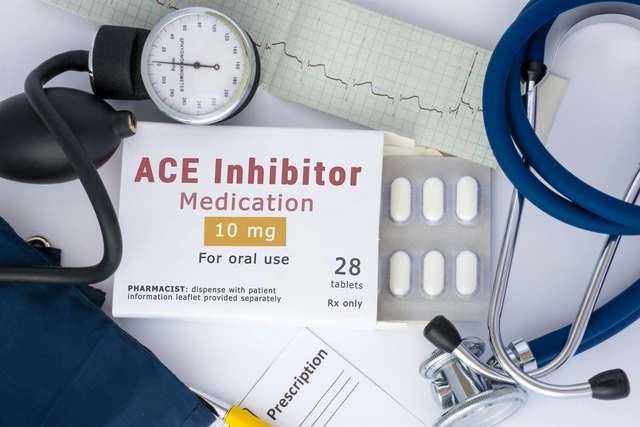
Take blood pressure medications. ACE inhibitors like lisinopril or enalapril are dangerous in the second trimester. They can cause kidney damage, low amniotic fluid, and skull deformities. The risk climbs after week 8 and peaks between weeks 12 and 20. That’s why doctors switch pregnant patients to labetalol or methyldopa - drugs that have been studied for decades and show no increased risk of major problems at any stage.
SSRIs like fluoxetine (Prozac) and sertraline are still commonly used in the second trimester. They’re considered low-risk for birth defects, but they can affect fetal heart rate and movement patterns. The key? Don’t stop them abruptly. Going off antidepressants cold turkey during pregnancy increases the risk of relapse, which can be even more harmful to both mother and baby.
NSAIDs like ibuprofen and naproxen are generally safe until week 20. After that, they start closing the ductus arteriosus - a vital blood vessel that bypasses the lungs before birth. This can lead to heart complications in the newborn. So if you’re prescribed an NSAID for a flare-up of arthritis or back pain, it’s fine in week 16 - but not in week 30.
Third Trimester: The Hidden Risks of Physiological Disruption
In the final stretch, your baby’s organs are fully formed - but they’re still developing function. This is when medications are most likely to cause problems with breathing, feeding, sleep, or withdrawal symptoms after birth.
SSRIs again come into focus. About 30% of babies exposed to paroxetine in the third trimester develop neonatal adaptation syndrome - jitteriness, poor feeding, trouble breathing, or high-pitched crying. These symptoms usually last a few days to weeks and aren’t permanent, but they can mean a longer hospital stay. Sertraline is much less likely to cause this. And tapering your dose slowly - reducing by 25% every two weeks starting at 34 weeks - can cut the risk in half.
NSAIDs are even more dangerous now. After week 32, using ibuprofen or similar drugs can cause the ductus arteriosus to close completely, leading to pulmonary hypertension - a life-threatening condition for newborns. That’s why doctors stop recommending NSAIDs entirely after 30 weeks.
And then there’s opioids. If you’ve been taking them for chronic pain, stopping suddenly can cause withdrawal in the baby - which can mean seizures, tremors, or feeding problems. The safest approach? Work with your doctor to slowly reduce the dose before delivery, not quit cold.
Even common medications like acetaminophen (Tylenol) need attention. It’s still the #1 recommended pain reliever during pregnancy. But one study found that taking more than 3,500 mg per day for more than two weeks might be linked to a slightly higher risk of ADHD in children. Stick to the lowest effective dose for the shortest time.
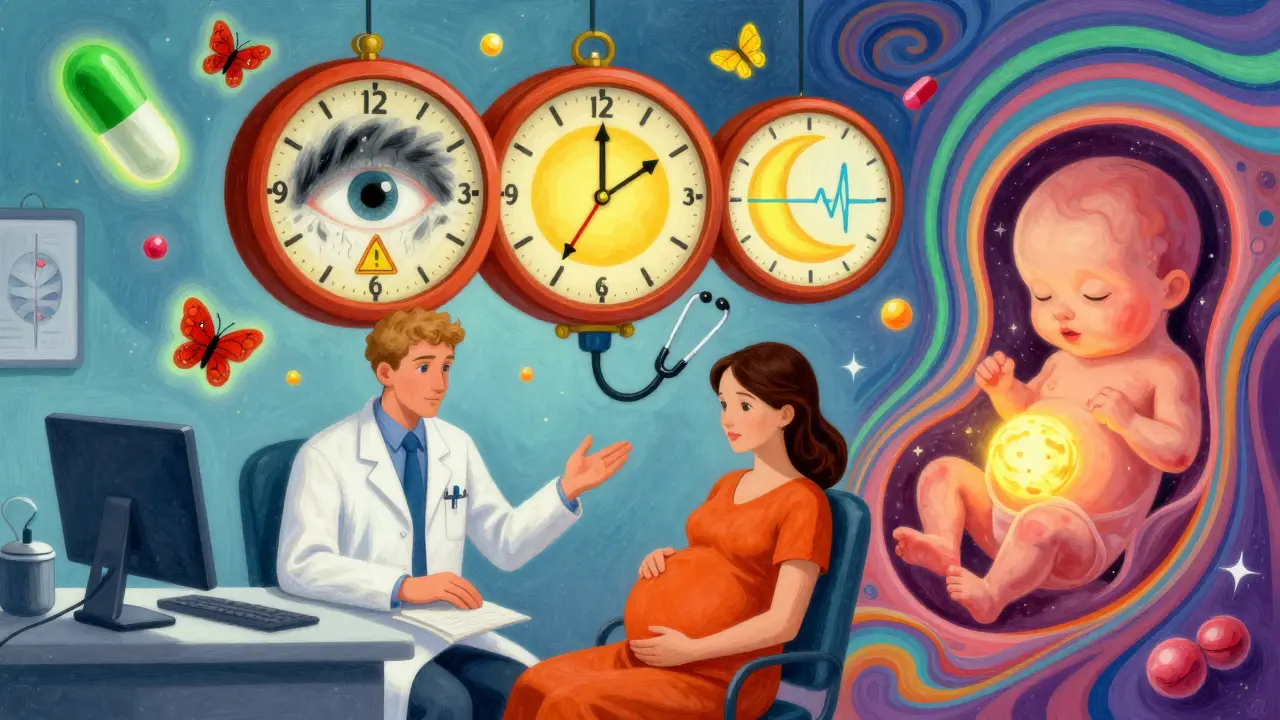
What About Over-the-Counter and Herbal Remedies?
Just because something is sold without a prescription doesn’t mean it’s safe. Many herbal supplements aren’t tested in pregnancy at all. But some OTC drugs have solid data.
Doxylamine and pyridoxine (Diclegis) - a combination used for morning sickness - has been studied in over 100,000 pregnancies. No increased risk of birth defects. Same with loratadine (Claritin) and cetirizine (Zyrtec) for allergies. Both are Category B, meaning animal studies show no risk and human studies haven’t found harm.
But avoid pseudoephedrine (Sudafed) in the first trimester. Some studies link it to a rare abdominal wall defect. And don’t use bismuth subsalicylate (Pepto-Bismol) at all - it contains salicylate, which is related to aspirin and can increase bleeding risk.
How to Make Safe Decisions
Here’s the reality: 90% of pregnant people take at least one medication. The goal isn’t to avoid all drugs - it’s to use the right one, at the right time, in the right dose.
First, know your dates. Many women rely on their last menstrual period to guess how far along they are. But that’s often off by a week or more. Ultrasounds in the first trimester give the most accurate dating. If you took a medication before you knew you were pregnant, get an early scan. You might be further along than you think - and that changes everything.
Second, talk to your care team. Don’t rely on Reddit, Facebook groups, or Google. ACOG recommends using trusted resources like MotherToBaby (a free service run by experts) or the CDC’s Treating for Two tool. These give trimester-specific data, not general warnings.
Third, don’t stop medication without a plan. If you’re on metformin for PCOS, stopping it can lead to dangerous blood sugar spikes. If you’re on an antidepressant, going off it cold turkey raises your risk of postpartum depression. Work with your OB and your psychiatrist to adjust doses safely.
And finally, keep records. Write down every medication - prescription, OTC, supplement - and when you took it. This helps your doctor assess risk if something goes wrong.
Tools and Resources That Actually Help
There are databases built just for this. The TERIS database has detailed trimester-specific risk ratings for over 1,800 medications. It’s not free, but many hospitals give clinicians access. The FDA’s Drugs@FDA site now includes pregnancy labeling for nearly all new drugs since 2015. And MotherToBaby offers free phone consultations - real experts who answer questions like, "I took one dose of X at 7 weeks - should I be worried?"
More than 450,000 people have used the CDC’s Treating for Two decision tool since 2016. Eighty-two percent said it helped them feel more confident. That’s the power of clear, evidence-based info.
What’s Changing in 2026
The FDA is pushing for better data. Starting in 2024, they’re requiring doctors to report pregnancy outcomes linked to medications directly into electronic health records. This could triple the amount of real-world safety data we have.
Researchers are also building risk calculators that factor in your genetics, how your body processes drugs, and your exact gestational age. By 2028, you might get a personalized recommendation: "Based on your metabolism and your baby’s age, this dose is safe. That one isn’t."
For now, the best strategy is simple: Know the windows. Know the drugs. Know your dates. And don’t make decisions alone.
Is it safe to take Tylenol during pregnancy?
Yes, acetaminophen (Tylenol) is the safest pain reliever during pregnancy and is recommended by ACOG and the CDC. Use the lowest effective dose for the shortest time. Avoid doses over 3,500 mg per day for more than two weeks, as some studies suggest a possible link to developmental issues. Never exceed 3,000 mg daily unless directed by your doctor.
Can I keep taking my antidepressant while pregnant?
Many antidepressants are safe during pregnancy, but timing matters. Sertraline (Zoloft) and citalopram (Celexa) have the best safety record across all trimesters. Paroxetine (Paxil) should be avoided in the first trimester due to heart defect risks. Never stop abruptly - this increases your risk of relapse. Work with your OB and psychiatrist to adjust your dose safely, especially in the third trimester to reduce newborn withdrawal symptoms.
What if I took a medication before I knew I was pregnant?
Don’t panic. Before day 20 after fertilization, most medications either cause no effect or lead to miscarriage - if the pregnancy continues, you likely didn’t harm the baby. After day 20, the risk depends on the drug and exact timing. Call MotherToBaby (1-800-962-2662) or your OB. They can help you assess the risk based on when you took it and your actual gestational age - not just your last period.
Are natural remedies safer than medications during pregnancy?
Not necessarily. Many herbal supplements aren’t tested in pregnancy and may contain unregulated ingredients. Ginger is generally safe for nausea, but others like black cohosh or dong quai can trigger contractions. Always check with your provider before using any supplement, even if it’s labeled "natural."
Why do different doctors give different advice about the same medication?
Because the data isn’t always clear. About 79% of prescription drugs lack enough pregnancy safety data. Some doctors rely on older guidelines, others on recent studies. Many also overestimate risk out of caution. Use trusted sources like MotherToBaby, the CDC’s Treating for Two tool, or your pharmacist to get evidence-based answers - not guesswork.
Next Steps
If you’re currently pregnant and taking any medication - even a daily vitamin - schedule a review with your OB. Bring your full list. Ask: "Is this safe for my baby right now?" If you’re planning pregnancy, talk to your doctor before you conceive. Some medications can be switched to safer options ahead of time. And if you’re worried about a past exposure, don’t wait. Call MotherToBaby. They’ve helped over 25,000 families just like yours.
February 11, 2026 AT 05:39
John McDonald
Man, this post saved my sanity. I was freaking out after taking Zofran at 8 weeks because some random Reddit post said it causes heart defects. Turns out, I was fine-my OB checked the timing and said I was just outside the risky window. Learned the hard way that not all advice on the internet is gospel. Always call MotherToBaby. They’re real humans who don’t sell supplements.
February 11, 2026 AT 09:19
Chelsea Cook
So let me get this straight-taking one ibuprofen at 16 weeks is chill, but at 31 weeks it’s basically child endangerment? 😏
Also, why do we still treat pregnant people like fragile glass figurines who can’t handle a Tylenol? I get the science, but the fear-mongering is exhausting. We’re not lab rats. We’re humans with bodies that know how to adapt.
February 12, 2026 AT 22:52
Andy Cortez
lol so accutane is bad but tylenol might cause adhd? sounds like someone just made up a whole list of scary words to sell more ultrasounds. also why is every drug suddenly a death sentence? my mom took thalidomide in the 60s and i turned out fine. maybe the real issue is doctors overreacting because they’re scared of lawsuits. also i think the FDA is just trying to get more data so they can charge drug companies more. #conspiracy
February 13, 2026 AT 20:05
Jacob den Hollander
I just want to say thank you for writing this with so much care. I’m a dad, and my wife was on sertraline during both pregnancies. We were terrified after reading half-baked posts online. But when we talked to her OB and used the CDC’s Treating for Two tool? It was like a weight lifted. We didn’t stop her meds-we adjusted. She had two healthy babies. And yes, we wrote down every pill, every herb, every tea. It gave us peace. You’re right: knowledge is power. And you just gave us a map.
February 15, 2026 AT 17:53
Patrick Jarillon
THIS IS ALL A LIE. THE FDA AND PHARMA COMPANIES ARE USING PREGNANCY AS A COVER TO PUSH MORE DRUGS. THEY WANT YOU TO BELIEVE THAT EVERYTHING IS DANGEROUS SO YOU’LL KEEP TAKING THEIR ‘SAFE’ OPTIONS. DID YOU KNOW THAT ACETAMINOPHEN WAS ORIGINALLY DEVELOPED BY THE NAZIS? AND THE ‘MOTHERTOBABY’ SERVICE? IT’S FUNDED BY MERCK. THEY WANT YOU TO FEEL ANXIOUS SO YOU’LL BUY MORE ‘SAFE’ MEDS. I TOOK 10 IBUPROFENS AT 28 WEEKS AND MY KID IS A GENIUS. THEY’RE LYING TO YOU.
February 16, 2026 AT 01:52
Randy Harkins
❤️ This is the kind of info we need more of. So many of us are scared to even take a cough drop. But this breaks it down so clearly-trimester by trimester, drug by drug. I’m sharing this with my sister who’s 8 weeks in. She’s been Googling in circles. Now she has a real guide. Thank you for making science feel human.
February 16, 2026 AT 06:34
Chima Ifeanyi
While the data presented is statistically significant, it lacks ecological validity. The cohort studies referenced are predominantly North American, middle-class, and heteronormative. The generalizability to global populations-particularly in LMICs where polypharmacy and malnutrition are prevalent-is questionable. Moreover, the reliance on self-reported gestational age introduces recall bias. A more robust model would integrate pharmacokinetic biomarkers and maternal metabolomic profiles.
February 18, 2026 AT 06:12
Jonah Mann
soo… i took one zyrtec at 6 weeks and now i’m paranoid. is my baby gonna be fine?? i dont even know how many weeks im. my last period was 2 months ago but i had a weird cycle. should i panic? or just call mothertobaby? they sound like a legit number. i’m gonna call them. thanks for the post. this is the first time i feel like someone actually gets it.
February 19, 2026 AT 05:02
THANGAVEL PARASAKTHI
As an Indian father, I want to say this article is gold. In our culture, we use turmeric, neem, and ashwagandha like candy during pregnancy. No one asks if it’s safe. I’m sharing this with my wife’s family. She’s 14 weeks and already taking ginger tea, turmeric milk, and ayurvedic supplements. Now I have facts to say: ‘Beta, let’s check with the doctor.’ This isn’t about fear. It’s about love.
February 20, 2026 AT 10:48
Frank Baumann
I had a 37-week ultrasound where they said my baby had low amniotic fluid because I took ibuprofen for my back pain at 29 weeks. I didn’t know. I thought it was fine because I took it once. The OB screamed at me. I cried for three days. I lost my job because I was too stressed to work. My husband left. I’m now in therapy. This isn’t just about drugs. It’s about how we treat pregnant women like walking liability lawsuits. We need better education. Not fear. Not blame. Just honest, calm, clear info. And if you’re reading this and you’re scared? You’re not alone. We’ve all been there.
February 21, 2026 AT 22:24
Chelsea Deflyss
OMG I took Zofran at 7 weeks and now I’m sobbing. I didn’t even know it was risky. I thought it was just for nausea. I’m gonna go to the ER. Is it too late? I’m 12 weeks now. I feel like a monster. 😭
February 22, 2026 AT 02:29
Tricia O'Sullivan
Thank you for presenting this information with such clarity and precision. The trimester-specific risk stratification is both scientifically rigorous and clinically actionable. I have shared this resource with my obstetric colleagues, as it represents a significant advancement in patient-centered counseling. The integration of evidence-based tools such as MotherToBaby and Treating for Two is particularly commendable. One may only hope that such resources become universally accessible.
February 23, 2026 AT 12:19
Scott Conner
So if I took one naproxen at 22 weeks, is that okay? I had a killer headache. I didn’t think it was a big deal. I didn’t know about the ductus thing. Should I be worried? I’m 30 weeks now. I’m just trying to figure out if I need to go to the doctor or if I’m overthinking it.
February 24, 2026 AT 02:18
Alex Ogle
There’s this weird tension in how we talk about pregnancy meds. On one hand, we say ‘don’t panic, it’s probably fine.’ On the other, we list every possible side effect like a horror movie. I took Zoloft the whole time. I didn’t stop. I didn’t taper. I didn’t even tell my mom until after the baby was born. She said, ‘You’re lucky you didn’t hurt him.’ I didn’t say anything. But I cried for a week. This post? It didn’t just inform me. It validated me. I’m not a bad mom. I’m just a mom trying to survive.
February 25, 2026 AT 11:53
Brett Pouser
My wife was on metformin for PCOS. We thought we’d have to stop it when we got pregnant. Turns out, stopping it was riskier than keeping it. Her blood sugar spiked, and the OB said that could’ve caused a miscarriage. We didn’t know. No one told us. This article? It’s the kind of thing I wish we’d had before we even tried. I’m printing this out and giving it to every friend who’s trying to get pregnant. Knowledge isn’t power-it’s peace.