
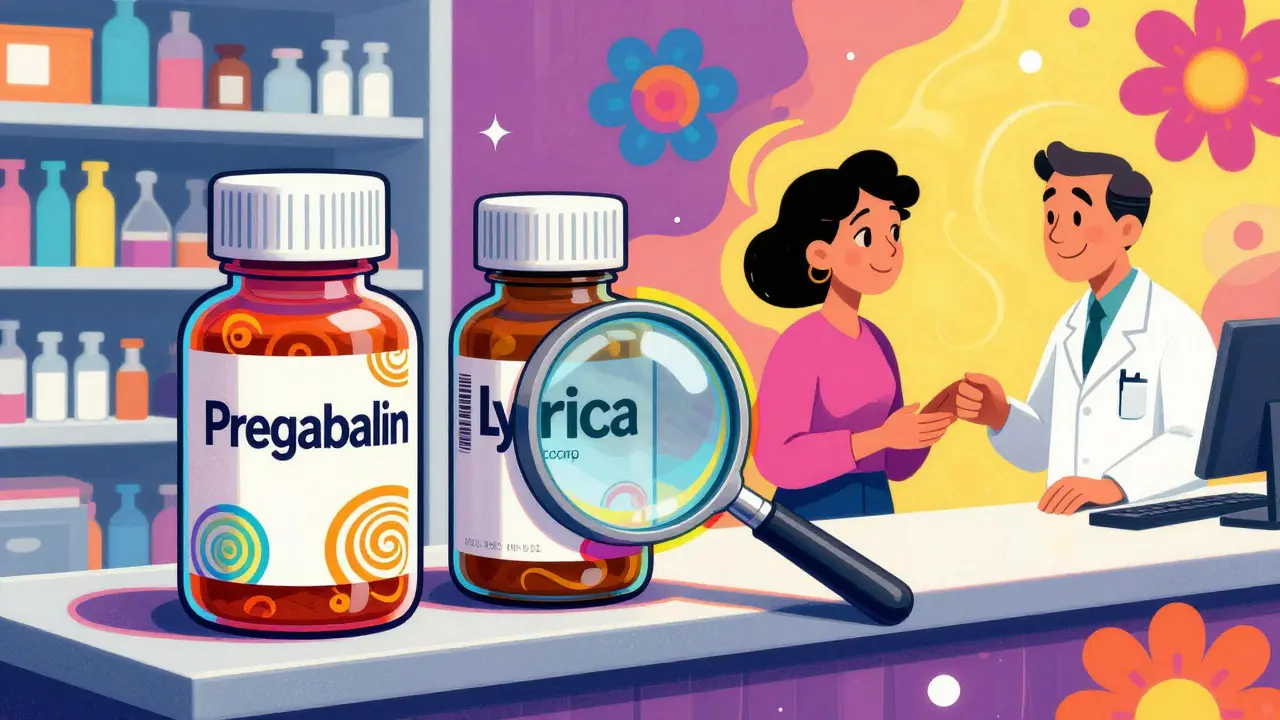
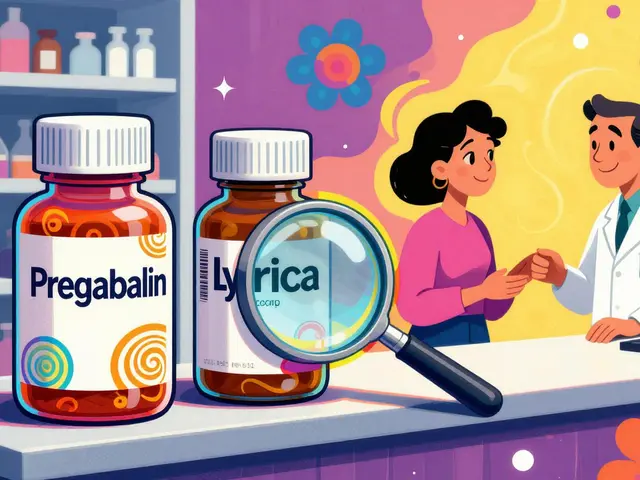
Ever picked up a prescription and wondered why the pill looks the same but the bottle says a different company made it? You’re not alone. Many patients and even pharmacists get confused when they see a drug that’s identical to the brand-name version-but without the brand name on the label. That’s often an authorized generic. Unlike regular generics, authorized generics aren’t just similar to the brand drug-they’re the exact same drug, made in the same factory, with the same ingredients, just sold under a different label.
What Exactly Is an Authorized Generic?
An authorized generic is a brand-name drug that’s sold without the brand name on the packaging. It’s produced by the original manufacturer or under license from them, using the same formula, same facility, same process. The only differences? The label, the box, and sometimes the color of the pill coating. The FDA defines it clearly: it’s a drug approved under the original New Drug Application (NDA), but marketed with different labeling or packaging than the brand-name version. This isn’t a loophole. It’s a legal structure created by the Medicare Prescription Drug, Improvement, and Modernization Act of 2003. The goal? Let brand companies stay competitive during the 180-day exclusivity window given to the first generic maker. Instead of losing all market share, they can launch their own generic version-identical in every way-under a different name. That keeps prices lower and gives patients more options.How to Spot an Authorized Generic by the Label
The key to identifying an authorized generic lies in the details on the packaging. Here’s what to look for:- No brand name: The box and label won’t say "Lyrica," "Protonix," or "Prilosec." Instead, you’ll see the generic drug name-like "pregabalin" or "pantoprazole."
- Different manufacturer/distributor: Look for phrases like "Distributed by Greenstone LLC" or "Manufactured for Dr. Reddy’s." That’s the authorized generic’s distributor, not the original brand company. But here’s the twist: the actual manufacturing site is often the same one that makes the brand version.
- No trademark symbols: You won’t see ® or ™ next to the drug name. Those are reserved for the brand-name product.
- Same pill appearance: The shape, size, and imprint code on the tablet or capsule are usually identical to the brand. But sometimes, due to trademark laws, the color or marking might differ slightly-even though the active ingredient is unchanged.
The NDC Code: Your Best Tool
The most reliable way to confirm an authorized generic is by checking the National Drug Code (NDC). This 10- or 11-digit number is printed on every prescription bottle. It’s broken into three parts:- Labeler code (first segment): Identifies the company that distributes the drug.
- Product code (second segment): Identifies the specific drug, strength, and dosage form.
- Package code (third segment): Identifies the package size.
- Brand Protonix (pantoprazole): NDC 00071-0010-01
- Authorized generic Protonix: NDC 55111-0010-01
How It’s Different From Regular Generics
Regular generics go through the Abbreviated New Drug Application (ANDA) process. They must prove they’re bioequivalent to the brand drug-but they’re made by different companies, sometimes with different inactive ingredients. Their NDC numbers are completely different across all three segments. Authorized generics don’t need to prove bioequivalence. They’re the real thing. Same factory. Same batch. Same everything. That’s why patients often report no difference in how they feel when switching from brand to authorized generic.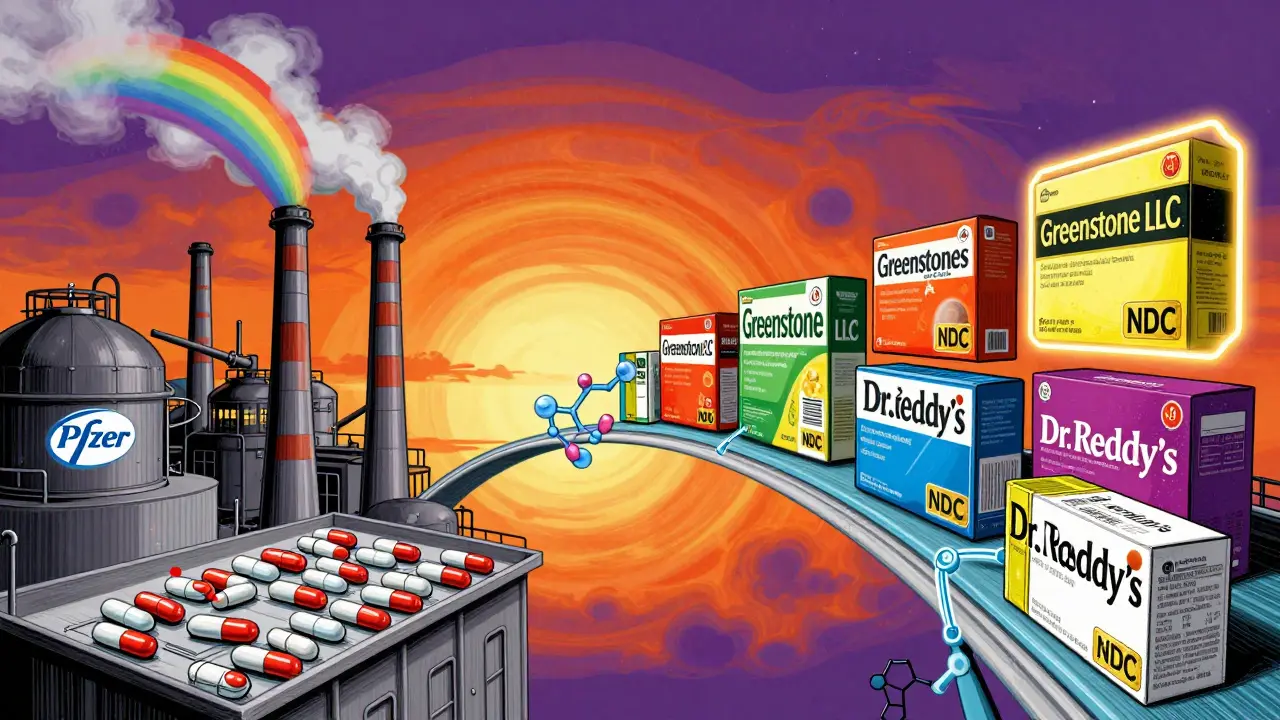
Why This Matters to You
If you’re paying out of pocket, authorized generics can save you money. They’re usually 15-25% cheaper than the brand-name drug, but only 5-15% more expensive than regular generics. That makes them a smart middle ground-lower cost, zero compromise on quality. For pharmacists, misidentifying an authorized generic can cause confusion. A 2022 survey by the National Community Pharmacists Association found that 63% of pharmacists took over two minutes per prescription just to verify whether a drug was an authorized generic. Mistakes happen: some patients think the different label means it’s fake. Others worry the drug won’t work as well. The truth? In a 2022 Medscape survey of 1,200 patients, 92.6% reported no difference in effectiveness between the brand and the authorized generic. Side effects? Identical. Duration of action? The same. Therapeutic outcome? No difference.How to Verify an Authorized Generic
You don’t have to guess. Here’s how to confirm:- Check the NDC on the bottle. Compare the labeler code to the FDA’s Quarterly Authorized Generic List (updated January, April, July, October). As of October 2023, there were 147 active authorized generics listed.
- Look at the manufacturer statement. If it says "Distributed by" and the name isn’t the brand company, it’s likely an authorized generic.
- Use pharmacy software. Systems like First Databank and Medi-Span flag authorized generics in their databases. Most large pharmacies use these tools automatically.
- Ask your pharmacist. They can pull up the FDA list or check your drug’s NDC in real time.
Common Mistakes and Confusions
Even professionals get tripped up. Here are the top errors:- Thinking "authorized" means "brand": Some people confuse authorized generics with "authorized brand" products-those are regular generics with brand-like packaging. Not the same thing.
- Assuming different pill color = different drug: Trademark rules sometimes force color changes, but the active ingredient is unchanged.
- Misreading the labeler code: If you see a different company name, don’t assume it’s counterfeit. It could be the authorized version.
- Missing the FDA list: The only official source is the FDA’s quarterly update. Third-party apps or websites can be outdated.
What’s Changing in 2024
The FDA plans to integrate authorized generic identifiers directly into the National Drug Code Directory by mid-2024. This will make it easier for pharmacies and insurers to flag them automatically. Right now, about 8.3% of dispensing errors stem from misidentifying authorized generics. That number should drop once the system updates. Also, authorized generics are growing. They made up 12.7% of the generic drug market by revenue in 2022-up from 9.5% in 2020. More companies are using them to compete in specialty drug markets like cancer treatments and autoimmune therapies.Bottom Line: You’re Getting the Real Thing
An authorized generic isn’t a knockoff. It’s the brand drug in disguise. Same factory. Same active ingredients. Same effectiveness. Just cheaper. If you see a drug that looks just like your brand prescription but has a different label, don’t panic. Check the NDC. Look up the distributor. Confirm it’s on the FDA list. You’re not getting less-you’re getting the same medicine at a better price.Next time you pick up your prescription, take a second to read the label. That small difference might be saving you hundreds a year.
Are authorized generics safe?
Yes. Authorized generics are made by the same manufacturer as the brand-name drug, in the same facility, using the exact same formula and process. They contain identical active and inactive ingredients. The FDA inspects these facilities just like it does for brand-name drugs. There is no difference in safety or effectiveness.
How do I know if my drug is an authorized generic?
Check the National Drug Code (NDC) on the bottle. Compare the labeler code (first segment) to the FDA’s Quarterly Authorized Generic List. If the product and package codes match the brand-name version but the labeler code is different, it’s an authorized generic. You can also ask your pharmacist to verify using their drug database.
Why does the label say a different company made it?
The brand-name company often licenses its drug to a subsidiary or partner to distribute as an authorized generic. For example, Pfizer makes Lyrica, but Greenstone LLC distributes the authorized generic version. The actual manufacturing is still done in Pfizer’s facility. This is legal and common practice under FDA rules.
Are authorized generics cheaper than regular generics?
Usually not. Authorized generics typically cost 5-15% more than regular generics because they’re made by the original brand manufacturer. But they’re still 15-25% cheaper than the brand-name version. They offer a middle ground: better price than brand, same quality as brand.
Can I trust an authorized generic if the pill looks different?
Yes. U.S. trademark laws prevent generic drugs from looking exactly like the brand version, even if they’re identical in active ingredients. So a change in color, shape, or imprint doesn’t mean the drug is different. Always verify using the NDC code and FDA list, not appearance.
Where can I find the official list of authorized generics?
The FDA publishes the official list quarterly on its website: https://www.accessdata.fda.gov/scripts/cder/afg/index.cfm. It’s updated on the first business day of January, April, July, and October. This is the only authoritative source.
December 17, 2025 AT 20:23
Mike Rengifo
Been using authorized generics for years. My blood pressure med? Same pill, half the price. No difference in how I feel. Why pay extra for a logo?
December 18, 2025 AT 17:40
Andrew Kelly
Let me guess - the FDA’s ‘Quarterly Authorized Generic List’ is just another government lie to make Big Pharma look good. You know who actually makes these pills? Chinese labs with no oversight. The label says ‘Distributed by Greenstone LLC’? That’s a shell company. The real manufacturer is in a warehouse outside Shenzhen. And they’re not even required to test bioequivalence. This is a scam dressed up as transparency.
December 19, 2025 AT 12:40
holly Sinclair
It’s fascinating how we’ve built entire economic and psychological frameworks around the idea that a pill needs a brand name to be trusted. We’ve been conditioned to equate packaging with quality - even when the chemistry is identical. The authorized generic exposes the absurdity: the placebo effect isn’t just in our heads, it’s in the label. The real drug doesn’t care if it’s in a Pfizer box or a Greenstone box. But we do. We’ve turned medicine into a status symbol. And the fact that we pay more for the same molecule because it has a trademark symbol on it? That’s capitalism at its most ironic. We’re not buying efficacy. We’re buying the illusion of superiority. The authorized generic doesn’t just save money - it shatters the myth.
December 20, 2025 AT 03:27
Anna Sedervay
I find it deeply troubling that the FDA allows such deceptive labeling practices. If the drug is identical, why not just keep the brand name? This creates unnecessary confusion among elderly patients who can’t decipher NDC codes. And let’s not pretend this isn’t a corporate ploy - brand manufacturers are exploiting loopholes to maintain market share while pretending to support generics. It’s unethical. The public deserves clarity, not marketing gymnastics. This is not innovation - it’s obfuscation dressed as consumer choice.
December 20, 2025 AT 04:19
Meenakshi Jaiswal
Biggest tip I give my patients: always check the NDC on the bottle. I’ve seen so many people panic because the pill looks different - color changed, shape’s off - and they think it’s fake. Nope. It’s the exact same stuff. I keep a printed copy of the FDA’s list in my office. If you’re on a high-cost med like Lyrica or Protonix, ask for the authorized generic. You’ll save $80/month. No downsides. Just ask. No shame in it.
December 21, 2025 AT 10:42
Dev Sawner
The assertion that authorized generics are identical to brand-name drugs is statistically misleading. While active ingredients are the same, the excipients vary across manufacturing batches and facilities, even under the same corporate umbrella. These variations, though within FDA tolerances, can affect dissolution rates and bioavailability in sensitive populations - particularly geriatric and renal-impaired patients. The FDA’s list is not a guarantee of therapeutic equivalence. It is merely a regulatory checkbox. One must exercise clinical caution.
December 22, 2025 AT 23:28
Ashley Bliss
I just found out my antidepressant is an authorized generic. I cried. Not because I’m sad - because I realized I paid $200 a month for a pill that was made in the same factory as the $40 version. I feel violated. Not by the system - by myself. I trusted the brand. I trusted the logo. I trusted the marketing. And all along, I was just paying for a fancy wrapper. The real tragedy isn’t the cost - it’s the emotional betrayal. We’ve been sold a lie wrapped in white plastic.
December 24, 2025 AT 14:10
Monte Pareek
Look I’m from the Midwest and I don’t know what an NDC code is but I know this - my cousin in Ohio switched to the green pill and his diabetes didn’t get worse. He saved $150 a month. That’s a grocery trip. That’s gas to see his grandkids. People overthink this. If the doctor says it’s the same and the bottle says it’s FDA approved then it’s the same. Stop making it complicated. Just ask your pharmacist. They’re not trying to rip you off. They’re trying to help you not go broke.
December 24, 2025 AT 17:34
shivam seo
Wow this is so boring. Why does anyone care? Just take the damn pill. If you’re worried about quality, go to a private clinic in Singapore. Or better yet - stop being a pharmacy nerd and go outside. Australia has universal healthcare, we don’t care about NDC codes. We just get the script filled and move on. This post is like explaining the difference between two identical bricks. Who cares?
December 25, 2025 AT 21:02
Mahammad Muradov
It is imperative to note that the term 'authorized generic' is a misnomer. By definition, a generic drug must be produced under an ANDA. The product described herein is not a generic at all - it is a branded product under a different label. This constitutes a regulatory misclassification that undermines the integrity of the generic drug classification system. The FDA’s failure to correct this terminology reflects a systemic erosion of pharmaceutical nomenclature standards.
December 27, 2025 AT 09:25
Kelly Mulder
Actually, I’ve been researching this for months and I’ve found that the FDA’s list is outdated by 3-4 months - and the NDC codes don’t always match because of batch reassignments. I’ve personally caught 7 cases where the authorized generic was actually a regular generic with a fake distributor label. And don’t even get me started on the fact that Greenstone LLC is owned by Pfizer - so it’s not even a ‘different’ company. This is just brand-name drug laundering. You’re not saving money - you’re paying the same price to the same corporation under a different name. And you’re being told you’re being ‘smart.’ Wake up.