
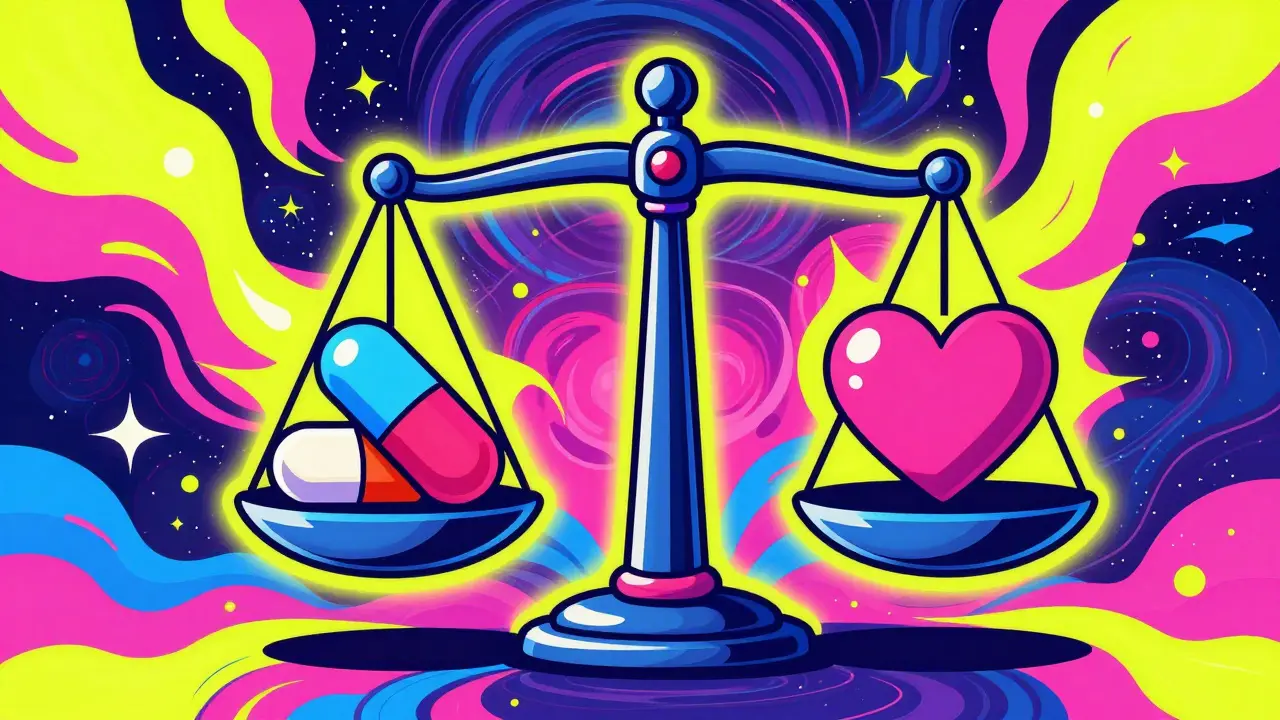
Drug Reaction Classifier
How to use: Select a scenario below to see if it represents a Type A (Dose-Related) or Type B (Non-Dose-Related) reaction and learn the corresponding management strategy.
Scenario 1: Severe Hypotension
A patient taking blood pressure medication experiences a sudden drop in systolic pressure below 90 mmHg.
Click to analyzeScenario 2: Anaphylactic Shock
A patient develops throat swelling and difficulty breathing immediately after the first dose of Penicillin.
Click to analyzeScenario 3: Lithium Toxicity
A patient with bipolar disorder shows signs of toxicity because their kidneys are clearing lithium too slowly.
Click to analyzeScenario 4: Skin Blistering (SJS)
A patient develops severe skin peeling and blisters after taking a single dose of lamotrigine.
Click to analyzeAnalysis Result
Imagine taking a medication exactly as prescribed, only to end up in the emergency room with a severe rash or a sudden drop in blood pressure. For some people, this happens because the dose was simply too high. For others, it happens because their immune system reacted in a way that no amount of dose-reduction could prevent. This is the core difference between dose-related and non-dose-related side effects.
In the world of pharmacology, these aren't just random occurrences. They are classified as Type A and Type B reactions. Understanding which is which isn't just for doctors; it's the difference between simply lowering a dose to feel better and needing to ban a specific drug from your medical record forever to save your life. While one is predictable and common, the other is "bizarre" and potentially fatal.
The Basics: Type A vs Type B Reactions
To keep things simple, pharmacologists use a system formalized by Rawlins and Thompson to categorize Adverse Drug Reactions (ADRs). Think of these as the "unwanted" effects of a drug. The primary split happens between those that follow a predictable pattern and those that don't.
Type A Reactions are known as augmented reactions. They are essentially an extension of what the drug is supposed to do, just taken too far. If a drug is designed to lower your blood pressure, a Type A reaction is when it lowers it too much. These make up about 80% of all ADRs. Because they are linked to the amount of drug in your system, they are predictable and usually manageable by adjusting the dose.
Type B Reactions are called "bizarre" reactions. These have nothing to do with the intended pharmacological action of the drug. Instead, they are often immune-mediated or idiosyncratic. You could take a tiny dose, and your body might still react violently. While these only account for 15-20% of reactions, they are far more dangerous, causing the vast majority of serious drug-related hospitalizations.
| Feature | Type A (Dose-Related) | Type B (Non-Dose-Related) |
|---|---|---|
| Predictability | Predictable | Unpredictable |
| Frequency | Common (approx. 80%) | Rare (15-20%) |
| Severity | Usually mild to moderate | Often severe or fatal |
| Mechanism | Pharmacological extension | Immune/Idiosyncratic |
| Management | Dose adjustment | Immediate discontinuation |
How Dose-Related Side Effects Actually Work
Type A reactions follow the law of mass action: the more drug molecules you have hitting a receptor, the stronger the effect. When the drug concentration crosses a certain threshold, you move from "therapeutic" (helping) to "toxic" (harming). This is especially risky with drugs that have a Narrow Therapeutic Index, which is a fancy way of saying the gap between a helpful dose and a deadly dose is very small.
Take digoxin, used for heart failure. The therapeutic range is tiny-usually between 0.5 and 0.9 ng/mL. If that level climbs above 2.0 ng/mL, you're in the toxicity zone. Similarly, lithium for bipolar disorder becomes toxic if levels exceed 1.2 mmol/L. In these cases, the side effect is directly tied to the blood concentration.
Other common examples of dose-related side effects include:
- Hypoglycemia: When insulin or oral diabetes meds drop blood glucose below 70 mg/dL.
- Hypotension: When blood pressure meds drop your systolic pressure below 90 mmHg.
- Hemorrhage: When anticoagulants like warfarin push your INR (International Normalized Ratio) above 4.0, making your blood too thin.
These reactions aren't always caused by taking "too many pills." Sometimes, your body just can't get rid of the drug fast enough. For instance, if you have stage 3 chronic kidney disease, your body might clear metformin 50% slower than a healthy person, leading to a dose-related buildup even if you follow the label.
The Mystery of Non-Dose-Related Reactions
Type B reactions are the wildcards. They don't follow the "more drug equals more effect" rule. Instead, they often depend on your unique genetic makeup or your immune system's memory. Many of these require "sensitization," meaning the first time you take the drug, nothing happens-but your immune system "marks" the drug. The next time you take it, your body launches a full-scale attack.
One of the most frightening examples is Anaphylaxis, a severe, life-threatening allergic reaction. This can happen with penicillin even if the dose is miniscule. Another is Stevens-Johnson Syndrome (SJS), where the skin blisters and peels. SJS can occur after a single dose of a drug like lamotrigine, regardless of whether the patient followed a slow titration schedule.
Why does this happen? Often, it's linked to HLA Alleles-specific markers on your white blood cells. For example, people with the HLA-B*57:01 allele have a very high risk of a hypersensitivity reaction to the HIV drug abacavir. This is why doctors now run genetic tests (costing roughly $150-$300) before prescribing it; the test is 99.9% accurate in predicting who should avoid the drug.
The Paradox: Is Anything Truly Non-Dose-Related?
If you ask a strict pharmacologist, they might tell you that every effect has a dose relationship. This is the "paradox of non-dose-related reactions." How can something be non-dose-related if it's a chemical reacting in a body?
Researchers like Aronson and Ferner suggest that Type B reactions aren't actually dose-independent; they just have "invisible" thresholds. For most people, the threshold to trigger a bizarre reaction is so incredibly high that they'll never reach it. But for a hypersensitive person, the threshold is so low that even a single pill triggers the response. Because the difference between individuals is so massive, it looks like the dose doesn't matter when we look at a large group of people.

Managing and Preventing Side Effects
The way a doctor handles these two types of reactions is completely different. If you're experiencing a Type A reaction, the solution is usually Therapeutic Drug Monitoring (TDM). This involves regular blood tests to ensure the drug stays in that "sweet spot" between effective and toxic. For example, vancomycin levels are routinely checked to keep them between 10-20 mg/L.
If you have a Type B reaction, there is no such thing as a "safe small dose." The only solution is permanent discontinuation. If you're allergic to penicillin, you don't try a smaller dose; you switch to a different class of antibiotics entirely.
Modern medicine is moving toward Pharmacogenomics to stop these reactions before they start. By analyzing your DNA, doctors can predict if you'll have a Type A issue (like poor metabolism of warfarin due to CYP2C9 variants) or a Type B catastrophe (like SJS from carbamazepine). This field is growing rapidly, with the global market expected to hit nearly $18 billion by 2030.
Can a dose-related side effect become non-dose-related?
No. These are two different mechanisms. A dose-related effect is based on the drug's known pharmacology (e.g., a blood thinner making you bleed too much). A non-dose-related effect is based on an unpredictable or immune response (e.g., a blood thinner causing a sudden skin rash). One is about quantity; the other is about biological compatibility.
Why are Type B reactions more dangerous if they are rarer?
Type B reactions are often systemic and violent, such as anaphylactic shock or organ failure (drug-induced liver injury). Unlike Type A reactions, which usually signal a need for a dose tweak, Type B reactions can happen suddenly and severely, often leading to emergency hospitalizations and higher mortality rates (roughly 5-10% compared to less than 1% for Type A).
Do I need genetic testing for every medication?
Not usually. Genetic testing is reserved for drugs with a known high risk of severe Type B reactions or a very narrow therapeutic index. The FDA currently requires or recommends testing for about 28 specific drugs, such as abacavir and carbamazepine, where the risk of a life-threatening reaction is significant.
What is the difference between a side effect and a Type B reaction?
"Side effect" is a broad term. A Type A reaction is a predictable side effect-like dry mouth from an antihistamine. A Type B reaction is an idiosyncratic adverse reaction-like a sudden, severe allergic reaction to a medication you've taken before without issue.
How can I tell if my reaction is dose-related?
Generally, if the symptom matches the drug's intended purpose (e.g., a sedative making you too sleepy), it's likely dose-related. If the symptom is "random" or involves the immune system (e.g., hives, swelling, fever), it's likely non-dose-related. However, you should always consult a healthcare provider for a diagnosis.
What to do next
If you suspect you're having a reaction to a medication, the first step is to identify the pattern. If it feels like an exaggeration of the drug's purpose, contact your doctor to discuss a possible dose adjustment. If you experience swelling of the throat, a widespread rash, or difficulty breathing, seek emergency care immediately-these are hallmarks of Type B reactions and require urgent intervention.
For those with a history of multiple adverse reactions, it may be worth asking your provider about pharmacogenomic screening. Knowing your HLA markers or CYP enzyme activity can turn a guessing game into a precise science, ensuring that the medications you take are both safe and effective for your specific biology.
April 6, 2026 AT 06:11
Rauf Ronald
This is a fantastic breakdown of something that usually confuses patients. For anyone reading this, just remember that being proactive with your medical history is the best way to avoid those Type B nightmares. Keep a detailed list of every reaction you've ever had, even if it seemed minor at the time, because it might be the key to avoiding a systemic crash later. It's all about empowerment through information!
April 6, 2026 AT 09:53
Danielle Kelley
Funny how they call these things "bizarre" reactions like they're just random accidents. Wake up people! They're just testing chemicals on us to see who survives and who doesn't. This "genetic testing" is just another way for them to get our DNA into a database so they can track us more efficiently. Absolute garbage.
April 7, 2026 AT 22:53
Vivek Hattangadi
Totally agree with the point about pharmacogenomics! It's such an exciting time for medicine. Imagine a world where we don't have to play the guessing game with prescriptions anymore. I've seen a few colleagues in the field implementing these screens and the patient outcomes are just night and day. Definitely worth looking into if you have a family history of drug sensitivities!
April 8, 2026 AT 19:19
Timothy Burroughs
only americans can handle this kind of science properly while the rest of the world just guesses honestly the dna stuff is the only way to go if you actually care about your health which most people dont because they are lazy and weak
April 9, 2026 AT 04:33
shelley wales
I really appreciate how this explains the difference between a simple dose tweak and a permanent ban on a drug. It makes me feel a lot more comfortable talking to my doctor about my concerns without feeling like I'm overreacting.
April 9, 2026 AT 13:24
charles mcbride
It is truly heartening to see such a clear explanation of pharmacological principles. I believe that by educating ourselves on these distinctions, we can all approach our healthcare journeys with more confidence and peace of mind. Well put!
April 10, 2026 AT 01:32
Alexander Idle
Honestly the sheer audacity of the medical establishment to pretend these things are "predictable" when half the time they just throw pills at a wall and see what sticks is just peak comedy. The way this is written is way too clinical for my taste but whatever. I can't believe we're still talking about this in the age of precision medicine it's literally an embarrassment to the industry and frankly quite tedious to even read through the tables provided
April 10, 2026 AT 06:48
Rupert McKelvie
Spot on.