
Statin-Grapefruit Interaction Risk Checker
Enter your medication type and daily grapefruit juice consumption to see your risk profile for muscle toxicity.
Your Daily Routine
Result
--Recommendations:
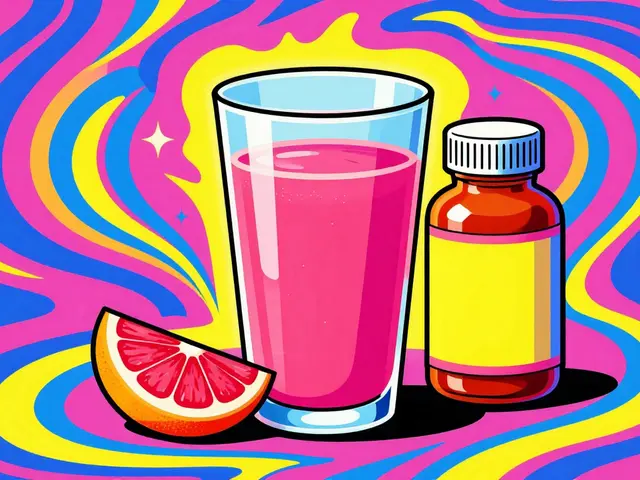
Imagine starting your day with a fresh glass of citrus juice, unaware that it could turn your heart medication into a potential hazard. This isn’t just a warning myth; it is a documented pharmacokinetic reality affecting millions of people taking cholesterol drugs. You likely know that Simvastatin is a widely prescribed lipid-lowering agent belonging to the statin class, often marketed under the brand name Zocor. However, many patients remain confused about exactly how much grapefruit is too much. Recent updates from the Food and Drug Administration (FDA) in 2023 clarify that the danger zone isn’t necessarily a single sip, but rather consistent, large-volume consumption. Understanding this interaction saves lives, as severe cases can lead to rhabdomyolysis, a condition where muscle tissue breaks down rapidly.
The Hidden Mechanism in Your Intestines
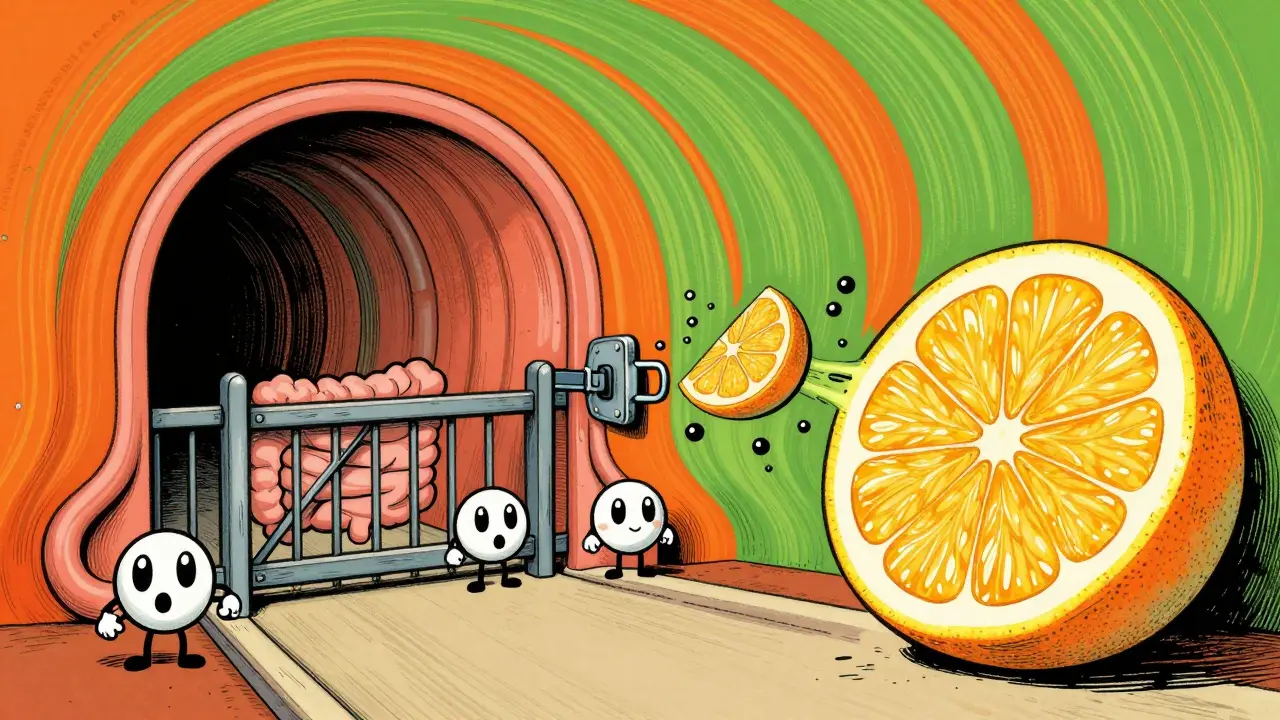
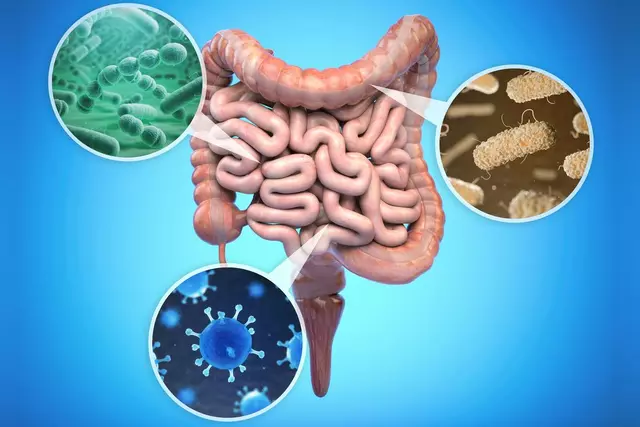
To understand why this happens, you need to look inside your gut. Your body uses a natural enzyme system called CYP3A4 is a cytochrome P450 enzyme located primarily in the intestinal wall and liver responsible for metabolizing many medications. Think of CYP3A4 as a security checkpoint. Normally, when you take Simvastatin, this enzyme breaks down a portion of the drug before it enters your bloodstream, keeping levels steady. Grapefruit juice contains chemical compounds known as furanocoumarins, specifically bergamottin. These compounds act like a lock jamming that security checkpoint.
When you consume significant amounts of grapefruit juice, these compounds irreversibly inhibit the CYP3A4 enzymes in your small intestine. Because the “security guard” is incapacitated, nearly all the Simvastatin you swallowed rushes straight into your blood instead of being filtered. Clinical pharmacology studies show this can inhibit intestinal metabolism by approximately 47%. The result is a massive spike in systemic exposure. Research published in Circulation in 2004 demonstrated that drinking double-strength juice three times daily increased the maximum plasma concentration of Simvastatin by nine-fold. That means you effectively took nine times the intended dose without changing your pill count.
The Numbers Behind the Safety Warning
Data matters when deciding whether to skip breakfast juice. The FDA updated its consumer guidance in 2023, specifying a critical threshold for concern. The interaction becomes dangerous when consumption exceeds 1.2 liters of grapefruit juice per day. To put that in real terms, 1.2 liters equals roughly five 8-ounce glasses. If you stay below this limit, the risk for most people remains low, according to the American Heart Association’s 2022 statement.
However, individual tolerance varies. For patients taking higher doses of the medication, such as 40 mg or 80 mg daily, even smaller amounts of juice pose a greater risk. Current consensus suggests that while moderate consumption (one glass) increases plasma statin concentrations by 30-40%, this usually stays below the clinical danger zone for healthy adults. Yet, the FDA still maintains a conservative stance because we cannot reliably predict who will develop muscle toxicity. Dr. David J. Graham from the FDA’s Office of Surveillance noted in 2021 that adverse events are unpredictable, suggesting complete avoidance for high-risk groups is safer than guessing.
| Statin Name | Brand Names | CYP3A4 Metabolism | Interaction Severity |
|---|---|---|---|
| Simvastatin | Zocor | High Substrate | Severe (16-fold increase) |
| Atorvastatin | Lipitor | High Substrate | Moderate (up to 3.3-fold increase) |
| Pravastatin | Pravachol | Low / Non-Substrate | No Significant Interaction |
| Rosuvastatin | Crestor | Non-Substrate | No Significant Interaction |
This differential risk profile explains why doctors often recommend switching medications for heavy grapefruit lovers. As shown above, Pravastatin and Rosuvastatin bypass the CYP3A4 pathway entirely. Market data from Express Scripts in 2023 highlights that Simvastatin remains the third most prescribed statin in the U.S., trailing only Atorvastatin and Rosuvastatin. With approximately 23 million prescriptions written annually, millions of users face this specific dietary restriction.
Recognizing the Physical Warning Signs
If you do consume grapefruit products alongside your medication, monitoring your body is essential. The most serious complication is myopathy, which manifests as unexplained muscle aches, tenderness, or general weakness. In extreme cases, this progresses to rhabdomyolysis. This rare condition occurs in approximately 0.1% of statin users generally but jumps significantly with juice co-consumption. Symptoms include side or back pain and decreased urination due to kidney stress from muscle breakdown products.
You should seek immediate medical consultation if these symptoms appear. Do not wait to see if they fade on their own. The American College of Cardiology guidelines from 2023 specifically recommend considering alternative statins for patients who regularly consume grapefruit products. This is especially true for those with additional risk factors like age over 65, renal impairment, or concurrent use of other interacting drugs like calcium channel blockers.

Practical Daily Management
Patients often ask if timing separates the two safely. Healthcare providers typically suggest a separation of at least four hours between taking Simvastatin and consuming grapefruit juice. While some experts believe this helps, the enzyme inhibition lasts for days. WellRx medication guides updated in January 2024 note that the interaction potential dissipates within 3 to 7 days after the last ingestion, as new enzymes synthesize to replace damaged ones. Simply waiting until dinner to drink your morning juice does not fully eliminate the risk if you drink it daily.
A simple substitution often works best. Orange juice is safe to drink and provides similar Vitamin C without the interfering furanocoumarins. For those attached to the flavor of citrus, researchers at the University of Florida reported in 2023 that a new hybrid variety, the UF Sweetie, shows 87% less bergamottin content. While promising, these varieties aren’t widely available yet, so standard grapefruit remains the primary concern.
Frequently Asked Questions
Can I drink a small amount of grapefruit juice with Simvastatin?
Moderate consumption (less than 1.2 liters daily) poses minimal risk for most patients on standard doses, but avoiding larger quantities is recommended to prevent elevated drug levels.
Is orange juice a safe alternative?
Yes, orange juice does not inhibit the CYP3A4 enzyme and is considered safe for patients taking Simvastatin without raising toxicity concerns.
Which statin is safest if I love grapefruit?
Rosuvastatin (Crestor) and Pravastatin (Pravachol) are preferred alternatives because they are not metabolized by CYP3A4, meaning they do not interact with grapefruit juice.
How quickly does the interaction stop after stopping juice?
The interaction potential usually dissipates within 3 to 7 days after the last intake of grapefruit juice, once the body synthesizes new enzyme proteins.
What symptoms indicate muscle toxicity?
Look for unexplained muscle pain, tenderness, weakness, general fatigue, or brown urine, and contact your doctor immediately if these occur.
Navigating this interaction doesn’t require you to change your entire diet, but it does demand awareness. By choosing the right statin or limiting juice intake, you maintain the benefits of cholesterol management without risking muscle damage. Always discuss your current diet with your cardiologist to find a balance that works for your health profile.
March 31, 2026 AT 22:59
Victor Ortiz
I wish they banned it entirely honestly.
April 1, 2026 AT 01:37
Amber Armstrong
It is such a scary thing to find out when you think you are being healthy with your breakfast choices.
My grandmother actually passed away because she took her cholesterol meds right along with her morning juice every single day for years without knowing about the enzyme stuff.
We never knew it was the juice until the doctor finally ran the blood work and saw her muscle enzymes were through the roof.
She had no idea she was effectively overdosing on simvastatin every single morning while drinking her glass of pink fruit nectar.
The way it blocks that security guard enzyme makes so much sense now that I look at the science diagrams they showed us.
You feel like you are doing everything right by eating fresh fruit and taking your prescribed vitamins but your body is turning it against you internally.
I really hope doctors do a better job warning people during the initial consultation instead of making us read tiny labels on bottles later.
Imagine how many people out there are walking around with damage they did not even notice building up inside their kidneys slowly over time.
My own cousin stopped drinking grapefruit entirely after he switched to rosuvastatin and said his legs felt so much less tight afterward.
He told me he thought he could handle a little bit of the juice but the risk just does not seem worth it anymore to him.
We all want to lower our lipids but nobody wants to end up on dialysis because of a fruit interaction we missed in a brochure.
Please listen to your pharmacist when they hand you those new pills because they know the chemistry better than most of us regular folks ever will.
It feels like such a betrayal by nature when something sweet turns into a poison just because of how your liver processes things.
Everyone needs to check their pill bottle for warnings about food interactions before they pour that first cup in the morning light.
Staying informed saves lives literally speaking so share this post with anyone who loves citrus fruits and takes heart medication daily.
April 1, 2026 AT 09:57
Kendell Callaway Mooney
That story about your grandmother is really sad to hear.
I am glad you decided to share the warning here though.
It is important for everyone to read about the CYP3A4 enzyme function carefully.
Many people assume orange juice works too but it does not inhibit that pathway.
Just swap your breakfast drink to keep safe.
April 1, 2026 AT 22:41
dPhanen DhrubRaaj
i heard some people say one glass is fine but i dont trust that logic at all because the study numbers vary so much
the threshold is blurry for older people specifically
just stop drinking the red stuff completely
April 2, 2026 AT 20:48
Vikash Ranjan
You are missing the point entirely when you say stop completely without data.
I see this advice gets thrown around everywhere but ignore the actual dosage limits mentioned in the FDA update section.
People are scared into quitting vitamin c sources when a moderate amount is perfectly safe for most demographics.
This is fear mongering disguised as medical safety information designed to sell alternative brands of pills.
Why not switch the drug instead of banning the fruit for millions of healthy consumers?
It feels like the pharmaceutical industry wants us to change habits to make more money selling different pills.
April 3, 2026 AT 08:04
RONALD FOWLER
Hearing different sides helps me understand the full picture better now.
Thanks for sharing the extra context on the numbers involved.
April 4, 2026 AT 13:51
Biraju Shah
Fear mongering? Absolutely not.
Rhabdomyolysis kills people directly every year if left unchecked by modern medicine teams.
Why are we debating safety limits when the cost of error is total organ shutdown?
Listen to the experts here not the conspiracy theorists in the comments section below.
I want hard facts not opinions.
April 6, 2026 AT 11:03
Cameron Redic
Boring stuff.
Who reads this anyway?
April 7, 2026 AT 19:12
Marwood Construction
It is crucial to maintain strict adherence to the clinical guidelines provided in recent reports.
The separation of intake timing is critical for metabolic stability.
Patient education remains the primary defense mechanism against toxicity events in outpatient settings.
April 9, 2026 AT 06:38
William Rhodes
We must see the bigger picture of wellness here.
Avoiding joy just because of a chemical reaction is not living life fully either side.
Find balance between health and happiness always.
Push forward despite the risks but wisely.
April 10, 2026 AT 19:20
Dan Stoof
What a vibrant discussion we are having today!,,, I love the colorful details about the bergamottin compounds!,, Truly fascinating science for sure!!!
April 11, 2026 AT 08:19
Calvin H
Oh great, another article telling us how to eat apples without dying.
April 12, 2026 AT 11:48
Carolyn Kask
You Americans really are too worried about your health these days,
But don't get me wrong I hate grapefruit too,
Just seems ridiculous to ban it officially though,
Stick to your weird diets and stay away from my kitchen.
April 13, 2026 AT 19:20
Katie Riston
The philosophical dilemma of consumption versus survival looms large over this simple question of diet.
Is freedom to consume anything we please truly compatible with biological necessity?
We walk a razor thin line between sustenance and destruction when chemistry intervenes silently inside our veins.
Perhaps the true lesson lies not in the juice itself but in how blindly we trust our daily rituals.
Nature often presents poisons alongside medicines waiting for us to distinguish correctly without guidance.
April 15, 2026 AT 12:59
Brian Yap
Cool info for Aussie readers over here.
We deal with this a lot down under with high cholesterol stats too.
Glad to see the research is getting out there properly.
April 16, 2026 AT 03:42
Victor Ortiz
Another useless take that ignores the core issue completely.
Data does not care about your feelings about juice.
Read the paper.